


The New Star of Saint-Émilion
Perched high on a limestone promontory, Château Quintus is Domaine Clarence Dillon’s ambitious creation: a Saint-Émilion estate that unites history, terroir, and innovation in a bid to craft some of the Right Bank’s best wines.
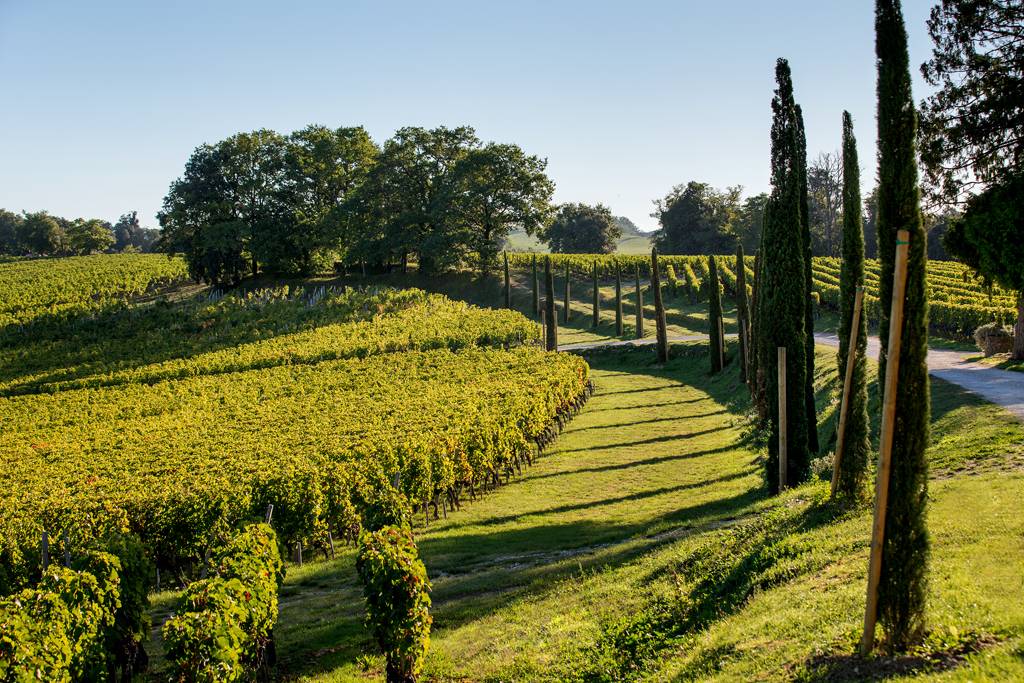
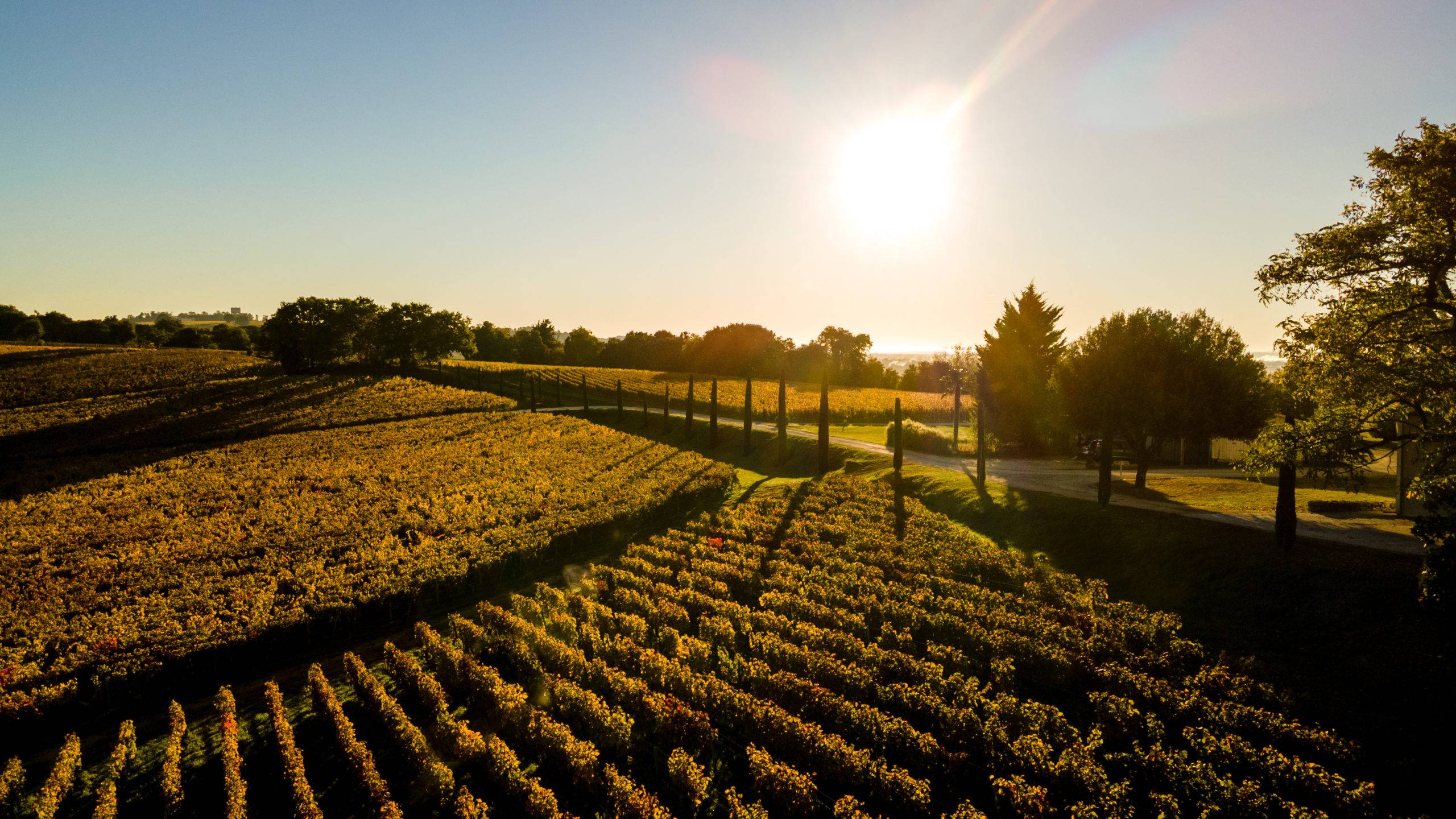
Château Quintus spreads across 45 hectares in Saint-Émilion © Alain Benoit
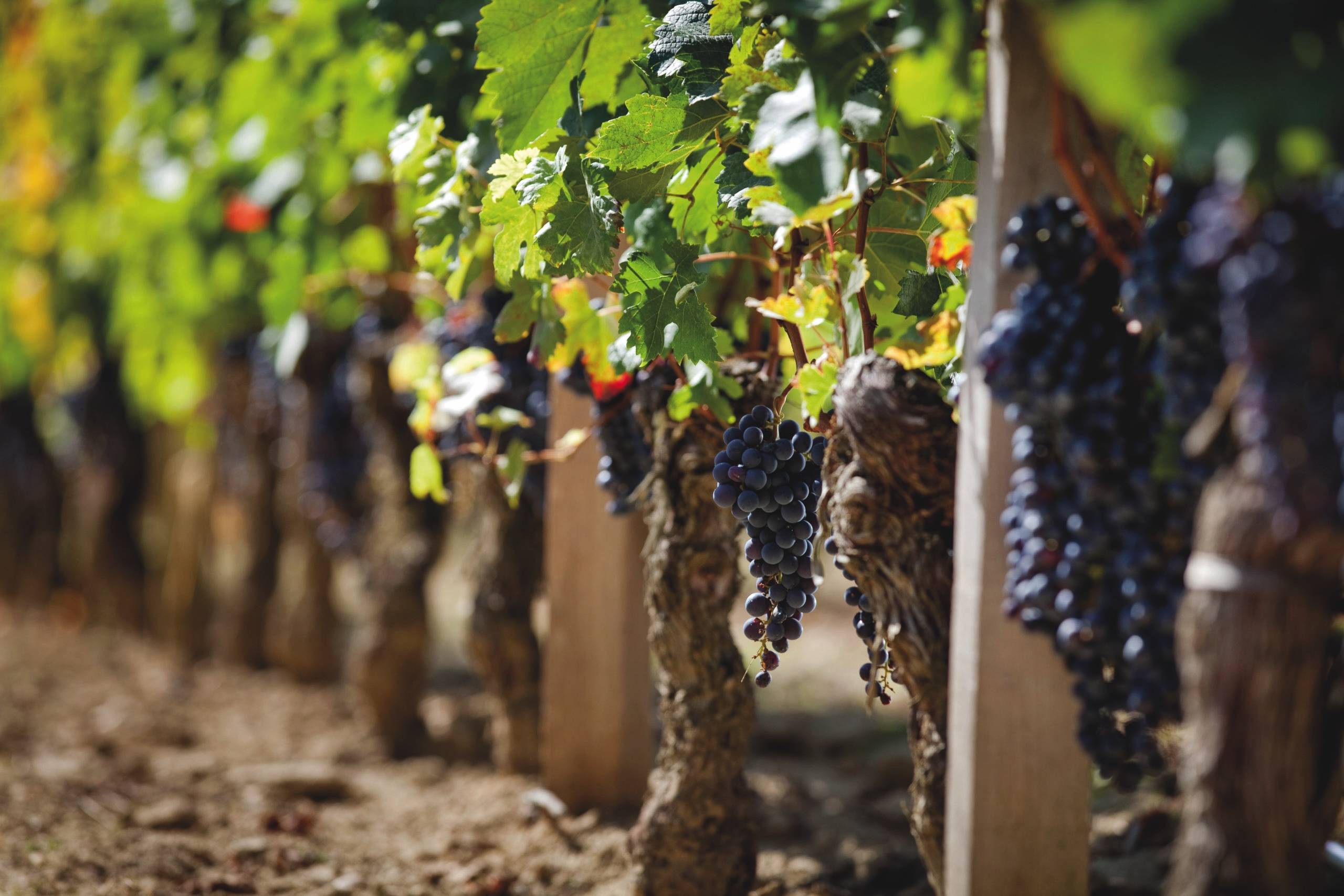
The grapes at Château Quintus are harvested by hand © Deepix Studio Bordeaux
Château Quintus now stands as one of the largest in the region © Michaël Boudot
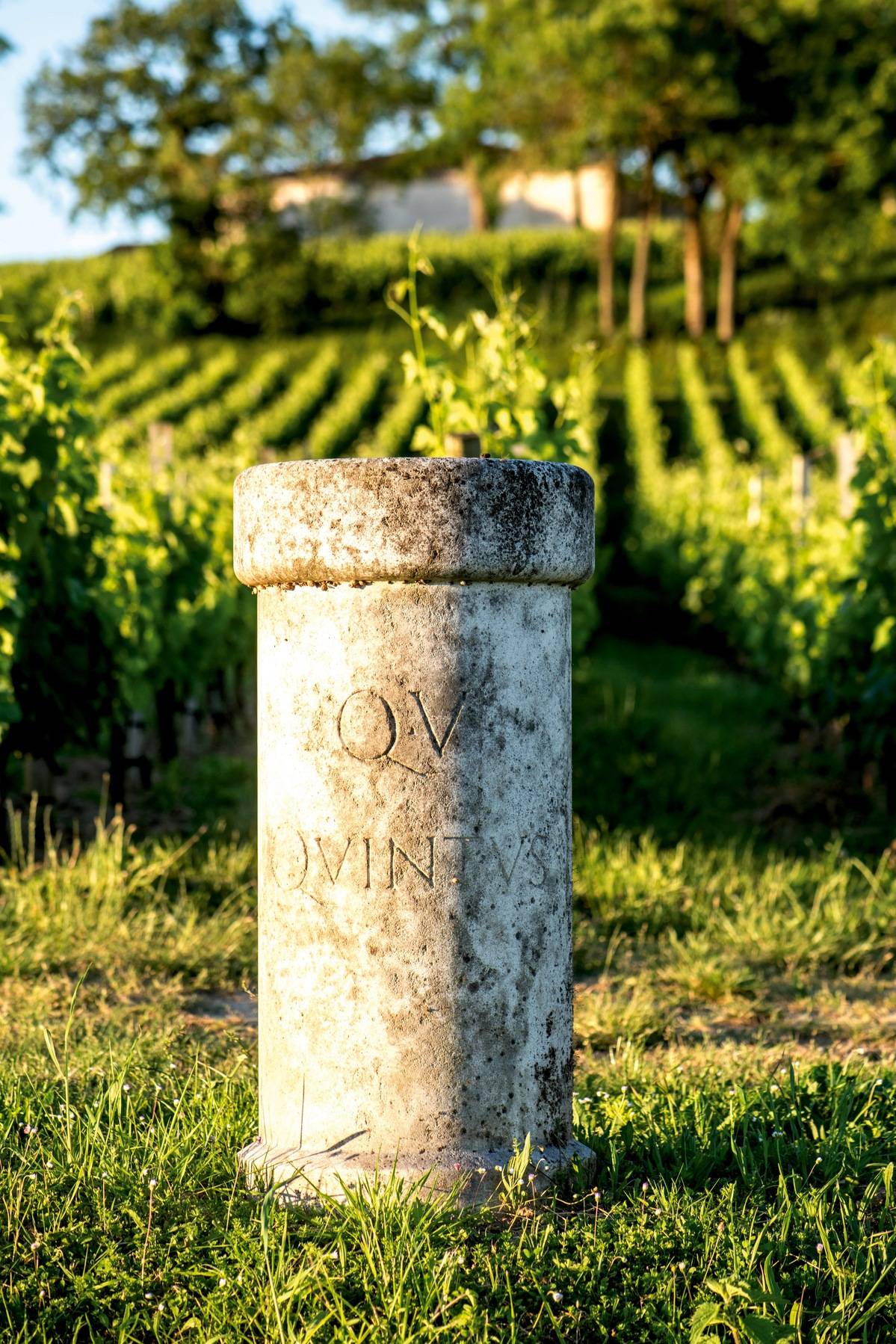
When Domaine Clarence Dillon acquired an outstanding Saint-Émilion estate in 2011, it marked the beginning of a bold quest: to shape one of the Right Bank’s future icons. Two further acquisitions, in 2013 and 2021, expanded this vision, uniting three historic vineyards under a single banner. The reborn estate, now one of the largest in the region, was named Château Quintus, a tribute to the Gallo-Romans who once gave their fifth child the name “Quintus”. Fittingly, the number five now threads through the property’s identity, nodding to its topography with its slopes facing the four cardinal points and bowing toward the sky.
At first glance, Quintus appears as a newcomer. Yet, its roots run deep. Each of the three estates that now form its 45-hectare domain are considered among Saint-Émilion’s oldest and most reputed, regularly referenced as Premier Cru de Saint-Émilion in the Féret Wine Guide, published between 1908 and 1949. By bringing this trifecta together, Domaine Clarence Dillon—already the custodian of illustrious Bordeaux names such as Haut-Brion and La Mission Haut-Brion—wove a new chapter of continuity and renewal.
As Prince Robert of Luxembourg, Chairman and CEO, explains: “In 2011, my family, our team, and I expressed our ambitious goals, with our communicated desire to craft one of the very finest wines possible in Saint-Émilion. By assembling some of the most promising parcels and terroirs, we would attempt to create a new star of the Right Bank: Quintus. After more than 10 vintages, I am proud to say that our exceptional winemaking team is excelling at meeting this challenge.”
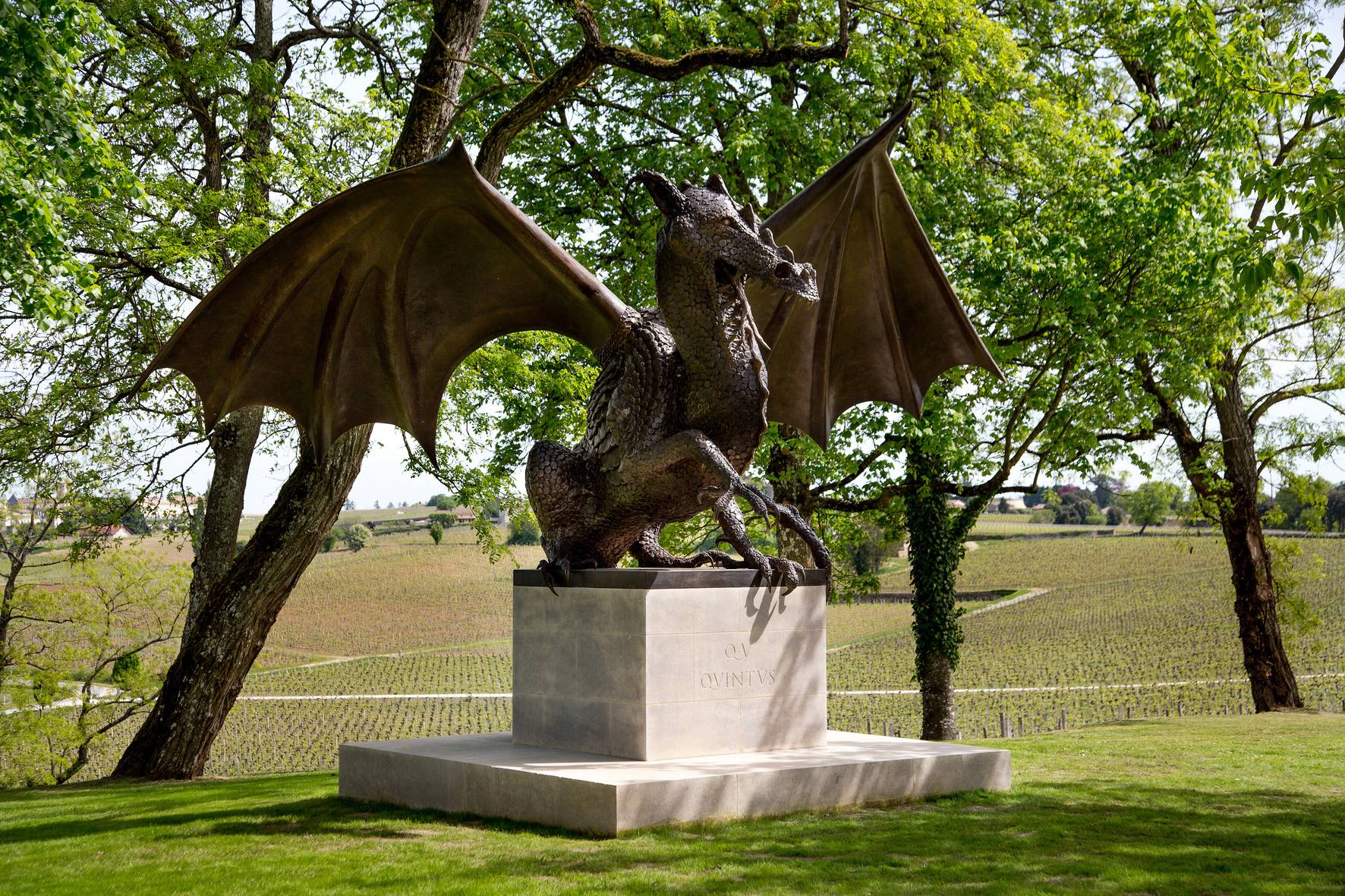
Created by British sculptor Mark Coreth, Quintus’s bronze dragon statue watches over the estate and its treasured wines © Deepix Studio Bordeaux
Château Quintus is perched dramatically on a limestone promontory at 62 metres above sea level, commanding a 360-degree panorama over the Dordogne valley. This elevated plateau, with its mix of north-, west- and southfacing slopes, provides an enviable range of microclimates and clay-limestone soils—the very conditions that coax Merlot and Cabernet Franc to their most eloquent expressions. In uniting neighbouring terroirs, the estate now holds one of the broadest viticultural palettes in SaintÉmilion, enabling the winemaking team to craft blends of remarkable depth and nuance.
This sense of guardianship over the land is not only geological but ecological. Quintus is distinguished by its so-called “Mediterranean Green Belt”—a mosaic of hedgerows, escarpments, holm oaks, and stone walls that shelter thriving biodiversity. More than 200 species of fauna and 80 wildflowers have been catalogued here, from black-capped chickadees to bats and beneficial insects. To nurture this living community, the estate has eliminated insecticides, planted ecological corridors, installed nesting boxes and “bug hotels”, and embraced a philosophy of minimal intervention. These efforts have earned Quintus dual certification for High Environmental Value (HEV) since 2018 and ISO 14001 since 2019.
The estate’s vineyard and cellar teams share the same guiding principle: to assist and protect the terroir without ever obscuring its voice. Hand harvesting is the rule, with meticulous selection at every stage ensuring that only the most pristine fruit reaches the vats. Fermentations take place in both wood and stainless steel, with gentle extractions achieved by pumping over. Each parcel— whether from the crest, middle, or foot of the slope—is vinified separately, then blind-tasted to allow instinct and sensory judgment to guide the blending.
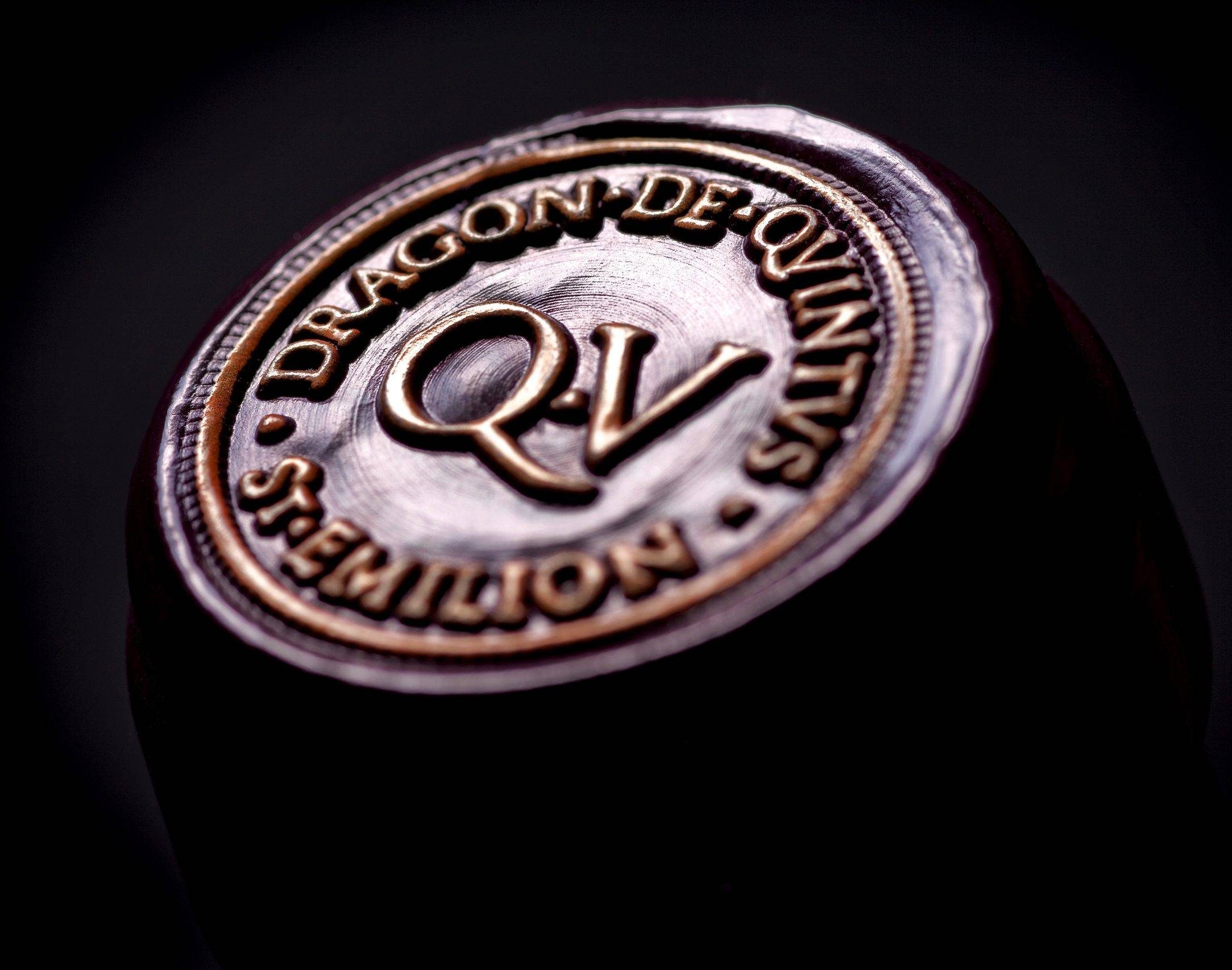
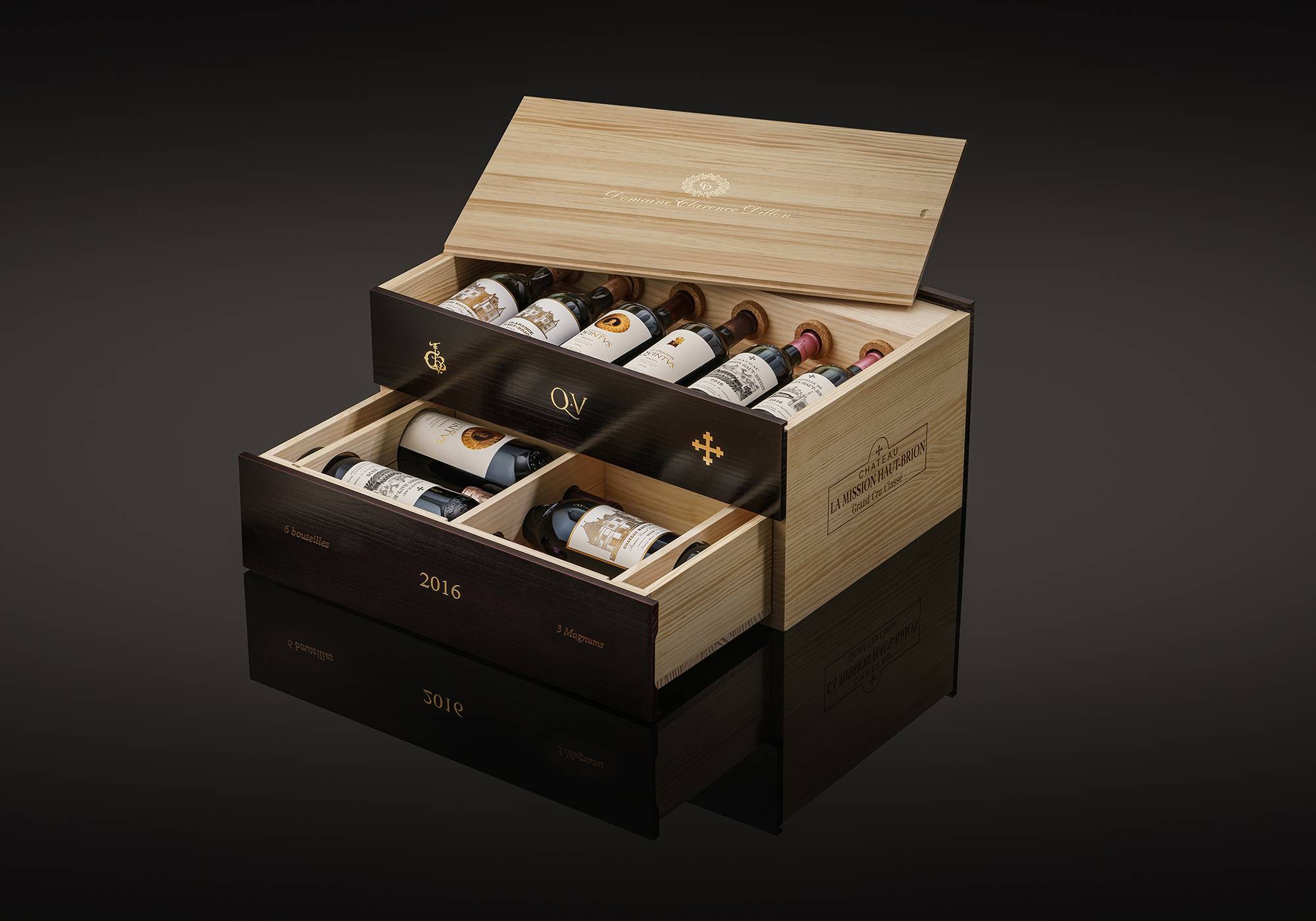
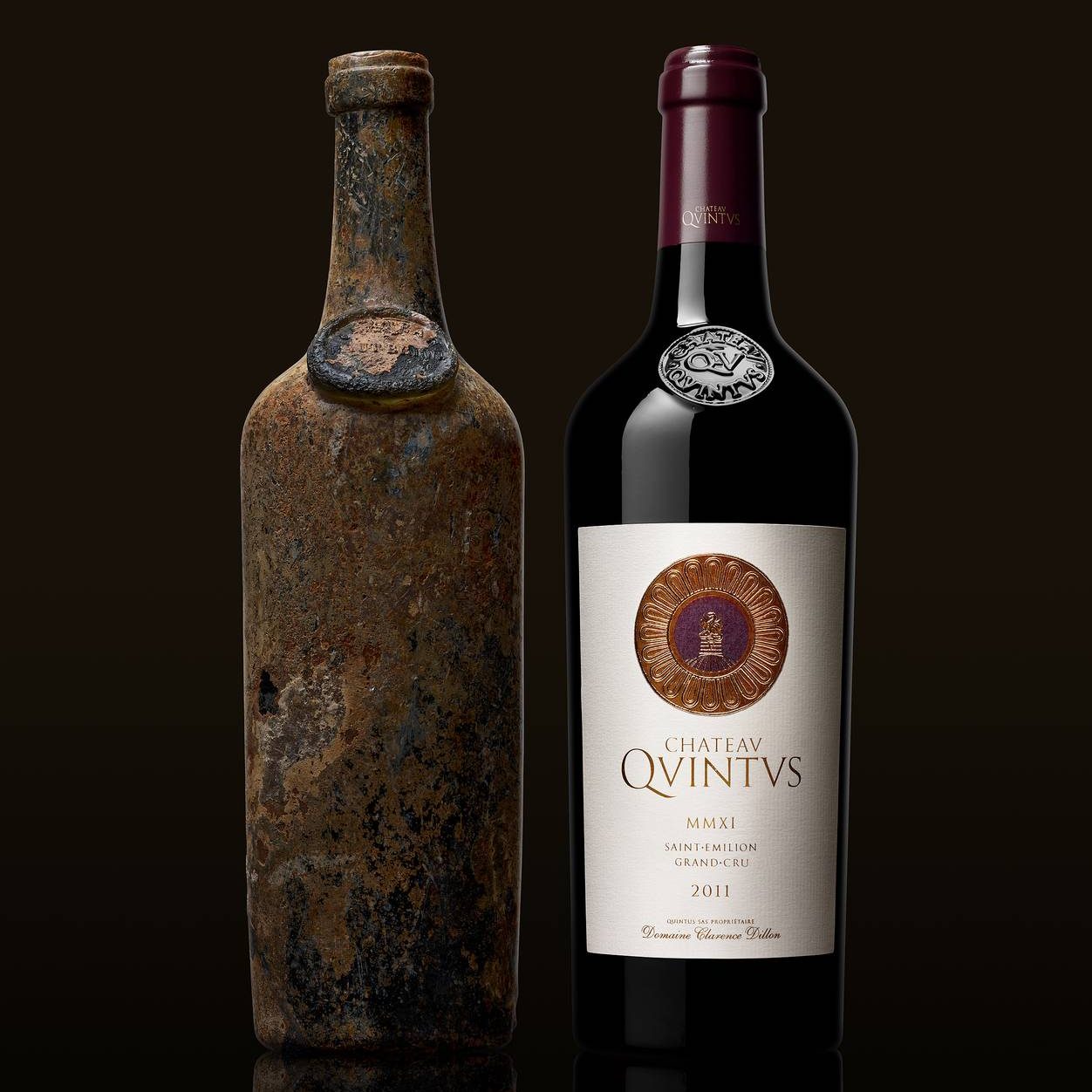
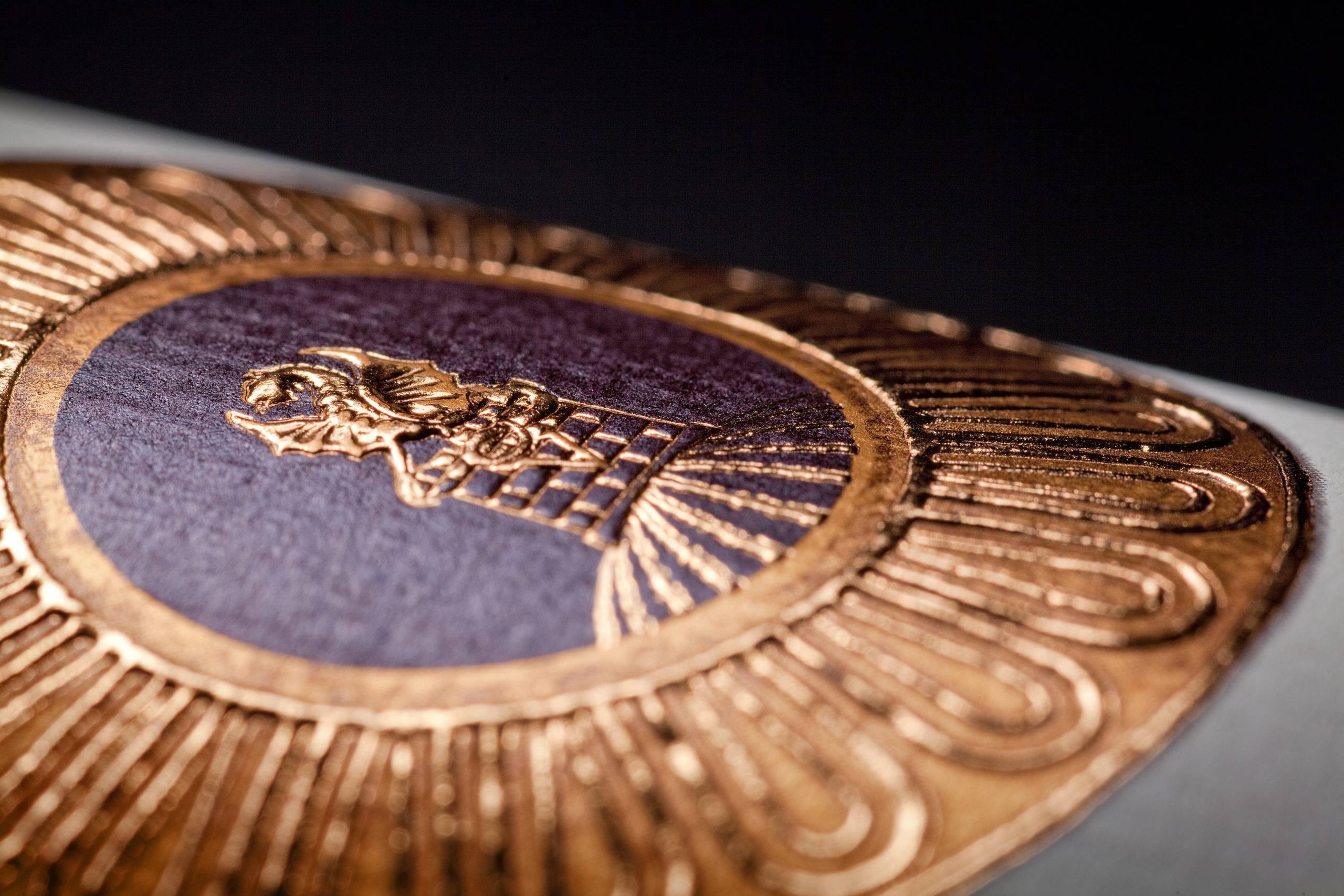
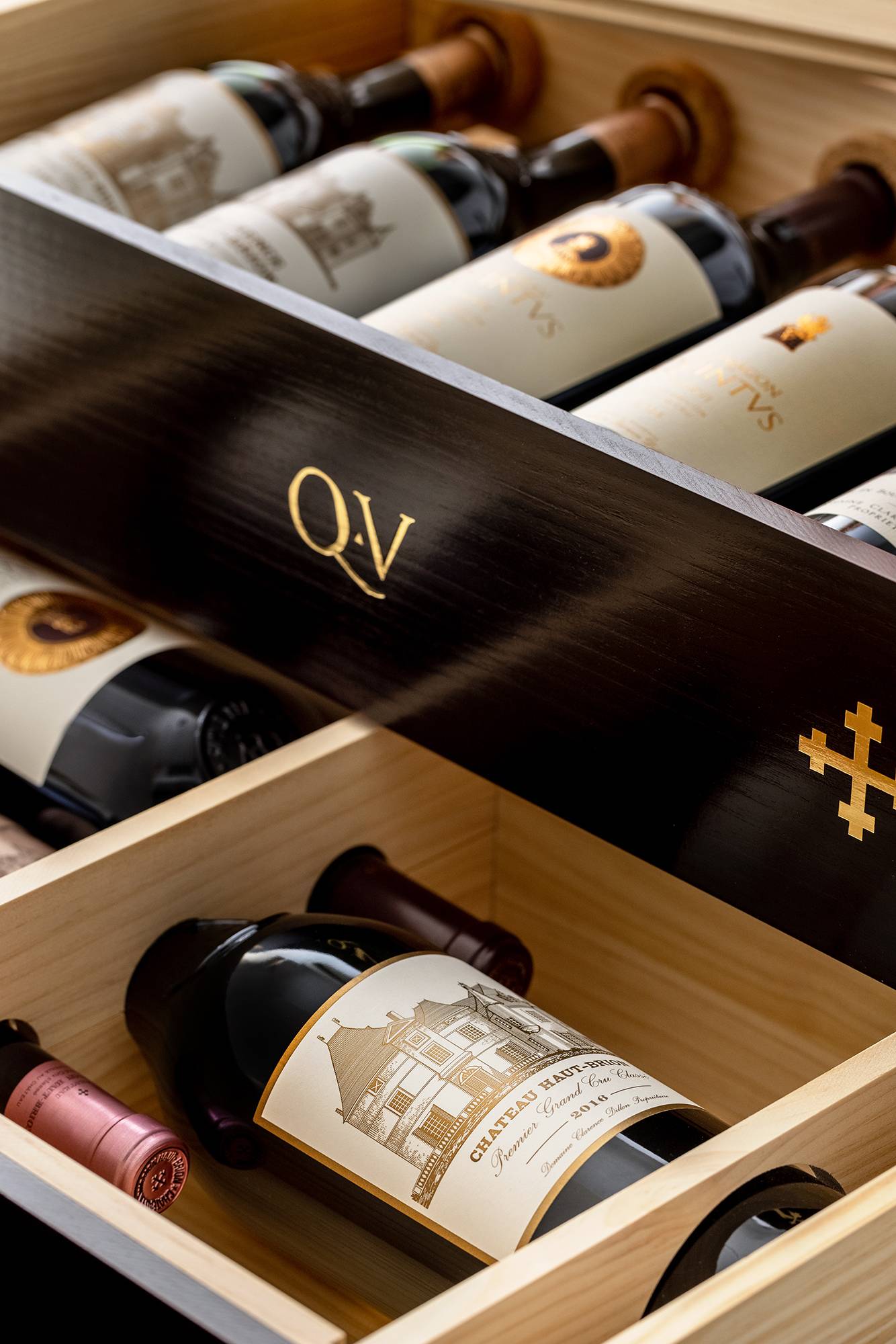
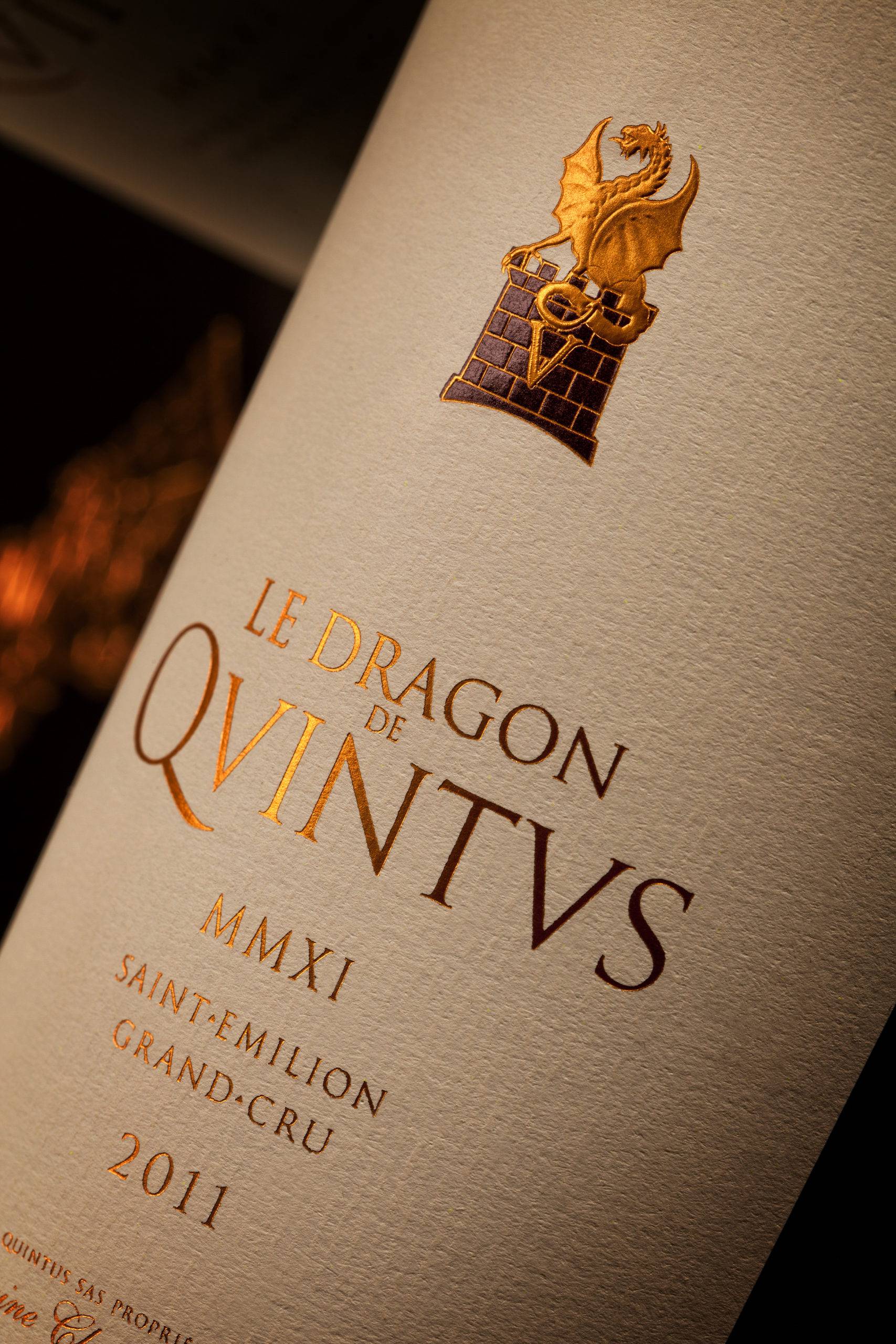
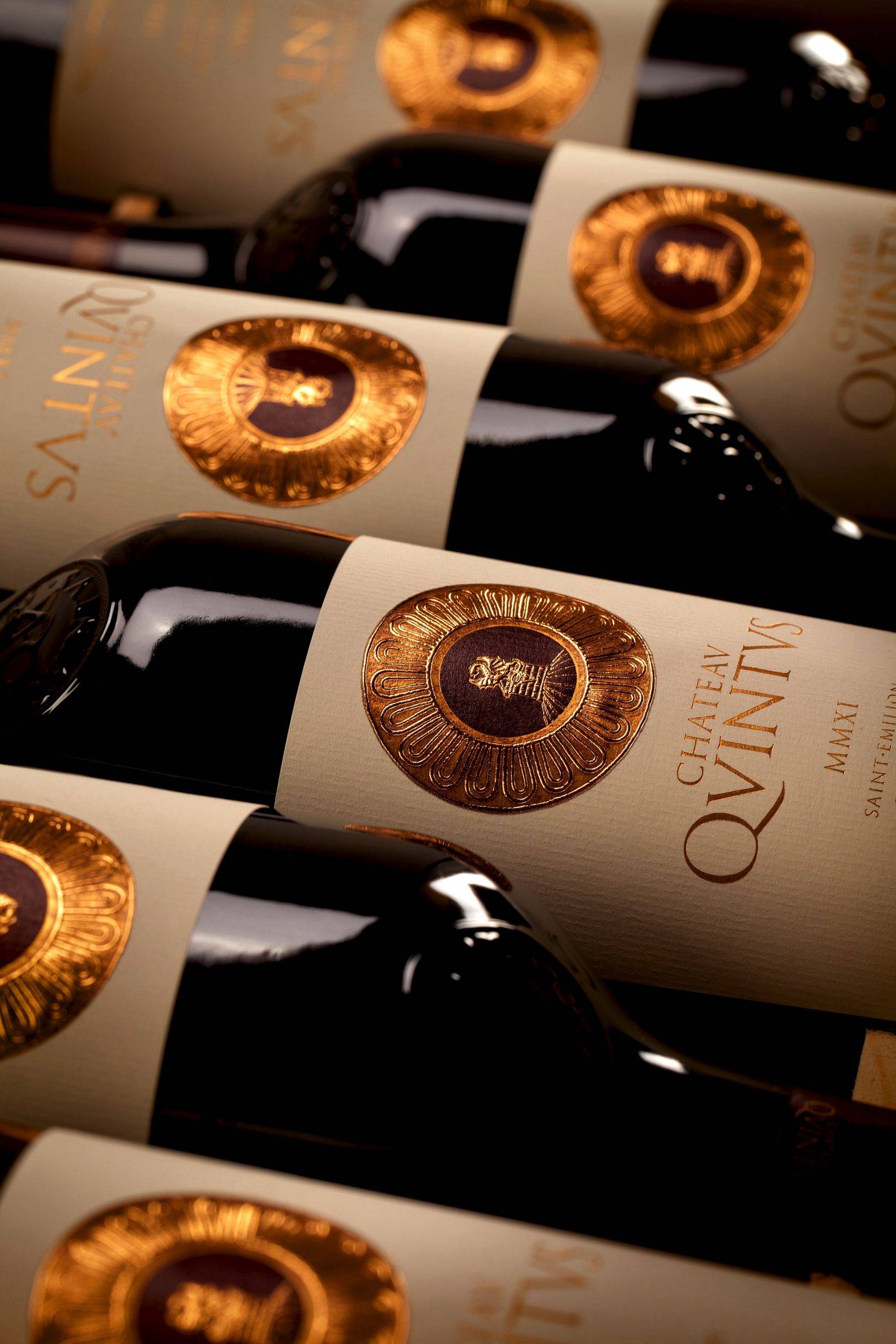
Clockwise from top-left: Dragon de Quintus is the estate’s second wine, after its flagship © Deepix Studio Bordeaux; Domaine Clarence Dillon’s 2016 Vintage Prestige Caisse © Deepix Studio Bordeaux; details of Château Quintus’s label © Deepix Studio Bordeaux; Château Quintus’s bottles are inspired by those of Château Haut-Brion from the mid-19th century.
Estate Manager Mariette Veyssière, Cellar Master Claude Diligeart, and Vineyard Manager Pauline Comin work in concert with the wider Clarence Dillon team to shape each vintage. Once the assemblage is complete, the wine rests patiently in French oak for 12 to 18 months, its tannins smoothing and its aromas sharpening. The goal is to achieve balance, crafting wines with a distinct elegance and minerality that reflect their clay-limestone birthplace.
The character of the Quintus wines is rooted in the fruit: supple, aromatic, and refined. However, each vintage tells its own story. The 2019 release, a blend of 55.4% Merlot and 44.6% Cabernet Franc, brims with blackcurrant, spice, and silk-fine tannins, earning recognition as one of the estate’s triumphs. The 2020 vintage, marked initially by excessive rainfall in spring and then a heatwave and drought in summer, produced a Quintus of impressive concentration and complexity. Juicy tannins with rich aromas of ripe red and black fruits characterise this superb wine, its fresh yet structured taste stretching out on the palate within incredible length. In 2021, a more classic Bordeaux vintage was produced, resulting in an exquisite ruby-red wine bursting with fruity lightness and controlled concentration, courtesy of the tightly-knit tannins.
Alongside the Grand Vin stands Dragon de Quintus and Saint-Émilion de Quintus, the estate’s other two expressions. More immediately approachable with less tannins and shorter time spent in oak than their elder sibling, these wines nonetheless share the same precision of fruit and fidelity to terroir, making them favourites among those discovering Château Quintus for the first time.
Sustainability is embedded in Château Quintus’s viticultural approach, with diverse initiatives designed to protect the environment © Michaël Boudot
While the estate looks resolutely to the future, incorporating sustainability initiatives and producing wines that are both prestigious and accessible, it remains anchored in the broader legacy of Saint-Émilion—the first wine-growing landscape to be inscribed by UNESCO as a World Heritage Site. The estate’s vineyards, with their limestone ridges and rolling slopes, form part of this cultural tapestry where nature and man have coexisted for centuries.
That continuity is essential to the ethos of Château Quintus. Much more than just an assemblage of parcels or a brand, it’s the embodiment of a long lineage, revitalised for a new era. Every harvest reaffirms the promise set out in 2011—to create one of Saint-Émilion’s greatest wines, a benchmark for elegance, balance, and authenticity.
With more than a decade now behind it, Château Quintus stands not as an upstart but as an emerging emblem of excellence whose roots intertwine past and future. Its wines are finding their place in cellars and on tables across the globe, while its limestone slopes continue to yield fruit that speaks with clarity and conviction.
In Saint-Émilion, where history and innovation often walk hand in hand, Quintus is living proof that new stars can indeed be born—provided they shine with the light of their terroir.
Details of the Domaine Clarence Dillon 2016 Vintage Prestige Caisse © Deepix Studio Bordeaux
Le Dragon de Quintus’s label © Deepix Studio Bordeaux
The 2011 Château Quintus vintage © Deepix Studio Bordeaux
To find out more about Château Quintus, visit the links below:
Château Quintus
No 1, Larose
33330 Saint-Émilion
France
Web: chateau-quintus.com
Instagram: @chateauquintus
Facebook: @ChateauQuintus
Hero image © F. Poincet
Necessary cookies are absolutely essential for the website to function properly. These cookies ensure basic functionalities and security features of the website, anonymously.
| Cookie | Duration | Description |
|---|---|---|
| __cfduid | 1 month | The cookie is used by cdn services like CloudFare to identify individual clients behind a shared IP address and apply security settings on a per-client basis. It does not correspond to any user ID in the web application and does not store any personally identifiable information. |
| _abck | 1 year | This cookie is used to detect and defend when a client attempt to replay a cookie.This cookie manages the interaction with online bots and takes the appropriate actions. |
| bm_sz | 4 hours | This cookie is set by the provider Akamai Bot Manager. This cookie is used to manage the interaction with the online bots. It also helps in fraud preventions |
| cookielawinfo-checbox-analytics | 11 months | This cookie is set by GDPR Cookie Consent plugin. The cookie is used to store the user consent for the cookies in the category "Analytics". |
| cookielawinfo-checbox-functional | 11 months | The cookie is set by GDPR cookie consent to record the user consent for the cookies in the category "Functional". |
| cookielawinfo-checbox-others | 11 months | This cookie is set by GDPR Cookie Consent plugin. The cookie is used to store the user consent for the cookies in the category "Other. |
| cookielawinfo-checkbox-advertisement | 1 year | The cookie is set by GDPR cookie consent to record the user consent for the cookies in the category "Advertisement". |
| cookielawinfo-checkbox-necessary | 11 months | This cookie is set by GDPR Cookie Consent plugin. The cookies is used to store the user consent for the cookies in the category "Necessary". |
| cookielawinfo-checkbox-performance | 11 months | This cookie is set by GDPR Cookie Consent plugin. The cookie is used to store the user consent for the cookies in the category "Performance". |
| ts | 3 years | This cookie is provided by the PayPal. It is used to support payment service in a website. |
| ts_c | 3 years | This cookie is provided by PayPal when a website is in association with PayPal payment function. This cookie is used to make safe payment through PayPal. |
| viewed_cookie_policy | 11 months | The cookie is set by the GDPR Cookie Consent plugin and is used to store whether or not user has consented to the use of cookies. It does not store any personal data. |
Functional cookies help to perform certain functionalities like sharing the content of the website on social media platforms, collect feedbacks, and other third-party features.
| Cookie | Duration | Description |
|---|---|---|
| akavpau_ppsd | session | This cookie is provided by Paypal. The cookie is used in context with transactions on the website. |
| nsid | This cookie is set by the provider PayPal. This cookie is used to enable the PayPal payment service in the website. | |
| tsrce | 3 days | This cookie is set by the provider PayPal. This cookie is used to enable the PayPal payment service in the website. |
| x-pp-s | session | This cookie is set by the provider PayPal. This cookie is used to process payments from the site. |
Performance cookies are used to understand and analyze the key performance indexes of the website which helps in delivering a better user experience for the visitors.
| Cookie | Duration | Description |
|---|---|---|
| YSC | session | This cookies is set by Youtube and is used to track the views of embedded videos. |
Analytical cookies are used to understand how visitors interact with the website. These cookies help provide information on metrics the number of visitors, bounce rate, traffic source, etc.
| Cookie | Duration | Description |
|---|---|---|
| _ga | 2 years | This cookie is installed by Google Analytics. The cookie is used to calculate visitor, session, campaign data and keep track of site usage for the site's analytics report. The cookies store information anonymously and assign a randomly generated number to identify unique visitors. |
| _gid | 1 day | This cookie is installed by Google Analytics. The cookie is used to store information of how visitors use a website and helps in creating an analytics report of how the website is doing. The data collected including the number visitors, the source where they have come from, and the pages visted in an anonymous form. |
Advertisement cookies are used to provide visitors with relevant ads and marketing campaigns. These cookies track visitors across websites and collect information to provide customized ads.
| Cookie | Duration | Description |
|---|---|---|
| _fbp | 3 months | This cookie is set by Facebook to deliver advertisement when they are on Facebook or a digital platform powered by Facebook advertising after visiting this website. |
| fr | 3 months | The cookie is set by Facebook to show relevant advertisments to the users and measure and improve the advertisements. The cookie also tracks the behavior of the user across the web on sites that have Facebook pixel or Facebook social plugin. |
| IDE | 1 year 24 days | Used by Google DoubleClick and stores information about how the user uses the website and any other advertisement before visiting the website. This is used to present users with ads that are relevant to them according to the user profile. |
| test_cookie | 15 minutes | This cookie is set by doubleclick.net. The purpose of the cookie is to determine if the user's browser supports cookies. |
| VISITOR_INFO1_LIVE | 5 months 27 days | This cookie is set by Youtube. Used to track the information of the embedded YouTube videos on a website. |
Other uncategorized cookies are those that are being analyzed and have not been classified into a category as yet.
| Cookie | Duration | Description |
|---|---|---|
| _gat_gtag_UA_120081375_1 | 1 minute | This cookie is installed by Google Analytics. The cookie is used to calculate visitor, session, campaign data and keep track of site usage for the site's analytics report. The cookies store information anonymously and assign a randomly generated number to identify unique visitors. |
| _gat_gtag_UA_83740222_1 | 1 minute | This cookie is installed by Google Analytics. The cookie is used to calculate visitor, session, campaign data and keep track of site usage for the site's analytics report. The cookies store information anonymously and assign a randomly generated number to identify unique visitors. |
| _mcid | 1 year | No description |
| ak_bmsc | 2 hours | No description |
| CONSENT | 16 years 9 months 2 days 6 hours | No description |
| ec_store_chameleon_font | session | This cookie is provided by Ecwid and it is used to save the font utilised in the website's online store. |
| enforce_policy | 1 year | No description |
| l7_az | 30 minutes | No description |
| LANG | 9 hours | No description |
| x-cdn | This cookie is provided by Paypal and is used in context with shopping transactions on the website's store. |