


Sip on Wine at Its Source in Alto Adige
In Alto Adige, wine is not confined to the cellar. It is part of the landscape, from the vineyards around Bolzano and Lake Caldaro to the ski huts of Alta Badia. The best way to understand it is to get out and follow where it leads.
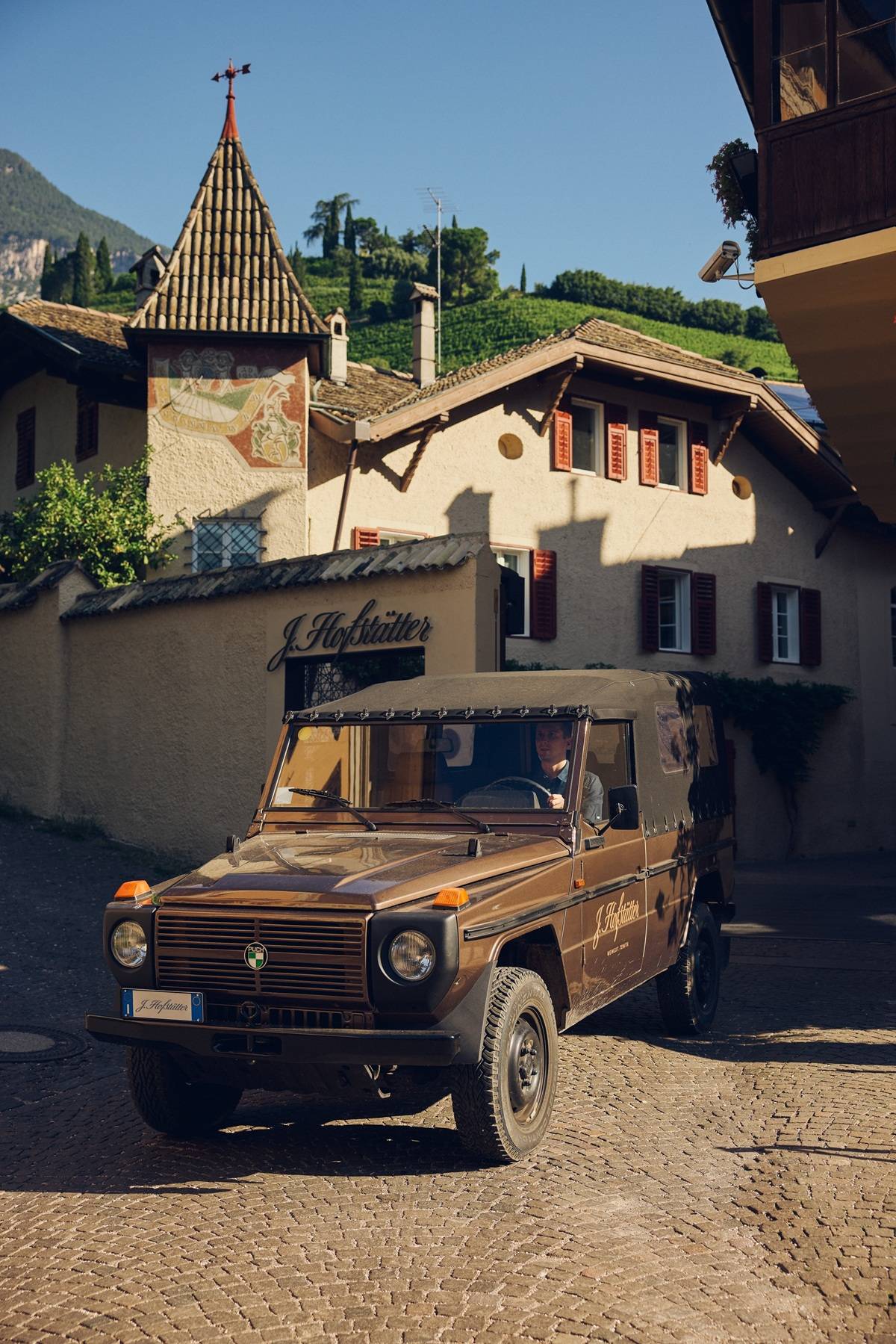
A 4×4 wine tour at J. Hofstätter © Peter Bender
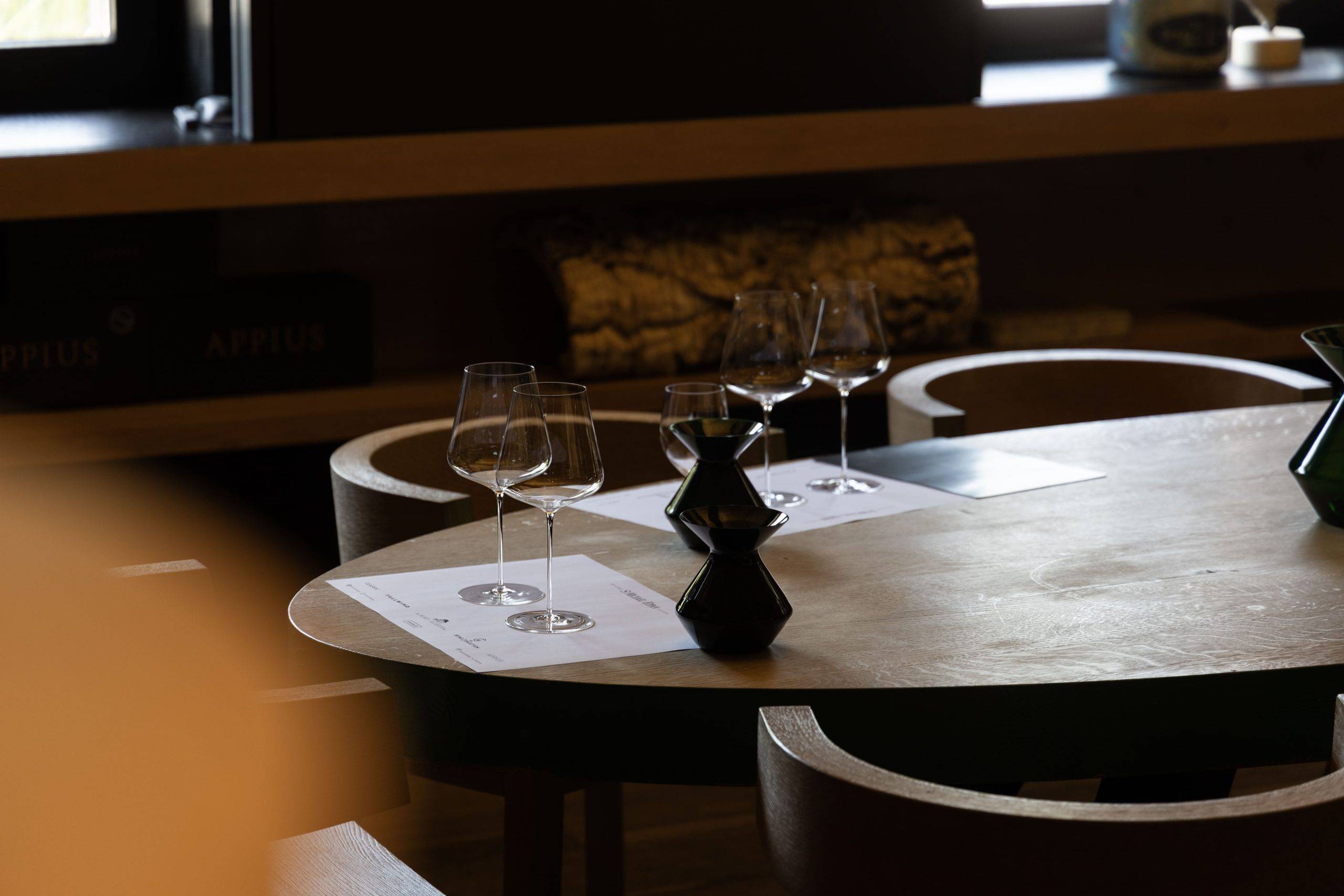
Wine tasting at Kellerei St. Michael-Eppan
In Alto Adige, wine is seldom separate from everyday life. It can lead you into the vines, beside a lake or down into a cellar. In winter, it may even follow you onto the ski slopes. The glass is only one part of the story. The place around it matters just as much. Here, wine tourism means visiting the estates, meeting the people who make the wines and seeing where the grapes grow.
The landscape is central to that relationship. Vines grow from about 200 to 1,000 metres above sea level, covering warm valley floors, steep hills, and cool mountain sites. Around 20 grape varieties grow across 5,850 hectares. That is less than one per cent of Italy’s total vineyard land. Yet 96% of Alto Adige wine carries DOC status. White wine now makes up about 65% of production. Those facts hint at the range. The best way to grasp it, though, is to move through the region.
The Alto Adige Wine Road is a good place to start. It runs for about 150 kilometres through the south of the province. Vines sit beside old farms, castles and small towns. Lake Caldaro lies among the hills, while Bolzano marks the northern part of the route. As the road continues, those different influences begin to overlap. Italian and German names share road signs, Tyrolean food sits beside pasta and polenta, and Mediterranean plants grow within sight of the Alps.
The wine reflects that mix. Warm days help grapes ripen. Cool nights preserve the fresh taste and acidity. Height, slope and soil change from one site to the next. Growers can match each grape to the place that suits it, which helps explain how so many styles can come from such a small area.
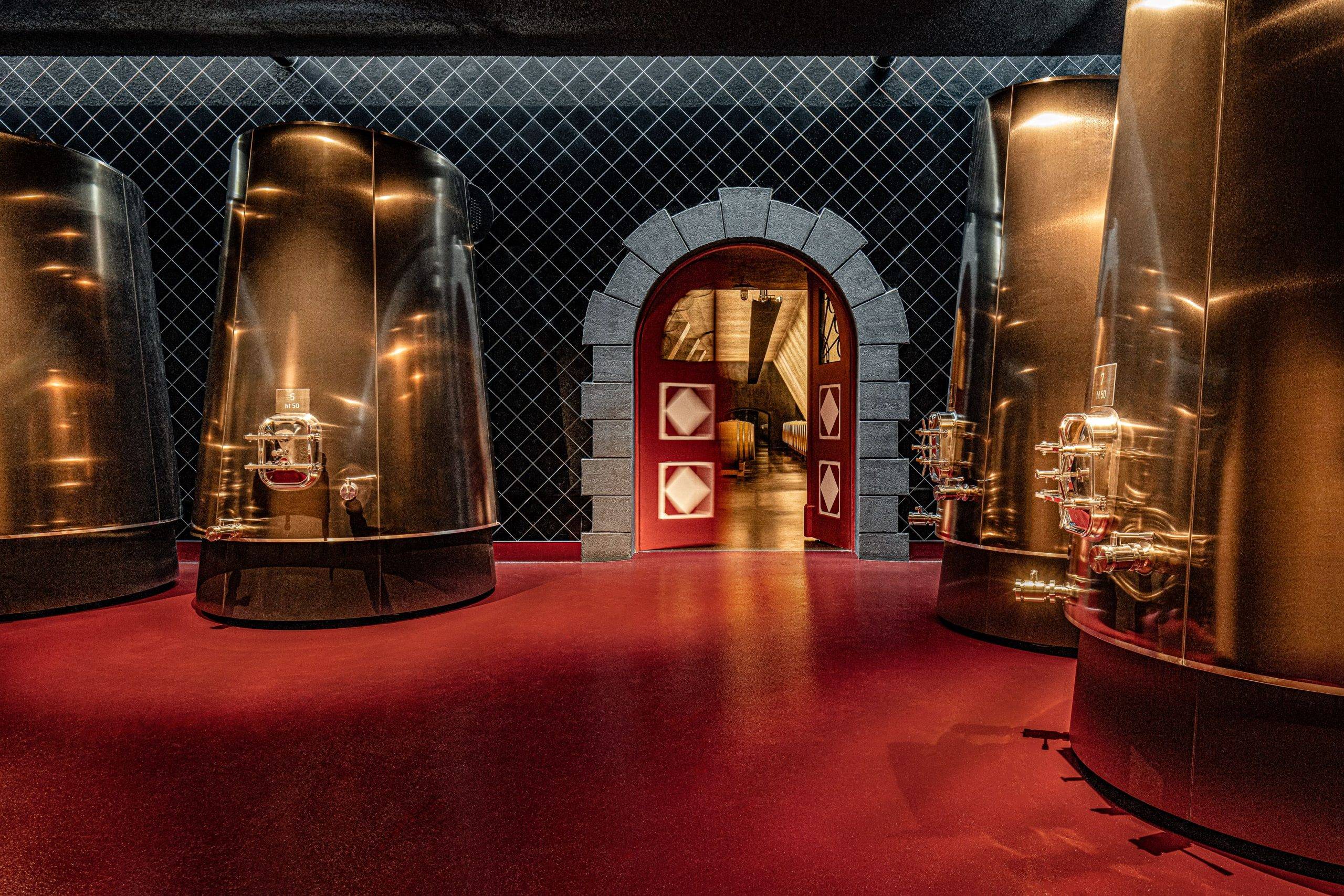
Wine Cellar at Kellerei St. Michael-Eppan
Pinot Bianco, Pinot Grigio, Chardonnay and Sauvignon Blanc are the main white grapes, but there are some wonderful local reds, too. Vernatsch, also called Schiava, has grown here for centuries, while Lagrein has deep roots around Bolzano. The best way to make sense of all this is to taste a wine close to where it began.
At St. Michael-Eppan, one of the region’s best-known wineries, that process starts in the Hortus Conclusus, a secluded walled garden. Its VIP Experience opens with a glass from the Fallwind range before moving into the cellars. The last stop is the Appius Cellar Lounge, where six wines show different sides of the estate. The line-up includes current and older vintages, such as Pinot Bianco from 2024 and 2010, as well as Appius from 2021 and 2013.
The contrast makes a point that can get lost when Alto Adige is seen only as a source of fresh mountain whites. These are wines with depth and, in many cases, the power to age. A younger bottle may give a clear view of grape and place. An older vintage shows what time can add.
Kettmeir Winery in Alto Adige
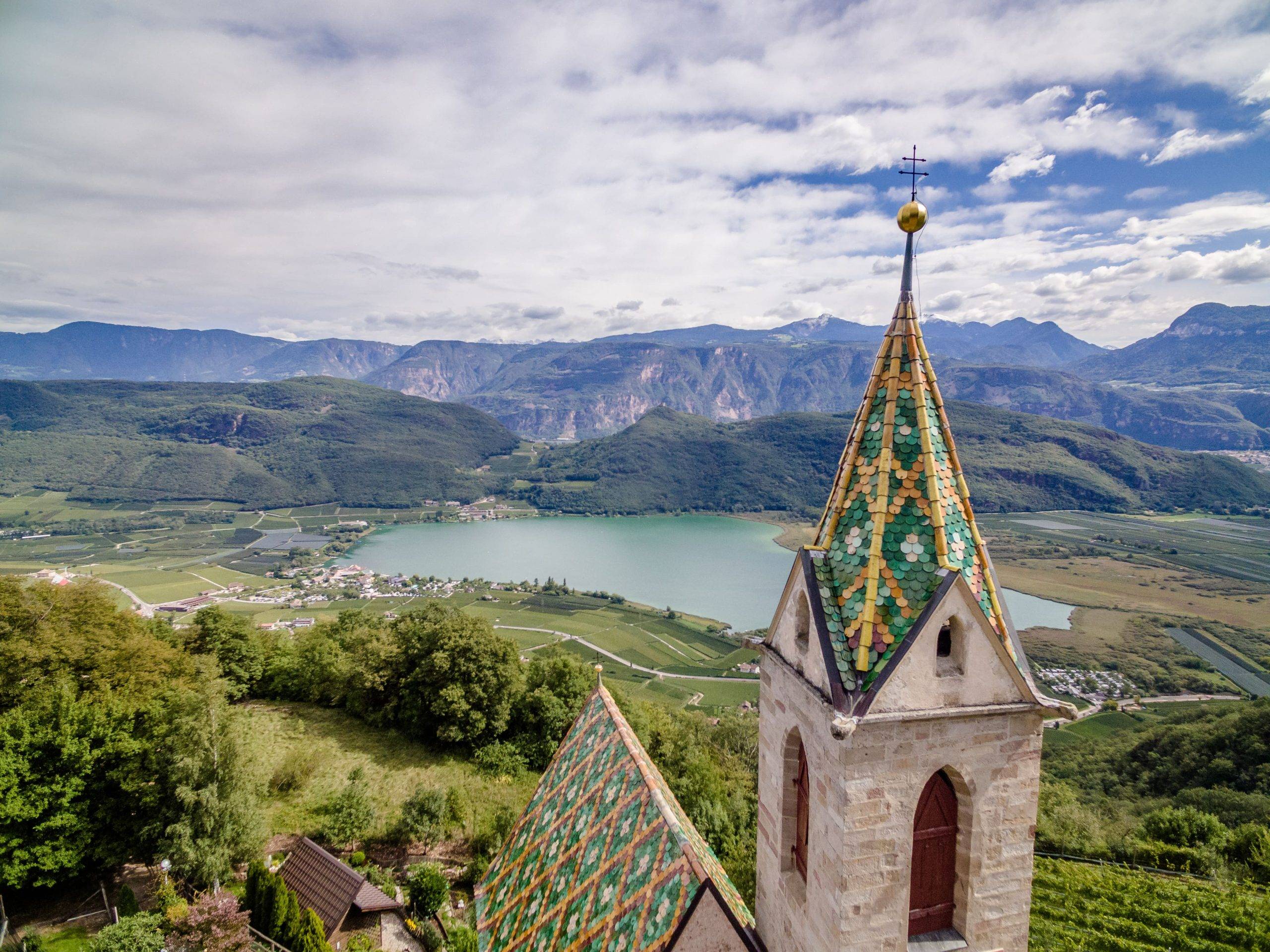
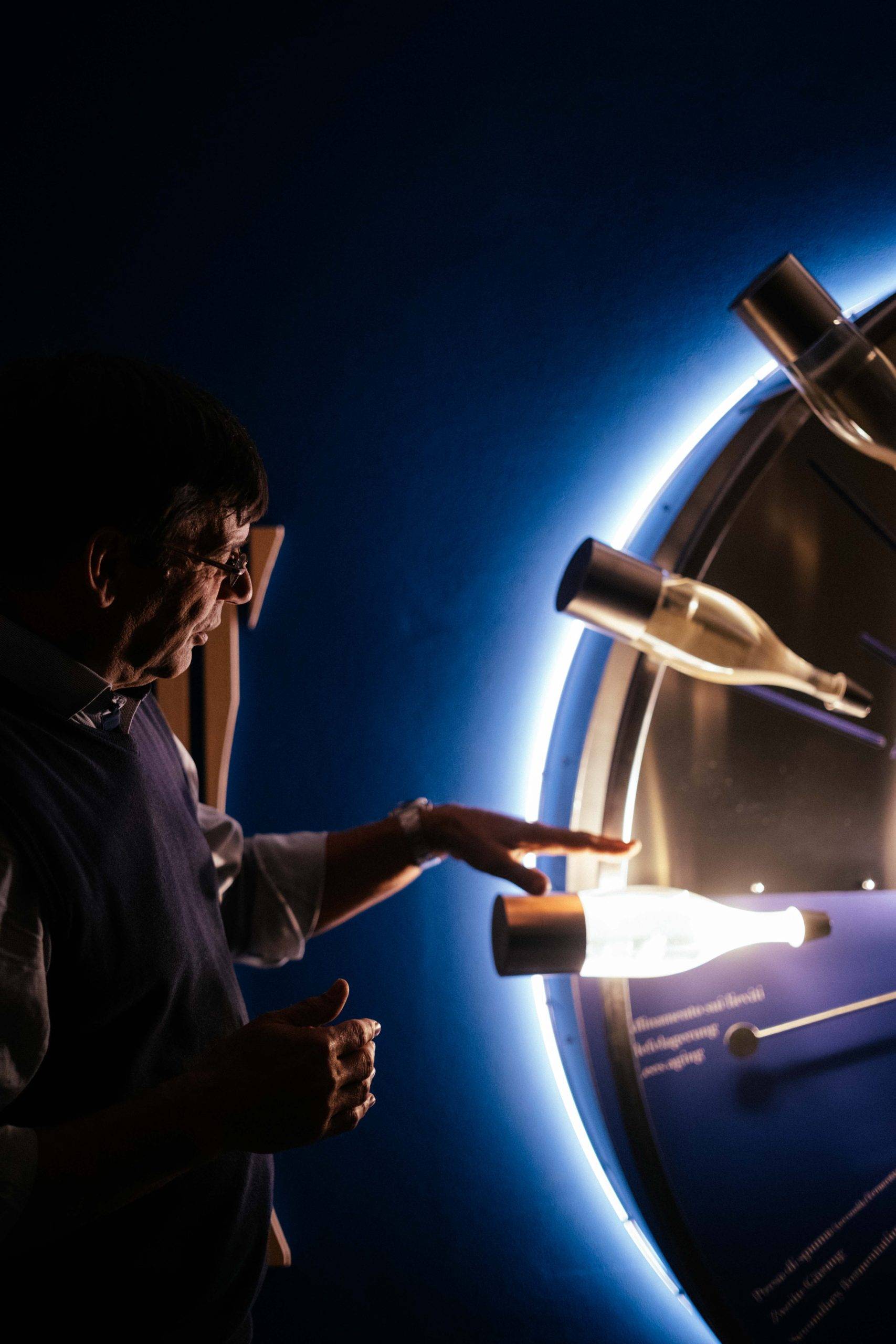
South of Appiano, Kettmeir gives a different perspective. The winery was founded in Caldaro in 1919 and has made sparkling wine since the 1960s. Its vineyards stretch across a wide range of sites and elevations, making the landscape integral to the tasting. Its “A Leap into the Lake” experience starts above Lake Caldaro at Castelvecchio. Guests head up for an aperitif with Athesis Brut and a view over the lake, before returning to the winery. A cellar visit follows, then a tasting of five regional wines served with local food.
The view is not just for show. Castelvecchio is one of Caldaro’s higher-altitude wine areas. Kettmeir grows Pinot Bianco here, at around 700 metres, on steep, east-facing slopes with porphyry-rich soils. The grapes go into wines, including its Athesis range. Seeing the land first makes what ends up in the glass much easier to understand.
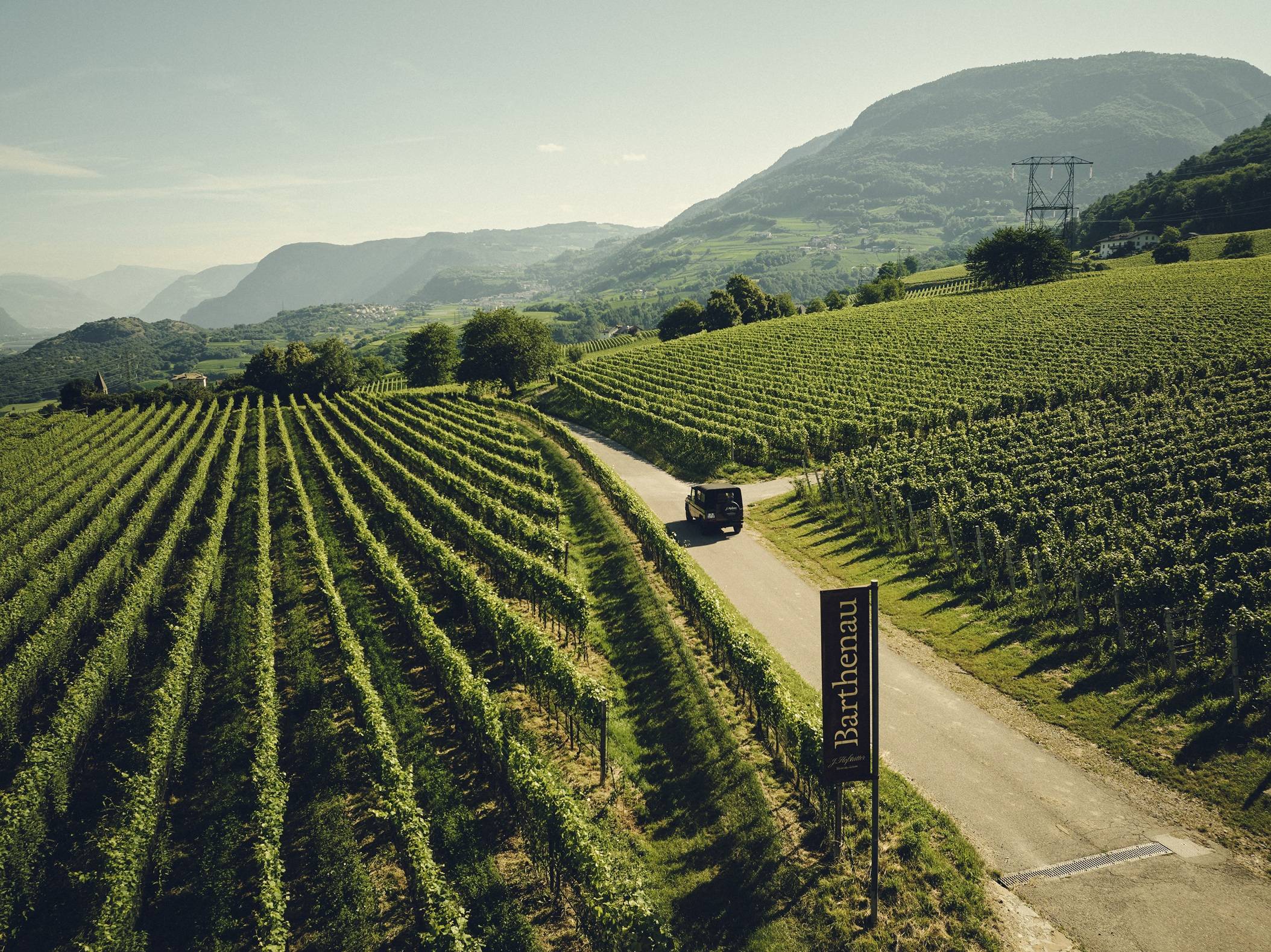
Tenuta J. Hofstätter takes the same idea into the vineyard. The estate is based in Termeno, and its private tour uses a restored classic 4×4 to reach key growing sites. Guests taste the wines in the places where their grapes grow. Along the way, the guide explains the history of each vineyard and why it matters to the family. This is a smart way to cut through wine talk. Terms such as aspect, altitude and soil can sound abstract on a tasting sheet. In a vineyard, they become real. You can feel the sun on one slope. You can see how fast the road climbs. You notice when the air turns cool.
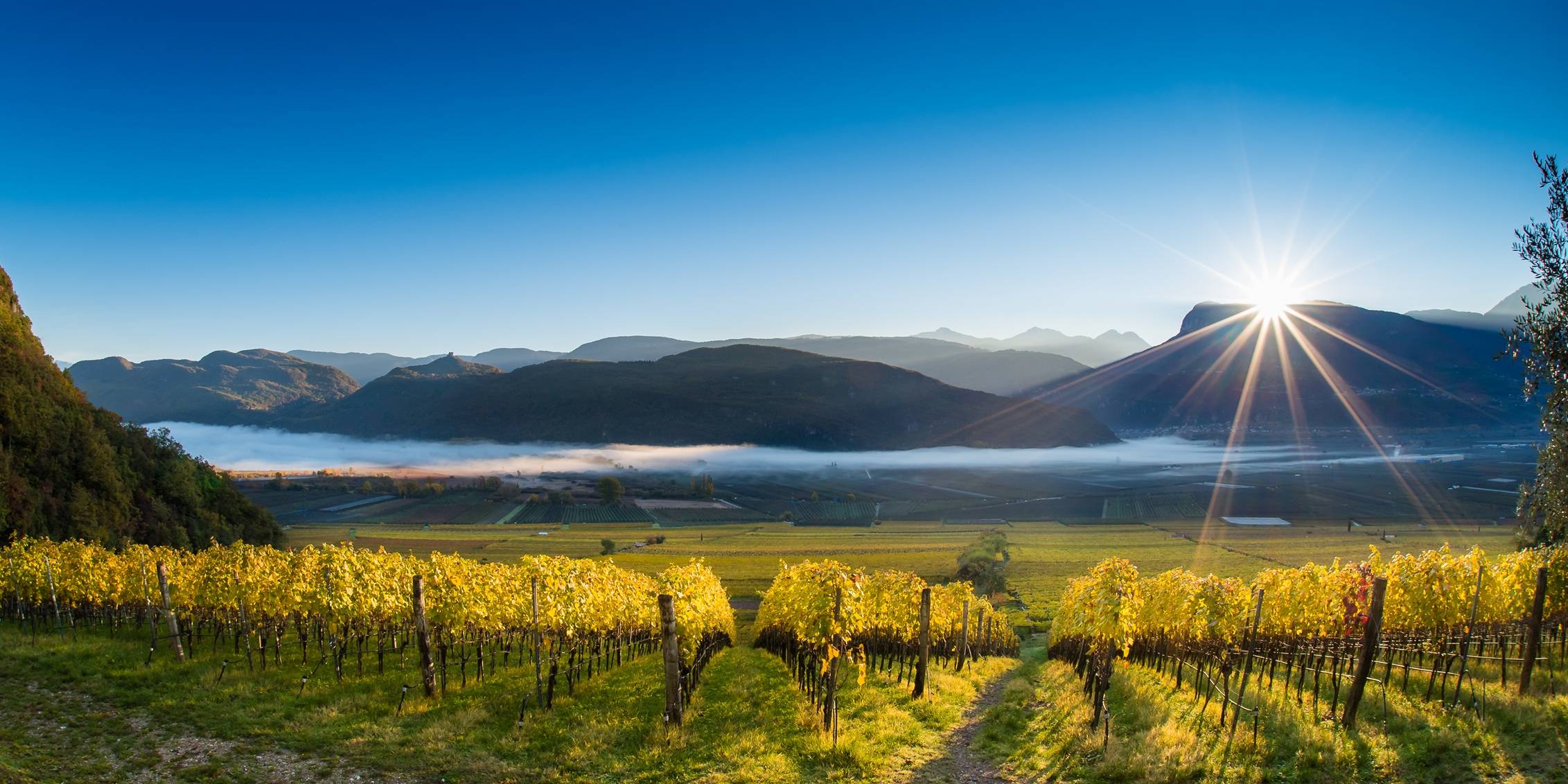
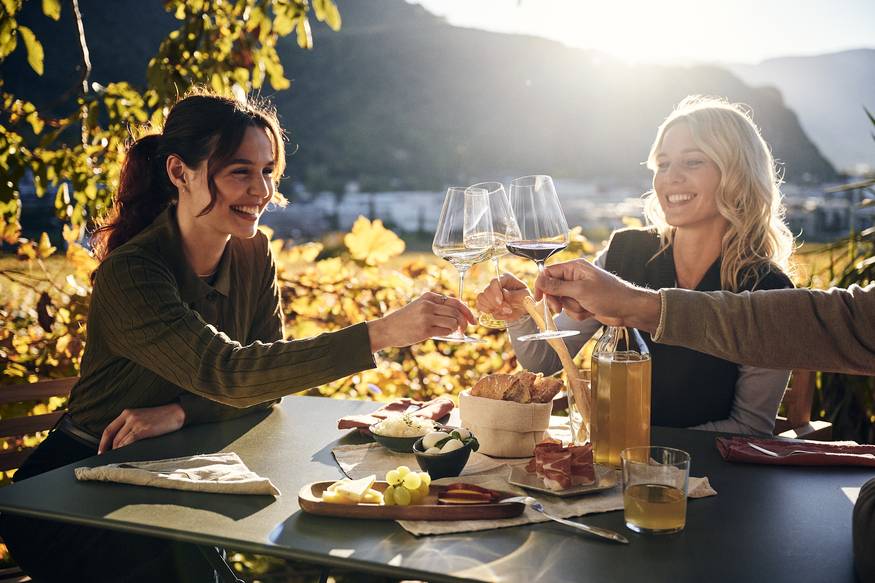
Clockwise from top-left: interactive wine experience at Kettmeir; vineyards at J. Hofstätter © Vigna Steinraffler; wine tasting overlooking the vines in Alto Adige © Manuel Ferrigato; a 4×4 wine tour at J. Hofstätter © Peter Bender
There are many ways to explore without a car, too. Wine paths run through much of the region. The Terlano Wine Trail looks at the area’s long white-wine history. Around Tramin and Caldaro, trails pass through vines, old farms and wine villages. Some are short walks; others can fill half a day.
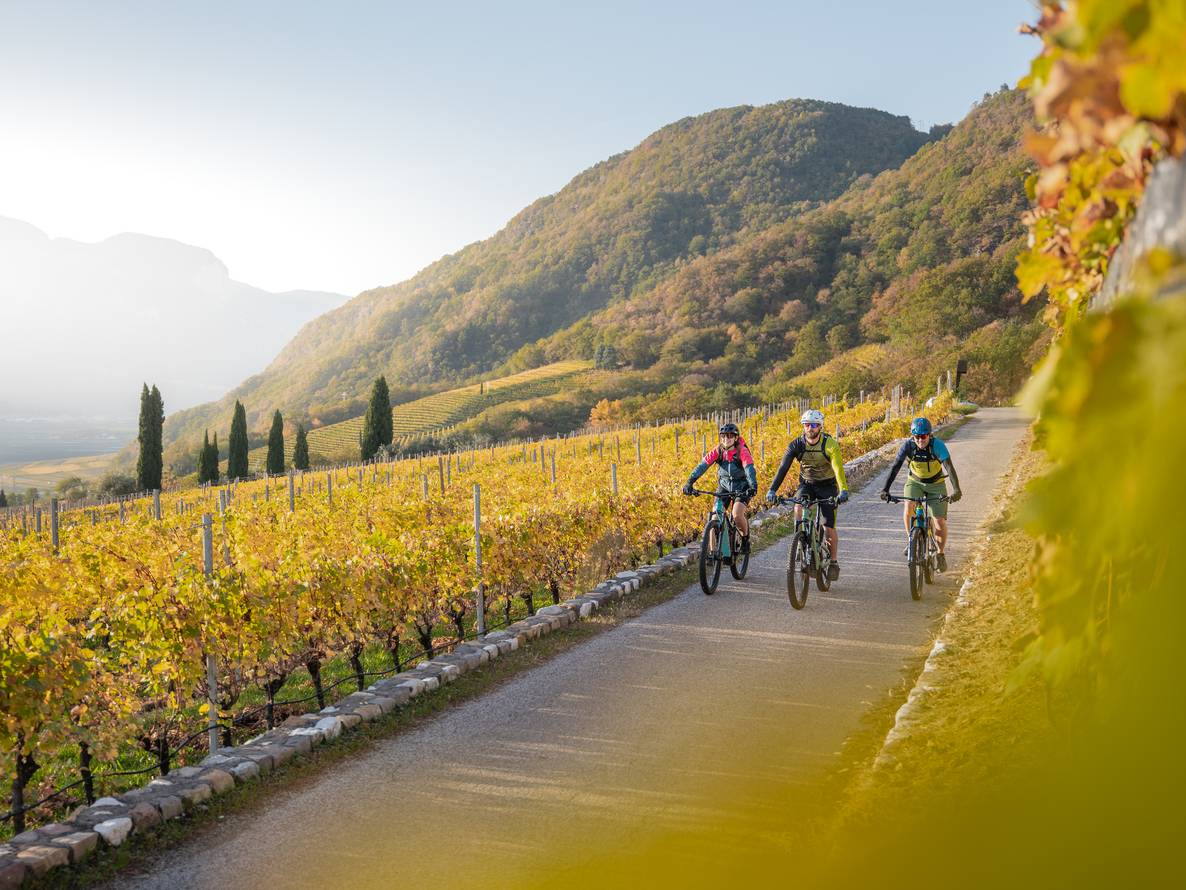
Cycling works well for much the same reason. Guided Wine & Bike trips run along parts of the Wine Road, led by guides who know both cycling and wine. The routes pass through vineyards and old estates, then end with a winery visit and tasting.
The people behind the vines are just as essential. Around 4,800 growers work across Alto Adige, and the average vineyard is only about one hectare. That helps explain why co-operatives play such a strong role here. Small growers can keep their family plots while sharing cellar space, skills and routes to market.
Cycling through vineyards in Alto Adige © Mediahouse
In Alto Adige, that model has never meant basic wine. Some of the region’s best-known producers are co-operatives, and their top bottles sit among Italy’s finest whites. At the 2026 Decanter World Wine Awards, Alto Adige won nine Platinum medals for white wines. Cantina Terlano took five, while Cantina Valle Isarco won the first Platinum medal awarded to a varietal Kerner.
The result fits a wider shift. Alto Adige may be small, but its white wines now hold a much bigger place on the world wine map. High vineyard sites and large swings between day and night give producers the conditions to make wines with freshness, ripe fruit and good structure. Grapes such as Pinot Bianco and Kerner can also age with far more grace than their light colour might suggest.
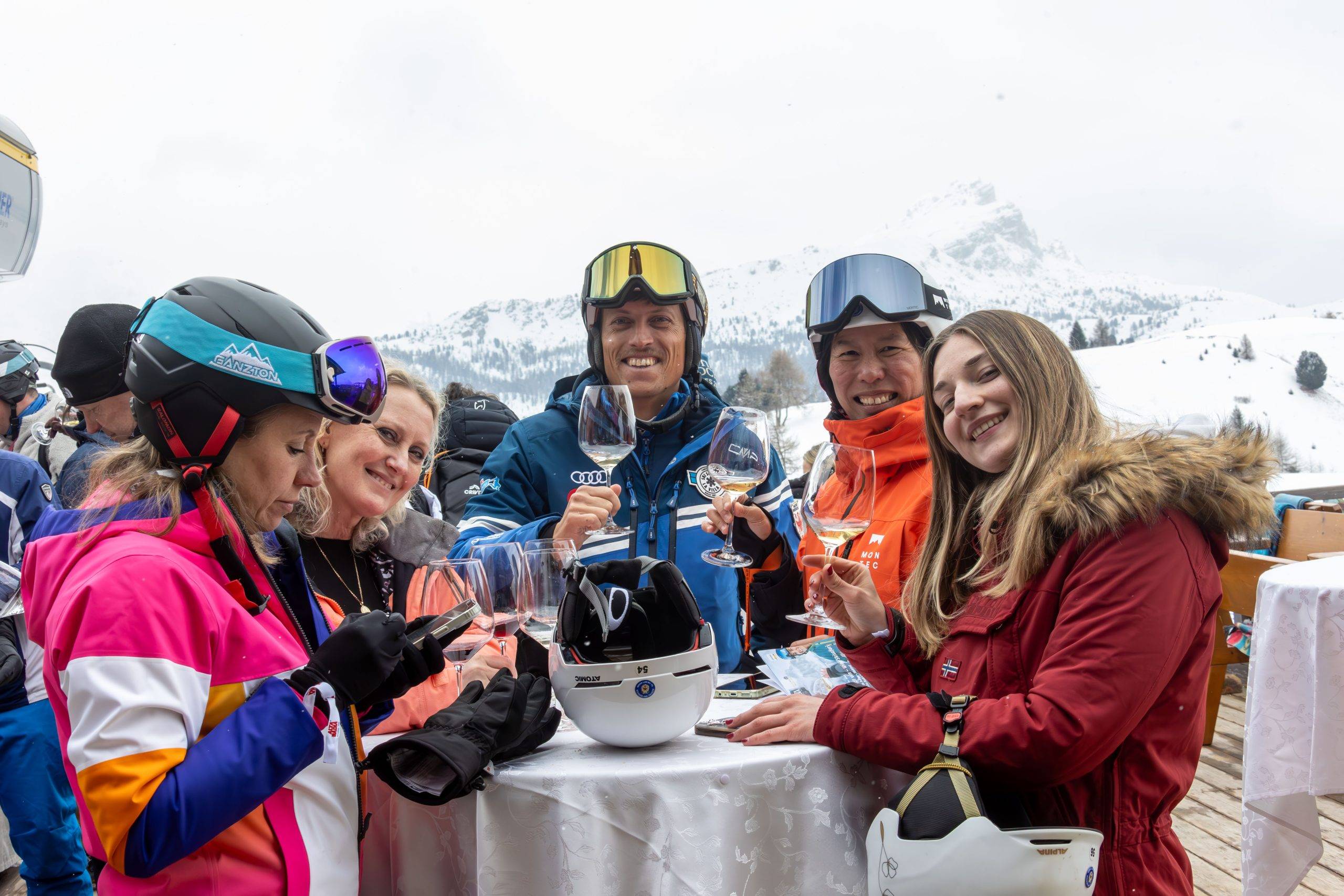
What’s more, wine life does not stop when snow arrives. In Alta Badia, it moves up the mountain. The Ski Wine Ambassador project trains local ski instructors in South Tyrolean wine, food and culture. Guests can spend a day on the slopes with them and learn about local bottles along the way. It is a simple idea, but a fitting one for a place where skiing and food have long shared the same mountain huts.
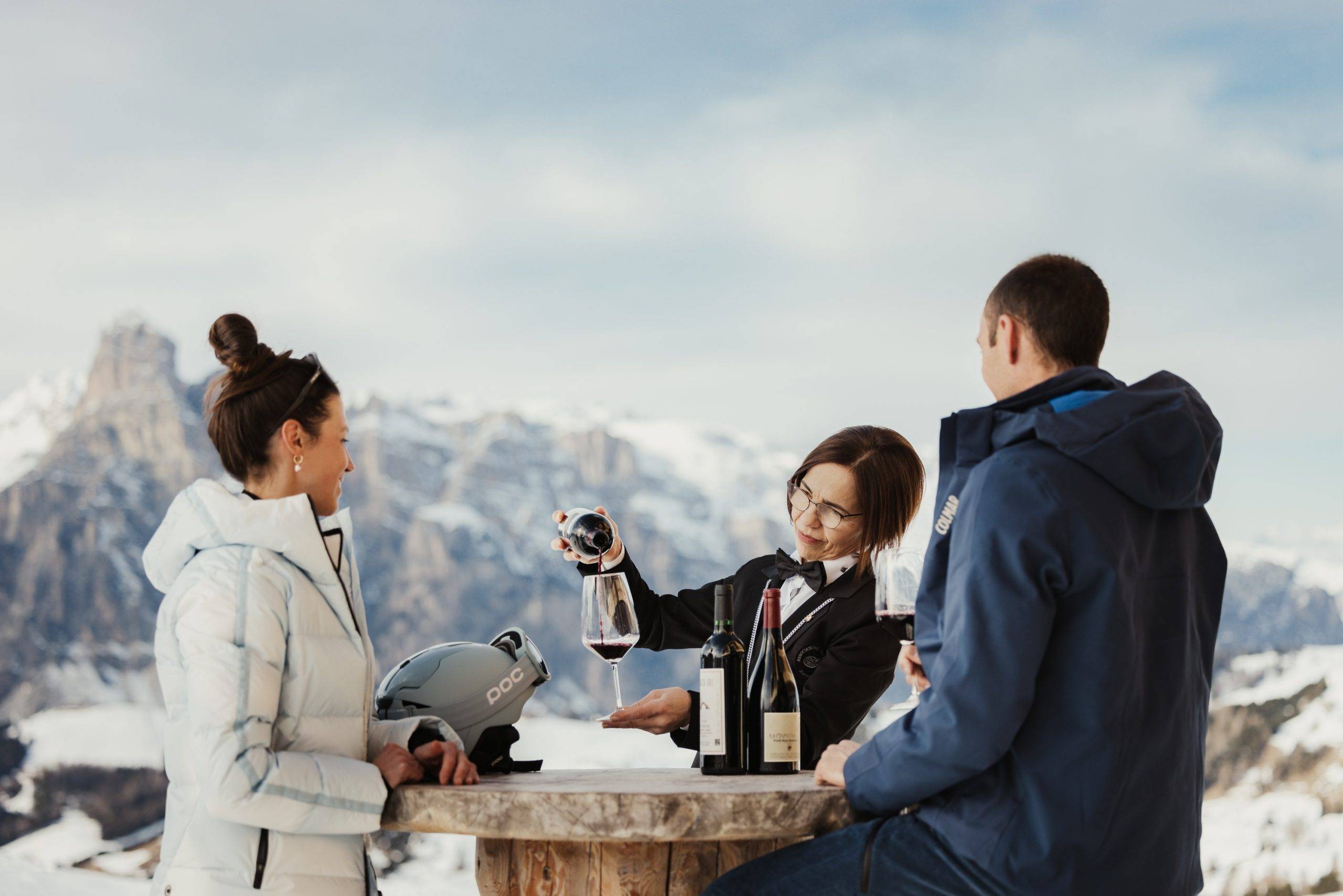
Sommelier on the Slopes goes a step further. A ski instructor and sommelier lead guests from hut to hut, with South Tyrolean wines poured at each stop. The tasting follows the method used by the Italian Sommelier Association, looking at appearance, aroma, taste and food pairing. The programme returns for the 2026/27 winter season, with dates from December through March.
Sommelier on the Slopes © Alex Moling
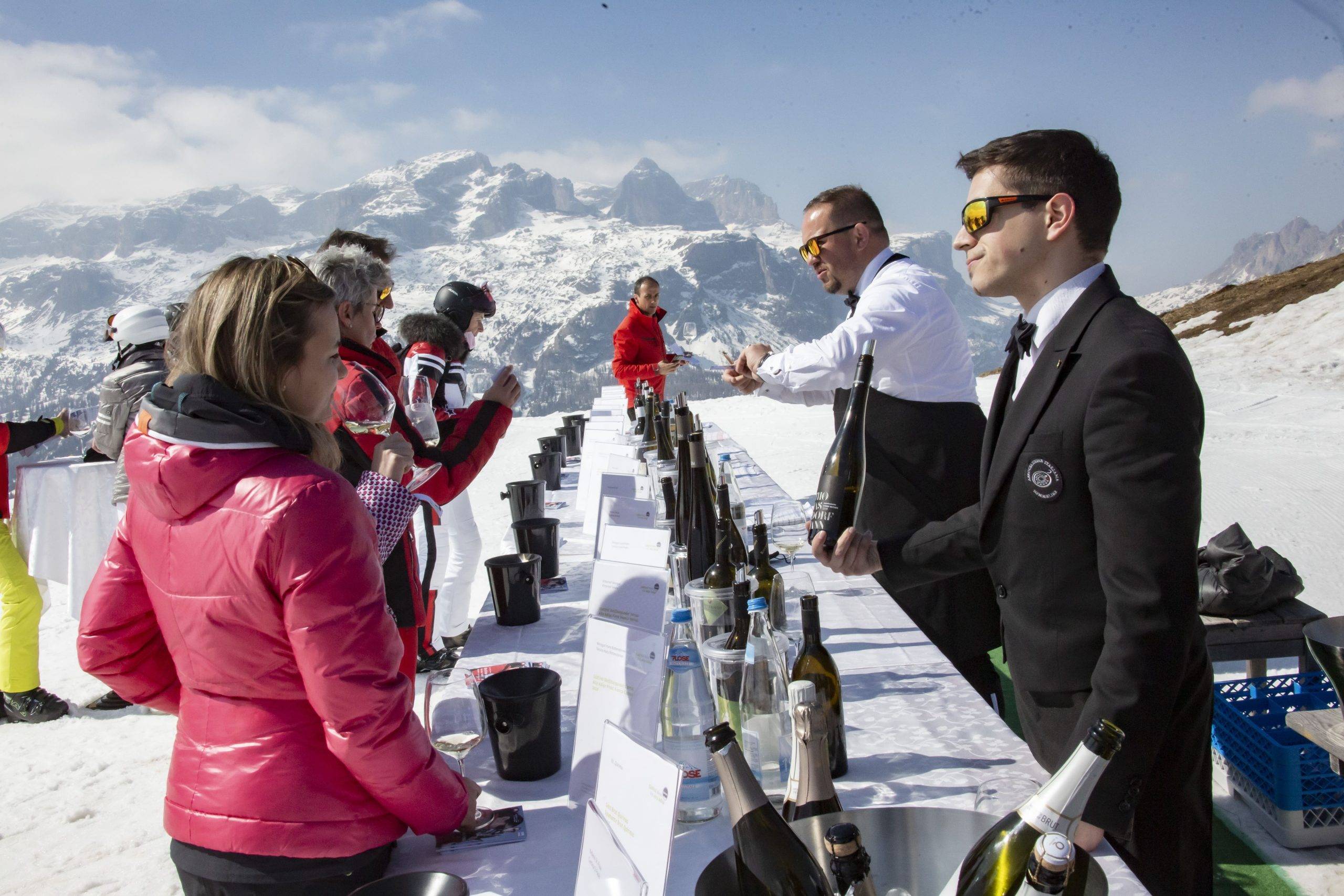
Then there is the Wine Skisafari, which has taken the idea as high as the huts around 2,000 metres. Different stops focus on different parts of the region’s wine culture. One may look at native grapes, another at high-altitude whites, wines made for ageing or local sparkling wine.
It sounds like fun, and it is. But it also makes an important point. Height shapes wine here. In Alta Badia, you can taste that fact while looking down at the valleys where much of it was grown.
That may be the best way to get to know Alto Adige wine. Do not treat it as a separate stop on the trip. Let it lead you through the region: walk among the vines, meet the growers, and taste a wine where its grapes grew. Then take the same idea into the mountains.
Alto Adige is small enough for these worlds to sit close together. A lake, a cellar, a vineyard and a ski hut can all form part of the same wine story. Here, the bottle is not the end point. It is a way to experience this beautiful place and all that it offers, from its exceptional wine to its local food and natural beauty.
Ski Wine Ambassador project © Freddy Planinschek
Wine Skisafari © Freddy Planinschek
Necessary cookies are absolutely essential for the website to function properly. These cookies ensure basic functionalities and security features of the website, anonymously.
| Cookie | Duration | Description |
|---|---|---|
| __cfduid | 1 month | The cookie is used by cdn services like CloudFare to identify individual clients behind a shared IP address and apply security settings on a per-client basis. It does not correspond to any user ID in the web application and does not store any personally identifiable information. |
| _abck | 1 year | This cookie is used to detect and defend when a client attempt to replay a cookie.This cookie manages the interaction with online bots and takes the appropriate actions. |
| bm_sz | 4 hours | This cookie is set by the provider Akamai Bot Manager. This cookie is used to manage the interaction with the online bots. It also helps in fraud preventions |
| cookielawinfo-checbox-analytics | 11 months | This cookie is set by GDPR Cookie Consent plugin. The cookie is used to store the user consent for the cookies in the category "Analytics". |
| cookielawinfo-checbox-functional | 11 months | The cookie is set by GDPR cookie consent to record the user consent for the cookies in the category "Functional". |
| cookielawinfo-checbox-others | 11 months | This cookie is set by GDPR Cookie Consent plugin. The cookie is used to store the user consent for the cookies in the category "Other. |
| cookielawinfo-checkbox-advertisement | 1 year | The cookie is set by GDPR cookie consent to record the user consent for the cookies in the category "Advertisement". |
| cookielawinfo-checkbox-necessary | 11 months | This cookie is set by GDPR Cookie Consent plugin. The cookies is used to store the user consent for the cookies in the category "Necessary". |
| cookielawinfo-checkbox-performance | 11 months | This cookie is set by GDPR Cookie Consent plugin. The cookie is used to store the user consent for the cookies in the category "Performance". |
| ts | 3 years | This cookie is provided by the PayPal. It is used to support payment service in a website. |
| ts_c | 3 years | This cookie is provided by PayPal when a website is in association with PayPal payment function. This cookie is used to make safe payment through PayPal. |
| viewed_cookie_policy | 11 months | The cookie is set by the GDPR Cookie Consent plugin and is used to store whether or not user has consented to the use of cookies. It does not store any personal data. |
Functional cookies help to perform certain functionalities like sharing the content of the website on social media platforms, collect feedbacks, and other third-party features.
| Cookie | Duration | Description |
|---|---|---|
| akavpau_ppsd | session | This cookie is provided by Paypal. The cookie is used in context with transactions on the website. |
| nsid | This cookie is set by the provider PayPal. This cookie is used to enable the PayPal payment service in the website. | |
| tsrce | 3 days | This cookie is set by the provider PayPal. This cookie is used to enable the PayPal payment service in the website. |
| x-pp-s | session | This cookie is set by the provider PayPal. This cookie is used to process payments from the site. |
Performance cookies are used to understand and analyze the key performance indexes of the website which helps in delivering a better user experience for the visitors.
| Cookie | Duration | Description |
|---|---|---|
| YSC | session | This cookies is set by Youtube and is used to track the views of embedded videos. |
Analytical cookies are used to understand how visitors interact with the website. These cookies help provide information on metrics the number of visitors, bounce rate, traffic source, etc.
| Cookie | Duration | Description |
|---|---|---|
| _ga | 2 years | This cookie is installed by Google Analytics. The cookie is used to calculate visitor, session, campaign data and keep track of site usage for the site's analytics report. The cookies store information anonymously and assign a randomly generated number to identify unique visitors. |
| _gid | 1 day | This cookie is installed by Google Analytics. The cookie is used to store information of how visitors use a website and helps in creating an analytics report of how the website is doing. The data collected including the number visitors, the source where they have come from, and the pages visted in an anonymous form. |
Advertisement cookies are used to provide visitors with relevant ads and marketing campaigns. These cookies track visitors across websites and collect information to provide customized ads.
| Cookie | Duration | Description |
|---|---|---|
| _fbp | 3 months | This cookie is set by Facebook to deliver advertisement when they are on Facebook or a digital platform powered by Facebook advertising after visiting this website. |
| fr | 3 months | The cookie is set by Facebook to show relevant advertisments to the users and measure and improve the advertisements. The cookie also tracks the behavior of the user across the web on sites that have Facebook pixel or Facebook social plugin. |
| IDE | 1 year 24 days | Used by Google DoubleClick and stores information about how the user uses the website and any other advertisement before visiting the website. This is used to present users with ads that are relevant to them according to the user profile. |
| test_cookie | 15 minutes | This cookie is set by doubleclick.net. The purpose of the cookie is to determine if the user's browser supports cookies. |
| VISITOR_INFO1_LIVE | 5 months 27 days | This cookie is set by Youtube. Used to track the information of the embedded YouTube videos on a website. |
Other uncategorized cookies are those that are being analyzed and have not been classified into a category as yet.
| Cookie | Duration | Description |
|---|---|---|
| _gat_gtag_UA_120081375_1 | 1 minute | This cookie is installed by Google Analytics. The cookie is used to calculate visitor, session, campaign data and keep track of site usage for the site's analytics report. The cookies store information anonymously and assign a randomly generated number to identify unique visitors. |
| _gat_gtag_UA_83740222_1 | 1 minute | This cookie is installed by Google Analytics. The cookie is used to calculate visitor, session, campaign data and keep track of site usage for the site's analytics report. The cookies store information anonymously and assign a randomly generated number to identify unique visitors. |
| _mcid | 1 year | No description |
| ak_bmsc | 2 hours | No description |
| CONSENT | 16 years 9 months 2 days 6 hours | No description |
| ec_store_chameleon_font | session | This cookie is provided by Ecwid and it is used to save the font utilised in the website's online store. |
| enforce_policy | 1 year | No description |
| l7_az | 30 minutes | No description |
| LANG | 9 hours | No description |
| x-cdn | This cookie is provided by Paypal and is used in context with shopping transactions on the website's store. |