



La Cornue: For the Love of Life, Food & Cooking
Since 1908, La Cornue has treated the kitchen as a place of connection, creating handcrafted stoves with care, intention, and respect for those who use them.
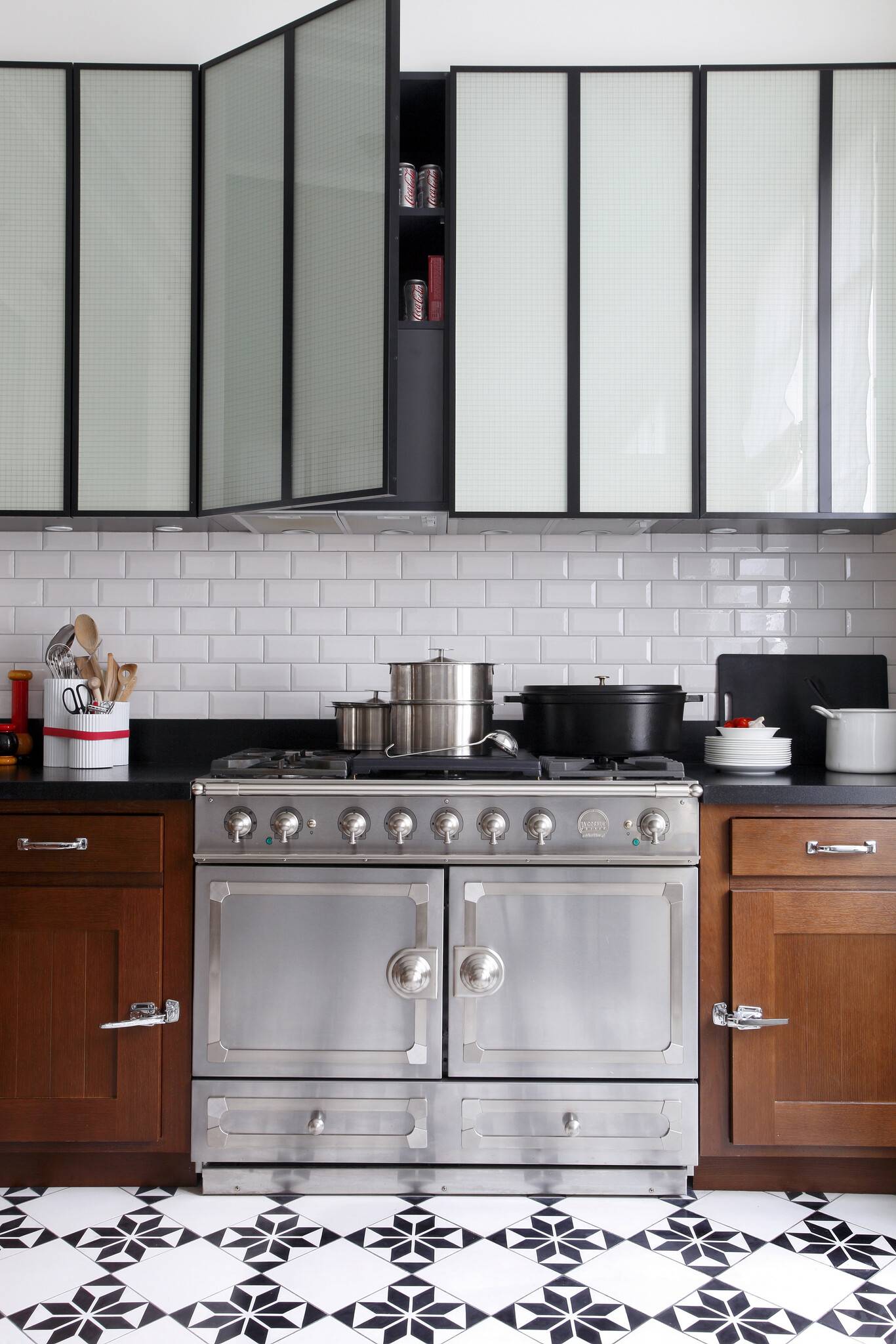
La Cornue’s story begins, as many French design stories do, with an invention born of observation. Albert Dupuy, a Parisian herbalist and gastronome, looked not to other stoves for inspiration but to the vaulted tunnels of the Paris Métro. In 1908, he patented the now-iconic vaulted oven—its curved form allowing heat to circulate naturally, enveloping food evenly while preserving moisture. More than a century later, that oven remains the structural and symbolic heart of every La Cornue range, transforming the kitchen into a living, loving space that kindles the flame of cooking and warms the hearts of those who gather around it.
Decades may have passed, but La Cornue’s ethos has remained unchanged: that cooking is best served by tools made carefully and built to last. As a result, every La Cornue range is still constructed entirely by hand in the company’s workshops outside Paris. Nothing is rushed or automated: metal is cut, folded, welded, and assembled piece by piece, guided by passionate craftsmen whose expertise has been honed over years and passed down through generations. Each cooker is made to order, adjusted to the millimetre, and finished only when it meets the exacting standards that have earned La Cornue its reputation as a Living Heritage Company in France.
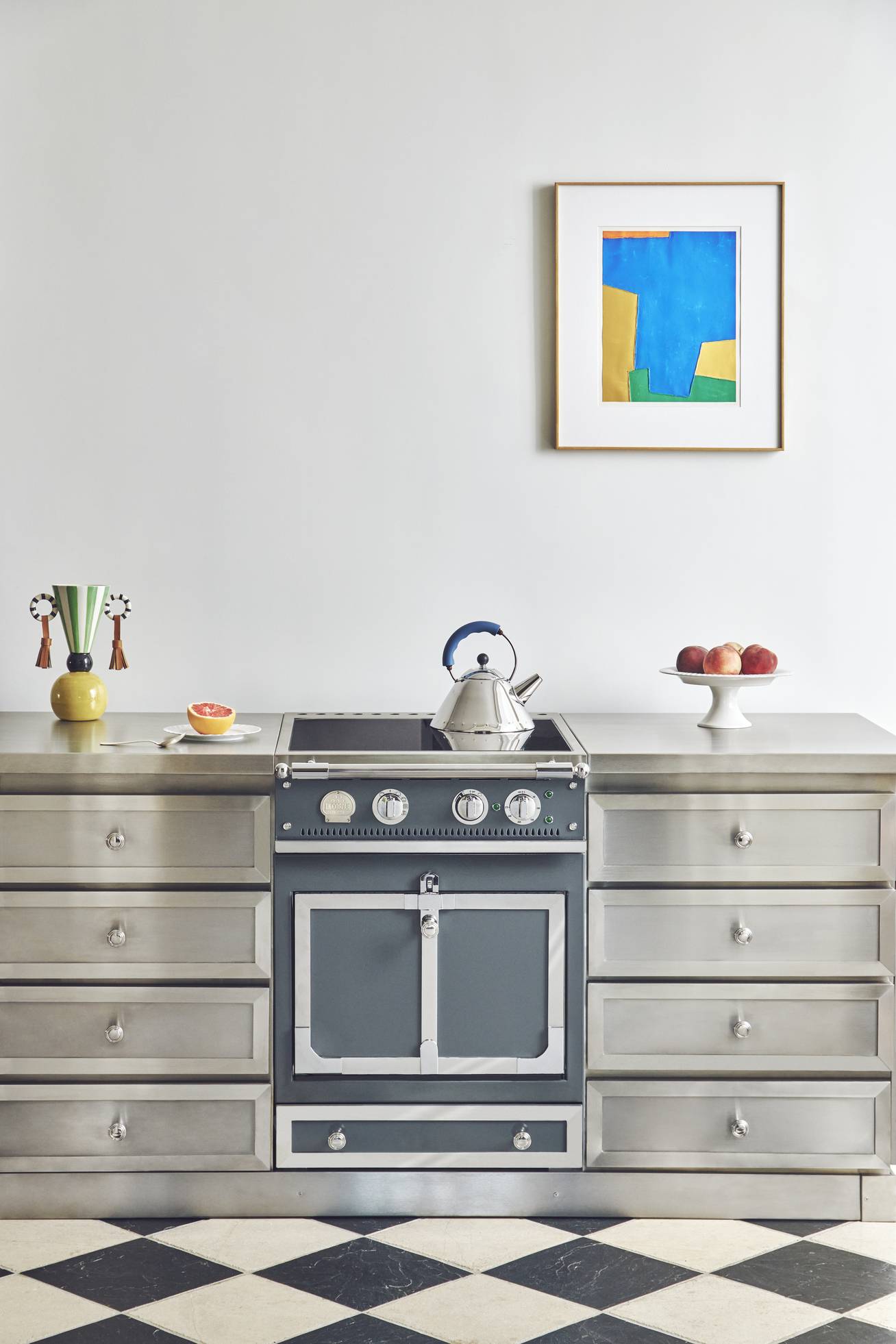
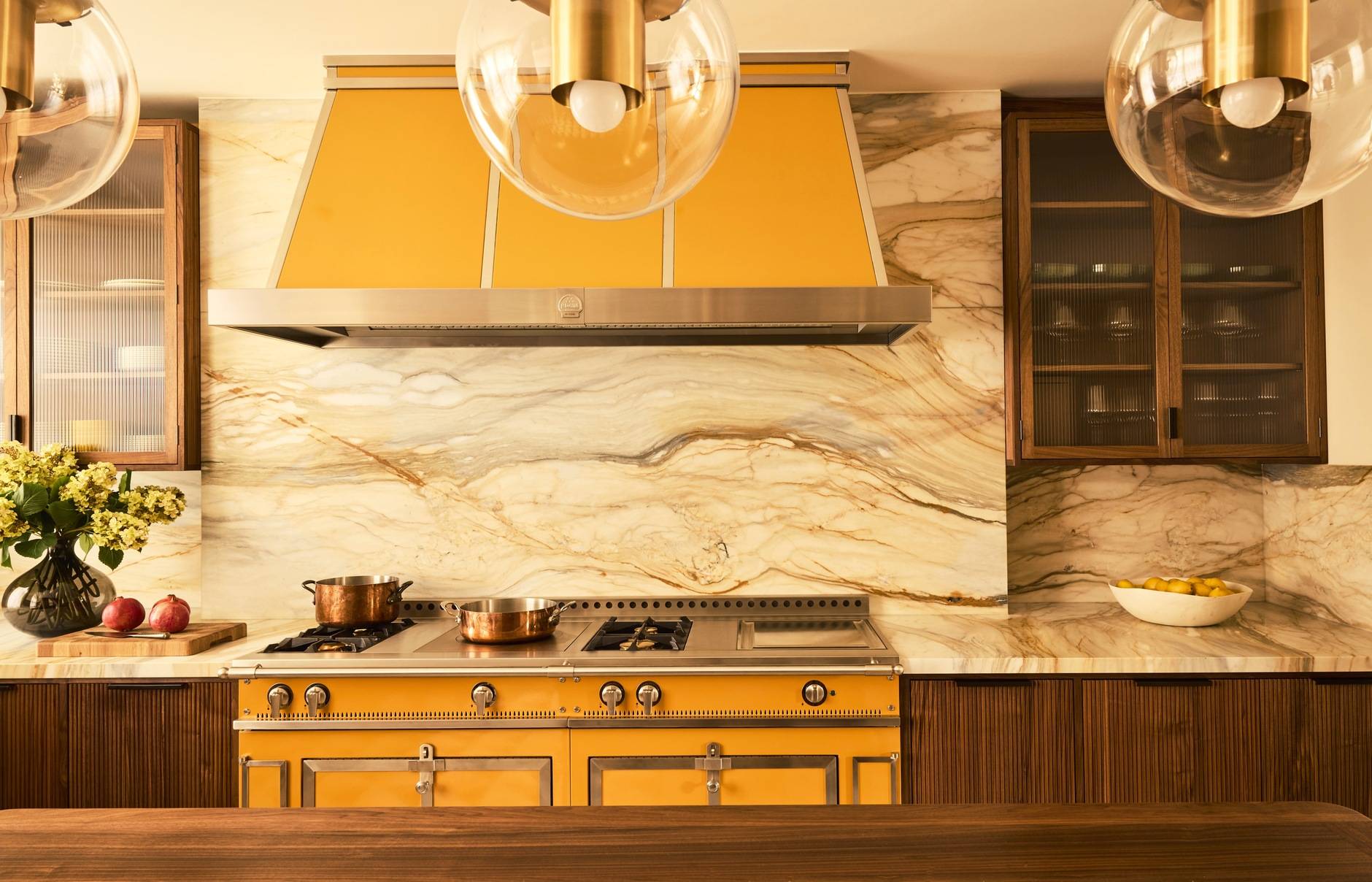
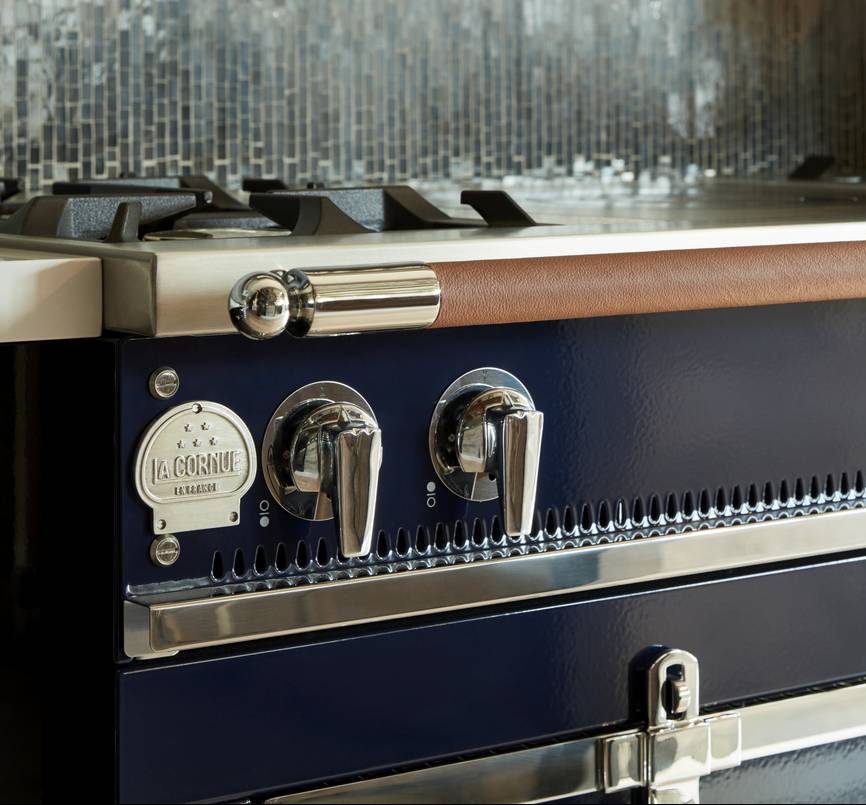
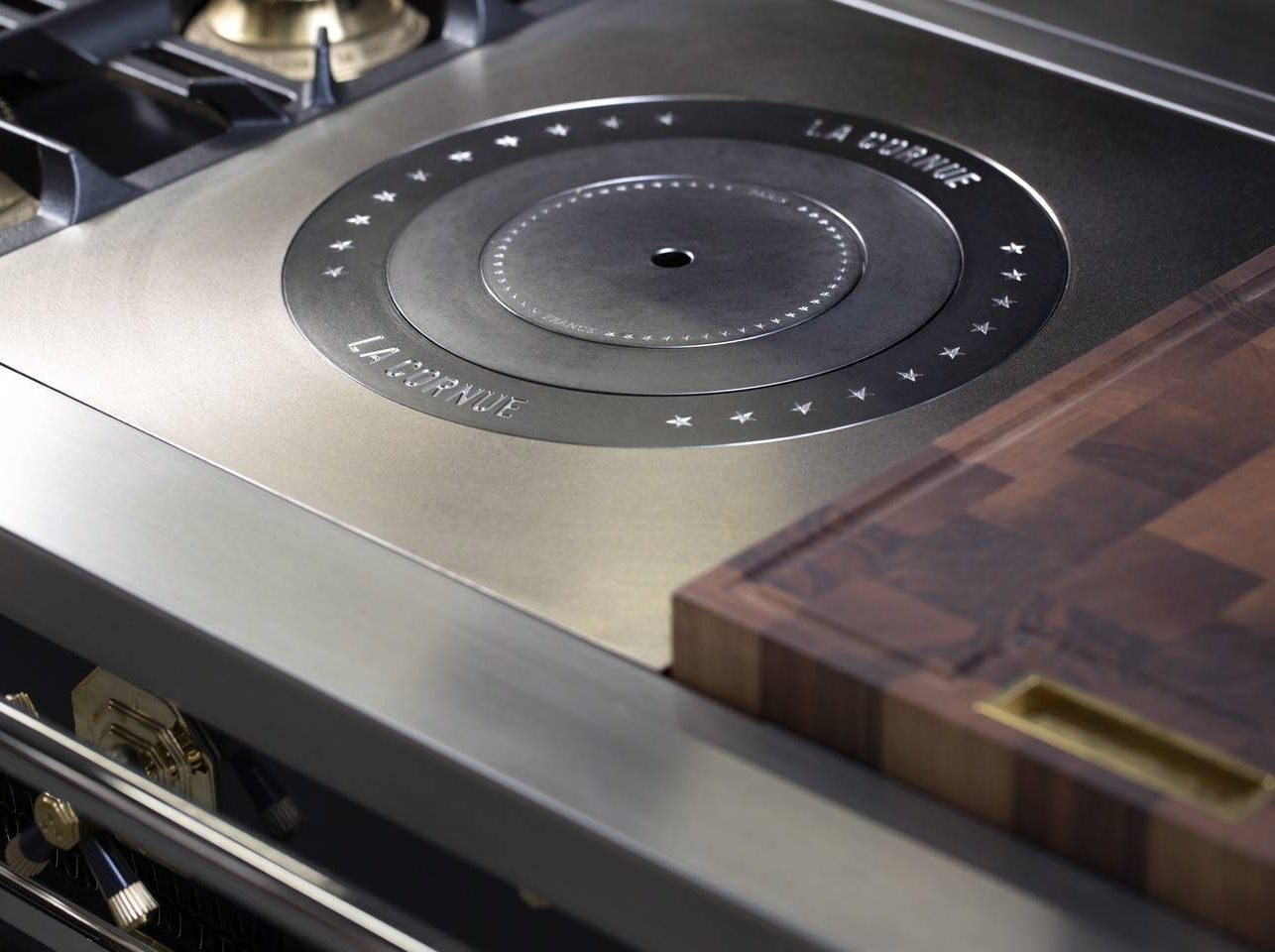
Because each range is crafted from the ground up, there is no fixed template to work within—and this means almost anything is possible. Hard-wearing enamels—applied through a demanding, multi-stage process— are mixed from raw colours and can be formulated to the finest pigment, producing shades that exist nowhere else. Finishes are equally diverse, ranging from brushed stainless steel to polished brass, bronze, copper, or even leather. Dimensions, configurations, engraving details, and materials are all open to customisation. The result is a truly personalised stove conceived to meet the needs and preferences of its home and the cooks who use it.
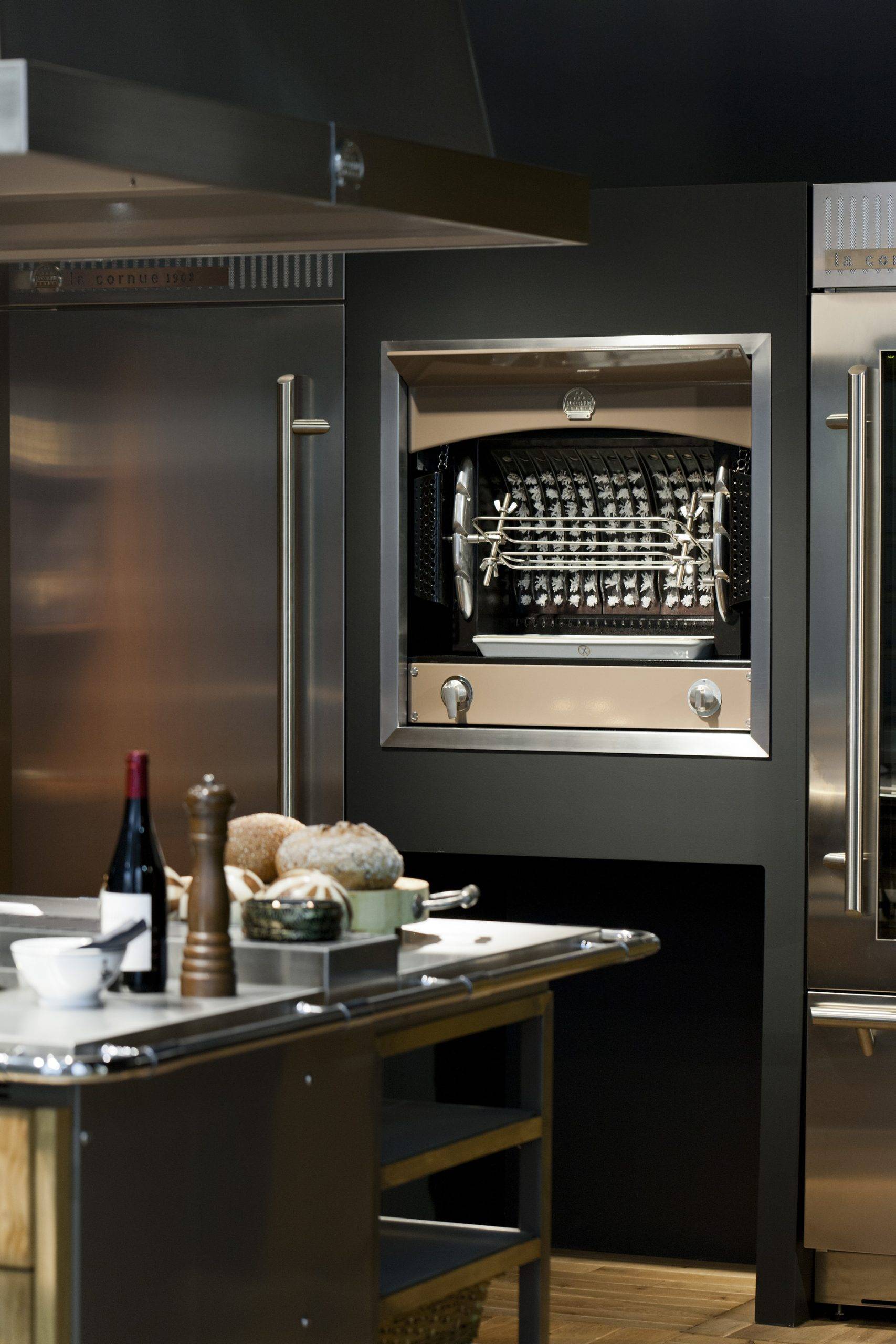
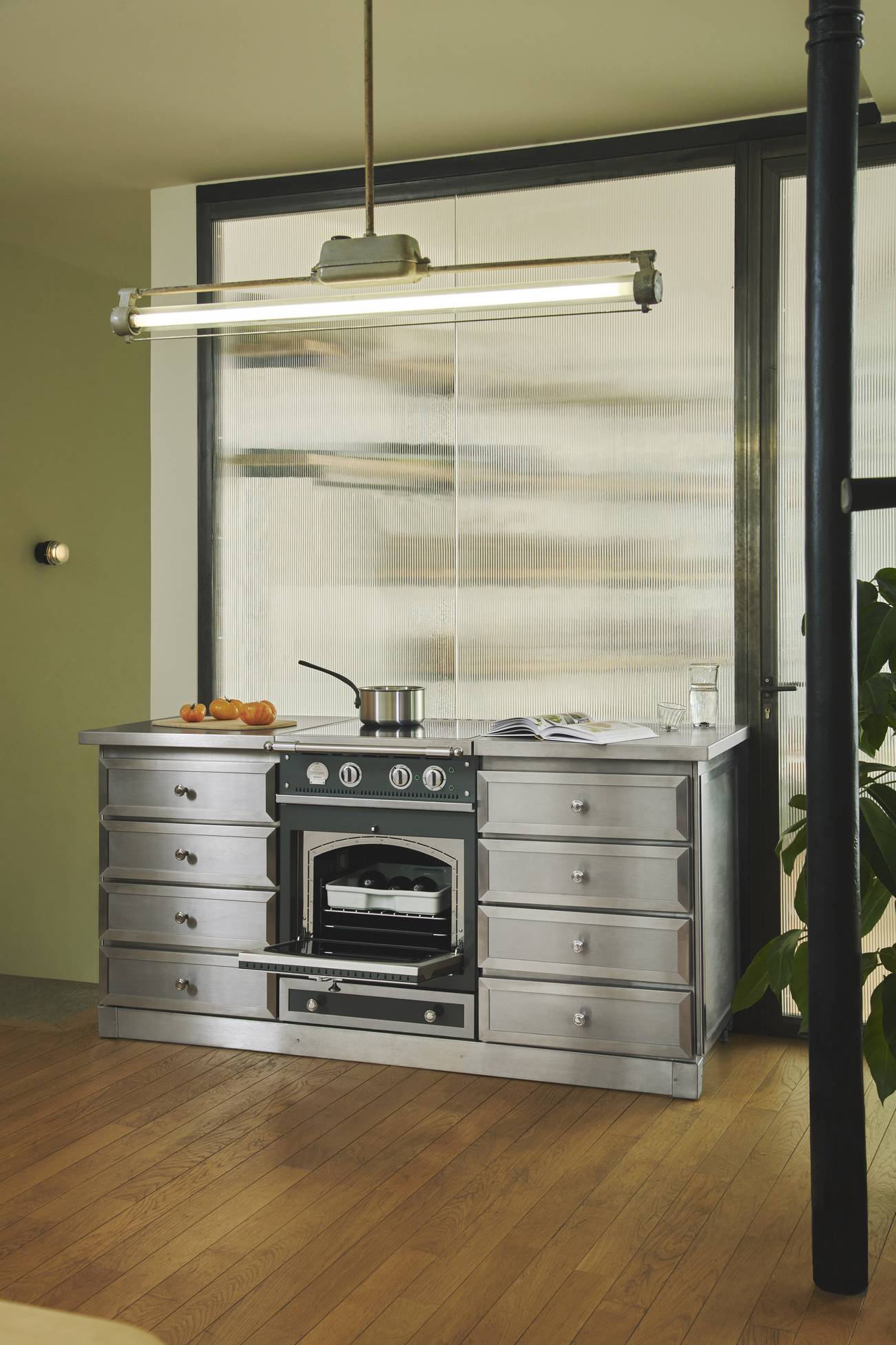
That thinking extends well beyond the stove itself. In recent years, La Cornue has increasingly referenced the idea of “culinary architecture”—a holistic approach in which the range becomes the organising centre of the kitchen. Hoods, cabinetry, islands, and built-in ovens are designed not as accessories, but as spatial continuations, allowing the room to read as a coherent whole. Because the range is conceived to work with architecture rather than assert itself against it, the Maison has consistently attracted designers and artists who approach the kitchen as a site of creative interpretation.
Over the years, La Cornue has collaborated with leading architects, artists, and designers to reexamine its most recognisable forms. Dutch designer Lex Pott explored material transformation in the stoves, with oxidised brass surfaces animated by an electric-blue patina. Street artist Cyril Kongo reimagined La Cornue ranges as continental artworks, a collaboration recognised with an Architectural Digest Design Award. Canadian designer Ferris Rafauli introduced an Art Deco sensibility to the Château Suprême, refining its proportions and detailing until the range became, in his words, “a jewel of the home”. Matthew Quinn, meanwhile, translated the iconic Château range into a more contemporary register with hammered surfaces, extended handles, and a clearer symmetry—while preserving its essential character. These projects, in which the stove is treated as both a functional object and a cultural canvas, further strengthen the Maison’s identity, demonstrating that good craftsmanship can adapt and resonate across disciplines and styles.
La Cornue’s relationship with chefs follows a similar logic. The brand has long been trusted by some of the world’s most respected culinary minds, who demand the best performance: ovens that heat evenly, respond intuitively, and provide the level of control chefs depend on—something La Cornue achieves with great precision thanks to its patented G4 system that combines radiation, convection, and conduction in a single oven. Yet the Maison is careful not to privilege the professional kitchen over the domestic one. A La Cornue range is just as likely to cook a Michelin-starred meal as a lamb roast for friends or a child’s first chocolate cake. This duality, where haute cuisine sits comfortably alongside the everyday, lies at the heart of the brand’s philosophy, framing the kitchen as a medium for memories and a place that fosters joy.
From its humble beginnings to its now global prestige, La Cornue has never been about the equipment alone. The brand has always focused on what unfolds around its stoves: the conversations between loved ones, the making of recipes passed down over generations, and the sharing of meals that mark time. The vaulted oven—its most enduring invention—was designed to cook evenly and gently, but it also anchors the room, drawing people closer and encouraging them to gather. In this way, each La Cornue range serves a simple, lasting purpose: to support the act of cooking and the life that naturally forms around it.
To learn more about La Cornue and its products, visit the company’s website, Instagram profile, or Facebook page.
Necessary cookies are absolutely essential for the website to function properly. These cookies ensure basic functionalities and security features of the website, anonymously.
| Cookie | Duration | Description |
|---|---|---|
| __cfduid | 1 month | The cookie is used by cdn services like CloudFare to identify individual clients behind a shared IP address and apply security settings on a per-client basis. It does not correspond to any user ID in the web application and does not store any personally identifiable information. |
| _abck | 1 year | This cookie is used to detect and defend when a client attempt to replay a cookie.This cookie manages the interaction with online bots and takes the appropriate actions. |
| bm_sz | 4 hours | This cookie is set by the provider Akamai Bot Manager. This cookie is used to manage the interaction with the online bots. It also helps in fraud preventions |
| cookielawinfo-checbox-analytics | 11 months | This cookie is set by GDPR Cookie Consent plugin. The cookie is used to store the user consent for the cookies in the category "Analytics". |
| cookielawinfo-checbox-functional | 11 months | The cookie is set by GDPR cookie consent to record the user consent for the cookies in the category "Functional". |
| cookielawinfo-checbox-others | 11 months | This cookie is set by GDPR Cookie Consent plugin. The cookie is used to store the user consent for the cookies in the category "Other. |
| cookielawinfo-checkbox-advertisement | 1 year | The cookie is set by GDPR cookie consent to record the user consent for the cookies in the category "Advertisement". |
| cookielawinfo-checkbox-necessary | 11 months | This cookie is set by GDPR Cookie Consent plugin. The cookies is used to store the user consent for the cookies in the category "Necessary". |
| cookielawinfo-checkbox-performance | 11 months | This cookie is set by GDPR Cookie Consent plugin. The cookie is used to store the user consent for the cookies in the category "Performance". |
| ts | 3 years | This cookie is provided by the PayPal. It is used to support payment service in a website. |
| ts_c | 3 years | This cookie is provided by PayPal when a website is in association with PayPal payment function. This cookie is used to make safe payment through PayPal. |
| viewed_cookie_policy | 11 months | The cookie is set by the GDPR Cookie Consent plugin and is used to store whether or not user has consented to the use of cookies. It does not store any personal data. |
Functional cookies help to perform certain functionalities like sharing the content of the website on social media platforms, collect feedbacks, and other third-party features.
| Cookie | Duration | Description |
|---|---|---|
| akavpau_ppsd | session | This cookie is provided by Paypal. The cookie is used in context with transactions on the website. |
| nsid | This cookie is set by the provider PayPal. This cookie is used to enable the PayPal payment service in the website. | |
| tsrce | 3 days | This cookie is set by the provider PayPal. This cookie is used to enable the PayPal payment service in the website. |
| x-pp-s | session | This cookie is set by the provider PayPal. This cookie is used to process payments from the site. |
Performance cookies are used to understand and analyze the key performance indexes of the website which helps in delivering a better user experience for the visitors.
| Cookie | Duration | Description |
|---|---|---|
| YSC | session | This cookies is set by Youtube and is used to track the views of embedded videos. |
Analytical cookies are used to understand how visitors interact with the website. These cookies help provide information on metrics the number of visitors, bounce rate, traffic source, etc.
| Cookie | Duration | Description |
|---|---|---|
| _ga | 2 years | This cookie is installed by Google Analytics. The cookie is used to calculate visitor, session, campaign data and keep track of site usage for the site's analytics report. The cookies store information anonymously and assign a randomly generated number to identify unique visitors. |
| _gid | 1 day | This cookie is installed by Google Analytics. The cookie is used to store information of how visitors use a website and helps in creating an analytics report of how the website is doing. The data collected including the number visitors, the source where they have come from, and the pages visted in an anonymous form. |
Advertisement cookies are used to provide visitors with relevant ads and marketing campaigns. These cookies track visitors across websites and collect information to provide customized ads.
| Cookie | Duration | Description |
|---|---|---|
| _fbp | 3 months | This cookie is set by Facebook to deliver advertisement when they are on Facebook or a digital platform powered by Facebook advertising after visiting this website. |
| fr | 3 months | The cookie is set by Facebook to show relevant advertisments to the users and measure and improve the advertisements. The cookie also tracks the behavior of the user across the web on sites that have Facebook pixel or Facebook social plugin. |
| IDE | 1 year 24 days | Used by Google DoubleClick and stores information about how the user uses the website and any other advertisement before visiting the website. This is used to present users with ads that are relevant to them according to the user profile. |
| test_cookie | 15 minutes | This cookie is set by doubleclick.net. The purpose of the cookie is to determine if the user's browser supports cookies. |
| VISITOR_INFO1_LIVE | 5 months 27 days | This cookie is set by Youtube. Used to track the information of the embedded YouTube videos on a website. |
Other uncategorized cookies are those that are being analyzed and have not been classified into a category as yet.
| Cookie | Duration | Description |
|---|---|---|
| _gat_gtag_UA_120081375_1 | 1 minute | This cookie is installed by Google Analytics. The cookie is used to calculate visitor, session, campaign data and keep track of site usage for the site's analytics report. The cookies store information anonymously and assign a randomly generated number to identify unique visitors. |
| _gat_gtag_UA_83740222_1 | 1 minute | This cookie is installed by Google Analytics. The cookie is used to calculate visitor, session, campaign data and keep track of site usage for the site's analytics report. The cookies store information anonymously and assign a randomly generated number to identify unique visitors. |
| _mcid | 1 year | No description |
| ak_bmsc | 2 hours | No description |
| CONSENT | 16 years 9 months 2 days 6 hours | No description |
| ec_store_chameleon_font | session | This cookie is provided by Ecwid and it is used to save the font utilised in the website's online store. |
| enforce_policy | 1 year | No description |
| l7_az | 30 minutes | No description |
| LANG | 9 hours | No description |
| x-cdn | This cookie is provided by Paypal and is used in context with shopping transactions on the website's store. |