


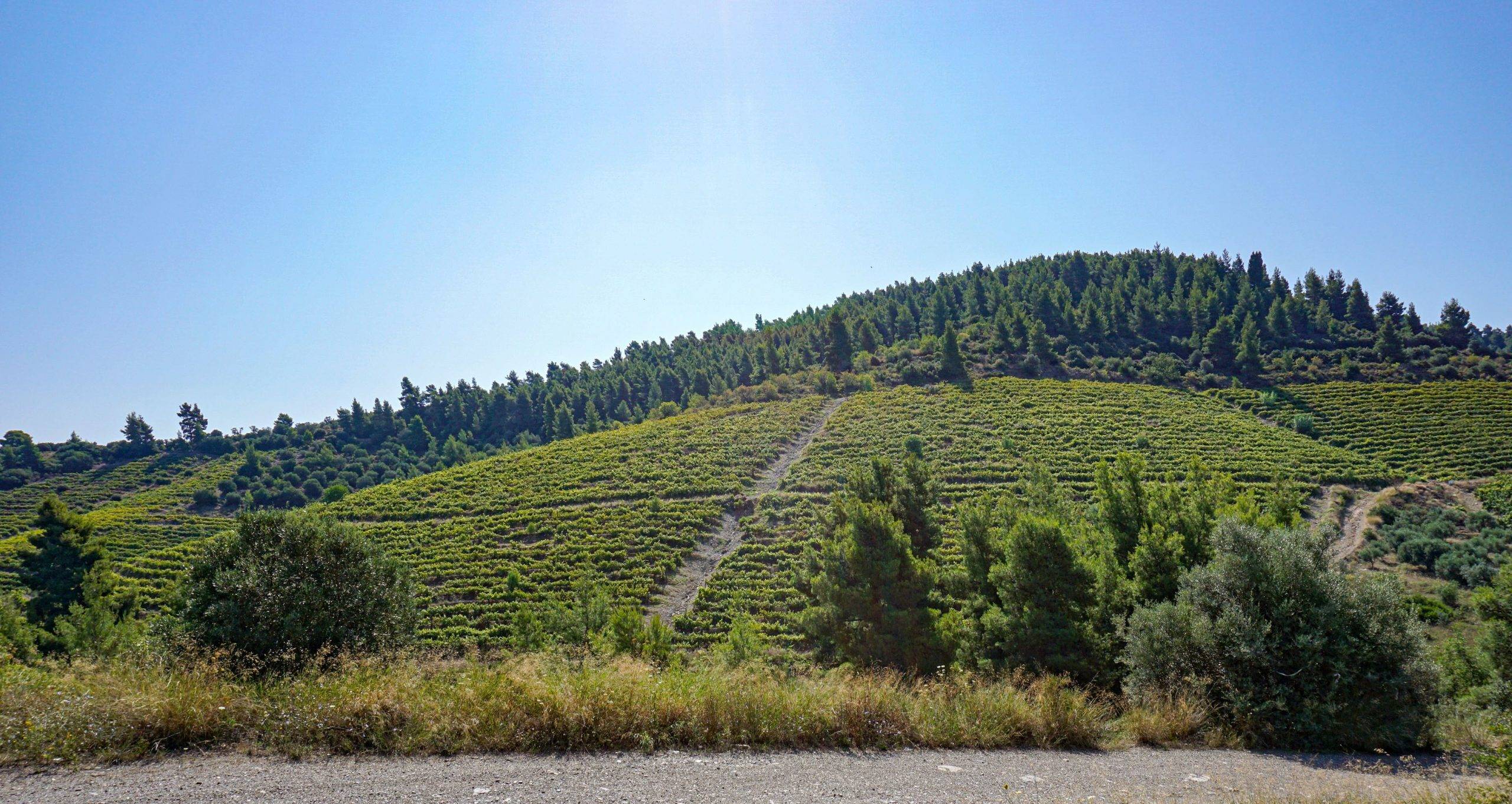
Vineyards in Sithonia
Halkidiki may be best known for its long coastline and clear Aegean waters, but head inland, and a different landscape begins to emerge. Vineyards spread across hills and valleys, mountain villages replace beach towns, and a network of wineries offers a compelling reason to venture beyond the shore.
The region’s wine routes extend across western Halkidiki and into Sithonia, with vineyards and estates around Kallikrateia, Triglia and Panagia, as well as the mountainous landscapes of Arnaia and Marathousa. Further east, vines reach towards Mount Athos, while some of Halkidiki’s best-known wines come from the slopes of Mount Meliton.
A natural starting point is Agios Pavlos, where viticulture remains one of the area’s defining activities. Rows of vines fill the countryside, producing wines that can be tasted close to where the grapes are grown, often alongside local dishes that have long shared the table with them.
From here, the route can also take in one of Halkidiki’s most important archaeological sites. Petralona Cave became internationally known following the discovery of the so-called “Archanthropus of Petralona”, described as the oldest human skeleton found in Europe.
Further south, the western coast of Sithonia offers one of the most striking settings on the wine trail. Here, the green slopes of Mount Meliton fall towards the Toroneos Gulf. The vineyards of the Slopes of Meliton are among the largest in Europe and operate as a model organic viticultural estate. Its position between mountain and sea also illustrates just how closely Halkidiki’s wines are tied to their surroundings.
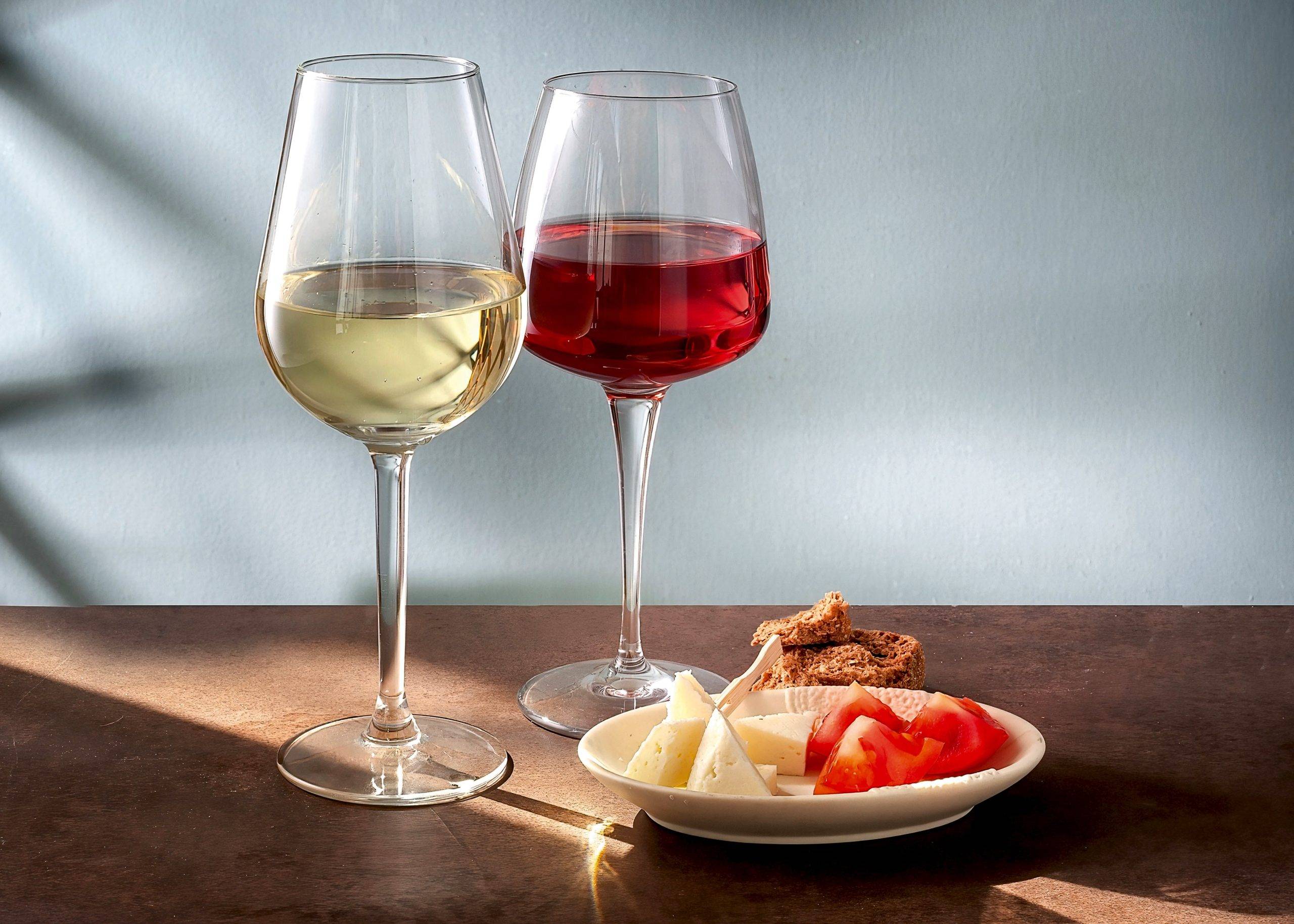
Halkidiki’s wines pair perfectly with local Greek cuisine © Studio M
The journey then turns inland towards Arnaia, one of the peninsula’s most picturesque mountain villages. Traditional houses and narrow streets make it worth a stop before continuing towards Chromitsa and the landscapes surrounding Mount Athos, an area with its own long relationship with vines and wine.
Across Halkidiki, several protected wine classifications help tell the story of the region. These include PGI Halkidiki, PDO Slopes of Meliton, PGI Sithonia and PGI Mount Athos.
The Mediterranean climate lends itself to some of Greece’s best-known native grapes. Assyrtiko, Athiri, Malagouzia and Roditis produce fresh, characterful white wines, while the red variety Limnio has particularly deep roots in Greek wine history. Native to the region, it was mentioned in the writings of Aristotle and remains part of Halkidiki’s winemaking identity today.
For travellers, that history is best understood not through a wine list but on the road: walking among the vines, meeting the people who tend them and tasting the wines within sight of the landscapes that shaped them. In Halkidiki, the wine route offers a slower, more immersive way to explore the peninsula—one glass, village and vineyard at a time.
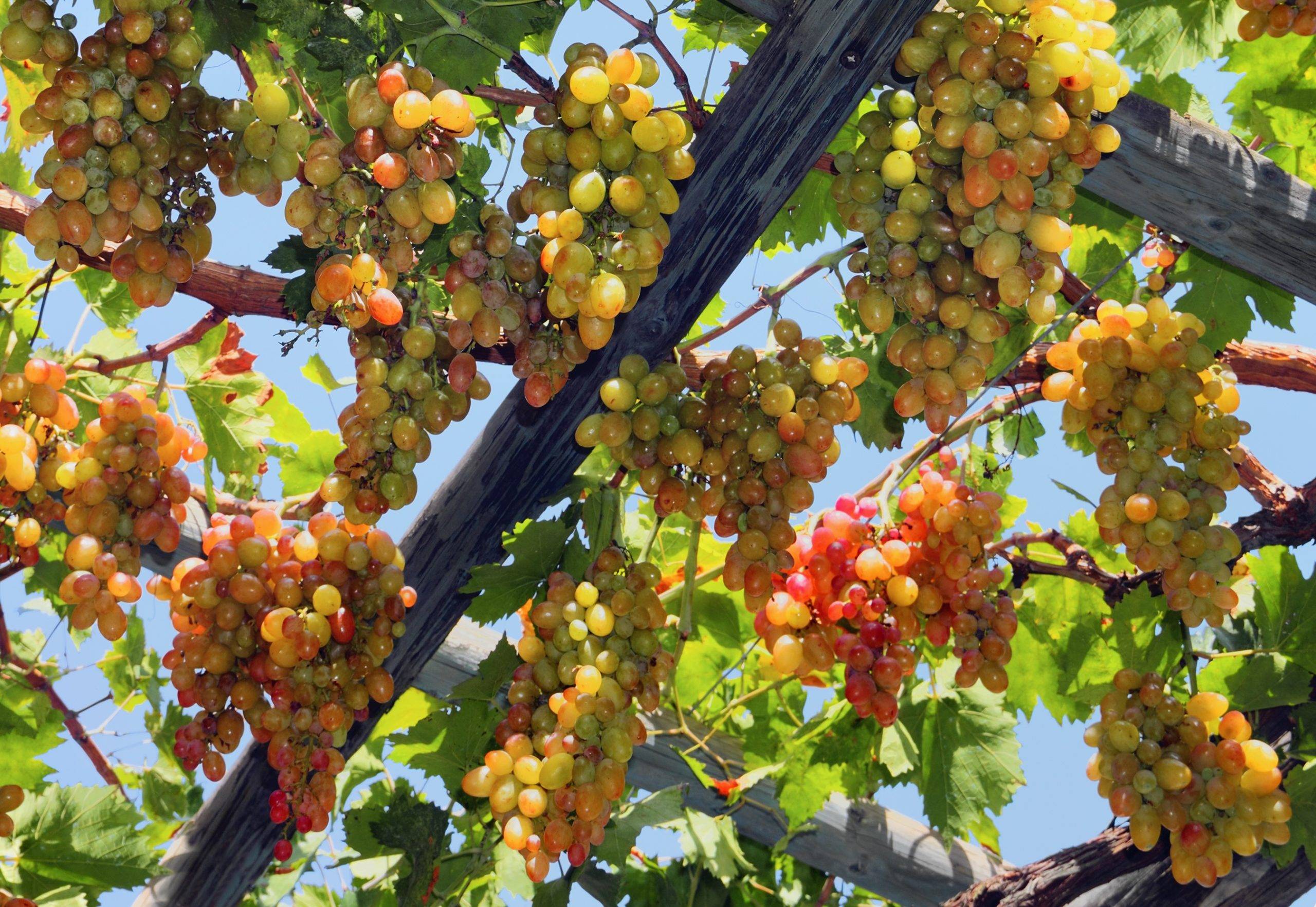
Afytos grapes planted on the Kassandra peninsula of Halkidiki, Greece
To find out more about Halkidiki and its unique wine routes, explore visitgreece.gr, the official website of the Greek National Tourism Organisation…