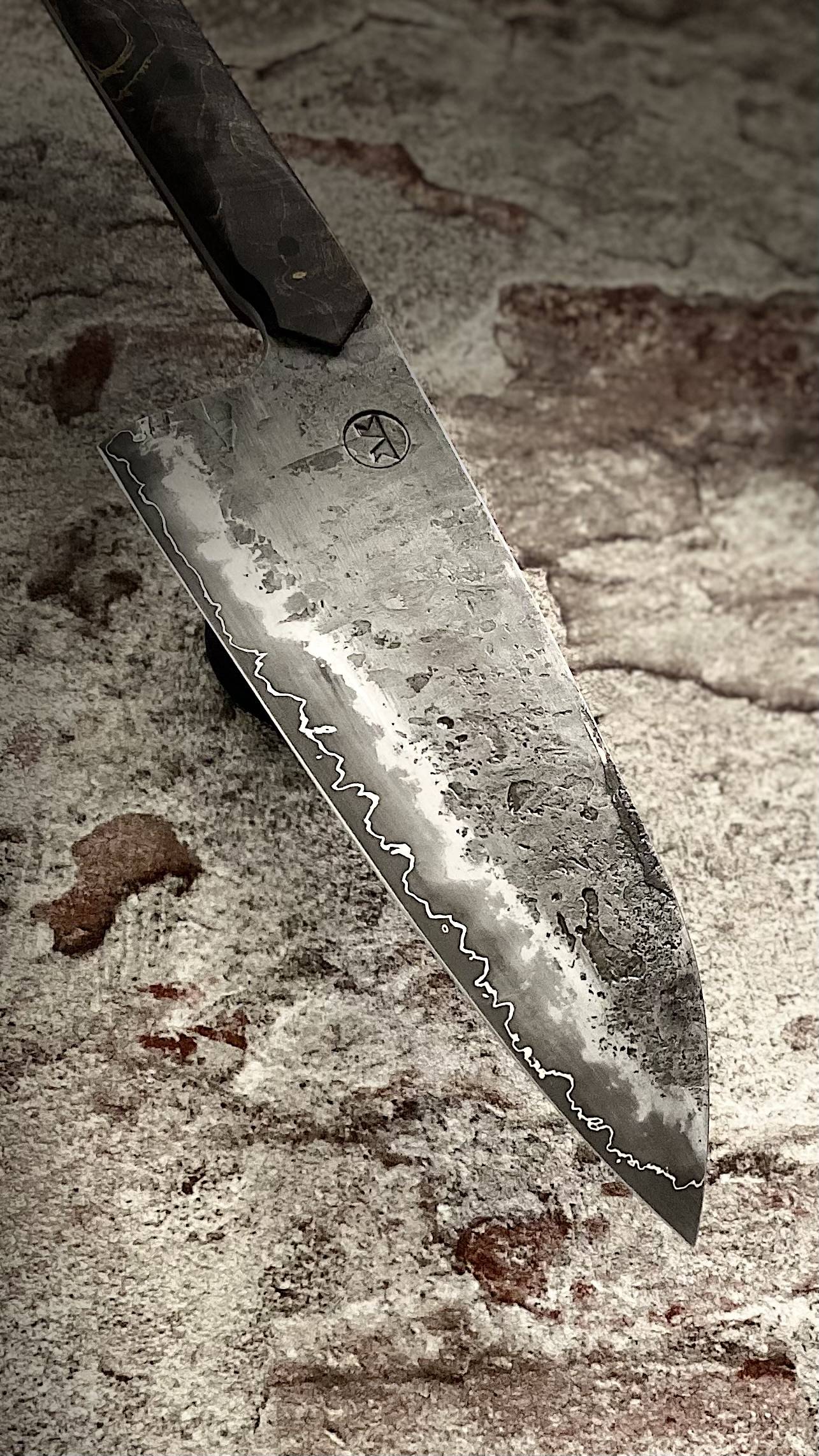



Forged with Intent
At Schmiedefeuer Knives, Kurt Forstner brings a measured, hands-on approach to knife making, shaped by both science and tradition.
At a time when so much of what we use is mass-produced, Kurt Forstner has built his work around a very different set of principles. At his Austrian workshop, Schmiedefeuer Knives, each knife is forged slowly, shaped by hand, and finished with a level of attention that reflects both technical understanding and a deep respect for traditional craft. His path to the forge was not a conventional one—rooted first in materials science—yet that background now informs a practice where precision and intuition sit comfortably side by side.
We spoke with Forstner about his journey into bladesmithing, the values that shape his work, and why time remains the most important element in the process…
Your journey began with a doctorate in materials science at the Montanuniversität Leoben before you became a bladesmith. Can you share how your academic and industrial experience shaped your decision to pursue knife-making full-time?
My background in materials science, including my PhD in metal forming, gave me a deep understanding of how metals behave. After years in the industry, I felt the need to apply this knowledge in a more tangible and creative way. Bladesmithing allows me to combine scientific precision with traditional craftsmanship.
What was the moment or experience that truly made you realise that working with fire, metal, and the anvil was where you wanted to dedicate your life and craft?
My passion for forging developed over time through my connection with metal. At a certain point, I realised that working with fire, steel, and the anvil was more than just a technical process—it was something deeply fulfilling and creative. That’s when I knew I wanted to dedicate myself to it fully.
How did your time in the industry—before founding Schmiedefeuer—influence the way you approach your work today?
My time in industry shaped my approach to precision, process control, and quality. I carry these standards into my workshop today, ensuring that every step—from material selection to finishing—is executed with accuracy and care.
In your own words, what does the act of hand-forging a knife represent—beyond the technical process—to you personally?
For me, forging a knife is more than a technical act. It is a dialogue with the material, requiring respect, patience, and intention. Each knife becomes a unique object with its own character and purpose.
You’ve described knife forging as requiring patience, discipline, and dedication. How do these values manifest in your daily practice in the workshop?
Patience, discipline, and dedication are present in every step of the process. From heating and forging to grinding and finishing, each phase requires focus and consistency—there are no shortcuts.
How do you balance function and aesthetics when designing a new blade? Is one more important than the other for you?
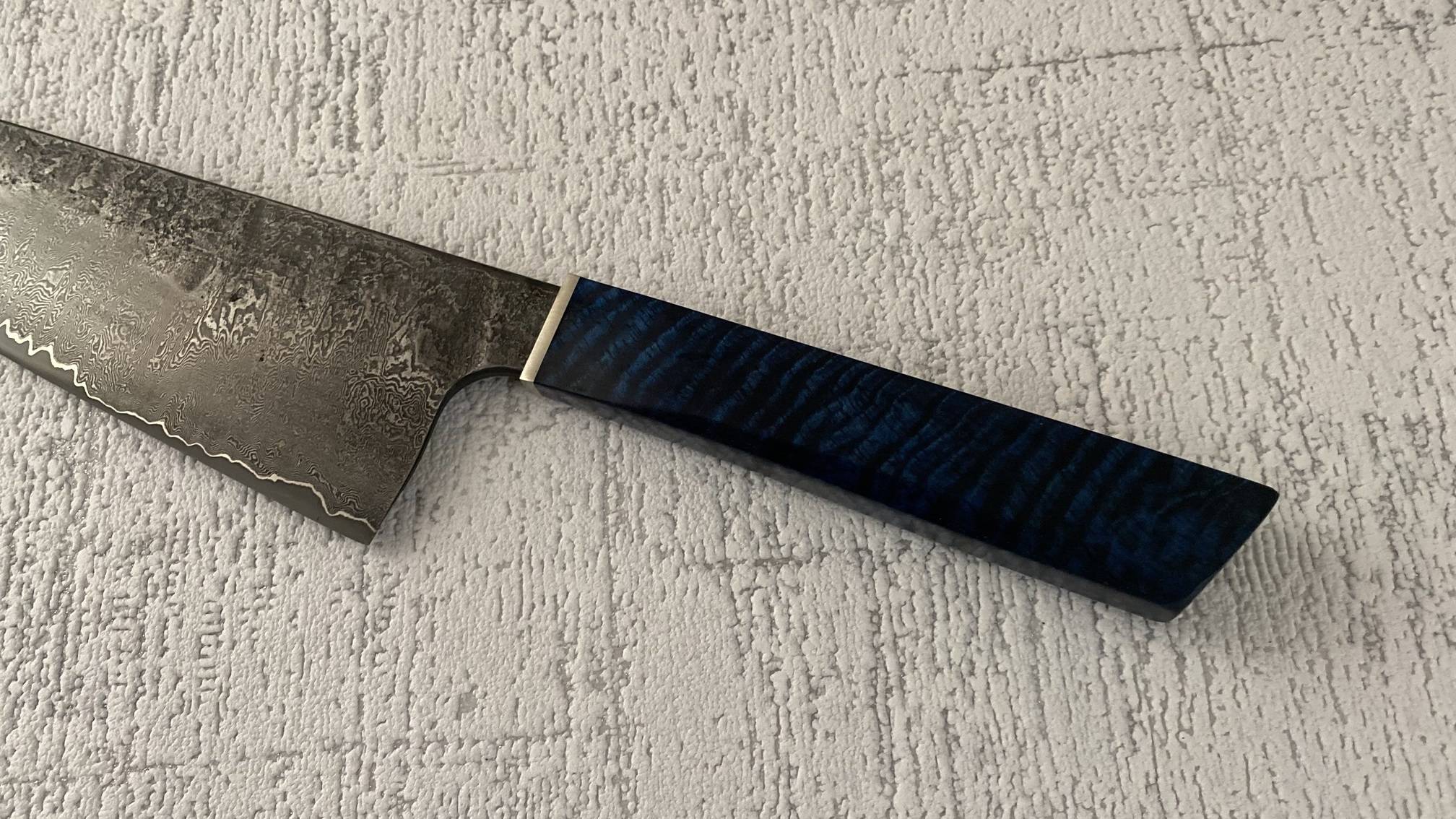
Function and aesthetics go hand in hand. A knife must perform exceptionally well, but it should also have a timeless and appealing design. My goal is always to create a balance between performance, ergonomics, and beauty.
Your knives are custom pieces tailored to individual needs. How do you approach translating a customer’s vision or cooking style into a physical tool?
Every knife I make is a custom piece. Some clients come with very clear ideas, while others need guidance. Together, we develop a design that reflects their needs, cooking style, and personal preferences.
Your scientific background gives you a unique understanding of steel and materials. How does this influence your choice of metals and forging techniques?
My scientific training allows me to fully understand the properties of different steels. This helps me choose the right materials and apply forging techniques that achieve the desired performance and durability.
Can you walk us through the process of creating a Damascus blade—from the selection of layers to the finished pattern?
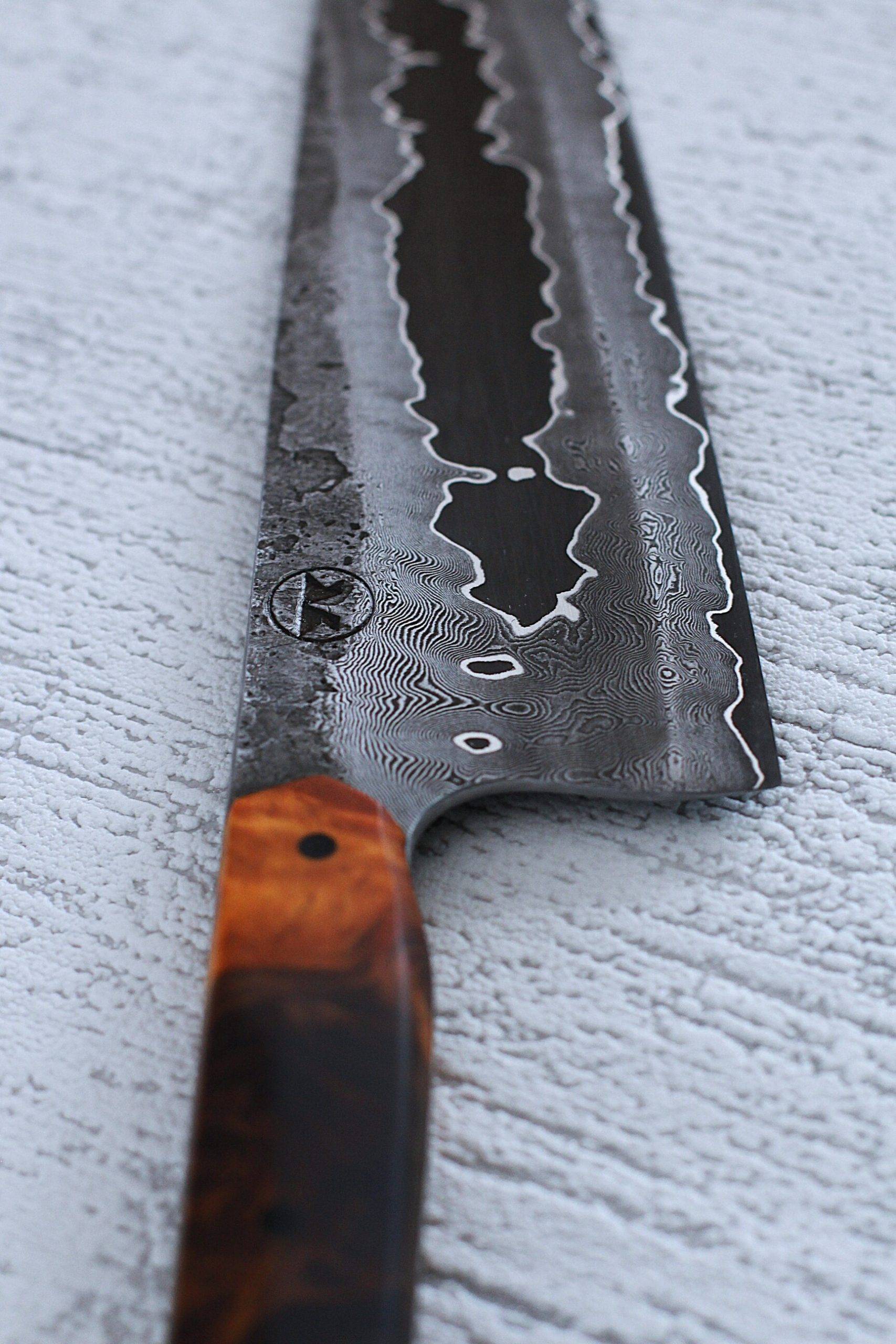
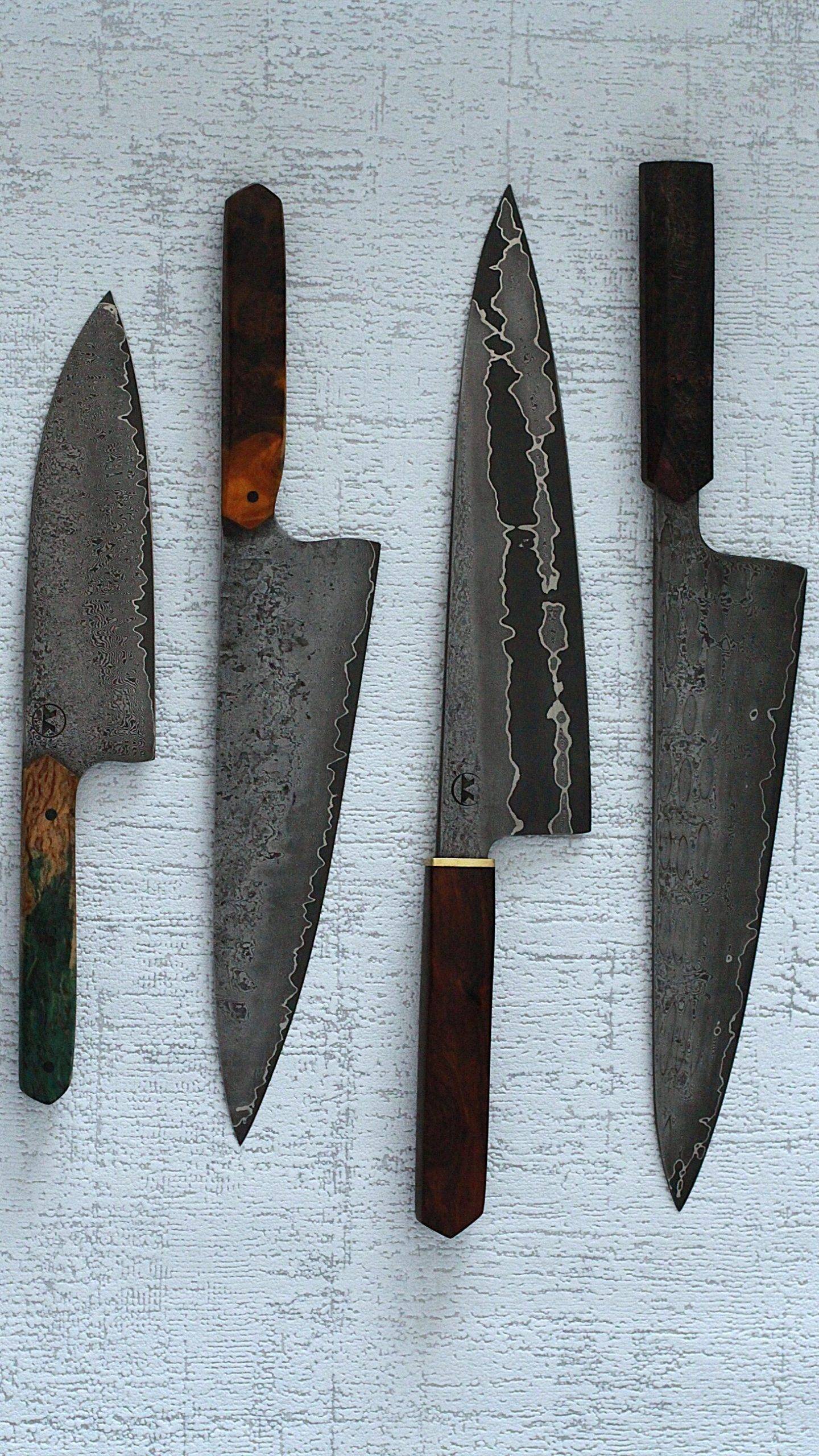
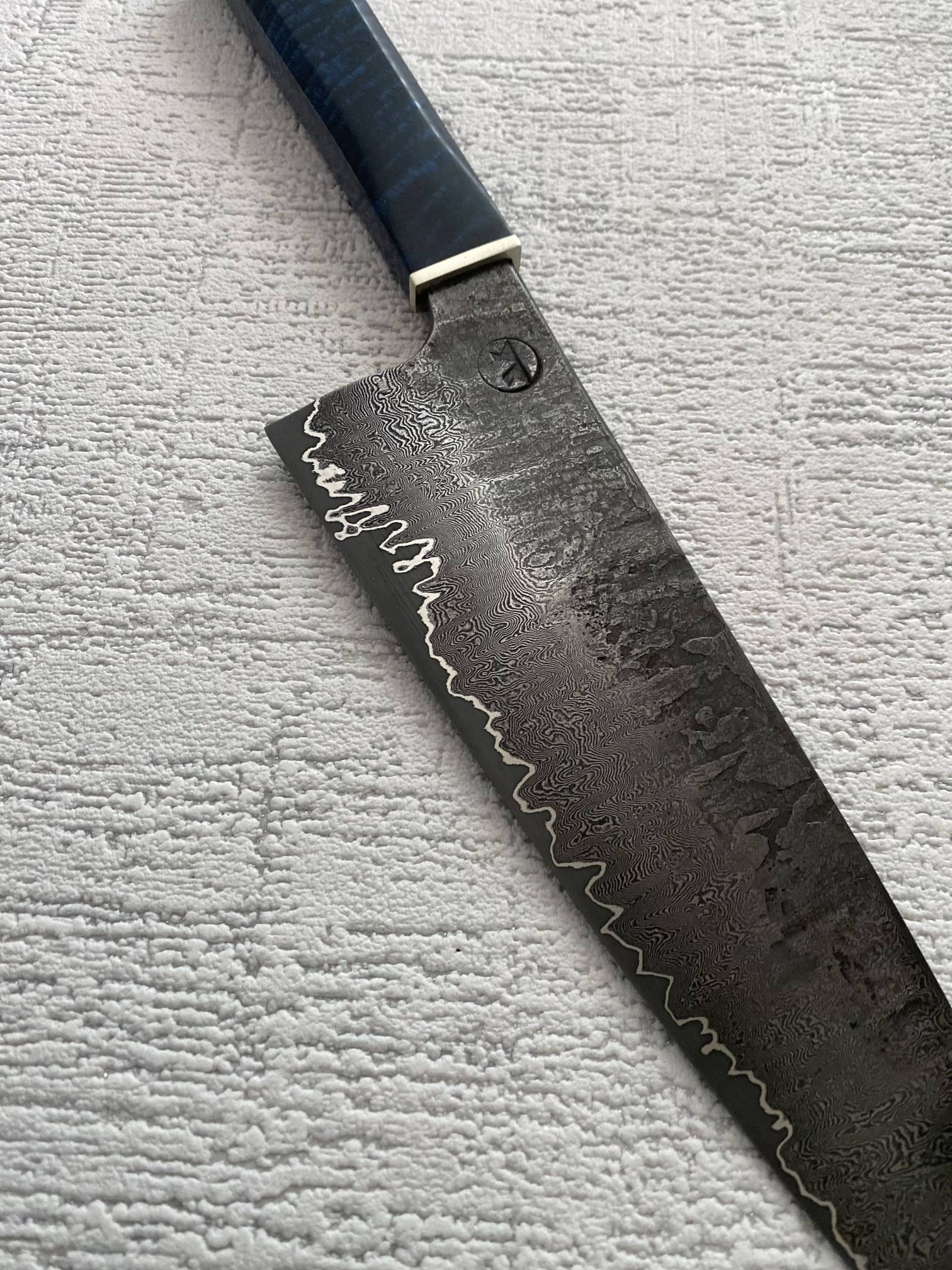
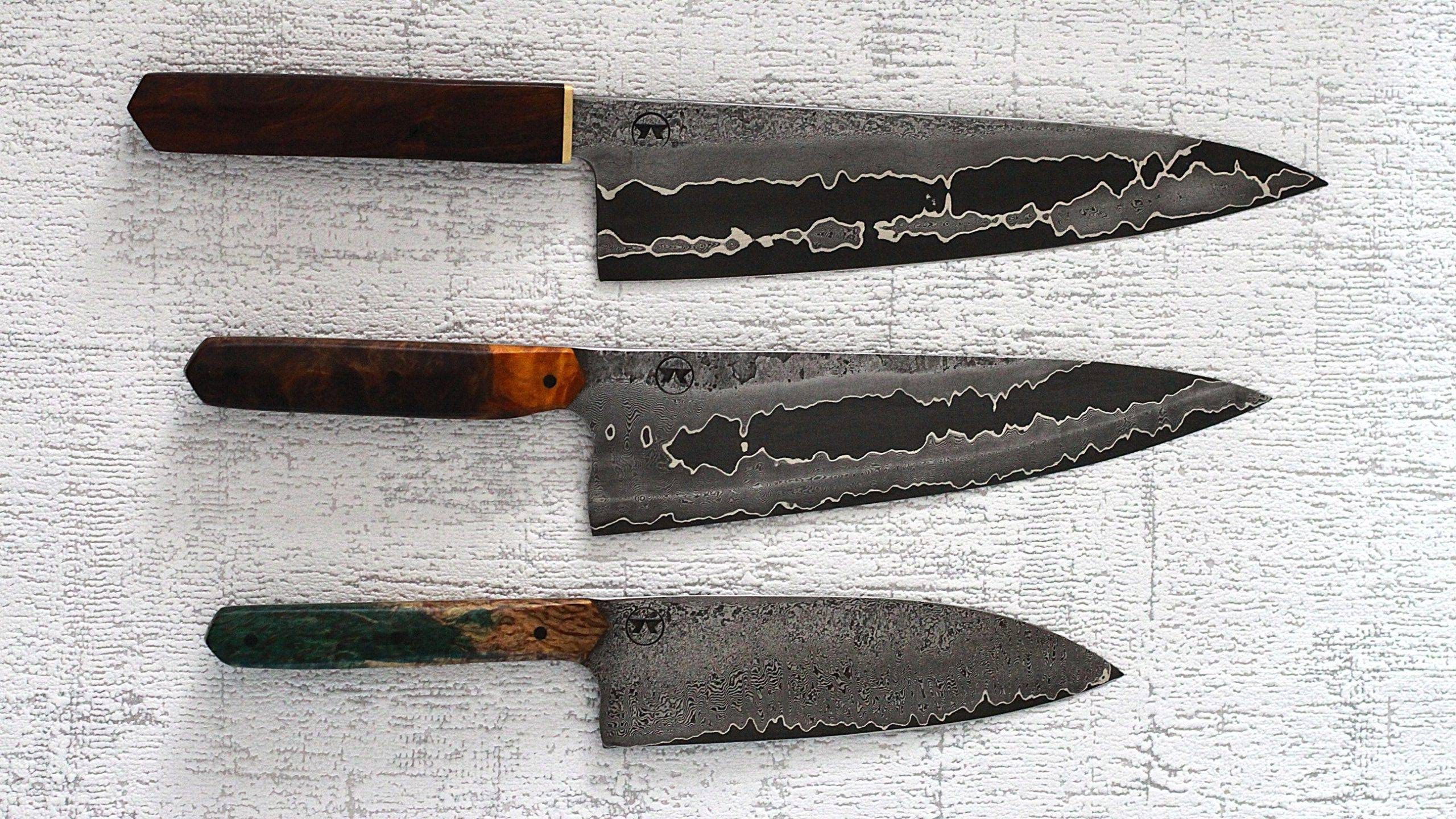
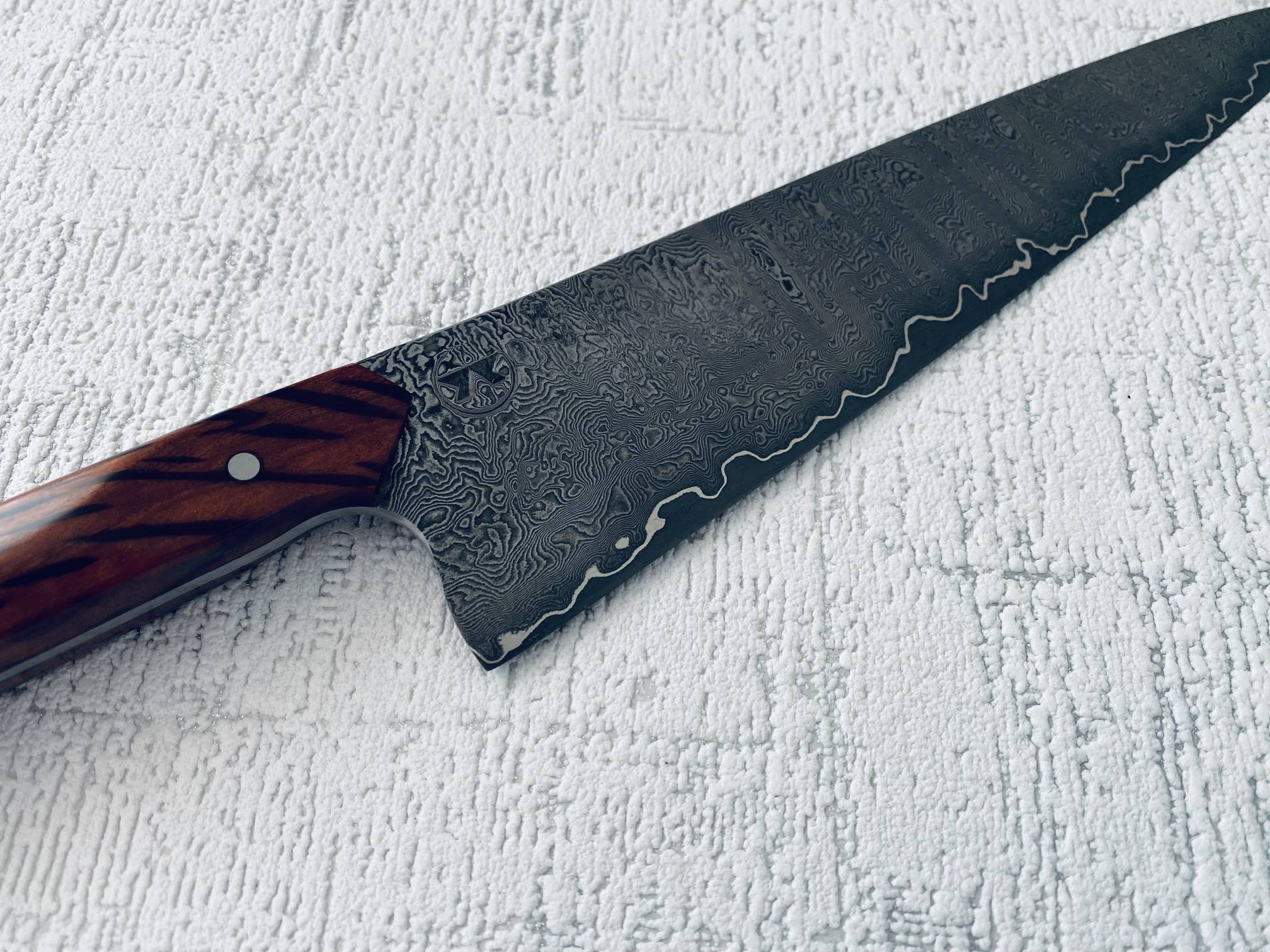
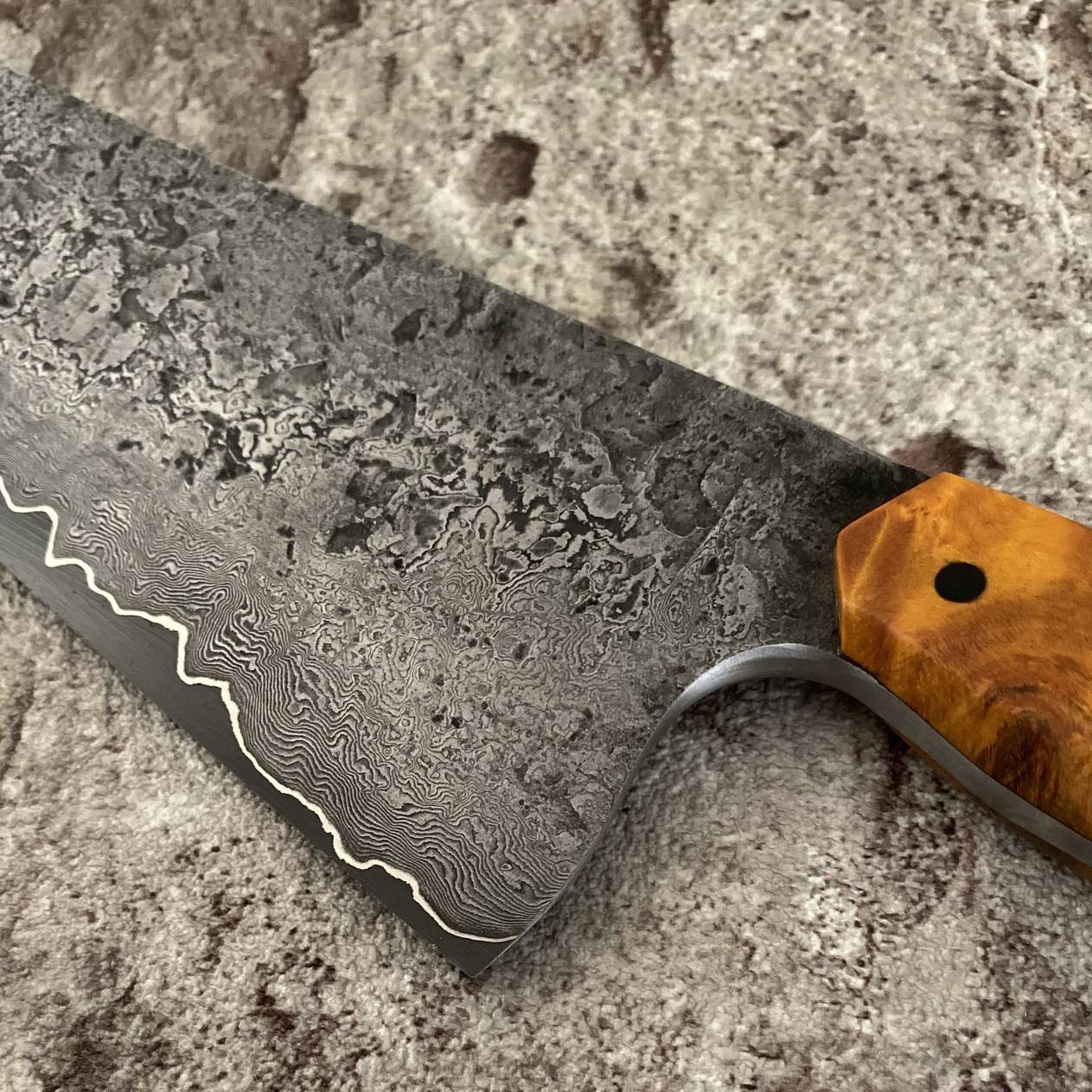
A Damascus blade is created by forge-welding multiple layers of different steels. These layers are folded, shaped, and refined repeatedly until the desired structure and pattern emerge. It’s a process that requires both precision and experience.
What are some of the challenges you face when controlling structure and quality during the forging and heat-treat phases?
One of the biggest challenges is controlling temperature and material structure throughout the process. Small variations can significantly affect the final properties of the blade, so precision is crucial at every stage.
You also offer knife forging courses. What inspired you to teach others, and what do you hope participants take away from the experience?
I offer courses to share this craft with others and give them a hands-on experience. My goal is for participants to leave not only with a knife but also with a deeper appreciation for the work and skill behind it.
In your view, how is the culture around handmade knives evolving in Austria and beyond?
There is a growing appreciation for handmade knives, both in Austria and internationally. More people are valuing quality, individuality, and craftsmanship over mass production.
What role does community—whether professional chefs, hobby cooks, or fellow smiths—play in your creative process?
The exchange with chefs, home cooks, and fellow smiths plays an important role in my work. It provides inspiration and helps me refine my designs based on real-world use.
What is your favourite type or style of knife to make, and why?
My preferred knife to make is a 210mm Gyuto. I appreciate this style because of its versatility and balance—it’s an all-purpose kitchen knife that performs exceptionally well across a wide range of tasks. The 210mm blade length offers the ideal combination of precision, control, and cutting efficiency, making it a perfect tool for both professional chefs and passionate home cooks.
Are there any tools, techniques, or collaborations that you haven’t explored yet but would like to in the future?
I am interested in further exploring the intersection of traditional craftsmanship and modern technology, as well as potential collaborations that push the boundaries of knife-making.
As a craftsman who melds science and traditional forging, how do you envision the future of bladesmithing in a world increasingly influenced by technology?
I see the future of bladesmithing in the combination of advanced scientific knowledge and traditional handicraft. Technology will enhance precision and performance, while the handmade aspect will continue to define the uniqueness of each piece.
To find out more about Kurt and his work at Schmiedefeuer Knives, visit the links below…
Schmiedefeuer Knives
Hauptstraße 37
8793 Trofaiach
Styria, Austria
Web: schmiedefeuerknives.com
Tel: +43 681 10528872
Email: kurt.forstner@schmiedefeuer.at
Instagram: @schmiedefeuerknives
Necessary cookies are absolutely essential for the website to function properly. These cookies ensure basic functionalities and security features of the website, anonymously.
| Cookie | Duration | Description |
|---|---|---|
| __cfduid | 1 month | The cookie is used by cdn services like CloudFare to identify individual clients behind a shared IP address and apply security settings on a per-client basis. It does not correspond to any user ID in the web application and does not store any personally identifiable information. |
| _abck | 1 year | This cookie is used to detect and defend when a client attempt to replay a cookie.This cookie manages the interaction with online bots and takes the appropriate actions. |
| bm_sz | 4 hours | This cookie is set by the provider Akamai Bot Manager. This cookie is used to manage the interaction with the online bots. It also helps in fraud preventions |
| cookielawinfo-checbox-analytics | 11 months | This cookie is set by GDPR Cookie Consent plugin. The cookie is used to store the user consent for the cookies in the category "Analytics". |
| cookielawinfo-checbox-functional | 11 months | The cookie is set by GDPR cookie consent to record the user consent for the cookies in the category "Functional". |
| cookielawinfo-checbox-others | 11 months | This cookie is set by GDPR Cookie Consent plugin. The cookie is used to store the user consent for the cookies in the category "Other. |
| cookielawinfo-checkbox-advertisement | 1 year | The cookie is set by GDPR cookie consent to record the user consent for the cookies in the category "Advertisement". |
| cookielawinfo-checkbox-necessary | 11 months | This cookie is set by GDPR Cookie Consent plugin. The cookies is used to store the user consent for the cookies in the category "Necessary". |
| cookielawinfo-checkbox-performance | 11 months | This cookie is set by GDPR Cookie Consent plugin. The cookie is used to store the user consent for the cookies in the category "Performance". |
| ts | 3 years | This cookie is provided by the PayPal. It is used to support payment service in a website. |
| ts_c | 3 years | This cookie is provided by PayPal when a website is in association with PayPal payment function. This cookie is used to make safe payment through PayPal. |
| viewed_cookie_policy | 11 months | The cookie is set by the GDPR Cookie Consent plugin and is used to store whether or not user has consented to the use of cookies. It does not store any personal data. |
Functional cookies help to perform certain functionalities like sharing the content of the website on social media platforms, collect feedbacks, and other third-party features.
| Cookie | Duration | Description |
|---|---|---|
| akavpau_ppsd | session | This cookie is provided by Paypal. The cookie is used in context with transactions on the website. |
| nsid | This cookie is set by the provider PayPal. This cookie is used to enable the PayPal payment service in the website. | |
| tsrce | 3 days | This cookie is set by the provider PayPal. This cookie is used to enable the PayPal payment service in the website. |
| x-pp-s | session | This cookie is set by the provider PayPal. This cookie is used to process payments from the site. |
Performance cookies are used to understand and analyze the key performance indexes of the website which helps in delivering a better user experience for the visitors.
| Cookie | Duration | Description |
|---|---|---|
| YSC | session | This cookies is set by Youtube and is used to track the views of embedded videos. |
Analytical cookies are used to understand how visitors interact with the website. These cookies help provide information on metrics the number of visitors, bounce rate, traffic source, etc.
| Cookie | Duration | Description |
|---|---|---|
| _ga | 2 years | This cookie is installed by Google Analytics. The cookie is used to calculate visitor, session, campaign data and keep track of site usage for the site's analytics report. The cookies store information anonymously and assign a randomly generated number to identify unique visitors. |
| _gid | 1 day | This cookie is installed by Google Analytics. The cookie is used to store information of how visitors use a website and helps in creating an analytics report of how the website is doing. The data collected including the number visitors, the source where they have come from, and the pages visted in an anonymous form. |
Advertisement cookies are used to provide visitors with relevant ads and marketing campaigns. These cookies track visitors across websites and collect information to provide customized ads.
| Cookie | Duration | Description |
|---|---|---|
| _fbp | 3 months | This cookie is set by Facebook to deliver advertisement when they are on Facebook or a digital platform powered by Facebook advertising after visiting this website. |
| fr | 3 months | The cookie is set by Facebook to show relevant advertisments to the users and measure and improve the advertisements. The cookie also tracks the behavior of the user across the web on sites that have Facebook pixel or Facebook social plugin. |
| IDE | 1 year 24 days | Used by Google DoubleClick and stores information about how the user uses the website and any other advertisement before visiting the website. This is used to present users with ads that are relevant to them according to the user profile. |
| test_cookie | 15 minutes | This cookie is set by doubleclick.net. The purpose of the cookie is to determine if the user's browser supports cookies. |
| VISITOR_INFO1_LIVE | 5 months 27 days | This cookie is set by Youtube. Used to track the information of the embedded YouTube videos on a website. |
Other uncategorized cookies are those that are being analyzed and have not been classified into a category as yet.
| Cookie | Duration | Description |
|---|---|---|
| _gat_gtag_UA_120081375_1 | 1 minute | This cookie is installed by Google Analytics. The cookie is used to calculate visitor, session, campaign data and keep track of site usage for the site's analytics report. The cookies store information anonymously and assign a randomly generated number to identify unique visitors. |
| _gat_gtag_UA_83740222_1 | 1 minute | This cookie is installed by Google Analytics. The cookie is used to calculate visitor, session, campaign data and keep track of site usage for the site's analytics report. The cookies store information anonymously and assign a randomly generated number to identify unique visitors. |
| _mcid | 1 year | No description |
| ak_bmsc | 2 hours | No description |
| CONSENT | 16 years 9 months 2 days 6 hours | No description |
| ec_store_chameleon_font | session | This cookie is provided by Ecwid and it is used to save the font utilised in the website's online store. |
| enforce_policy | 1 year | No description |
| l7_az | 30 minutes | No description |
| LANG | 9 hours | No description |
| x-cdn | This cookie is provided by Paypal and is used in context with shopping transactions on the website's store. |