


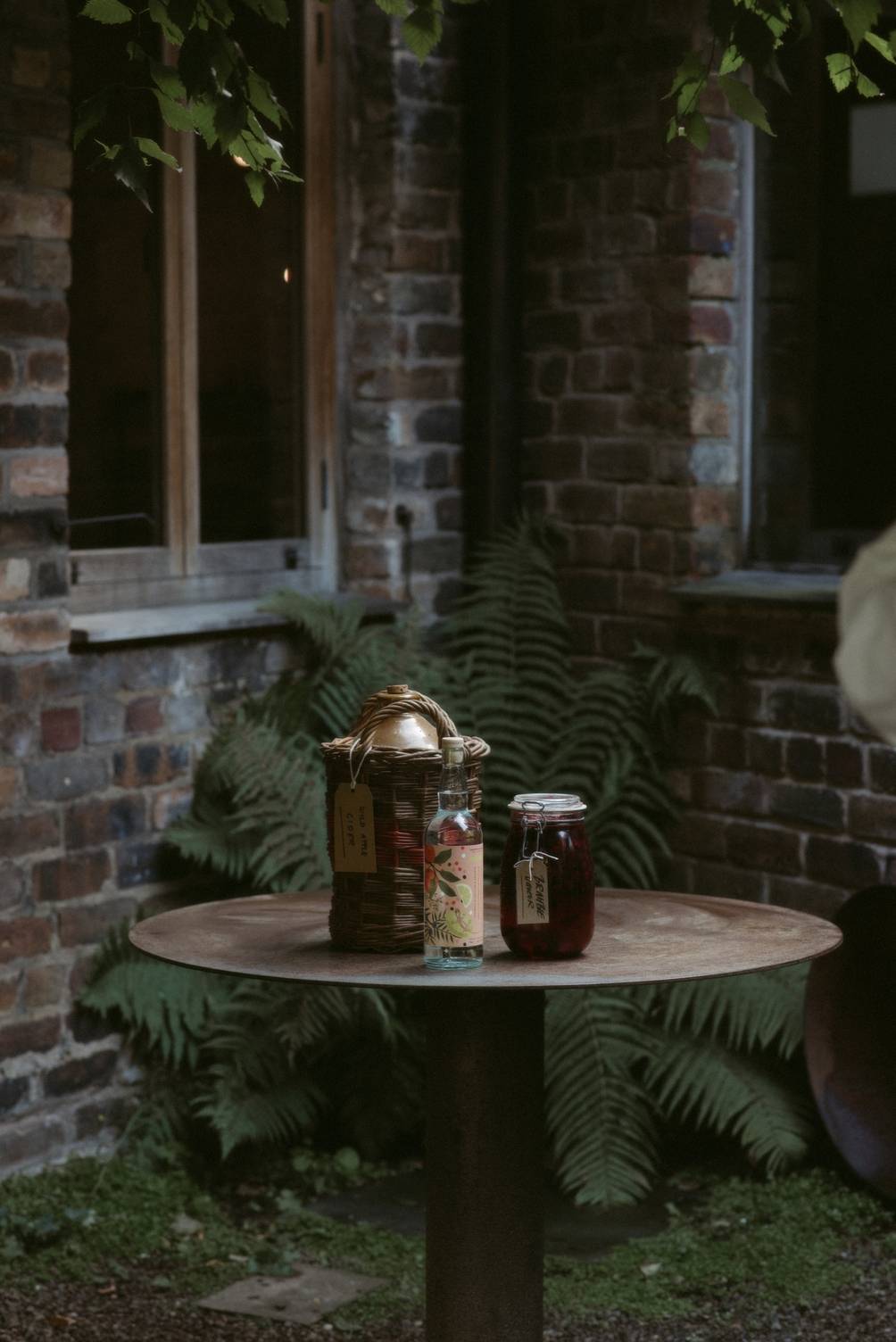
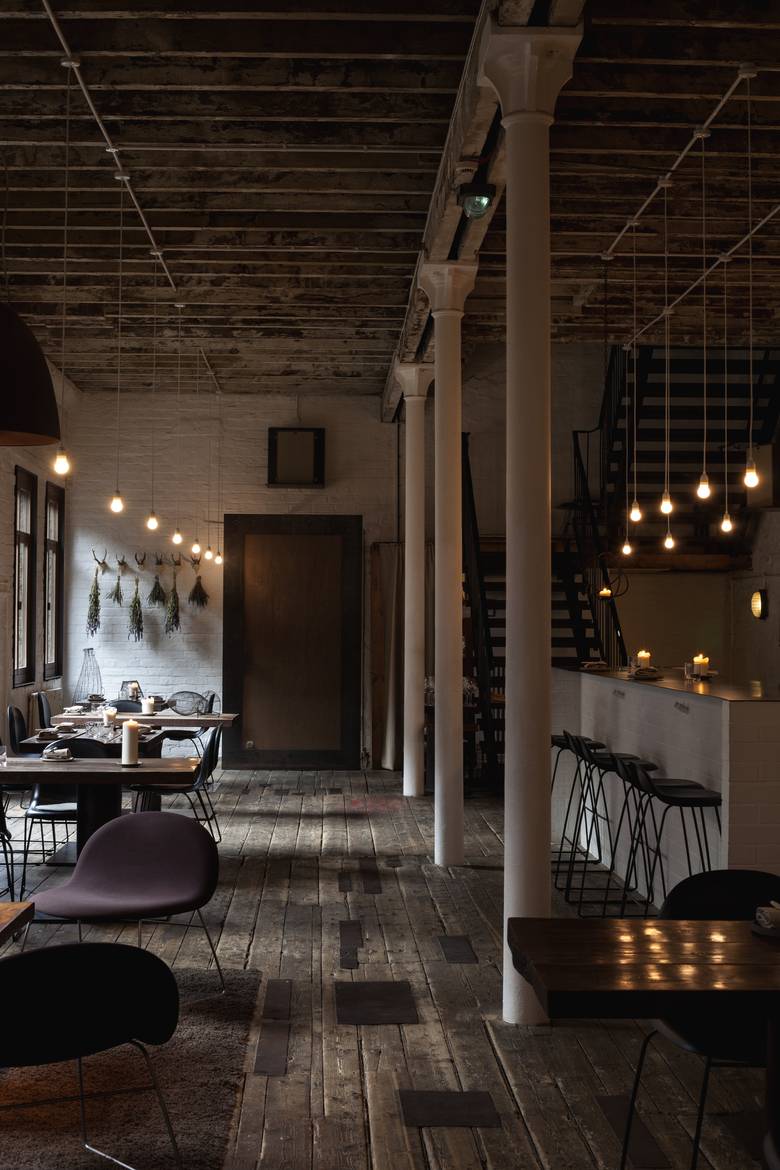
Anna Šebelová humourously describes herself as Timberyard’s “resident witch”. It’s a fitting title for someone whose working days might involve gathering wild plants on the way to the restaurant, checking a ferment, drying strawberry tops for winter tea or finding a new use for something the kitchen might otherwise discard. What began as experimentation has grown into a drinks and preservation programme rooted in seasonality and a deep curiosity about flavour.
For Šebelová, though, none of this feels particularly new. She grew up in a small village in Czechia, where much of the family’s food came from gardens, fields and forests. Preserving the summer and autumn harvest for winter was simply part of life. That instinct has found a natural home at Timberyard. After moving to Scotland around nine years ago, Šebelová came to the restaurant through Edinburgh’s speciality coffee scene and worked her way from front of house towards the bar, before gradually taking on its drinks, soft-pairing and preservation work. Along the way, she trained at René Redzepi’s MAD Academy and developed an approach that favours what she calls “responsibility” over the much-used language of sustainability. For her, that means making drinks people want to drink while respecting the produce, suppliers, landscape and colleagues behind them.
This approach has helped shape one of Scotland’s most distinctive drinks programmes. Timberyard’s cocktail list was recently named Cocktail List of the Year at the National Restaurant Awards, recognition Šebelová is quick to share with the wider team and the restaurant’s 14-year history of working with foraged produce.
In conversation with FOUR, Šebelová reflects on the influences that shaped her approach, the role of fermentation and foraging in her work, and why responsibility sits at the heart of Timberyard’s drinks programme.
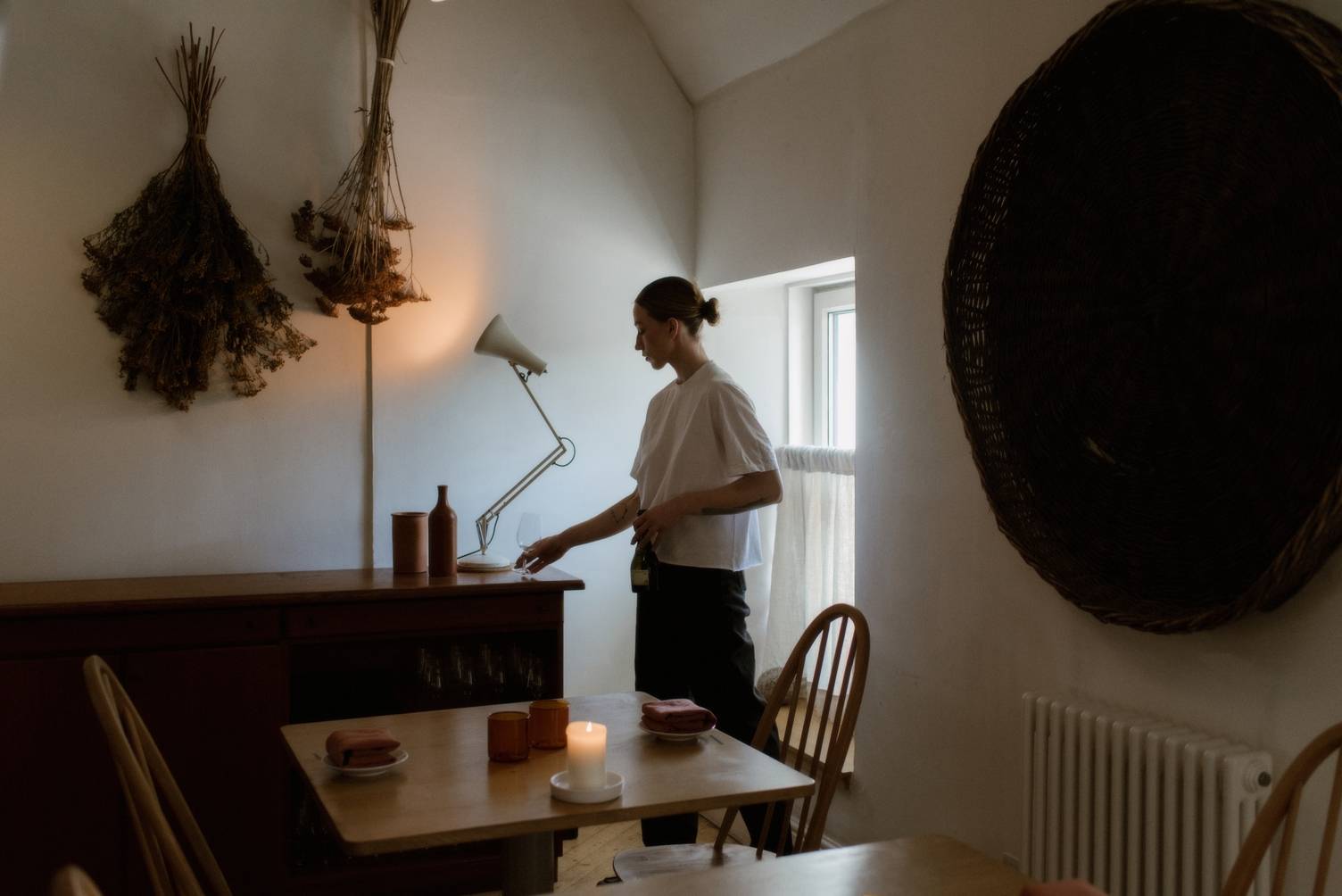
Can you start by telling us a little about yourself and how you came to be responsible for drinks production and fermentation at Timberyard?
My journey in Scotland started about 9 years ago when I moved here. I spent a bit of time working in coffee shops, which was, at the time, my main passion. Andrew, one of the owners of Timberyard, used to come to the coffee shop where I used to work, usually very early in the morning, which is pretty unusual for Edinburgh. We started chatting, and he said he gets up early to go for a walk and do some foraging for his family restaurant. We started talking about plants and their use in restaurants, and that’s kind of how I found out about Timberyard.
Eventually, I gathered the courage and asked if they were looking for any staff at Timberyard. And his response was: we are always looking for people; just like any other hospitality venue, there are never enough people.
I started from the bottom, with no experience in fine dining but very much inspired by the level of detail put into everything. I gravitated towards the bar pretty quickly as I had bartender training and was interested in learning more about wine. Anything involving the study of flavour was interesting to me.
We are very lucky that Edinburgh is such a green city; there are green spaces everywhere, and you can also get out of town even without a car. So I started slowly exploring what was out there, foraging even on my way to work and experimenting with whatever I could find.
The role of a ‘resident witch’ was slowly developed. Over the years, I was allowed more and more time to work on our drinks menu, soft drink pairings to go with our food offering and the whole preservation programme we run now.
You grew up in the Czech countryside, picking mushrooms, making wild blueberry compote and being surrounded by traditions of harvesting and preserving food. How much of what you do today can be traced back to those early experiences?
Pretty much everything. A lot of my creations start with “well, why don’t we just try making it instead of buying it”, which is very much my grandma’s mindset. I grew up in a small village, running in the fields, harvesting fruit and veg from the garden, looking after our animals and, of course, foraging.
We didn’t really buy much; most of what we ate came from our gardens, fields and forests. During the growing season, we would do everything we could to preserve our produce in the best possible way so we would have enough to eat in winter whether it was drying and braiding garlic, making jams and pickles or burying carrots in sand in our cellar to keep them crunchy.
The way I grew up shapes everything I do at work every day.
Your career took you through hospitality and then into speciality coffee in Norway and Edinburgh before you arrived at Timberyard. What did coffee teach you about ingredients, provenance and flavour?
The focus on flavour is the main and most important thing that coffee taught me. Being able to focus on a beverage and think about its texture, mouthfeel, and aftertaste. And then tracking all of those qualities directly to the coffee variety, the country where it was grown and how it was processed. Connecting the dots really teaches you a lot!
You joined Timberyard in 2018 in a front-of-house and coffee role. Was there a particular moment when drinks production and preservation began to become your focus?
It was a very gradual process, I have to say. I started just bringing things in, foraging on my way to work or going to ‘pick your own fruit’ farms, going to work early and simply running experiments. It wasn’t even my goal to eventually just make drinks; I just enjoyed the process of making and fermenting, trying new techniques, failing and trying again.
I was lucky that I managed to make some delicious things pretty early on; the owners picked up on it and slowly started giving me more freedom to develop my current role.
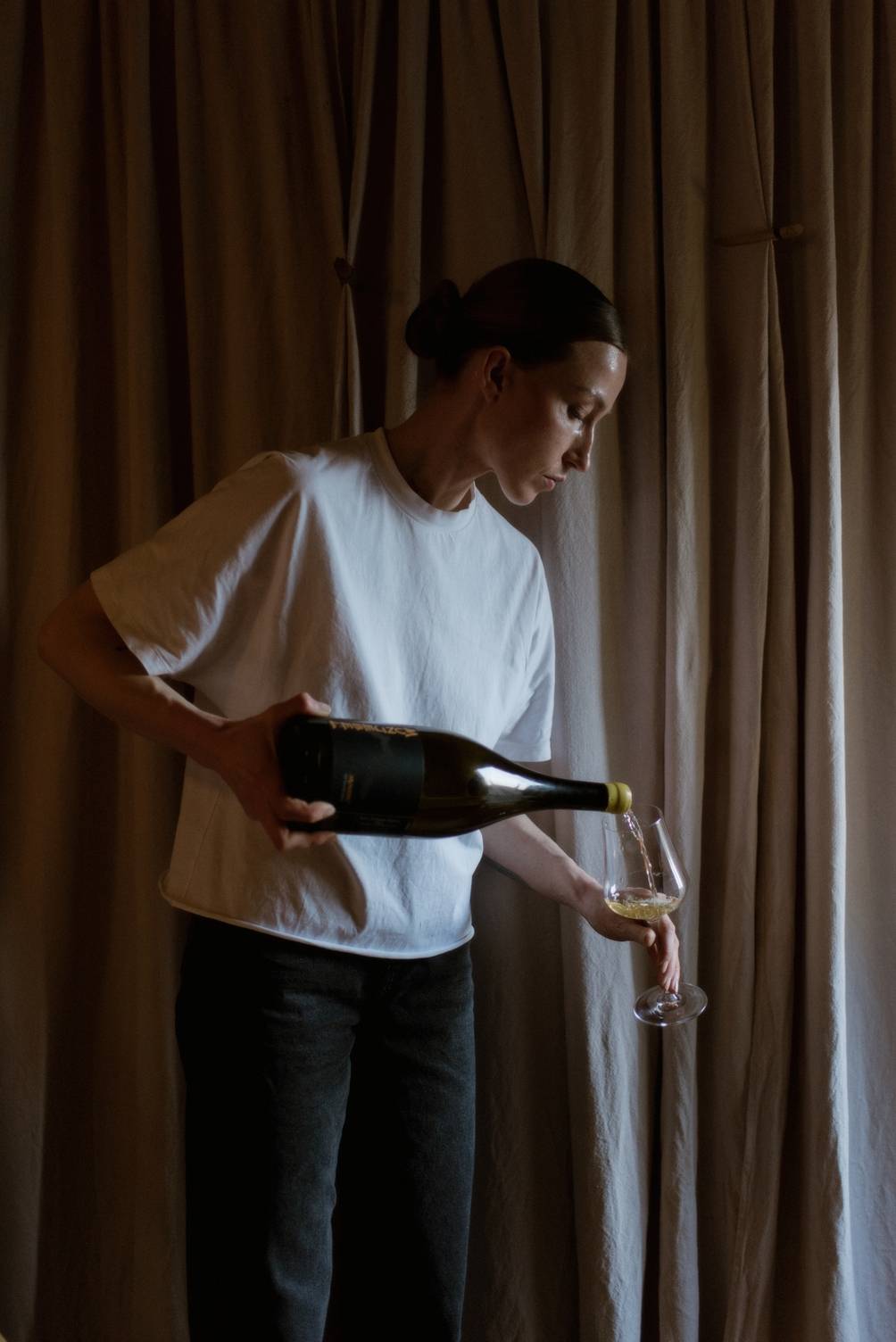
The pandemic seems to have played an unexpected role in that shift, when Timberyard began bottling cocktails and soft drinks alongside its at-home food offering. How did that period change the way you thought about what a restaurant drinks programme could be?
I think I was just looking forward to being able to welcome guests back into the building and actually being able to talk and explain what we do. It was such a strange time. We did have a little shop at the entrance of the restaurant, and we were selling a few of our cocktails and wine, but it definitely wasn’t the experience we wanted to offer.
What it did give me, though, was plenty of time to read, so when I came back to work, I had lots of new ideas I wanted to try.
Fermentation can sound quite technical from the outside. What is it about the process that continues to fascinate you?
Fermentation can seem quite daunting and niche when looking at it from the outside, but there are actually so many products we eat every day that are products of fermentation and have been a part of our culture for centuries—cheese, beer, wine, fermented vegetables, and some of the most popular condiment sauces sold in every supermarket are fermented, like Tabasco.
The versatility is something that will always fascinate me about fermentation. And also, honestly, once you get your head around one fermentation process, you realise a lot of different fermentation processes can easily become a part of your everyday life.
Your work often begins with ingredients that might otherwise be discarded by the kitchen. How closely do you work with the chefs, and how does an offcut or surplus ingredient become the starting point for a drink?
I am moving around the kitchen pretty much every day, and there is always something I will pick up throughout the day. Working with small farms and also foraged produce often means that we sometimes get too much or too little. If I forage a lot of mushrooms and the kitchen accidentally gets more plums than anticipated, I’ll give them the mushrooms, and they will give me some plums. It’s a constant haggling system, ha.
Everyone has different tastes and priorities, so I might see potential in things they might not necessarily use in the kitchen.
That creates an unusually close relationship between the food and drinks at Timberyard. When developing a pairing, are you trying to echo flavours on the plate, contrast with them, or sometimes take them somewhere completely different?
I often lean on wine-pairing theory. When I was working on the floor at Timberyard, I was doing wine pairings, which taught me what style of wine you would ideally pair with the flavours of a certain dish. Sometimes you just get some incredible cherries in, and you know, ‘this would be perfect with venison ’, but most of the time, I am working with all the preserves I have in my shed and creating something that will complement the dish.
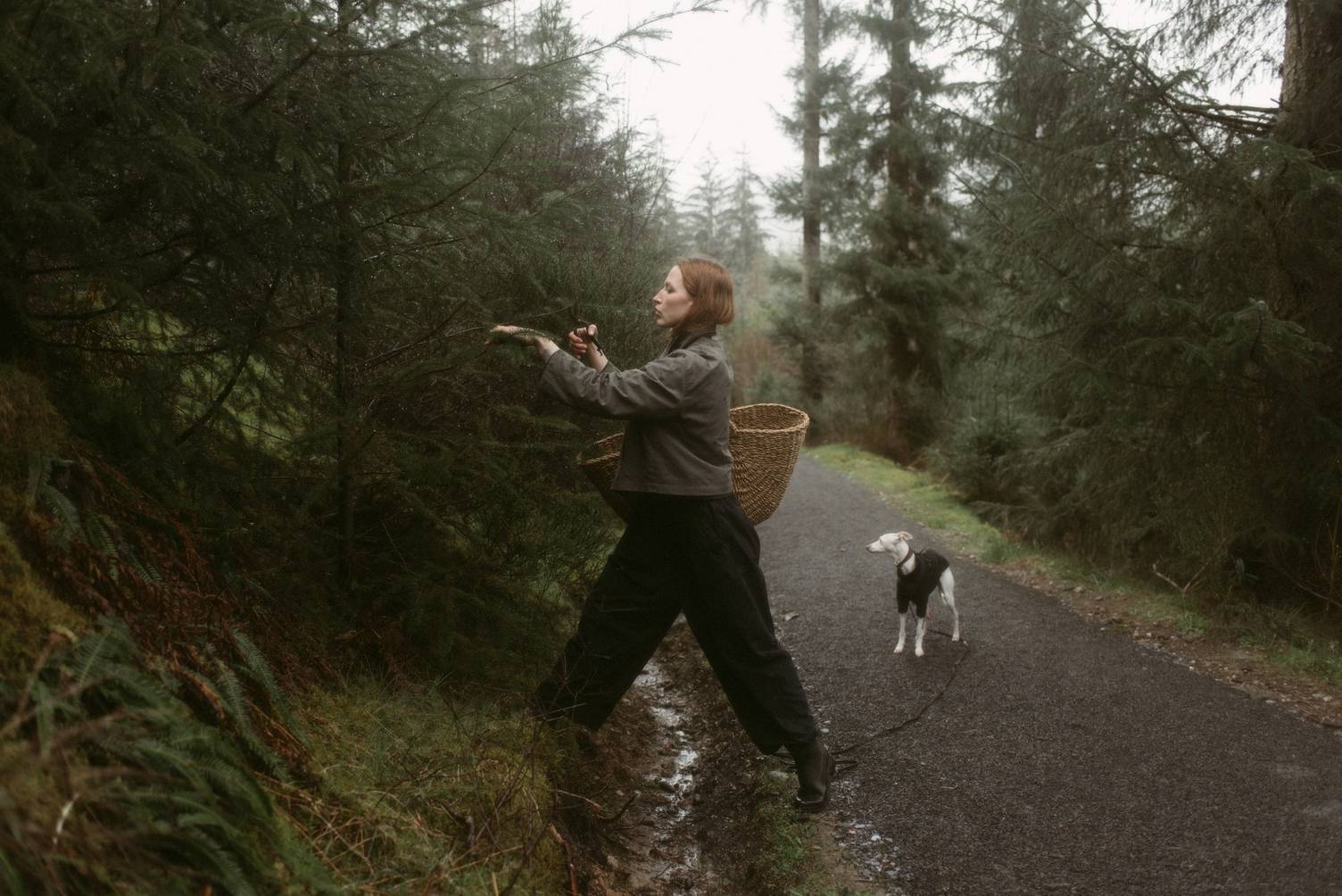
Foraging is another important part of your work. What do you tend to notice when you are out walking, and how do you decide that a wild herb, flower or plant has potential in a drink?
With foraging, it usually works the other way around; the plants I find inspire the drinks I make. It’s like walking through a library of different tastes. Wandering around, nibbling on plants and fruit, is actually a huge part of my creative process. You kind of need to not to have a plan to think of something new.
Scotland has such a distinctive landscape and growing season. How does working with wild Scottish ingredients shape the identity of Timberyard’s drinks programme?
Foraged produce has always been a huge part of Timberyard; the drinks were always made in-house with ingredients as local as possible. As I was saying before, Andrew used to go and pick lots of different things. Since I started taking the drinks over, I just got a bit obsessed with different wild plants and the best possible expression of Scotland through a drink.
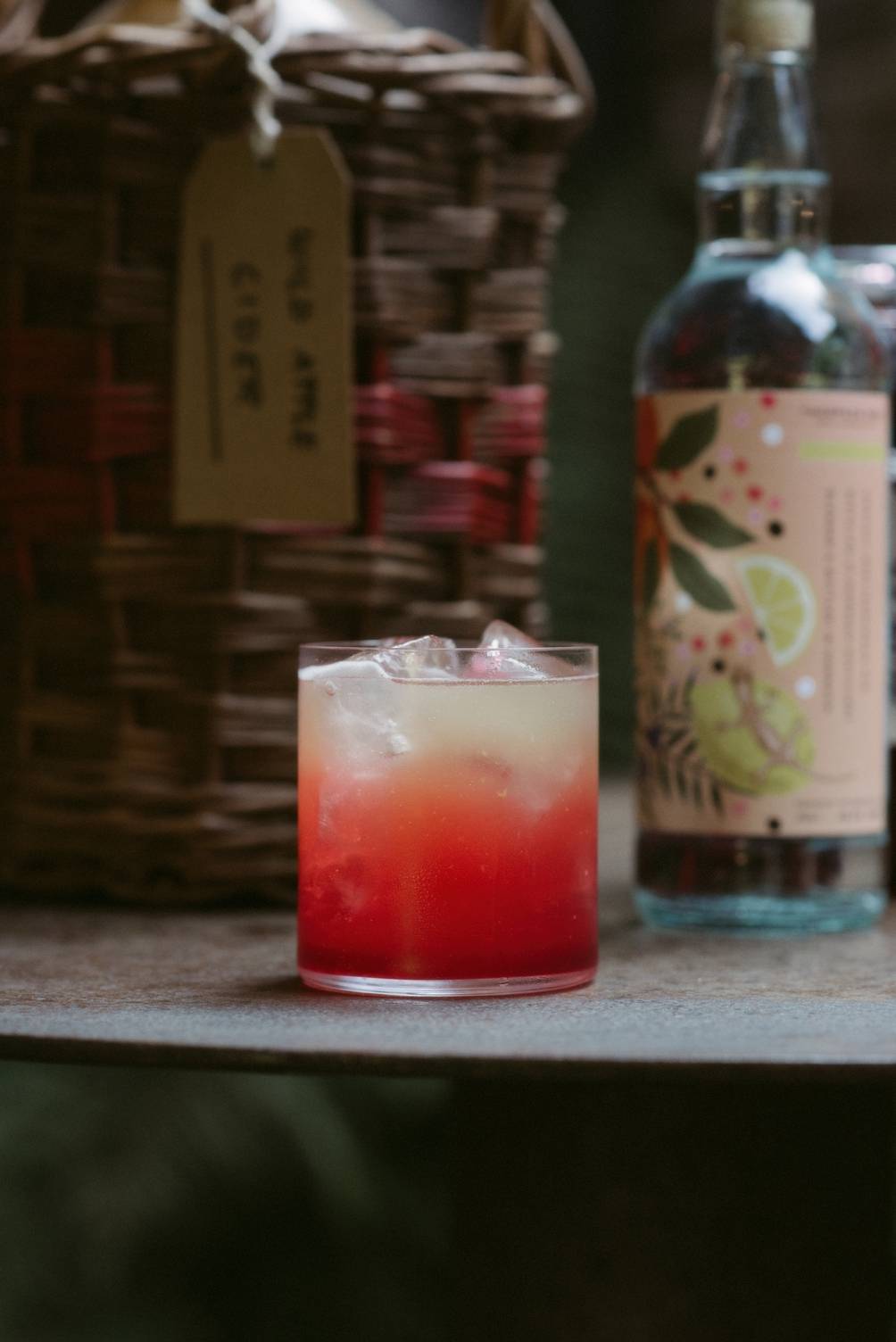
Your creations have included lovage kombucha, a pineapple weed and plum Negroni, and meadowsweet and woodruff cream soda. Where does the process begin when you develop something like these—with an ingredient, a flavour memory, a dish or an idea?
Ooft, kind of a bit of everything. It very much depends on the time of the year too. In the warmer months, when everything is abundant, you almost don’t know when to stop. There is so much out there that inspires our drinks. It can be a memory, an incredible ingredient or a new dish. I guess that’s what’s so exciting about this job; there is a lot to take inspiration from: old Scottish drinks, my heritage & beautiful produce.
I should also mention that cocktails are no longer fully my responsibility; George—one of my colleagues—makes our cocktails. We are still very much working together, and he is working with all my preserved produce, but I don’t want to take ownership of his creations.
How much experimentation sits behind the finished drinks guests eventually see? Are there ferments or ideas that have surprised you by behaving in a completely different way from what you expected?
Pretty much all I make starts as an experiment. You have to start with experiments to create something new and exciting. Obviously some of them don’t go well at the start, but that’s all part of the process!
I think even the experiments that didn’t go exactly to plan can be used for something and made into something delicious. Take kombucha, for example—you forgot about it, it went too far, now it tastes like vinegar, and it can’t be used as kombucha. Just use it as vinegar then! Give it to the kitchen to cook with, use it in a shrub … the small (and safe) failures don’t have to be wasteful.
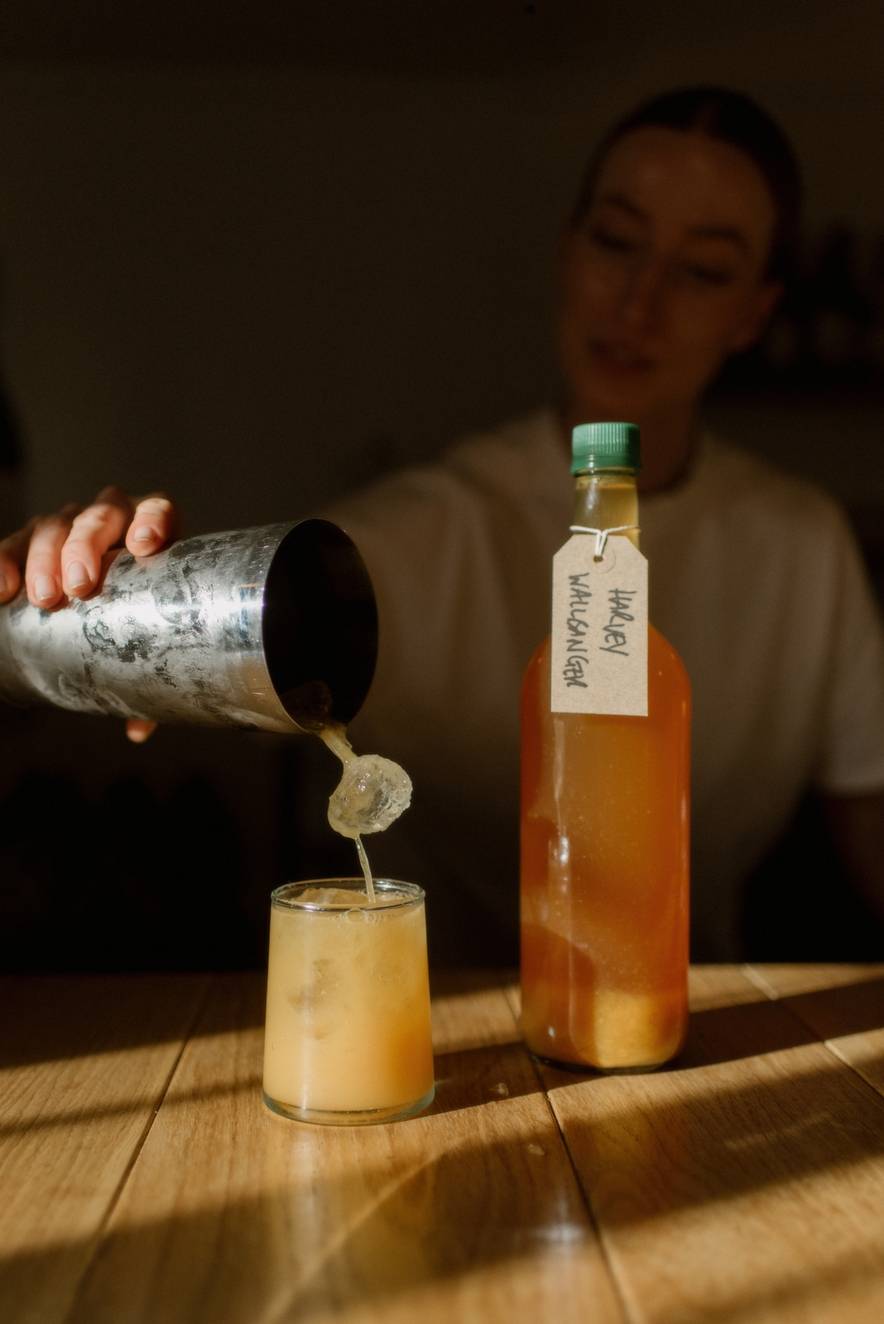
You trained at MAD Academy, founded by René Redzepi. How did that experience change or sharpen your thinking about sustainability, food systems, and waste?
It was a great experience; I’d recommend it to anyone who works in hospitality and wants to make sure our industry has the longevity it deserves. My main takeaway was the ability to recognise and measure what sustainability practices have the biggest impact.
Sustainability is a word used so often in hospitality that it can lose some of its meaning. What does a genuinely sustainable drinks programme look like to you in day-to-day practice?
The word sustainability has been so overused in the past few years that it has lost all meaning, and it is just being used as a marketing tool.
I like to use the word responsibility instead. It shifts the focus onto everyone’s actions. I have the responsibility to make drinks that people enjoy, responsibility to showcase all the wonderful Scottish produce as well as I can, but also responsibility to never over-forage a certain plant, responsibility for our suppliers—If they come to me saying that they have too much of something and too little of something else, I need to try to make it work and use things I wasn’t planning on—and even responsibility for my colleagues, passing information on and training everyone correctly.
Timberyard’s cocktail list was recently named Cocktail List of the Year at the National Restaurant Awards. What did that recognition mean to you, particularly for a programme that approaches cocktails in such an unconventional way?
This award was such a beautiful recognition for everyone in the team and also for all the 14 years of working with foraged produce at Timberyard.
It was very unexpected as we don’t really make very ‘showy’ cocktails. A lot of the flavours are simple but very clean, representing the best Scotland has to offer. I kind of feel like I only pushed us over the finish line, and there are so many other people to get us here!
Cocktail culture has traditionally centred on spirits, citrus, syrups and imported ingredients. Do you think the industry is starting to reconsider what a cocktail can be, and where its ingredients should come from?
Slowly but surely. The cocktail and spirit world is quite set in its ways sometimes. And also dominated by men—whether it’s bartenders, bar owners or distillers.
To a degree, the rigidity of this industry is completely understandable. If you think about it, you are always aiming for precision and perfection. Great service, perfectly calculated moves, precise pours of every element of every drink. That rigidity also applies to ingredients. Citrus has been a huge part of cocktail culture and, until quite recently, replacing certain citrus elements was unheard of.
It’s just an old-school way of thinking that is slowly changing, thanks to people who don’t like to stick to the rules.
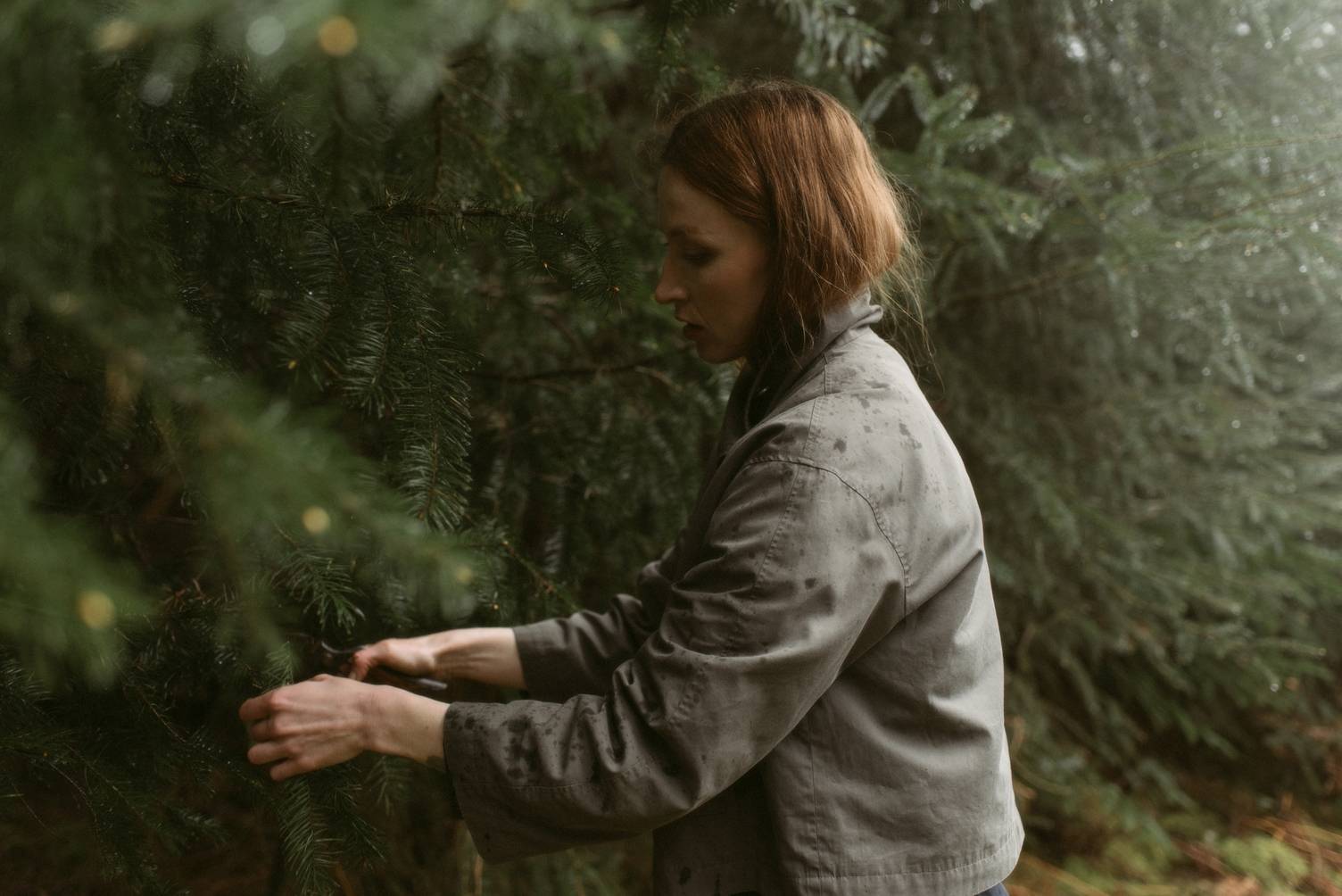
Non-alcoholic drinks have also become much more ambitious in recent years. Do fermentation and preservation give you greater scope to create alcohol-free pairings with the same depth and complexity as wine or cocktails?
Definitely, but you can even start way simpler. You don’t need to be a master fermenter to create a great drinks pairing for your restaurant. Understanding flavour, how to layer it and pair it with different dishes is the key.
Preservation gives me an incredible variety which would be very hard to replace. I often have strawberries on the menu in December. But they don’t taste like frozen strawberries full of water and no taste. They taste like summer, and that’s what I love about preservation. You can showcase all seasons at any time of the year.
After working with preservation for several years, has it changed the way you personally look at something as simple as a peel, stem, leaf or piece of fruit that is past its prime?
I feel guilty throwing anything out now, haha. I think it made me realise we have detached ourselves from our food system so much. Because if I look back at the way I grew up, food waste wasn’t a thing. It made me go back to what I knew as a kid. Sometimes waste can’t be reused to be eaten, but maybe you can do something else with it. I started really getting into natural dyeing of different fabrics with leftovers—you’d be amazed at what incredible colours you can get.
But that’s maybe a bit more for home rather than a restaurant environment. At work, I definitely see potential in so many things that would usually end up in the bin. It’s great to have a system (if you can) of preserving leftovers, even if you don’t have a plan for them at the time. Drying is probably the easiest way to go. Strawberries are a good example—we save and dry all the strawberry tops/leaves throughout the season. In winter, they are then added to our herbal tea blends.
Is there one wild ingredient, ferment or preservation technique you are particularly excited about exploring at the moment?
Oh, autumn is every forager’s dream! I am definitely excited about mushrooms; I love using them in drinks as a savoury element. It’s kind of unexpected, but it works really well, and they bring such a great umami.
And looking further ahead, what would you like the drinks programme at Timberyard to become? Are there ideas you still haven’t had the chance to pursue?
The programme changes its shape all the time, which is very exciting. Every year I find new fruits, veg and herbs I perhaps never used before, so I am hoping that is going to continue in the future.
We are starting to make larger quantities of alcoholic fruit ferments such as apple or plum cider, so I am very excited to see how they will turn out after we age them for a year or two! These long-term projects are definitely my favourite ones.
To find out more about Anna Šebelová and her work at Timberyard, visit the links below…
Timberyard
10 Lady Lawson St
Edinburgh EH3 9DS
United Kingdom
Web: timberyard.co
Tel: +44 131 221 1222
Email: bookings@timberyard.co
Instagram: @timberyard10
Images of Anna foraging © Ewelina Czarnota