


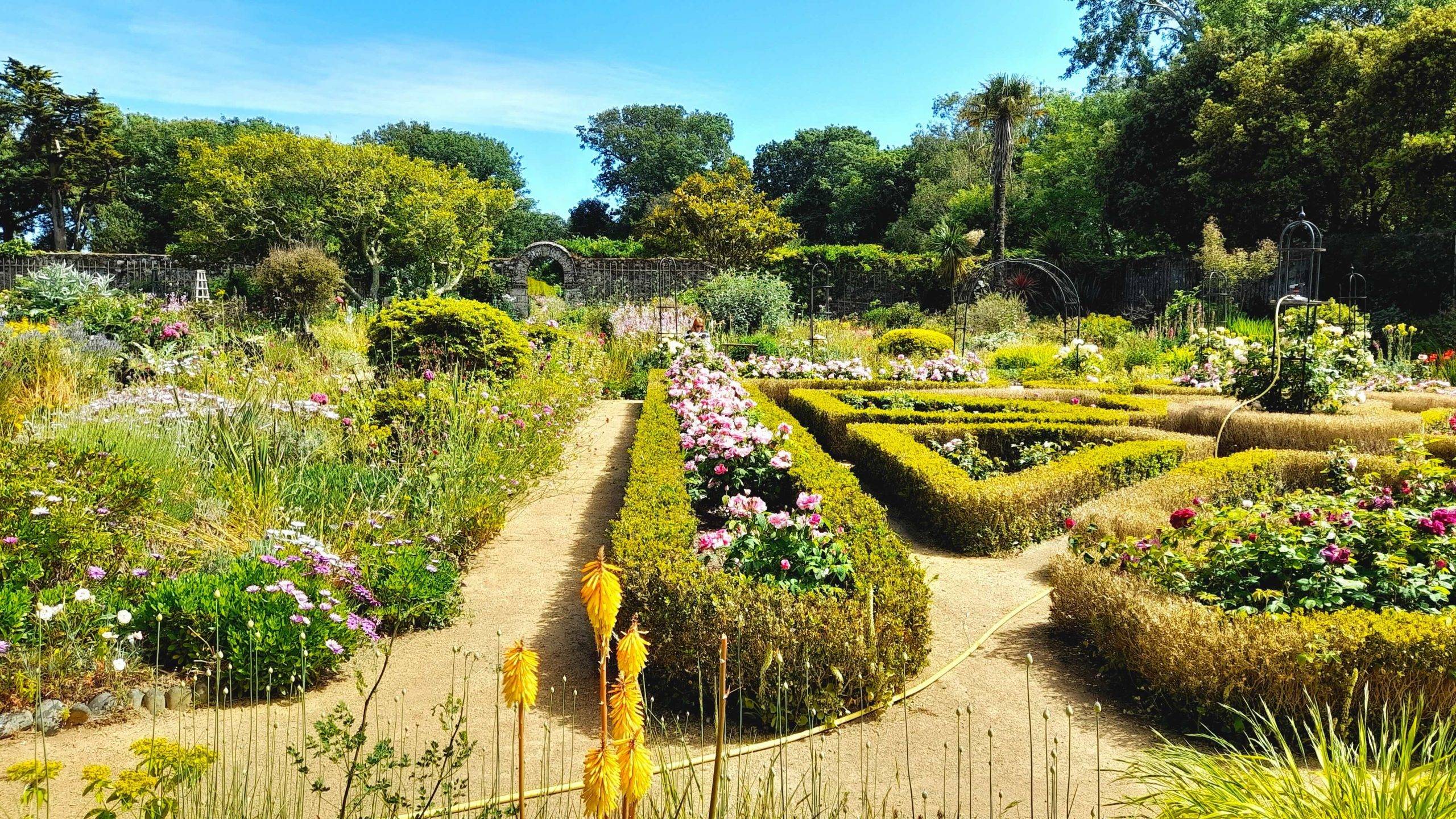
La Seigneurie Gardens © Rowena Marella-Daw
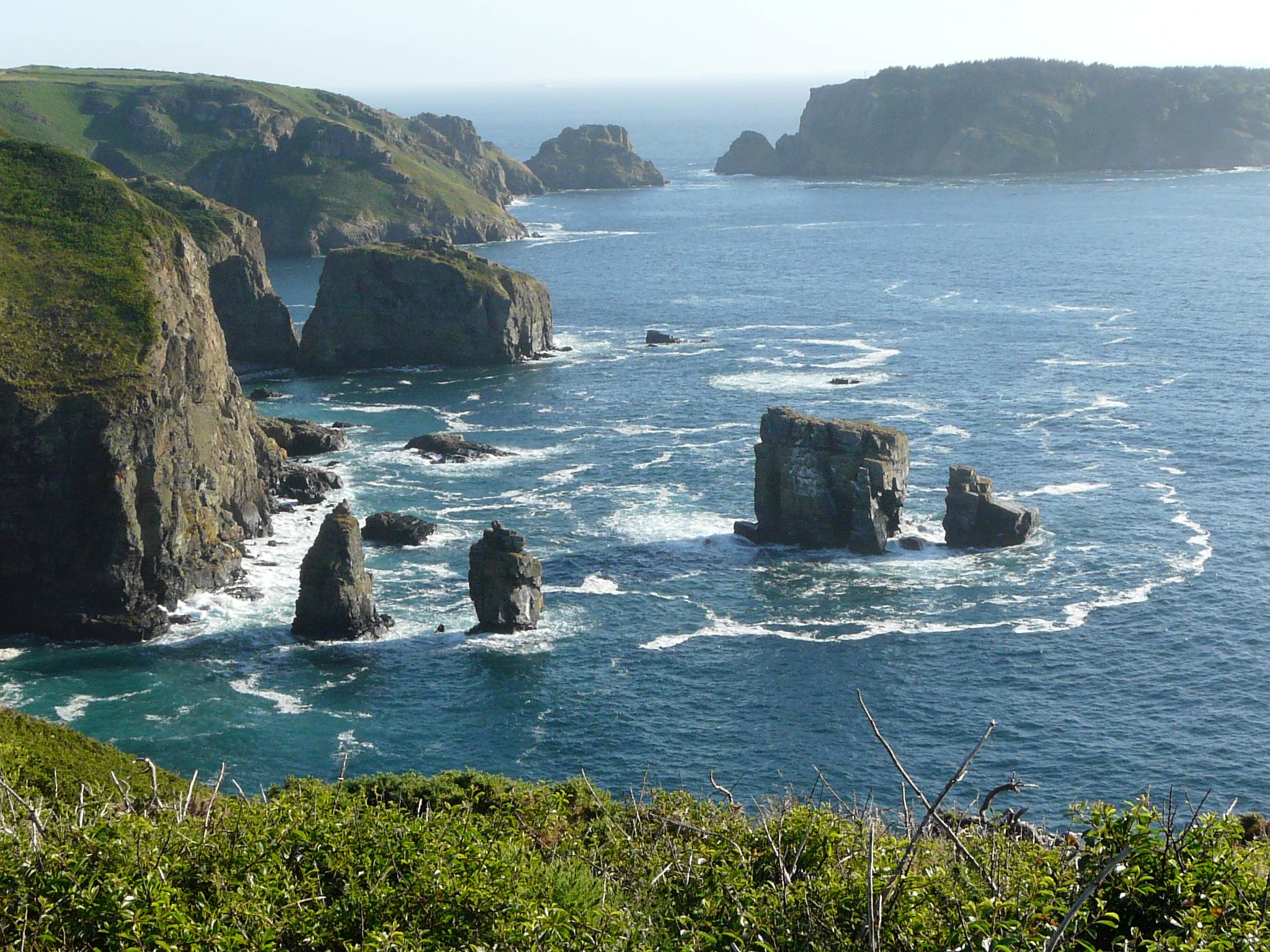
View from Horse Carriage Tour © Rowena Marella-Daw
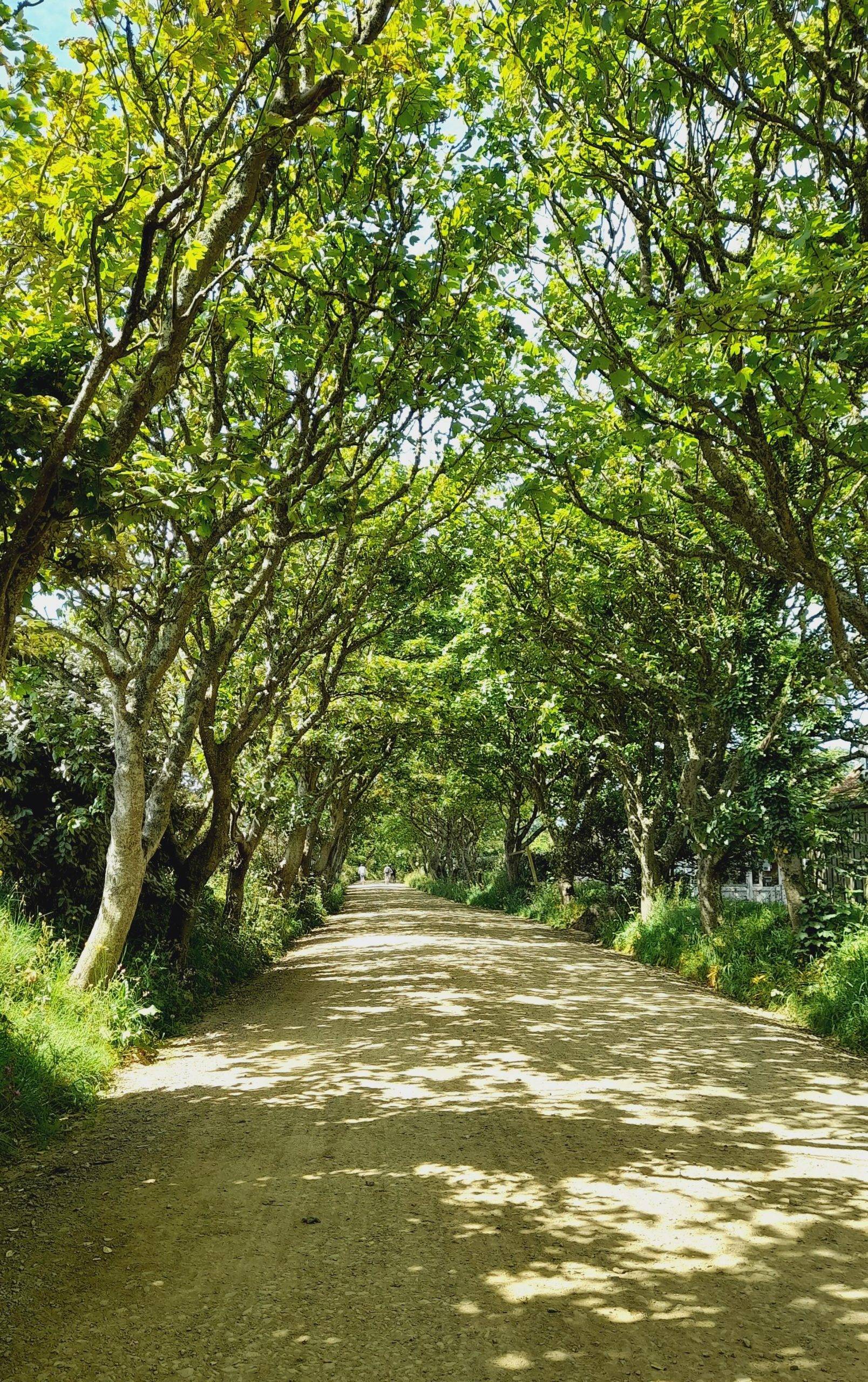
Quiet leafy lane on Sark Island © Rowena Marella-Daw
Escaping the stresses of modern life is an ideal most of us yearn for. And while a remote rural retreat in mainland UK may suffice for many, those in search of effortless tranquillity and down-to-earth existence will be pleased to know there’s such a place totally devoid of cars, traffic, noise, pollution and street lamps. It may sound too good to be true, but it’s closer than you think.
Situated 80 miles from England’s south coast and 24 miles west of northern France, the tiny island of Sark, one of the Channel Islands, is only 1.5 miles wide and 3.5 miles long—barely visible on the map, let alone from space. But what it lacks in size, it makes up for with its captivating beauty and enviable lifestyle.
A short flight on board Aurigny Airline took me from Gatwick to bustling Guernsey. And it wasn’t until I boarded the ferry heading towards Sark that life began to slow down. Fresh sea air and the sight of distant islands and islets had a meditative effect; the 50-minute journey just flew by.
From Maseline Harbour, where we disembarked, my companions and I walked up to the pick-up point, where the ‘Toast Rack’ awaited. This endearing nickname depicts rows of seats encased in an open-sided trailer attached to the back of a tractor. For those who don’t fancy walking uphill, this is the main mode of transport to and from the top of Harbour Hill. Cars are banned on the island; hence, unpaved roads and clouds of dust are all part of the experience.
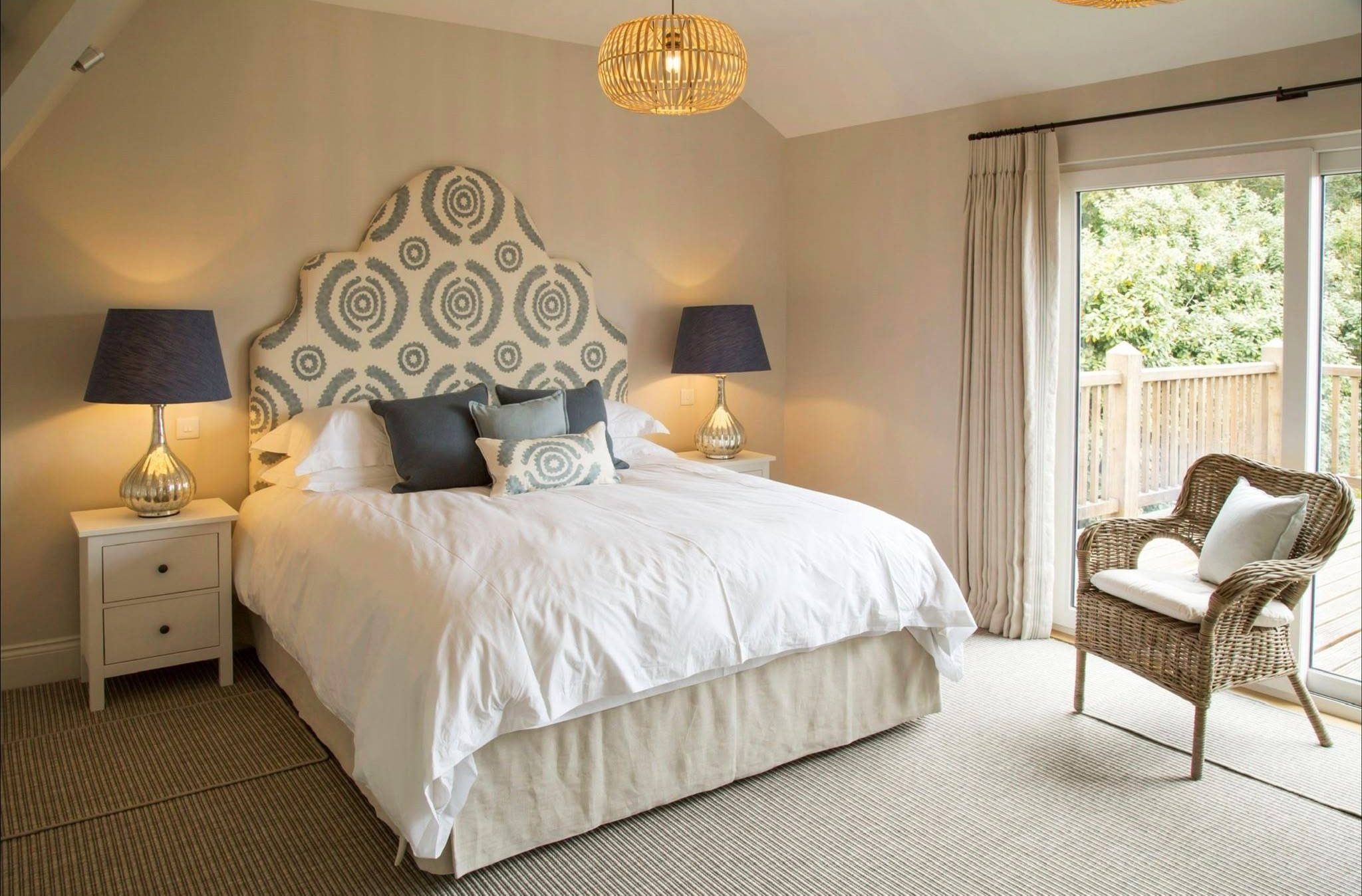
Featured image: View of La Grande Grève beach from La Coupée @Rowena Marella-Daw | Above image: Master bedroom at La Grange, image courtesy of Sark Holiday Cottages
LA GRANGE
My weekend retreat, La Grange, belongs to the Clos à Jaon collection of six properties managed by Sark Holiday Cottages. Its central location enabled non-cyclists like myself to walk to local restaurants, shops at The Avenue, St Peter’s Church, the Seigneurie Gardens and other points of interest. La Grange was erected in the 1700s as a pair of cottages built with traditional Sark granite and thatched roofing. In 2015, it underwent extensive renovation to restore its original exterior features whilst creating a luxurious interior that marries country style with contemporary touches. There are four bedrooms for eight guests, and the spacious master bedroom comes with an en-suite bathroom.
My favourite features are the modern kitchen with French doors that lead to the private garden, and a balcony running across the entire first floor. Accessible via the master bedroom’s double doors, it also has a staircase providing access to the garden below. And since Sark has been officially designated as the planet’s first International Dark Sky Island, this would be the perfect place to relax with a glass of wine and observe the wonders of the universe.
FOOTLOOSE ON SARK
The next morning, our ‘Limo’ service came in the form of a horse-and-carriage tour around the island, which can be booked through Sark Carriages. During a guided tour with owner Michelle Perrée and her horse Denzil, we stopped at various vantage points, pathways and meadows to marvel at panoramic vistas of rugged cliffs bordering the sea. It’s not unusual to come across a cannon strategically positioned on the cliff’s edge as we did. They were used to defend the island from invaders and have now become part of Sark’s historic landscape. Along the way, we also encountered wild horses busily chomping on fertile grass, oblivious to the untamed beauty that surrounds them.
Sark Carriages dates back to the late 1700s, making it the island’s oldest operating carriage service. Its founder, Hepsibar Perrée, delivered mail from Creux Harbour to the post office using a white mule and trap. Generations later, Charles Perrée, a Royal Coachman, delivered cargo and coal and also conducted tours from the family’s base at Le Grand Fort Farm. Today, Michelle shares her family’s legacy with passengers, coupled with her in-depth knowledge of Sark’s history and intriguing folklore. While Denzil dutifully trotted along, Michelle pointed to a house with a “Witch’s Seat”, a piece of brick protruding from the exterior wall. It was intended to ‘appease’ witches by providing them a seat to rest on during their nocturnal jaunts. Otherwise, the owner could be hexed.
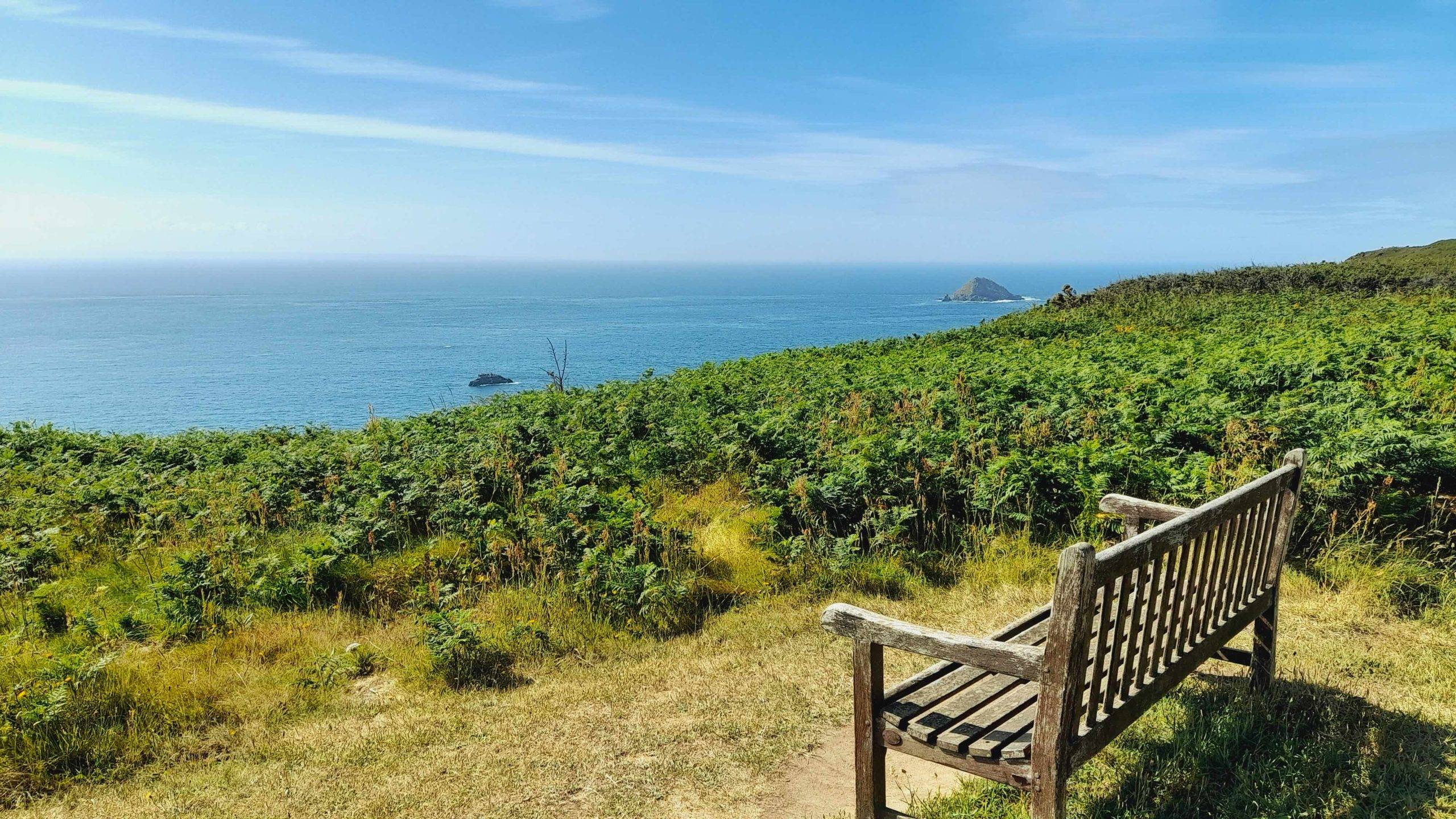
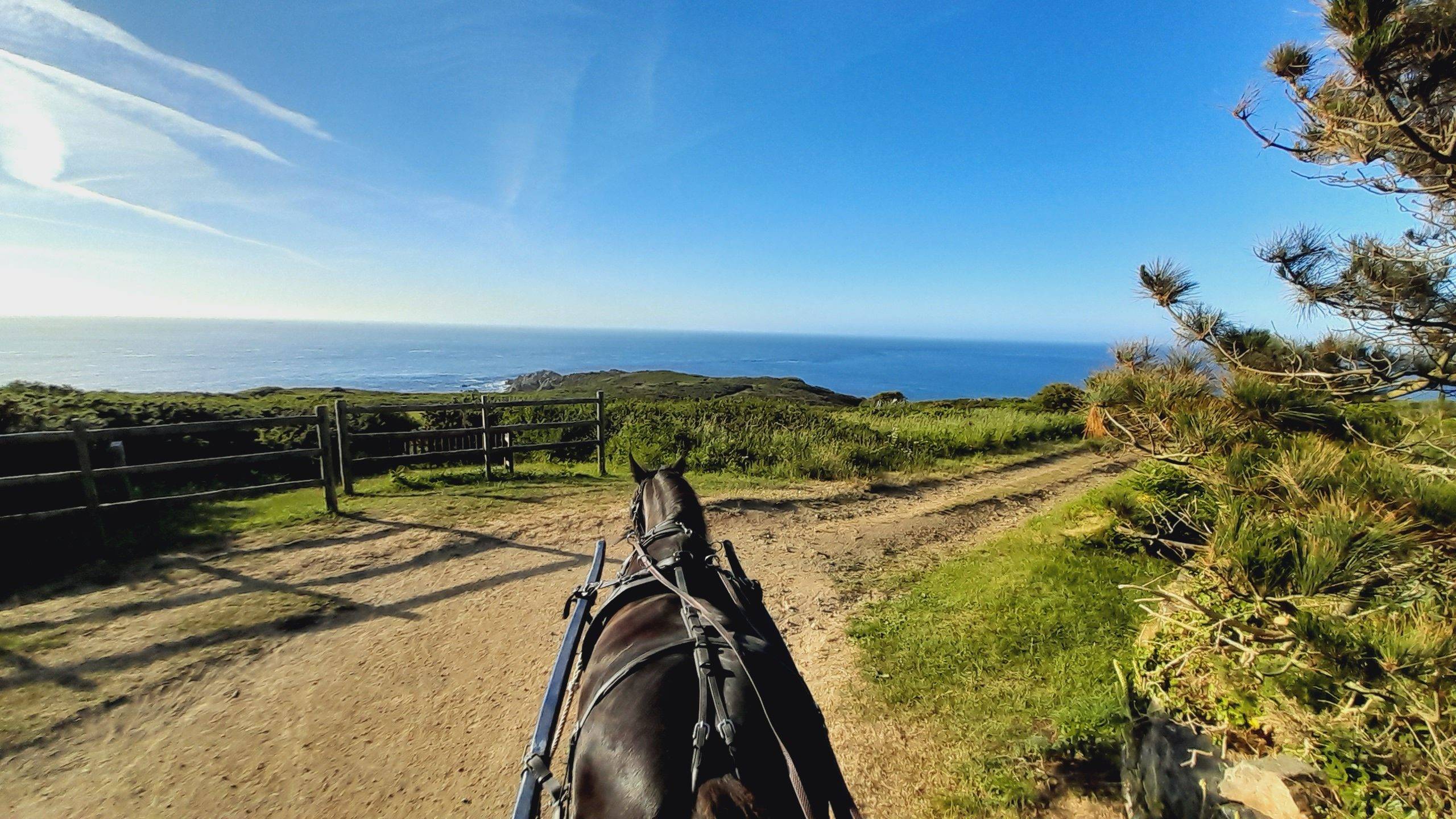
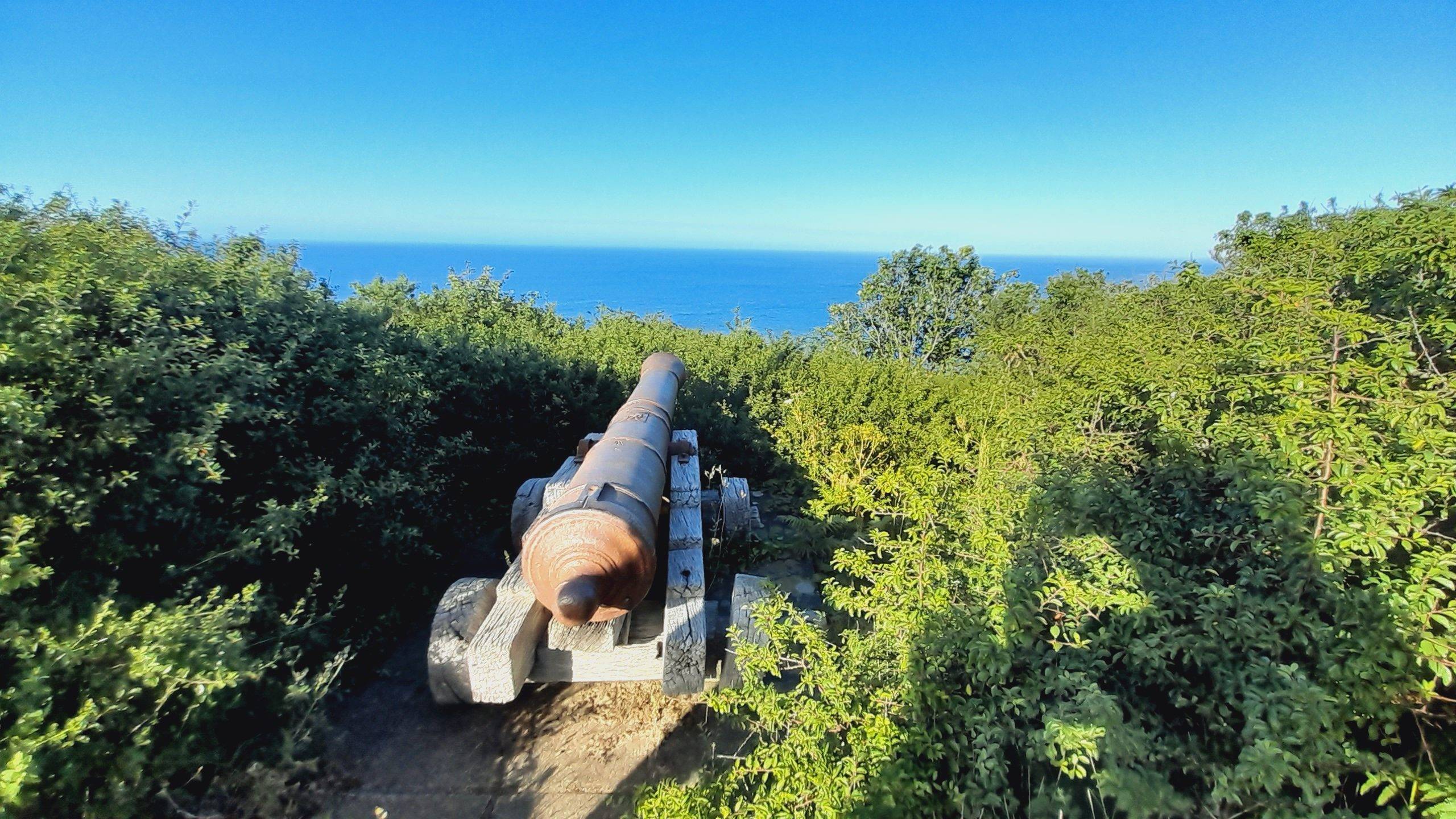
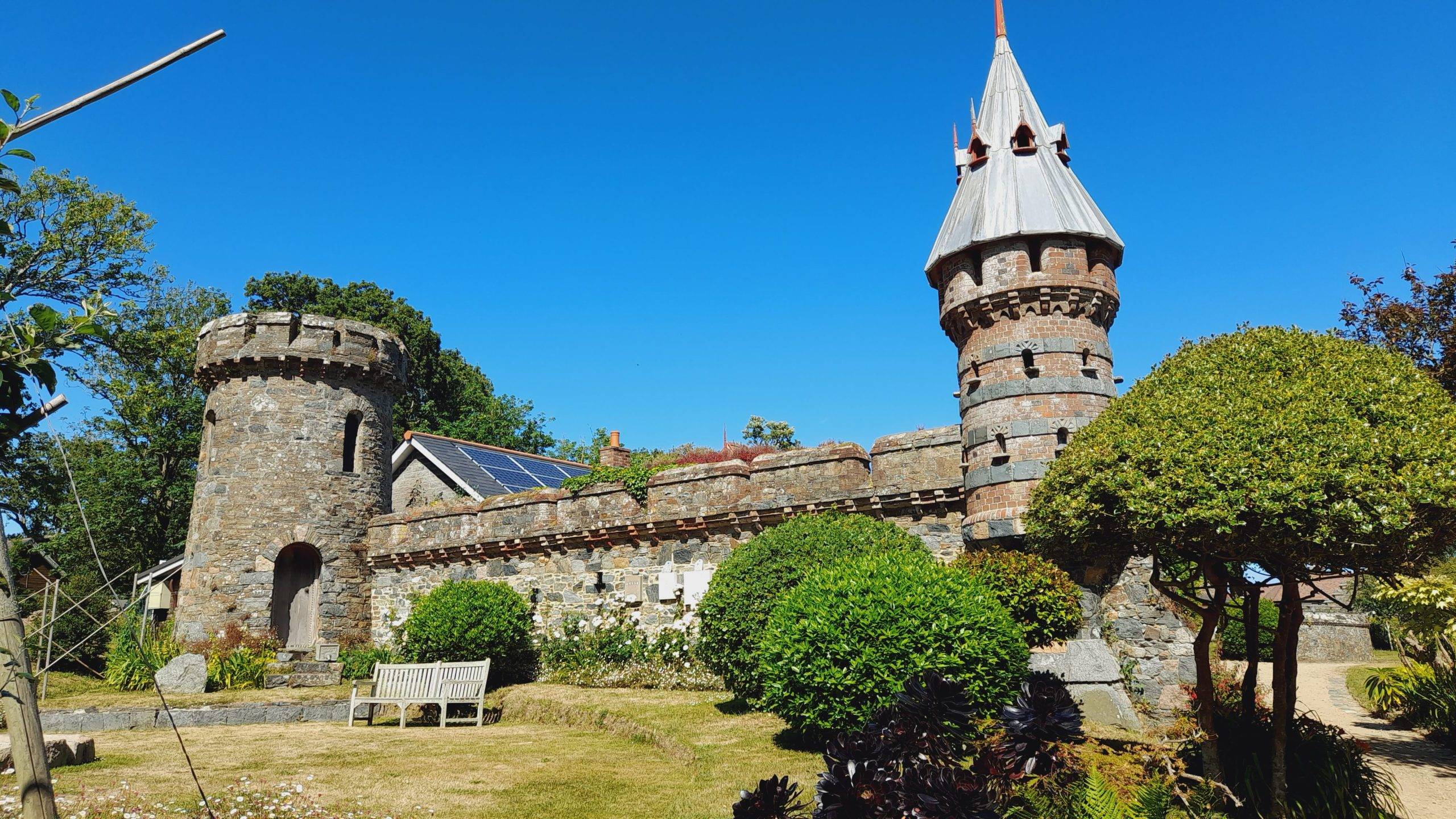
Clockwise from top left: Dixcart Bay view; horse carriage ride; La Seigneurie House; Sark cannon © Rowena Marella-Daw
LA COUPÉE
Sark is divided into Great Sark and Little Sark, and the only means of travelling between them is to cross La Coupée. Not for the fainthearted, this isthmus is 90 metres long and 10 metres wide, with a sheer 80-metre drop on both sides. Once upon a time, children had to crawl on their hands and knees to cross this dirt track on windy days. At the end of WWII, 100 German POWs were transported from Jersey to Sark to clear the landmines and reinforce the causeway with concrete and safety railings.
The quickest way to get to La Coupée is to cycle, but cyclists have to dismount their bikes before crossing over. It took me around 40 minutes to walk from La Grange, but it was a leisurely stroll along quiet lanes interrupted only by birdsong and a cockerel’s cock-a-doodle-doo. This vertiginous passage is a must-see for photography buffs, while adventurous swimmers can descend the 360 steps leading to the La Grande Grève beach down below.
Also worth exploring is La Seigneurie, built in 1675 as the residence of the Seigneur of Sark. This impressive house is surrounded by sprawling grounds comprising a walled garden, Victorian watchtower and several stone outbuildings. Energetic visitors not fazed by heights can experience wild swimming at coves, pristine bays and rock pools dotted around the island. Some are challenging to reach, such as Derrible Bay, Venus Pool and Adonis Pool. The small pebbly beach at Creux Harbour appears easiest to get to, and Dixcart Bay is accessed through the Dixcart woods.
PIRATES AND CAVES
The island of Sark rises 114 metres (374 feet) above sea level, its 22-mile craggy coastline defined by jagged cliffs and isolated coves. Our cruise around the island was guided by Morgan Guille, who, together with his dad, runs George Guille’s Island Boat Trip. Morgan’s ancestors were among the first to set foot on Sark some 450 years ago, and it’s fascinating to know the Guille lineage survives to this very day.
Island weather is unpredictable, and at 07:00 that morning, the fog was particularly dense. Part of me was dreading the thought of a rough boat ride, and it wasn’t until around 8:00 am that Morgan gave the green light for the boat trip. By the time we arrived at Creux Harbour at 9 am, the fog had already cleared.
From Creux Harbour, we skimmed the coastline, encountering different rock formations at every turn. Morgan slowed down the boat and pointed towards a colony of Guillemots nesting on rocky outcrops. Other migrant birds that regularly visit here include gannets, cormorants, shags, oyster-catchers and fulmars, as well as puffins and razorbills.
Sark’s coastline is littered with caves, some more inconspicuous than others. Since the 13th century, they have served as a stronghold for pirates, including the notorious Eustace the Monk, who renounced his vows to become a merciless raider. He fought for the French fleet during the decisive 1217 Battle of Sandwich and was finally captured and beheaded. Piracy continued until the 16th century, by which time Sark was rendered lawless and uninhabitable, so much so that in 1565 Queen Elizabeth was compelled to grant the fiefdom of Sark to Helier de Carteret on the condition that he rid the island of marauders and defend it against invaders. To fulfil his duty, he organised a posse of 40 armed men and their families and divided the island into 40 landholdings, marking the beginning of Sark’s feudal system.
By the time we got back from our exhilarating boat ride, two fishermen were busy sorting spiny spider crabs they had caught earlier. This time around, they were dealing with a different kind of piracy. Apparently, there is a shortage of crabs due to a surging number of octopuses feeding on these tasty crustaceans.
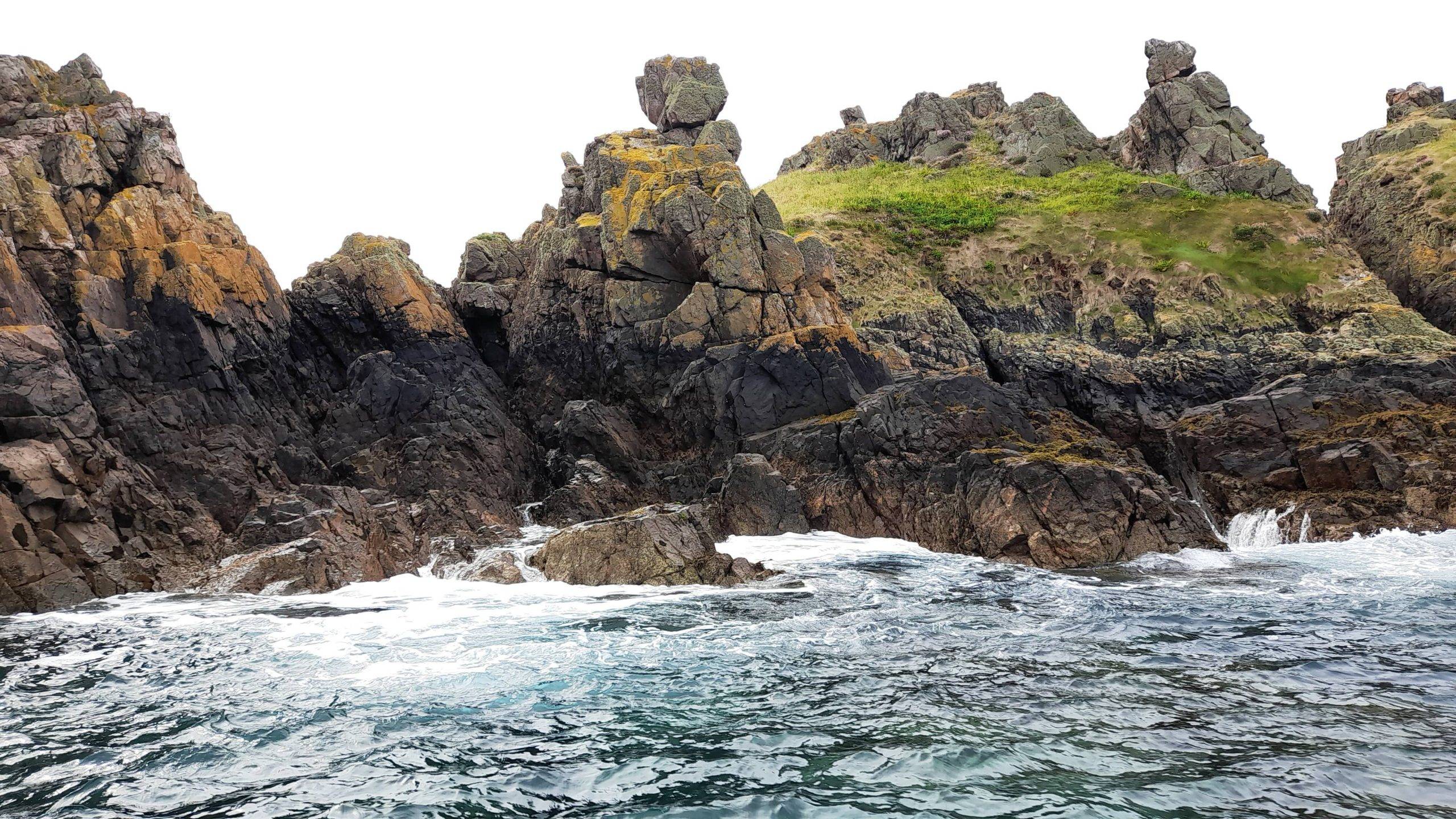
Sark Island Boat Trip © Rowena Marella-Daw
FRESH CATCH
When we arrived at Sark Time and Tide for dinner, the restaurant was nearly full, which was a good sign. Surf and turf dishes are specialities here, and the signature Seafood Platter was simply irresistible—a huge two-tier feast comprising a whole Sark lobster, six Herm oysters, picked Sark crab, mussels, Atlantic pink prawns, four langoustines, smoked salmon, six scallops, organic salad, new potatoes, fries and an array of sauces. This portion for two could feed two more people—and it did. The Pork Belly was tender and succulent, one of the best I’ve ever had. This sumptuous meal was washed down with a light and easy Les Sardines Grenache Gris. Bring a big appetite.
For a light and satisfying lunch, Fleur du Jardin is highly recommended for its selection of fresh seafood, crab sandwiches and afternoon tea. My crab cakes were delicate and tasty, accompanied by quality chips. Blessed with glorious warm weather, dining alfresco felt like having a private garden party. And after a long walk around the island, this is definitely the place to relax and refuel.
TRUE LUXURY
When visitors set foot on Sark, they become equals regardless of their background or financial status. Everyone walks, cycles, and enjoys the same delicious seafood. Visiting Sark is an opportunity to leave worries and excesses behind, engage with nature, and live a simple life. And if you arrive unfit and stressed, I can bet you will go back healthier, relaxed and grounded. That, to me, is the essence of real luxury that money can’t buy.
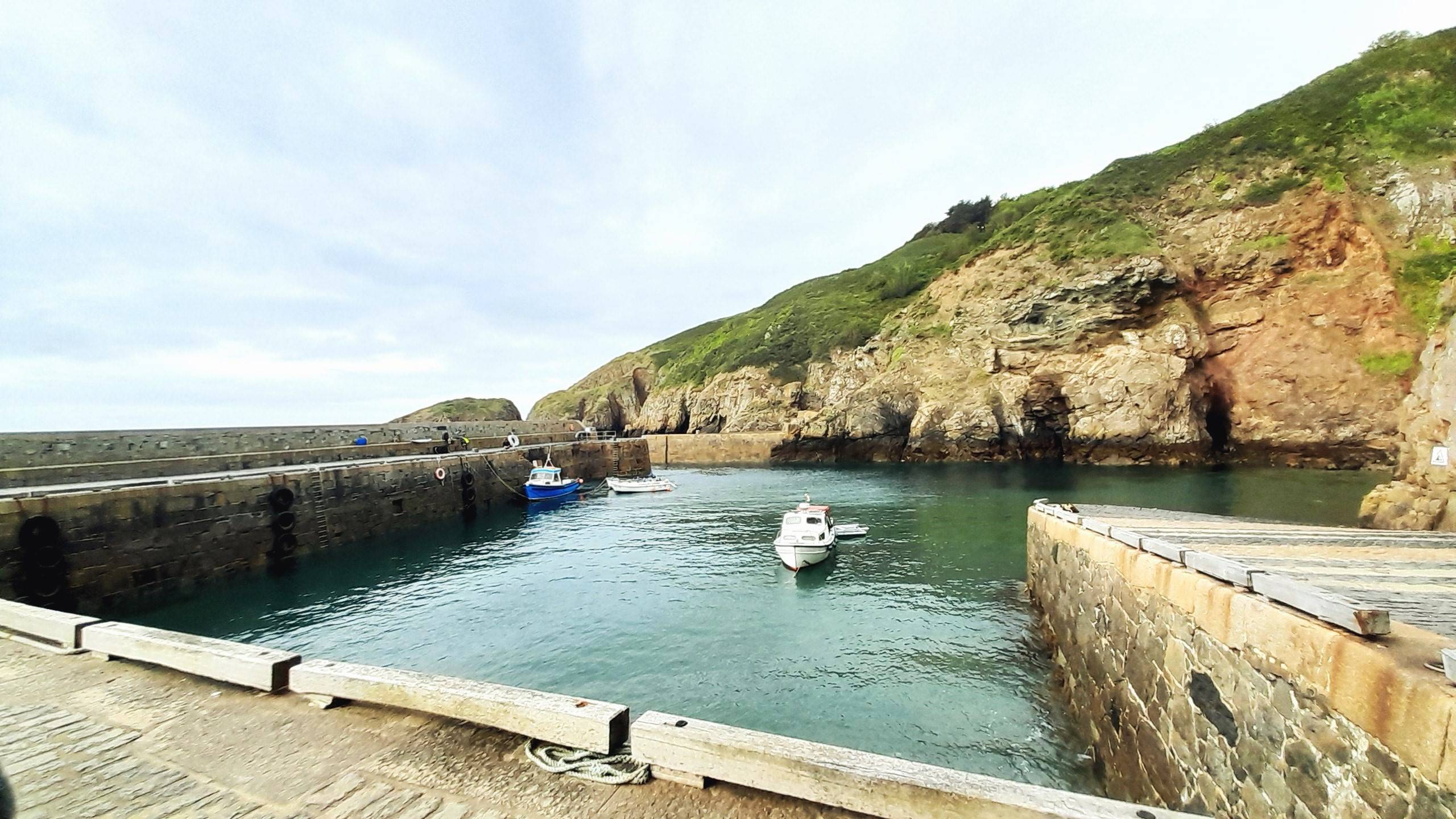
Creux Harbour © Rowena Marella-Daw
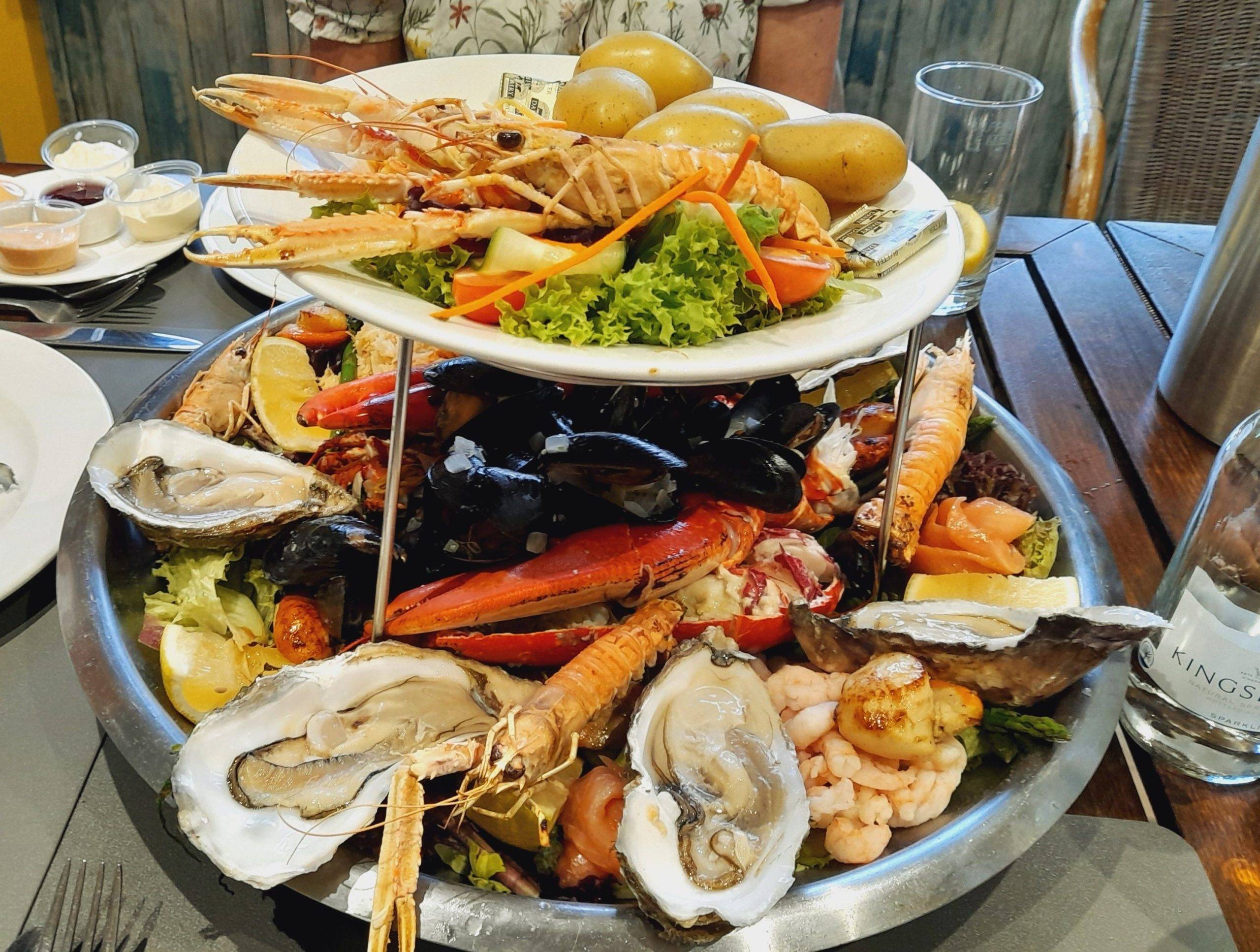
Seafood at Sark Time and Tide © Rowena Marella-Daw
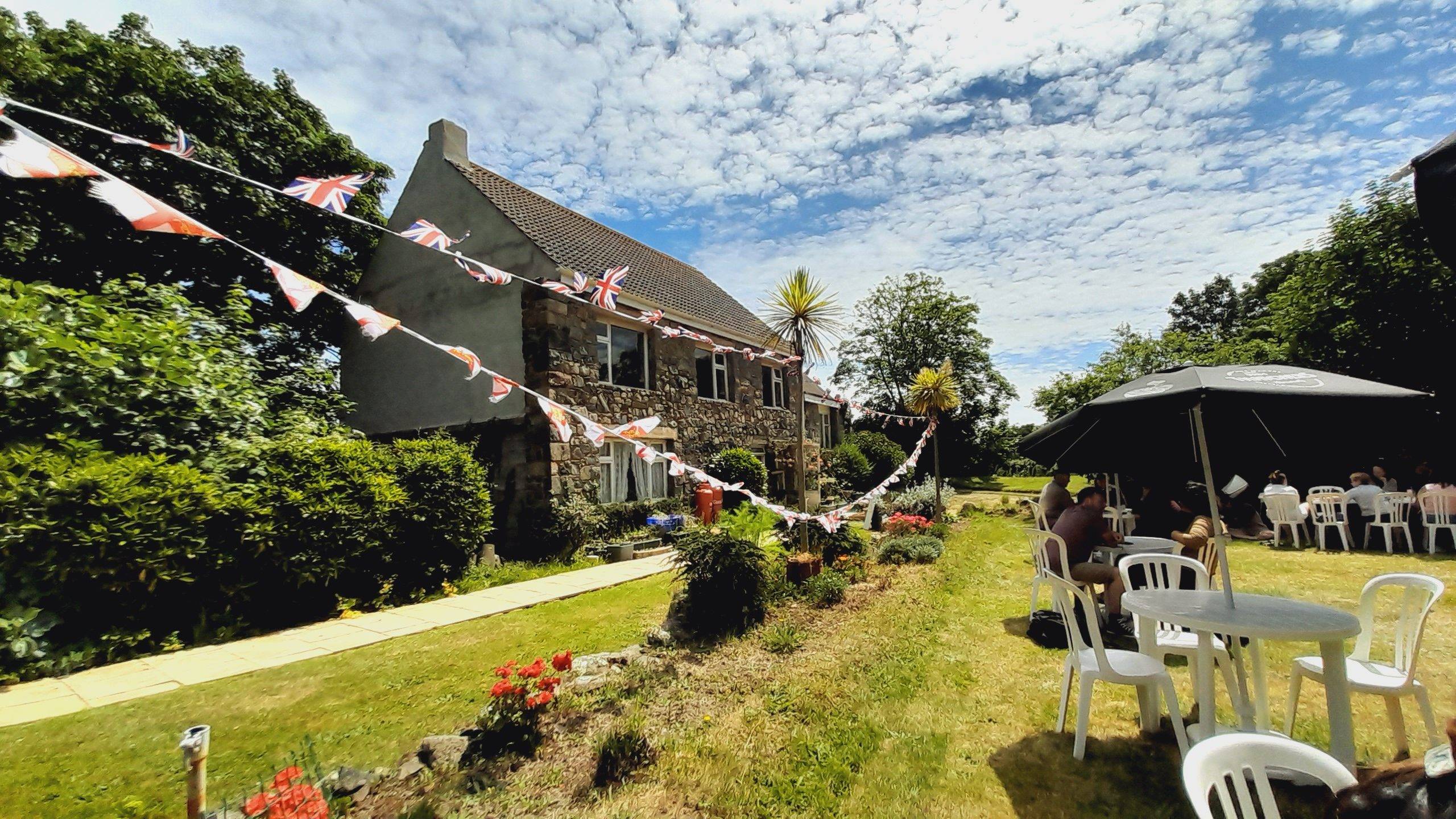
Fleur du Jardin © Rowena Marella-Daw