


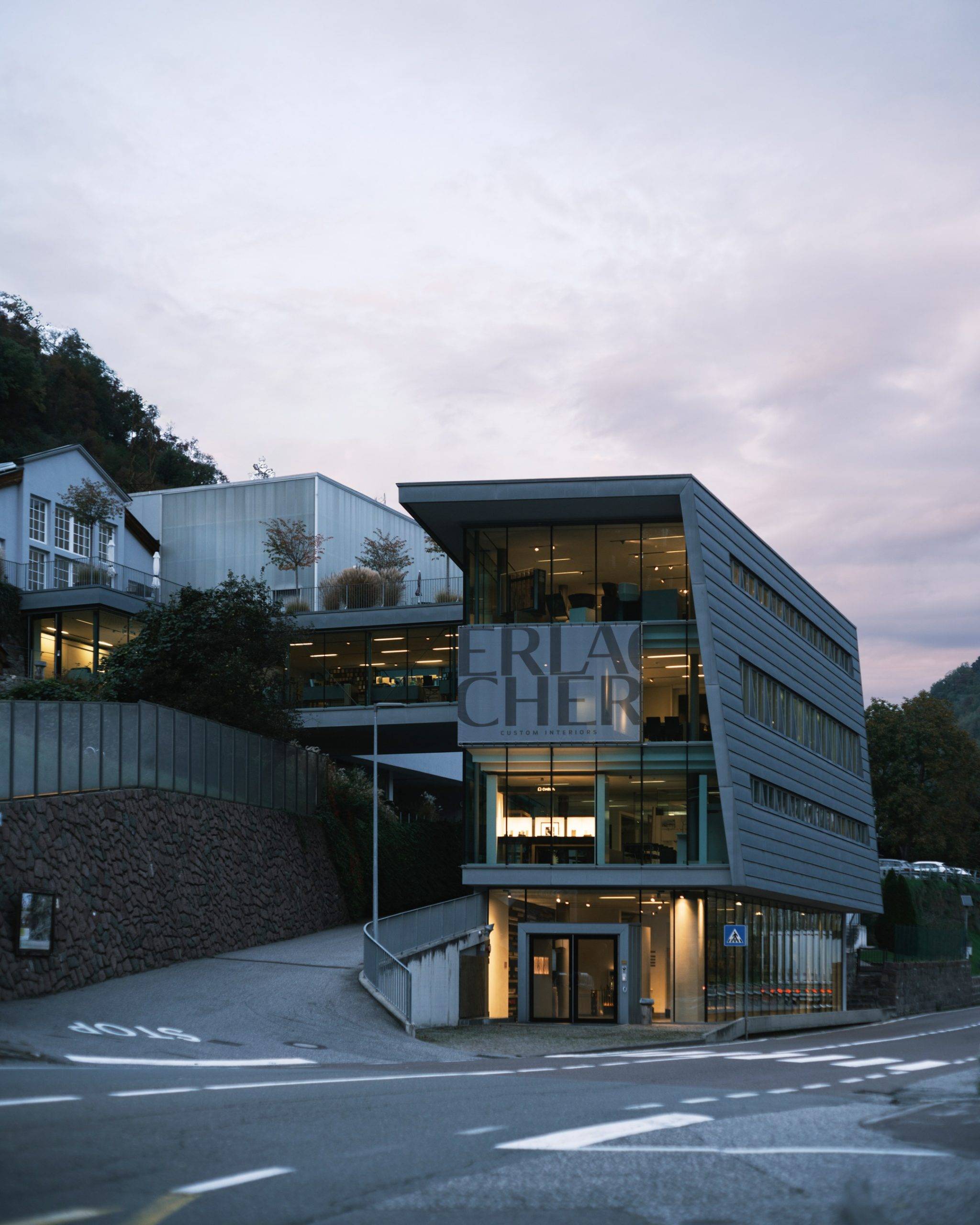
Exterior of Erlacher Custom Interiors’ building in Barbiano, Italy © Wast Media
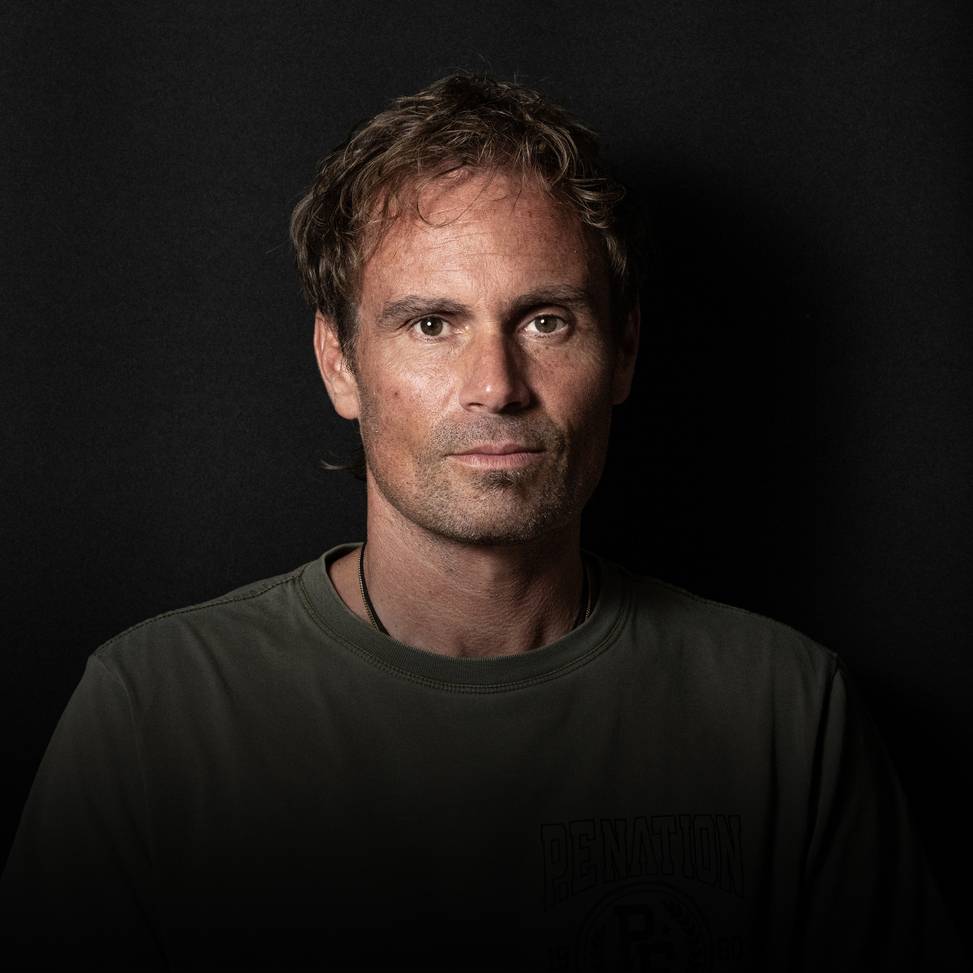
Thomas Erlacher, Owner & CEO of Erlacher Custom Interiors
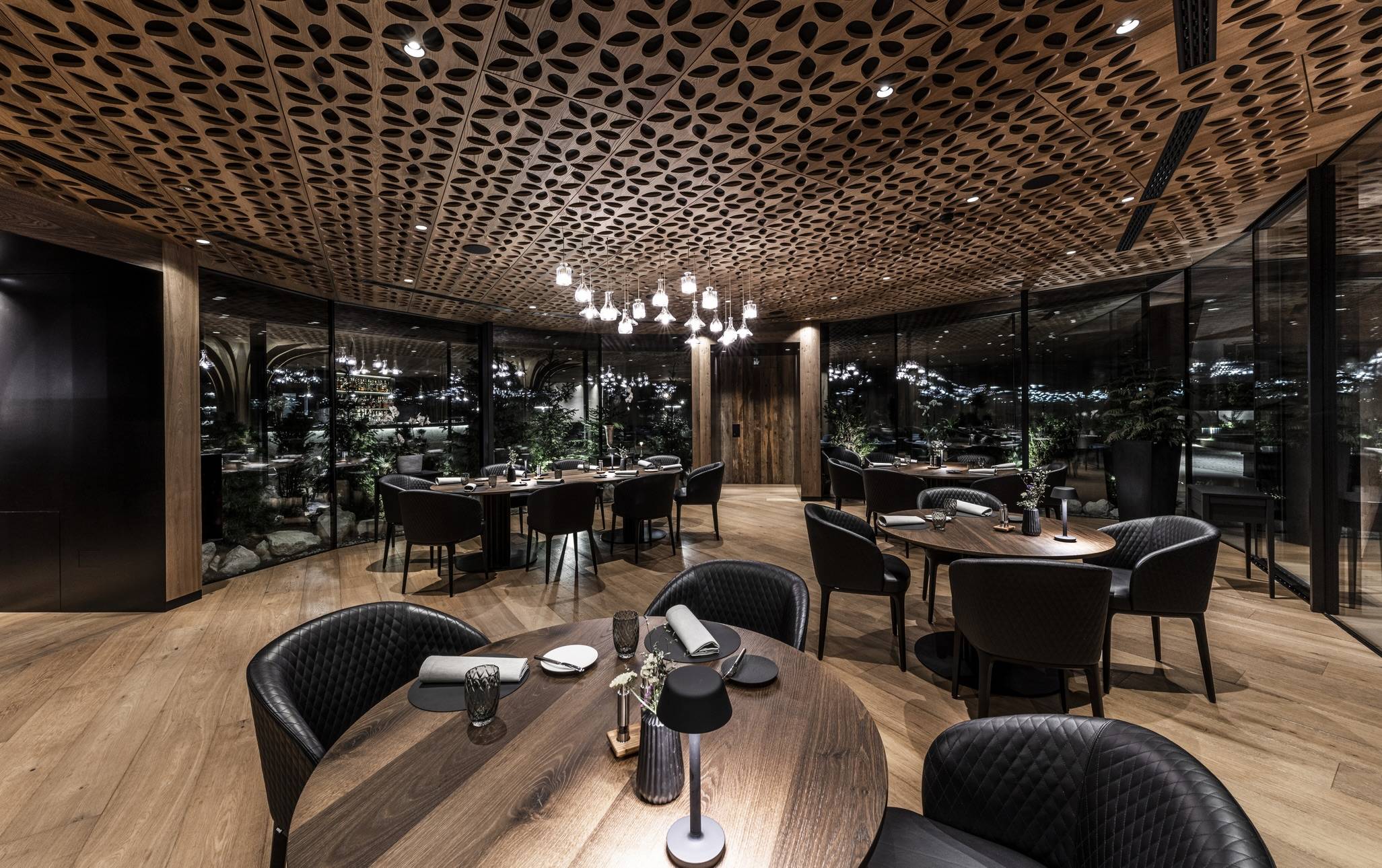
Interior of Hotel Granbaita Dolomites, furnished by Erlacher Custom Interiors & designed by Perathoner Architects © Hannes Niederkofler
With its roots in South Tyrol and a legacy of craftsmanship stretching back to 1905, Erlacher Custom Interiors has grown from a small artisan workshop into an internationally active specialist in bespoke interiors. Working across hospitality, residential, retail, and commercial spaces, the family-run company brings together traditional skill, technical precision, and a deep respect for materials to create interiors that feel personal, enduring, and subtly refined.
In this interview, Thomas Erlacher, Owner & CEO of Erlacher Custom Interiors, shares more about the firm’s heritage, collaborative process, and the details that define its approach to contemporary luxury.
Give us a brief background on Erlacher Custom Interiors, how it was founded and what the company’s guiding principles are…
Erlacher Custom Interiors is a family-run company rooted in the heart of South Tyrol, Italy, where craftsmanship has always been deeply connected to culture, architecture, and the surrounding landscape. What began in 1905 as a small artisan workshop has evolved into an internationally active company specialising in bespoke interior solutions for hospitality, residential, retail, and commercial spaces.
Despite this growth, our core philosophy has remained unchanged: to translate architectural visions into tangible realities with precision, integrity, and a deep respect for materials. We see ourselves not simply as manufacturers, but as trusted partners; accompanying each project from the first concept to the final installation with a commitment to excellence at every stage.
Our guiding principles are rooted in passion, honesty, trust, and transparency. These values shape the way we collaborate with architects, clients, and our own team every day. For us, true luxury lies in authenticity, timeless craftsmanship, and the ability to create spaces that evoke emotion and endure over time.
Erlacher Custom Interiors is rooted in South Tyrol, a region with a strong tradition of craftsmanship. How does this heritage shape the way you approach your work today?
South Tyrol teaches you humility towards materials and landscape. Craftsmanship here is not decorative; it is essential. This heritage shapes our approach in a quiet but fundamental way: we value authenticity over effect, longevity over trends, and precision over speed. Even when working on international projects, there is always a certain Alpine sensibility present. An understanding of proportion, tactility, and atmosphere that comes from generations of working with wood, stone, and natural materials.
Whenever possible, we work with local materials and collaborate closely with regional artisans and craftsmen who share the same passion for quality and detail. Even within contemporary architecture and modern interiors, we always try to bring a sense of local soul, warmth, and authenticity into every project. For us, true luxury is creating spaces that feel timeless, emotional, and deeply connected to their surroundings.
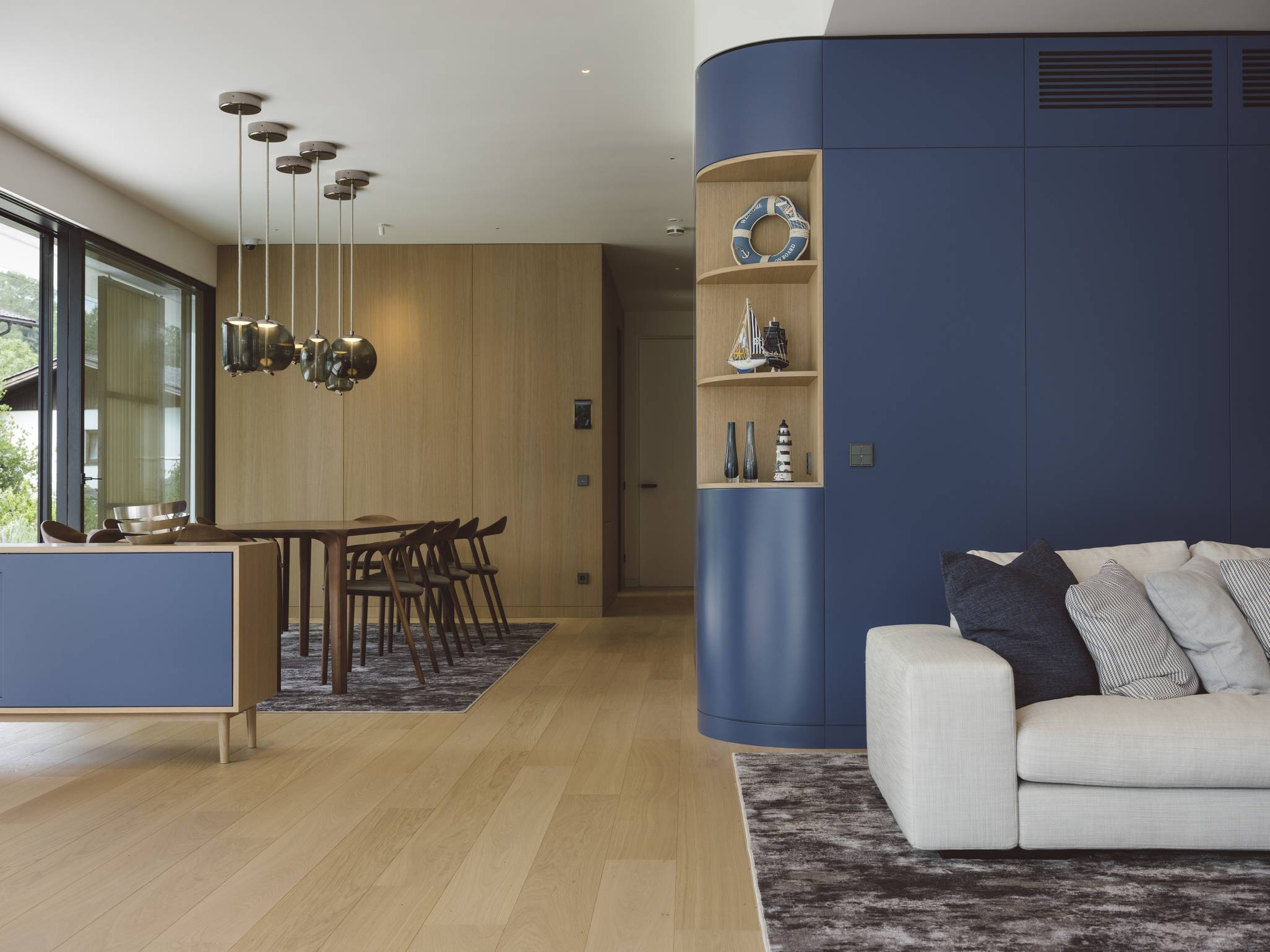
Villa Traunsee furnished by Erlacher Custom Interiors & designed by Archisphere © Christof Wagner
Your projects often feel deeply personal and tailored. How do you translate a client’s vision into something tangible, especially when starting from a blank slate?
It begins with listening. Before any drawing or material selection, we invest time in understanding the client: their habits, expectations, and often even what they cannot yet fully articulate themselves. From there, we translate abstract ideas into physical form through dialogue, sketches, material samples, and prototypes.
What makes a project truly personal are often the smallest details: the texture of a surface, the warmth of wood, the way light interacts with materials, or how a space flows naturally. Our role is to interpret these ideas with sensitivity and precision, while ensuring that the result not only looks beautiful but also feels authentic, timeless, and deeply connected to the people who will experience it.
The process is highly collaborative and iterative. Our goal is always the same: creating that moment when a client walks into the finished space and feels that it reflects them completely. Ideally, it becomes something even more beautiful than what they had originally imagined.
At what point does a project begin for you—does it start with the architecture, the materials, or the people you’re designing for? Tell us a bit more about the process from beginning to end…
A project always begins with the people. Architecture, materials, and function follow, but the foundation is understanding how a space will be lived in, experienced, and emotionally perceived. We spend a great deal of time listening at the beginning of a project, because every interior should reflect not only a vision, but also a way of life and a certain atmosphere. From there, the process becomes highly collaborative. We work closely with architects, designers, clients, and local artisans to develop every detail through technical drawings, material studies, prototypes, and precise planning. Everything is produced in our workshop in South Tyrol, where traditional craftsmanship meets advanced technology and engineering expertise.
The final stage is installation on site, where our teams ensure that every detail is executed exactly as intended. It is a seamless process from concept to completion, but one that requires precision, coordination, and constant dialogue. In the end, our goal is always to create spaces that feel timeless, authentic, and deeply connected to the people who experience them.
Materials play a central role in your work. What draws you to certain woods, finishes, or textures, and how do you decide what is right for a particular project?
Materials are often where the emotional quality of a space begins. We are naturally drawn to materials that age beautifully and carry a certain honesty: solid wood, natural stone, brushed metals, textured fabrics, and surfaces that develop character over time rather than losing it. Wood plays a central role in many of our projects because it brings warmth, depth, and a strong connection to nature and craftsmanship. Very often, however, it is the combination of materials that truly defines a space and gives it richness and individuality.
The choice of materials always depends on the atmosphere and story of the project itself. Every project is highly individual, which means there is never a predefined formula. Materials are selected together with the client and architect, based not only on aesthetics, but also on tactility, longevity, and how they interact with light and architecture. Whenever possible, we work with local materials and regional artisans to bring authenticity and local soul into every project, even within very contemporary interiors.
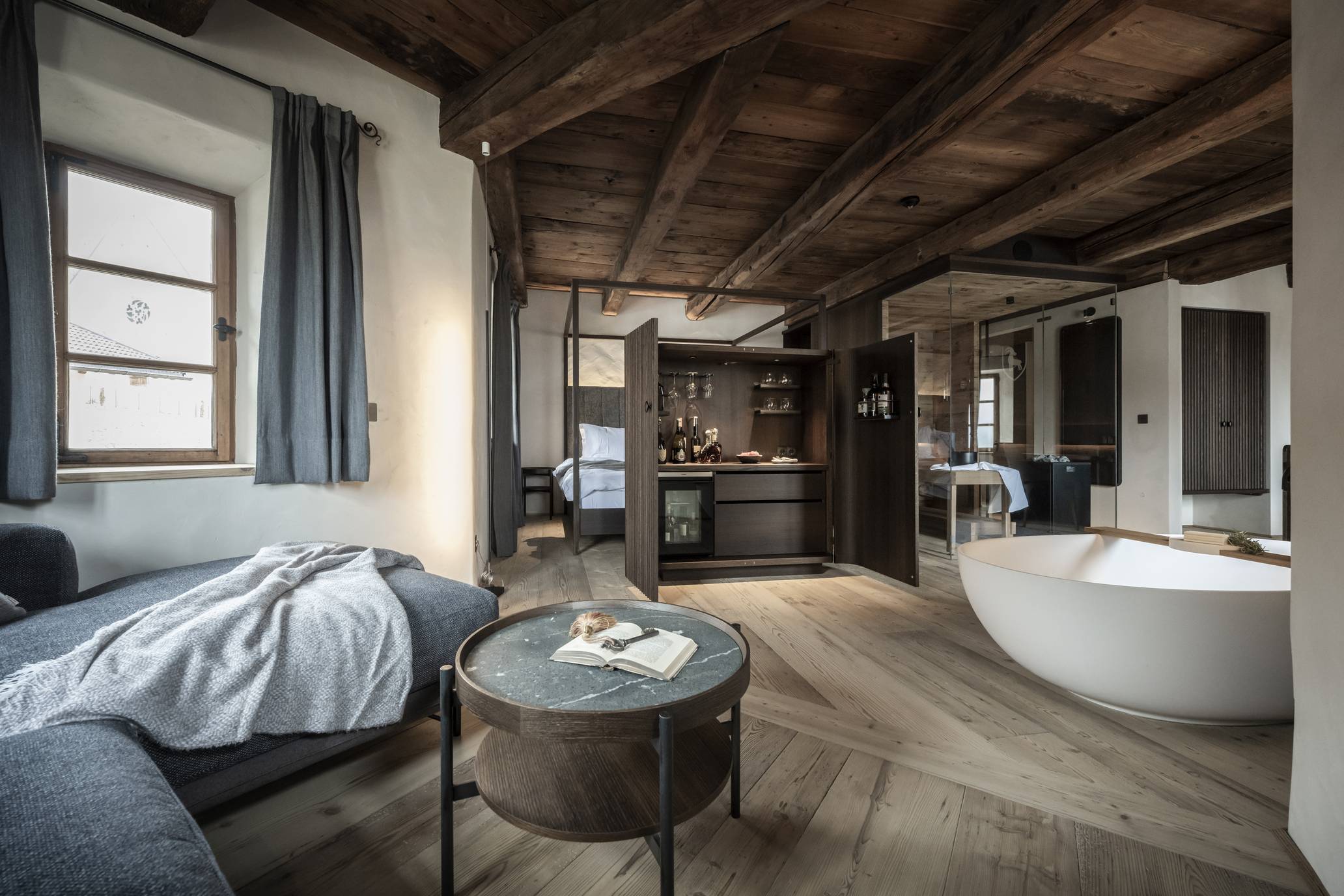
Room at Gourmet Hotel & Restaurant Ansitz Steinbock, furnished by Erlacher Custom Interiors & designed by Andreas Lengfeld Architects © Alex Filz
In an age of fast production, Erlacher continues to emphasise handicraft and detail. Why is that commitment important to you, and how do clients respond to it?
In an age of fast production and standardisation, craftsmanship becomes something increasingly rare and valuable. For us, handicraft is not about nostalgia. It is about creating interiors with soul, individuality, and lasting quality. The smallest details often make the biggest difference: the precision of a joint, the tactility of a surface, the way materials are finished by hand, or how different elements come together seamlessly within a space. Clients can feel this difference immediately. Especially in luxury hospitality and bespoke residential projects, people are searching for authenticity and emotional connection rather than something generic or mass-produced. Handcrafted interiors carry a certain warmth and character that cannot be replicated industrially. That is why detail matters so much to us.
Collaboration often sits at the heart of custom interiors. How do you work alongside architects, designers, and clients to ensure a cohesive outcome?
Collaboration is at the heart of everything we do. Custom interiors are never created in isolation; they are the result of continuous dialogue between architects, designers, clients, artisans, and our internal teams. From the first concept discussions to the final installation, communication and mutual trust are essential to achieving a cohesive and authentic result.
Our project managers play a central role throughout the entire process. They are in constant contact with all parties involved, coordinating details, resolving challenges, and ensuring everything runs smoothly from planning through production to installation. This close collaboration allows us to translate creative visions into precise, tangible realities while maintaining the integrity of the original design concept.
Many of your interiors feel timeless rather than trend-driven. How do you design spaces that will endure beyond shifting aesthetics?
We focus on proportion, material quality, and atmosphere rather than decoration. Trends are often surface-level, but true design lies in structure and composition. If a space feels calm, balanced, and authentic, it will remain relevant long after trends have passed. This approach is also inherently sustainable, as it reduces the need for constant renewal.
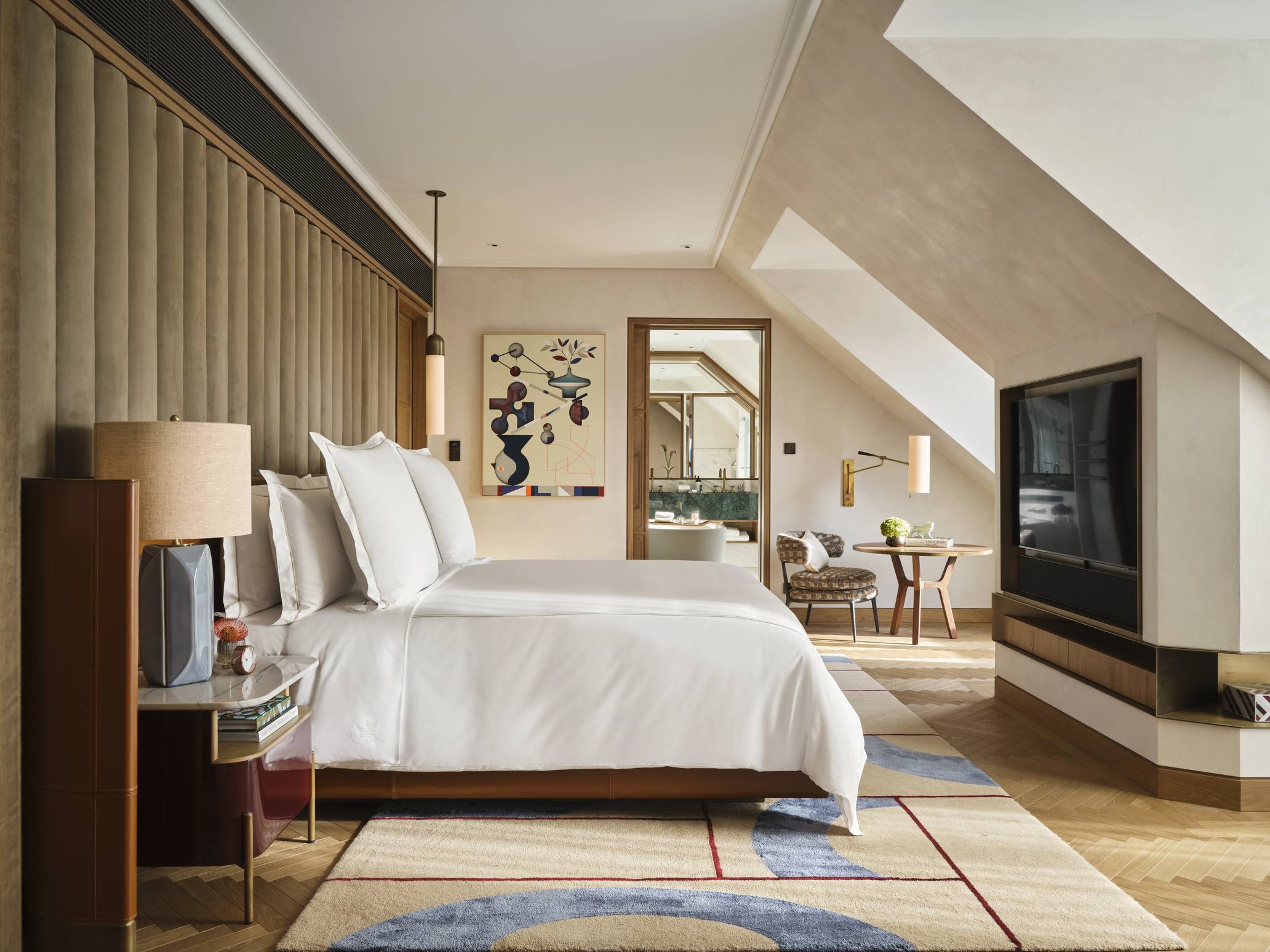
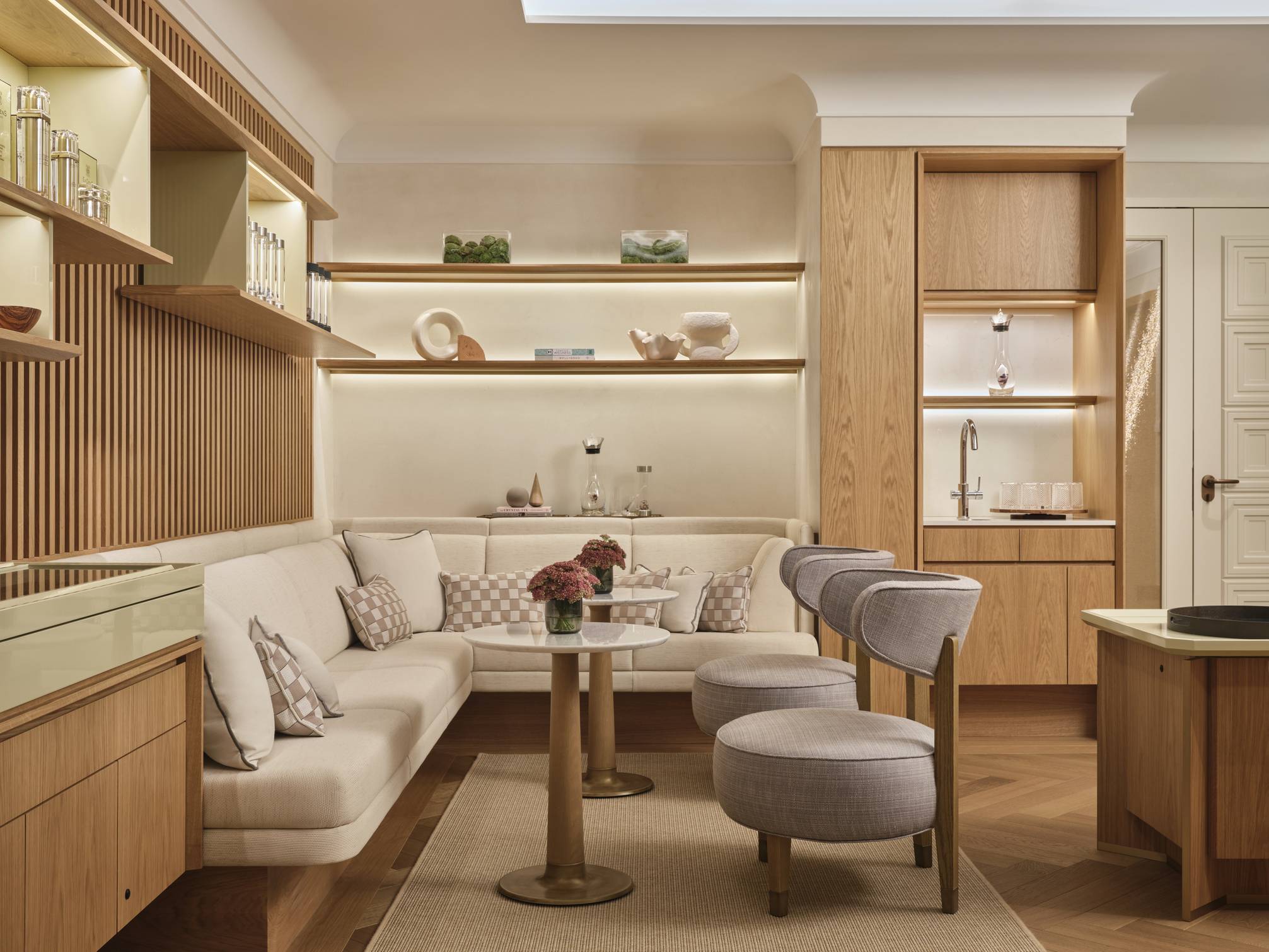
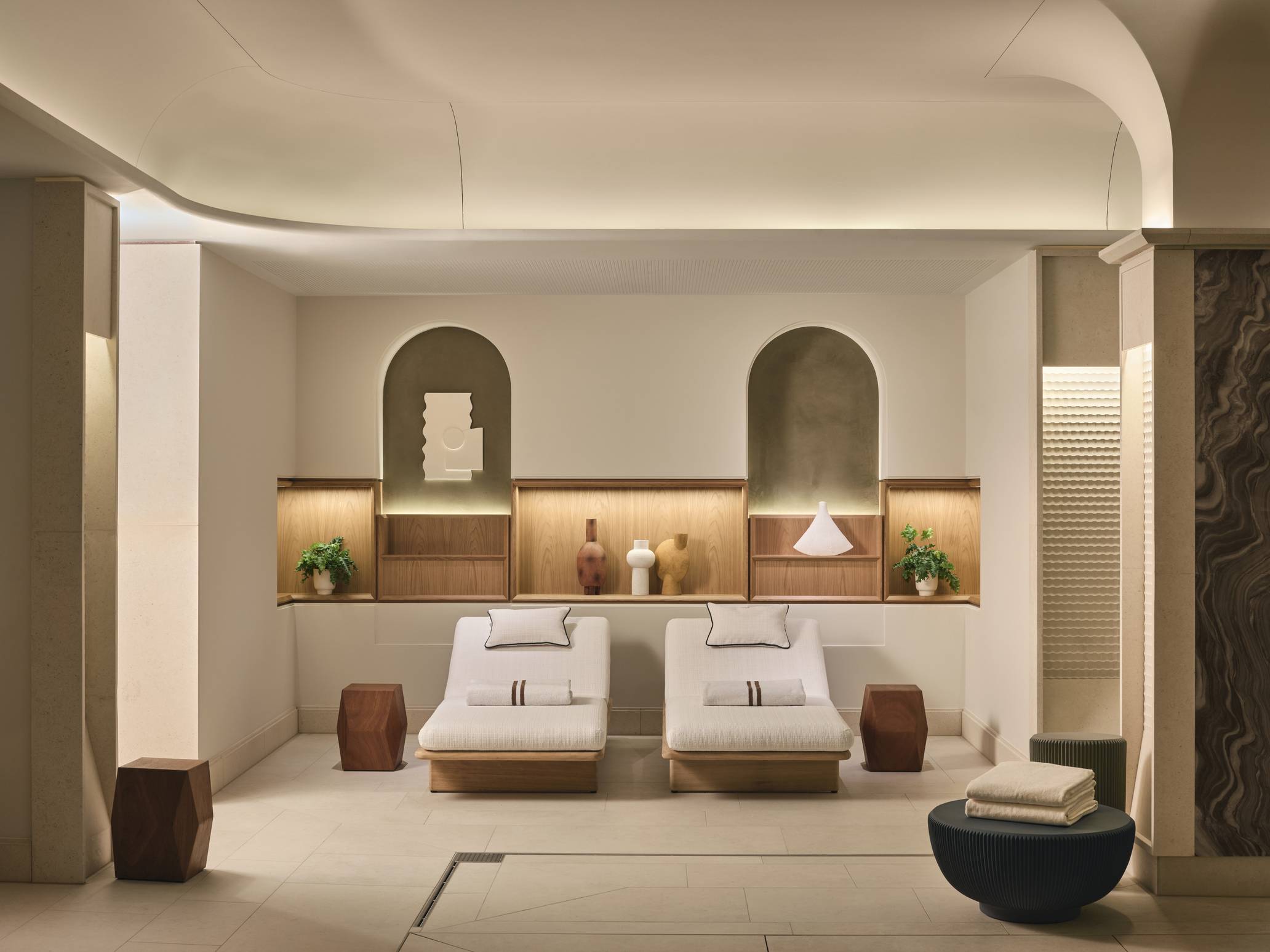
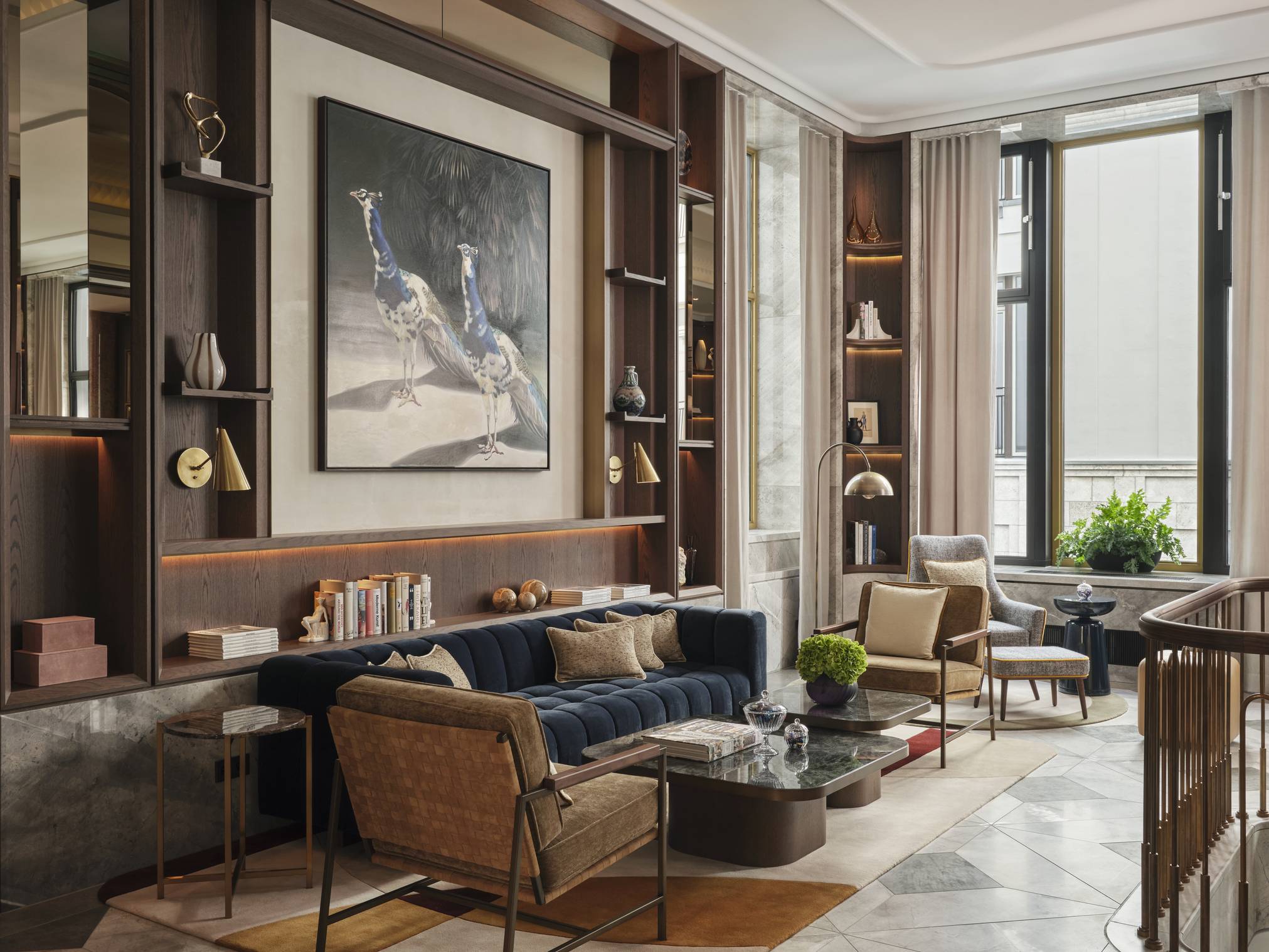
Above & featured images: inside Rosewood Munich, furnished by Erlacher Custom Interiors & designed by Tara Architects © Davide Lovatti
What role does innovation play in your process—whether in techniques, materials, or technology?
Innovation is essential, but it must serve craftsmanship, not replace it. We invest in advanced technologies, from CNC production to digital planning tools, to enhance precision, efficiency, and flexibility. We also see great potential in AI to facilitate internal processes, communication, and project coordination. At the same time, we continuously explore new materials and finishes to keep evolving creatively and technically. The real innovation lies in combining these technologies with traditional know-how and craftsmanship developed over generations. For us, technology is not the final goal, but a tool that allows us to create interiors that feel both contemporary and enduring, with an even higher level of quality and detail.
Sustainability is increasingly central to design conversations. How does Erlacher approach responsible sourcing and long-term durability?
We believe sustainability begins with longevity. We design and produce interiors that are made to last, not only physically, but also aesthetically. Spaces created with timeless design, high-quality materials, and craftsmanship do not need constant replacement or reinvention, which is one of the most sustainable approaches in itself.
At the same time, we place great importance on responsible sourcing and production. We work with certified wood from sustainably managed forests and collaborate with partners who share our values regarding quality and environmental responsibility. In our own production, we continuously try to minimise waste and reuse material residues wherever possible. For example, wood offcuts from production are used to heat our facilities. For us, sustainability is not a trend, but a long-term responsibility towards materials, people, and future generations.
Are there particular projects that you feel best capture the essence of Erlacher Custom Interiors? What made them stand out?
One project that captures the essence of Erlacher Custom Interiors particularly well is Rosewood Munich. It is a luxury hotel in the heart of Munich where craftsmanship, elegance, and architectural sensitivity come together at a very high level. The project required extraordinary precision and attention to detail, from bespoke wall panelling and furniture to refined material combinations and custom-made interior elements. It reflects our ability to translate an international luxury vision into tangible craftsmanship of the highest quality.
What made the project especially meaningful was the close collaboration with internationally renowned architects and designers, combined with the challenge of working within a historic context while creating a contemporary atmosphere. Projects like this show what defines Erlacher: timeless interiors, exceptional craftsmanship, technical expertise, and the ability to create spaces that feel both sophisticated and deeply authentic.
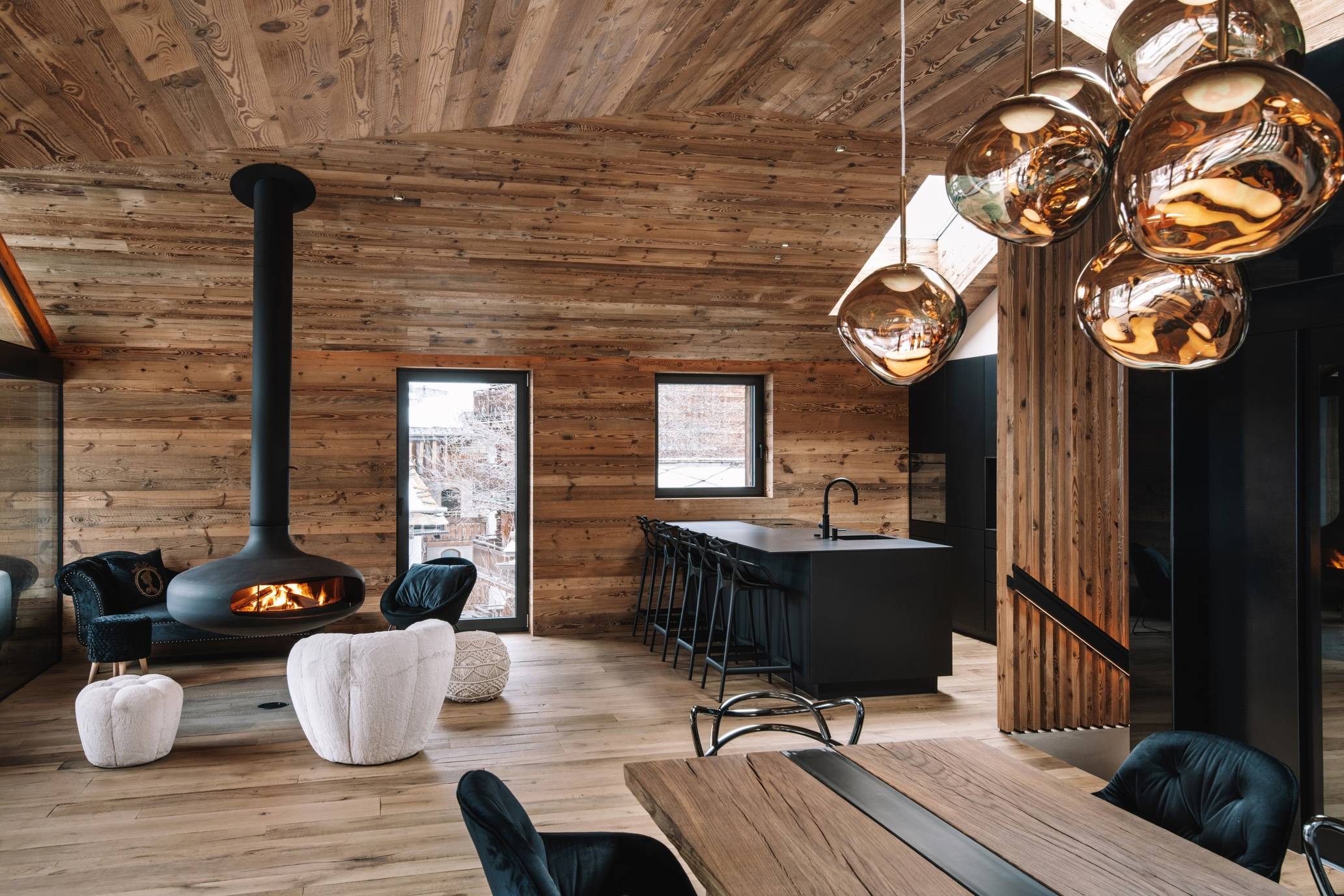
Chalet Nirvana furnished by Erlacher Custom Interiors & designed by Stefan Gamper Architecture © Janmatie Bernardi
How do you approach designing for different contexts—private residences versus hospitality or commercial spaces?
The scale and function may differ, but the principle remains the same: understanding how people interact with a space. Private residences are more intimate and personal, while hospitality and commercial projects require a broader narrative and operational clarity. In both cases, our role is to create spaces that feel intuitive, comfortable, and coherent.
Detail seems to be a defining element of your work. Is there a specific detail or finishing touch that you feel makes all the difference?
Detail is often what transforms a space from beautiful to truly memorable. Many of these details are subtle and not immediately obvious, but they shape how a space is perceived and experienced. It can be the precision of a joint, the softness of a rounded edge, the way materials meet each other, or how light interacts with a handcrafted surface. For us, the finishing touch is rarely something decorative. It is more about achieving harmony and coherence throughout the entire project. When proportions, materials, craftsmanship, and atmosphere come together seamlessly, the space feels effortless and timeless. Those are usually the details that make the greatest difference, even if they are felt more than consciously seen.
Looking ahead, how do you see the future of bespoke interiors evolving, and where does Erlacher position itself within that landscape?
As clients increasingly seek spaces that reflect their identity rather than follow conventions, bespoke interiors will become even more relevant. At the same time, there will be a stronger focus on sustainability, longevity, and responsible design. Erlacher positions itself exactly at this intersection: combining tradition and innovation to create interiors that are both deeply personal and enduring.
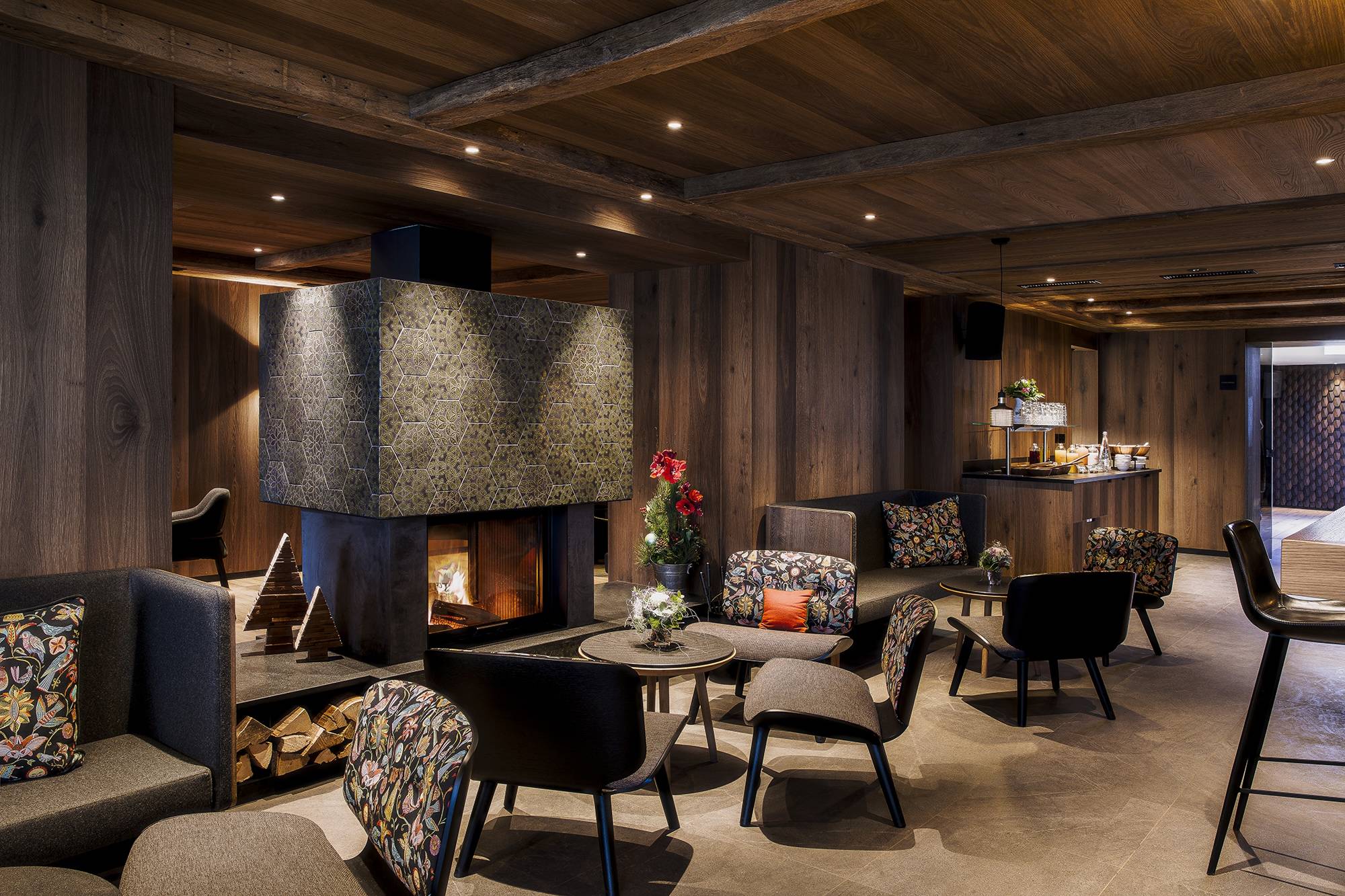
Lobby at Hotel Mama Zermatt, furnished by Erlacher Custom Interiors & designed by Perathoner Architects © William Croall
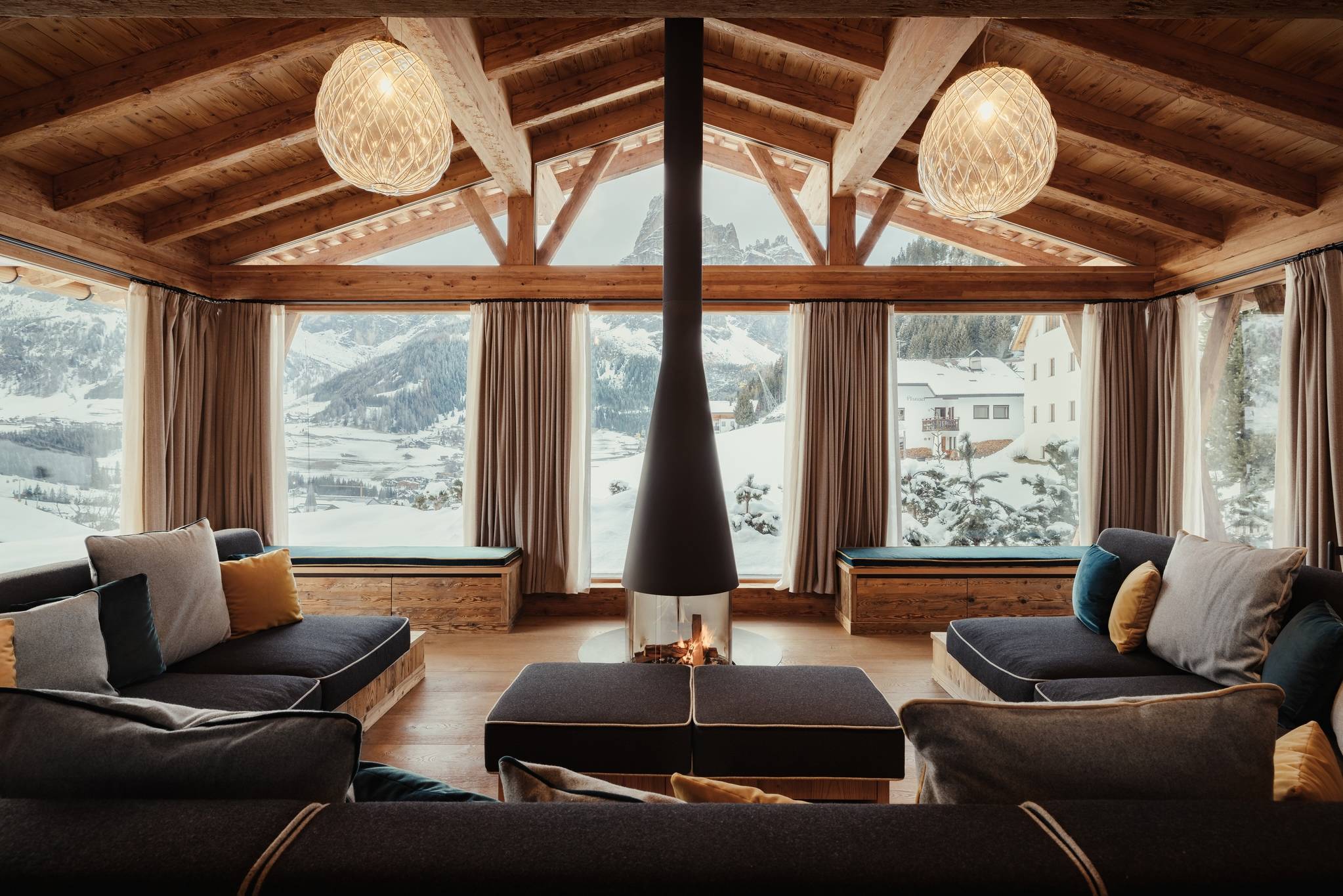
Chalet Ladinia furnished by Erlacher Custom Interiors & designed by Studio Kostner © Alex Moling
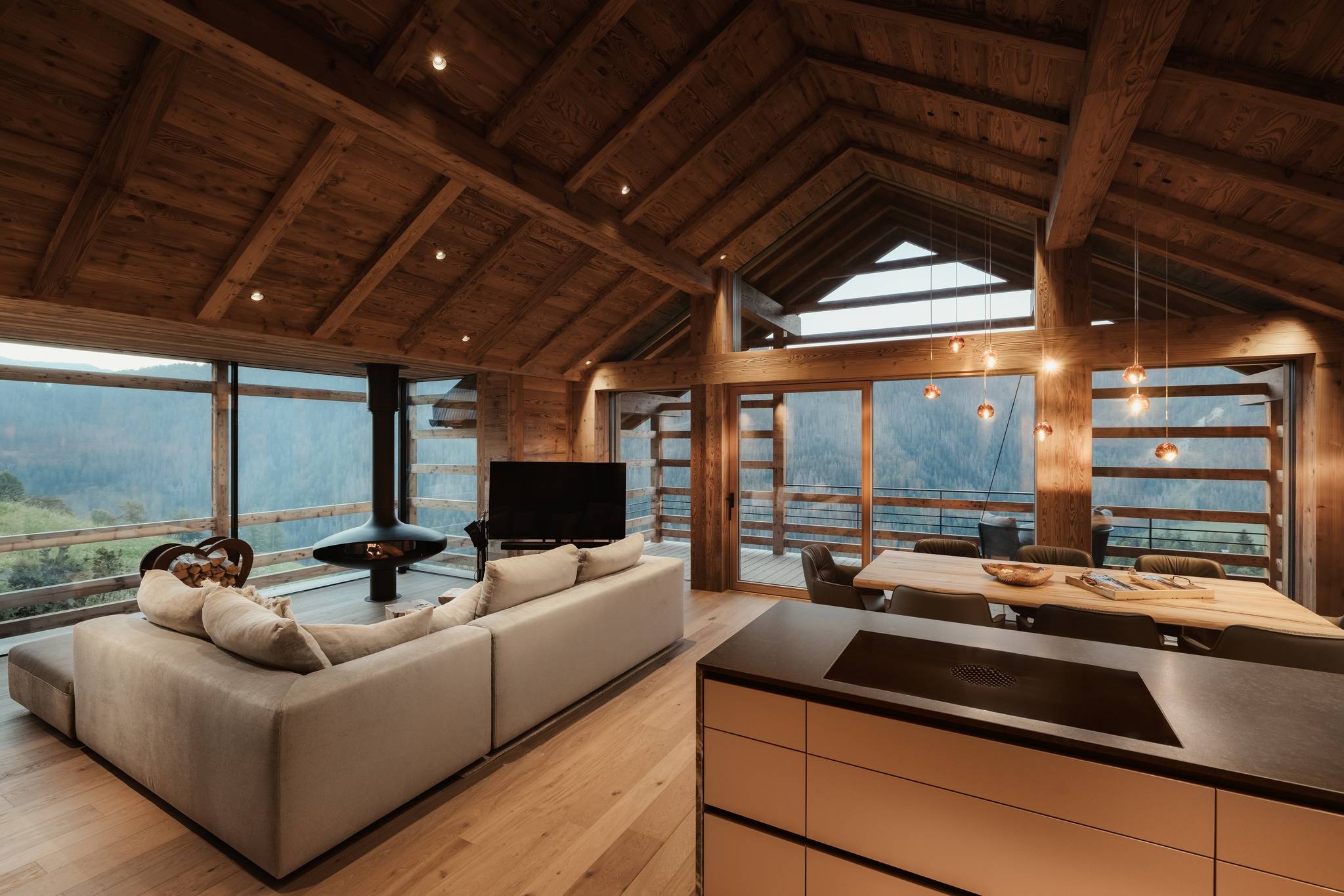
Chalet Lominus furnished by Erlacher Custom interiors & designed by Perathoner Architects © Alex Moling
To find out more about Erlacher Custom Interiors, visit the links below…
Erlacher Custom Interiors
Via Brennero 4
39040 Barbiano (BZ)
Alto Adige, Italy
Web: erlacher.it
Tel: +39 0471 067 600
Email: info@erlacher.it
Instagram: @erlachergmbh
Facebook: @erlachergmbh