

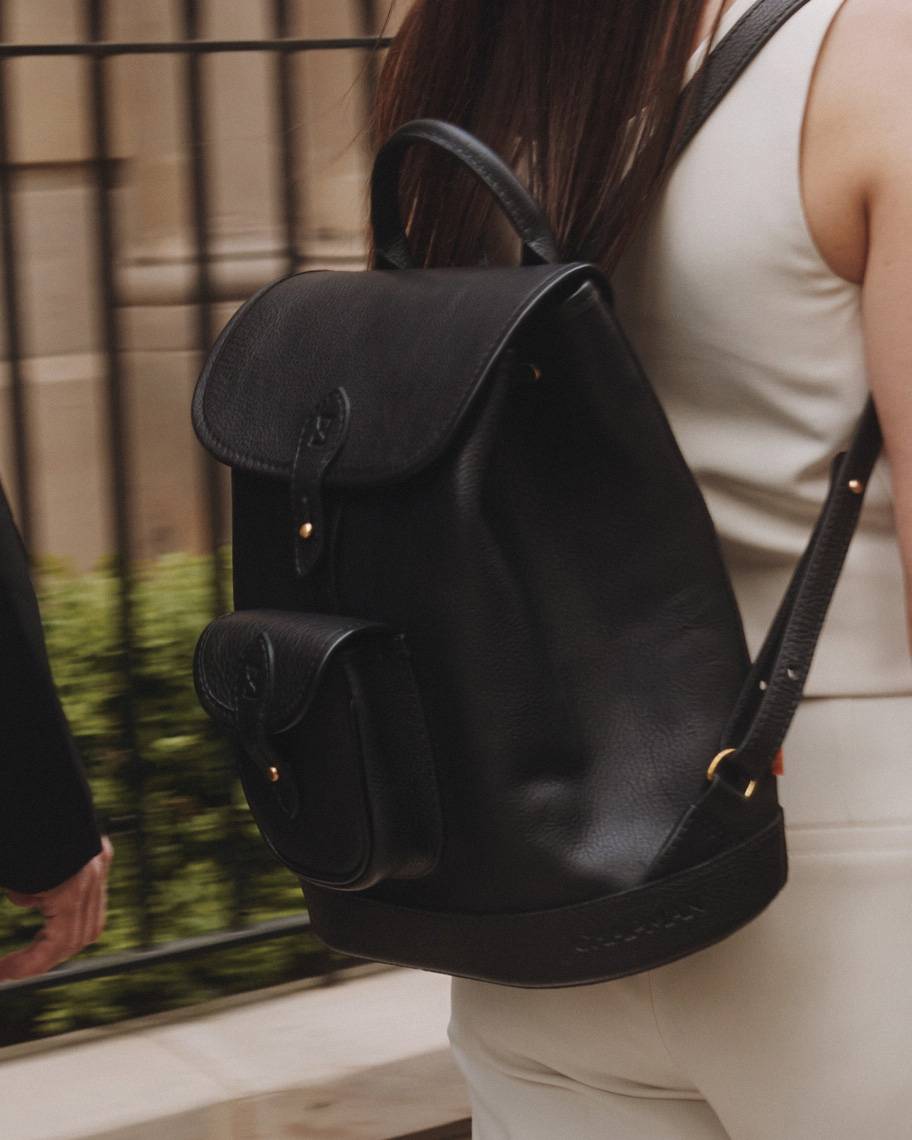





Crafted for a Lifetime: Inside the New Era of Chapman Made
As Chapman enters a new creative chapter, its ethos remains untouched—bags shaped by hand, rooted in tradition, and designed for a lifetime of use. In an era of speed, this is craftsmanship that invites us to slow down.
In an age defined by speed, convenience, and disposable fashion, there is something quietly radical about a brand that chooses to work slowly. Methodically. Intentionally. For more than forty years, Chapman has done precisely that. From its workshop in the heart of Cumbria, this independent British maker continues to prove that true craftsmanship is not a relic of the past but a living, evolving discipline—one that still has the power to shape how we value and use the things we carry every day.
Founded in the early 1980s, Chapman began life as a producer of rugged fishing and sporting bags—pieces built for weather, wear, and the realities of life outdoors. The brand quickly gained a reputation among field sports communities for its robust materials and unfussy functionality. But while Chapman has since evolved into a contemporary accessories brand, that founding spirit of practicality remains at its core. The bags are still built with purpose first, designed to serve a life in motion rather than a passing trend.
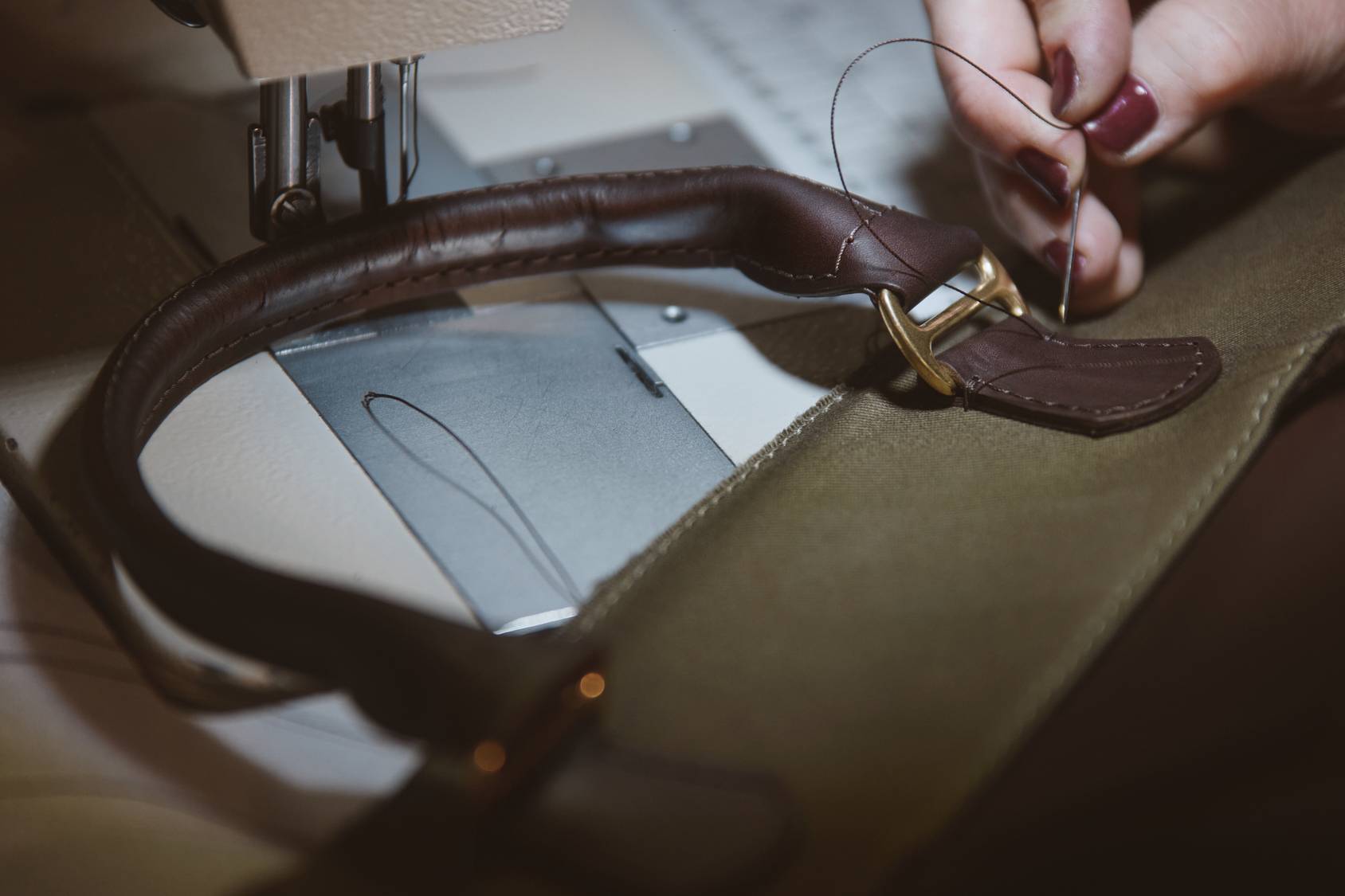
What sets Chapman apart is not only its heritage, but the way it has chosen to honour it. While many “heritage-inspired” brands outsource production in favour of scale, Chapman has held fast to its workshop roots. Every Chapman bag is still cut, stitched, and assembled in-house by a small team of just 32 highly skilled makers. Many of them have been with the brand for years, honing their craft at the sewing machines and cutting tables where Chapman’s story has always been written—by hand.
This commitment to British manufacturing is more than a tagline; it is the foundation of the brand’s identity. Materials are sourced as close to home as possible, supporting an ecosystem of UK textile mills and hardware suppliers. The sole exception is Chapman’s leather, imported from Italy—but purposefully so. Sourced from specialist tanneries, the full-grain, vegetable-tanned leather is created using natural tannins rather than harsh chemicals. This traditional, environmentally responsible process not only significantly reduces impact; it results in a leather that ages beautifully, developing the rich character and patina that only time—and use—can create.
It would be easy to call this approach “sustainable,” and in many ways it is. But Chapman does not subscribe to the notion of sustainability as a marketing device. Instead, its philosophy is rooted in durability and longevity. At its simplest, Chapman believes in making fewer things—but making them better. Bags designed to last a lifetime, not a season. Products that can be loved, repaired, and ultimately passed on.
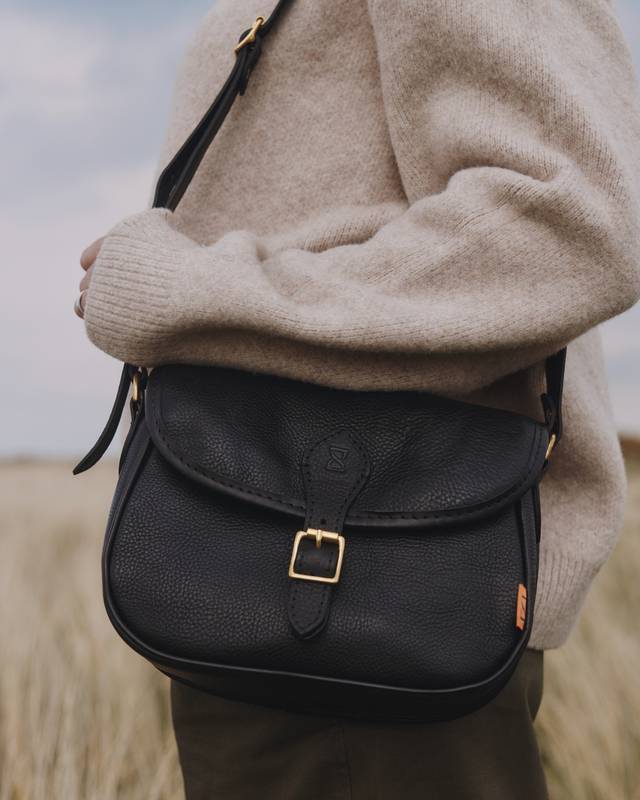
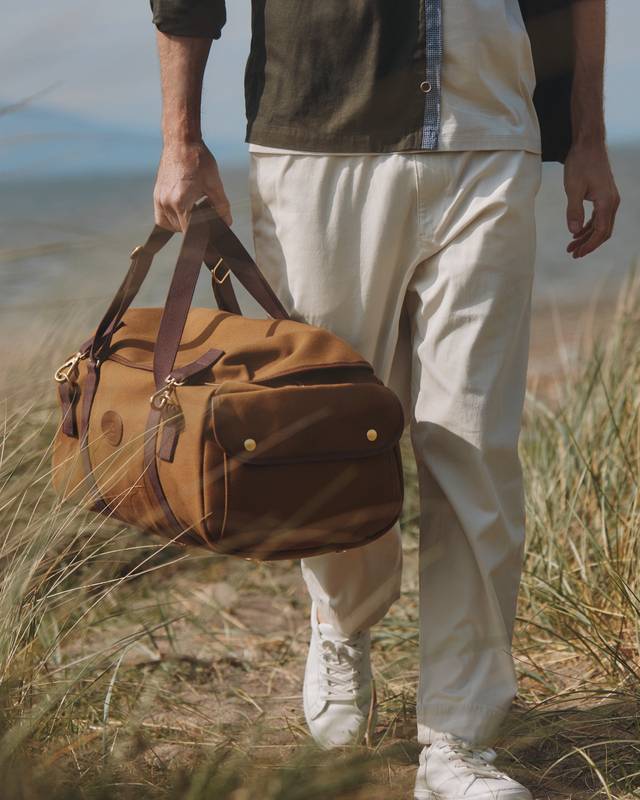
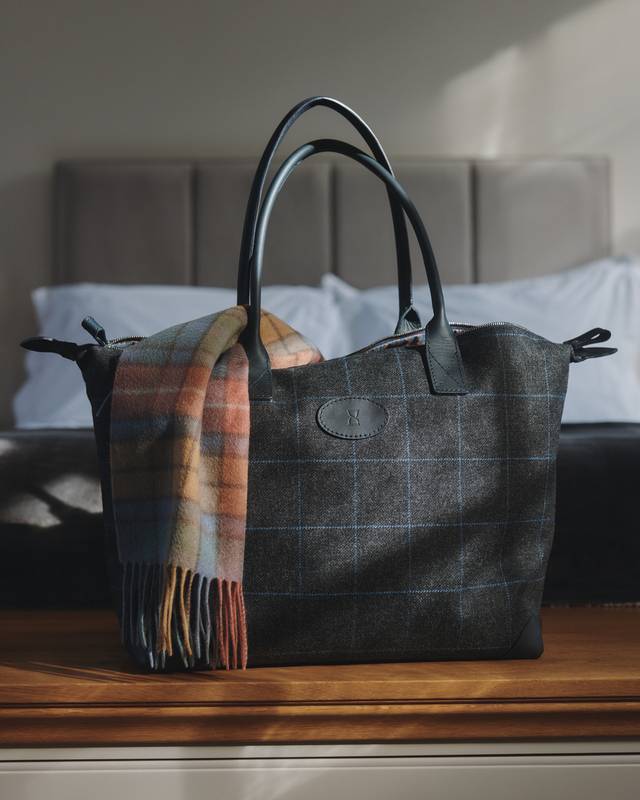
In a landscape dominated by fast fashion and accelerated trend cycles, this kind of product integrity feels quietly defiant. Yet Chapman’s evolution is far from static. Today, the brand is entering an exciting new chapter—one defined by both reflection and forward momentum. With renewed creative direction and a considered expansion of its product range, Chapman is broadening its horizons beyond its sporting origins. The focus now includes everyday, work, and travel accessories that still embody the brand’s hallmark aesthetic: refined simplicity, understated functionality, and purposeful design.
This evolution is less about reinvention and more about refinement. Chapman’s new direction leans into what has always set the brand apart: the beauty of well-made things and the emotional connection that comes from knowing how—and by whom—they were made. It is a celebration of British craft, not as nostalgia, but as a living tradition with the power to serve modern life.
Walk into Chapman’s Cumbrian workshop and you’ll see that tradition in motion: pattern cutters tracing templates onto heavy cotton canvas; machinists stitching webbing straps with absolute precision; leatherworkers hand-cutting the brand’s signature vegetable-tanned trims. There are bags in various stages of creation—some half-stitched, others awaiting hardware, all guided by the same unhurried principle. Nothing leaves the workshop until it is right.
This in-house manufacturing model offers Chapman something rare in today’s industry: complete control. Over materials. Over quality. Over the subtle, human details that distinguish a good bag from an exceptional one. The result is a collection of accessories that feel intentionally designed, rooted in utility yet elevated through craftsmanship.
And while Chapman’s philosophy is grounded in restraint, the brand understands the small joys that can elevate the experience of buying and owning something well made. In the lead-up to Christmas, Chapman is offering customers a complimentary personalised keyring with all orders—a gesture that reflects the brand’s ethos of thoughtfulness and attention to detail. Those who sign up to the Chapman newsletter can claim both the free keyring and 10% off their first purchase, making it an ideal moment for those looking to invest in a piece of British craft, either for themselves or as a gift.
Such touches underscore the spirit of the brand today: warm, human, and quietly confident. Chapman is not trying to be loud. It is not chasing trends. Instead, it is carving out a space for people who appreciate the integrity of a well-made product—the weight of sturdy canvas, the feel of quality leather, the knowledge that every stitch has a purpose.
As Chapman moves forward, its mission remains beautifully simple: to preserve and champion British craftsmanship; to create bags with meaning, honesty, and longevity; and to offer customers something increasingly rare—items made with care, intention, and a deep respect for tradition.
In a world of fast fashion and fleeting choices, Chapman is a reminder that some things are worth holding onto. Quite literally.
To find out more about Chapman Made’s latest collection, plus its other products, visit the links below:
Chapman Made
John Chapman Limited
Gallery House
Tannery Road
Harraby Green Business Park
Carlisle CA1 2SS
United Kingdom
Web: chapmanmade.uk
Tel: +44 (0) 1228 514 514
Email: retail@chapmanmade.uk
Instagram: @chapman bags
Necessary cookies are absolutely essential for the website to function properly. These cookies ensure basic functionalities and security features of the website, anonymously.
| Cookie | Duration | Description |
|---|---|---|
| __cfduid | 1 month | The cookie is used by cdn services like CloudFare to identify individual clients behind a shared IP address and apply security settings on a per-client basis. It does not correspond to any user ID in the web application and does not store any personally identifiable information. |
| _abck | 1 year | This cookie is used to detect and defend when a client attempt to replay a cookie.This cookie manages the interaction with online bots and takes the appropriate actions. |
| bm_sz | 4 hours | This cookie is set by the provider Akamai Bot Manager. This cookie is used to manage the interaction with the online bots. It also helps in fraud preventions |
| cookielawinfo-checbox-analytics | 11 months | This cookie is set by GDPR Cookie Consent plugin. The cookie is used to store the user consent for the cookies in the category "Analytics". |
| cookielawinfo-checbox-functional | 11 months | The cookie is set by GDPR cookie consent to record the user consent for the cookies in the category "Functional". |
| cookielawinfo-checbox-others | 11 months | This cookie is set by GDPR Cookie Consent plugin. The cookie is used to store the user consent for the cookies in the category "Other. |
| cookielawinfo-checkbox-advertisement | 1 year | The cookie is set by GDPR cookie consent to record the user consent for the cookies in the category "Advertisement". |
| cookielawinfo-checkbox-necessary | 11 months | This cookie is set by GDPR Cookie Consent plugin. The cookies is used to store the user consent for the cookies in the category "Necessary". |
| cookielawinfo-checkbox-performance | 11 months | This cookie is set by GDPR Cookie Consent plugin. The cookie is used to store the user consent for the cookies in the category "Performance". |
| ts | 3 years | This cookie is provided by the PayPal. It is used to support payment service in a website. |
| ts_c | 3 years | This cookie is provided by PayPal when a website is in association with PayPal payment function. This cookie is used to make safe payment through PayPal. |
| viewed_cookie_policy | 11 months | The cookie is set by the GDPR Cookie Consent plugin and is used to store whether or not user has consented to the use of cookies. It does not store any personal data. |
Functional cookies help to perform certain functionalities like sharing the content of the website on social media platforms, collect feedbacks, and other third-party features.
| Cookie | Duration | Description |
|---|---|---|
| akavpau_ppsd | session | This cookie is provided by Paypal. The cookie is used in context with transactions on the website. |
| nsid | This cookie is set by the provider PayPal. This cookie is used to enable the PayPal payment service in the website. | |
| tsrce | 3 days | This cookie is set by the provider PayPal. This cookie is used to enable the PayPal payment service in the website. |
| x-pp-s | session | This cookie is set by the provider PayPal. This cookie is used to process payments from the site. |
Performance cookies are used to understand and analyze the key performance indexes of the website which helps in delivering a better user experience for the visitors.
| Cookie | Duration | Description |
|---|---|---|
| YSC | session | This cookies is set by Youtube and is used to track the views of embedded videos. |
Analytical cookies are used to understand how visitors interact with the website. These cookies help provide information on metrics the number of visitors, bounce rate, traffic source, etc.
| Cookie | Duration | Description |
|---|---|---|
| _ga | 2 years | This cookie is installed by Google Analytics. The cookie is used to calculate visitor, session, campaign data and keep track of site usage for the site's analytics report. The cookies store information anonymously and assign a randomly generated number to identify unique visitors. |
| _gid | 1 day | This cookie is installed by Google Analytics. The cookie is used to store information of how visitors use a website and helps in creating an analytics report of how the website is doing. The data collected including the number visitors, the source where they have come from, and the pages visted in an anonymous form. |
Advertisement cookies are used to provide visitors with relevant ads and marketing campaigns. These cookies track visitors across websites and collect information to provide customized ads.
| Cookie | Duration | Description |
|---|---|---|
| _fbp | 3 months | This cookie is set by Facebook to deliver advertisement when they are on Facebook or a digital platform powered by Facebook advertising after visiting this website. |
| fr | 3 months | The cookie is set by Facebook to show relevant advertisments to the users and measure and improve the advertisements. The cookie also tracks the behavior of the user across the web on sites that have Facebook pixel or Facebook social plugin. |
| IDE | 1 year 24 days | Used by Google DoubleClick and stores information about how the user uses the website and any other advertisement before visiting the website. This is used to present users with ads that are relevant to them according to the user profile. |
| test_cookie | 15 minutes | This cookie is set by doubleclick.net. The purpose of the cookie is to determine if the user's browser supports cookies. |
| VISITOR_INFO1_LIVE | 5 months 27 days | This cookie is set by Youtube. Used to track the information of the embedded YouTube videos on a website. |
Other uncategorized cookies are those that are being analyzed and have not been classified into a category as yet.
| Cookie | Duration | Description |
|---|---|---|
| _gat_gtag_UA_120081375_1 | 1 minute | This cookie is installed by Google Analytics. The cookie is used to calculate visitor, session, campaign data and keep track of site usage for the site's analytics report. The cookies store information anonymously and assign a randomly generated number to identify unique visitors. |
| _gat_gtag_UA_83740222_1 | 1 minute | This cookie is installed by Google Analytics. The cookie is used to calculate visitor, session, campaign data and keep track of site usage for the site's analytics report. The cookies store information anonymously and assign a randomly generated number to identify unique visitors. |
| _mcid | 1 year | No description |
| ak_bmsc | 2 hours | No description |
| CONSENT | 16 years 9 months 2 days 6 hours | No description |
| ec_store_chameleon_font | session | This cookie is provided by Ecwid and it is used to save the font utilised in the website's online store. |
| enforce_policy | 1 year | No description |
| l7_az | 30 minutes | No description |
| LANG | 9 hours | No description |
| x-cdn | This cookie is provided by Paypal and is used in context with shopping transactions on the website's store. |