
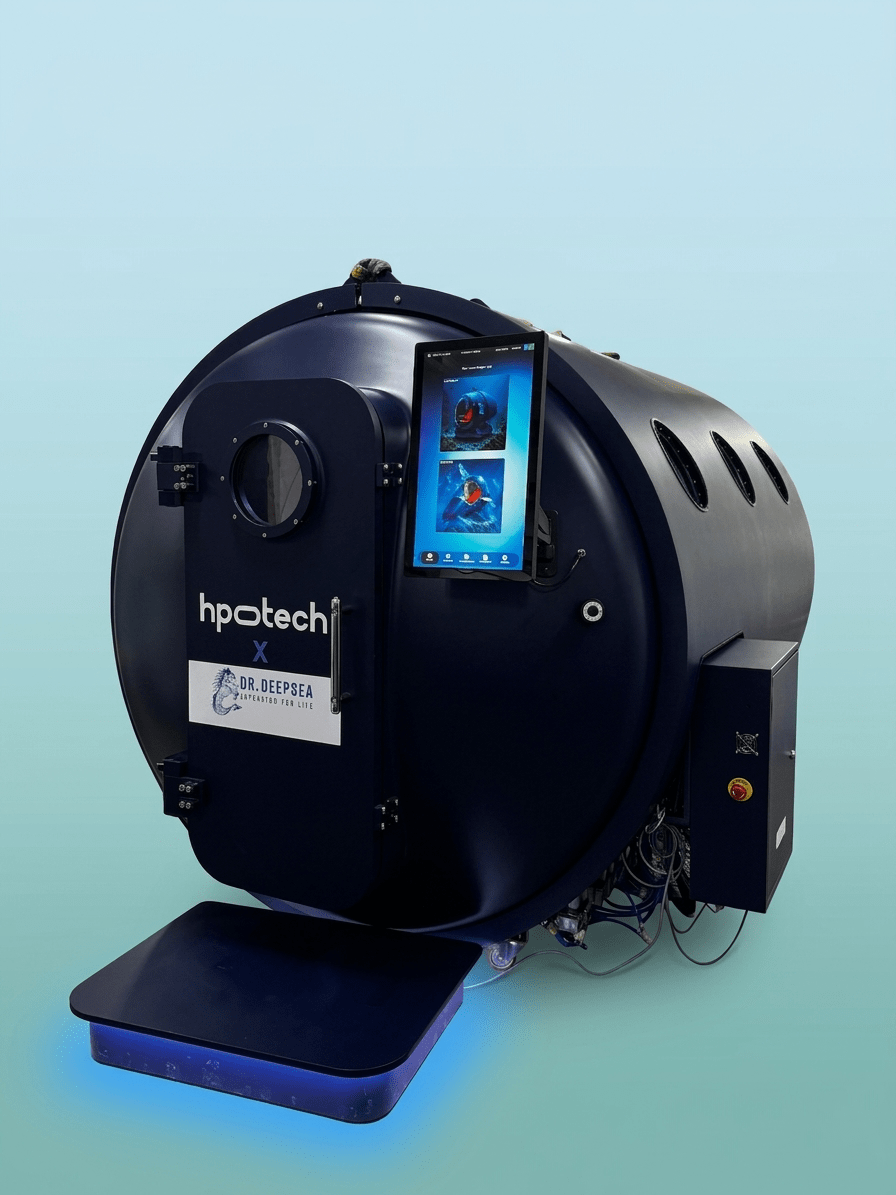



Beyond the “Hyperbaric” Chamber: ZEUGMA and the Future of Recovery
Introducing the ZEUGMA hyperbaric chamber: HBOT’s most elegant evolution and the masterpiece of Tolga Kabak
Once reserved for clinical environments, hyperbaric oxygen therapy has undergone a remarkable transformation. Today, it exists at the crossroads of medicine, longevity, and wellbeing, embraced by elite sports teams, high-performance recovery centers, forward-thinking clinics, and a new generation of wellness spaces where restoration is approached with both scientific precision and aesthetic care. Few people have done more to shape that transformation than Tolga Kabak.
As CTO and co-founder of HPO.TECH, the Istanbul-based company behind some of the world’s most advanced pressure systems for hyperbaric medicine and altitude physiology, Tolga Kabak has helped reimagine what hyperbaric technology can be. HPO.TECH’s hyperbaric chambers are immersive environments: spaces designed to heal, to calm, reassure, and elevate the entire therapeutic experience. They are beautiful objects that have an almost artistic installation feel when seen in a beautiful spa.
With a background in mechanical engineering from Trakya University and a master’s degree focused on hyperbaric oxygen chambers, Kabak built his expertise within the field before recognizing a problem that others seemed willing to overlook. The science was evolving, but the design was not. Hyperbaric chambers remained functional, safe and technically sound, yet visually intimidating and emotionally cold. They had no soul and inspired no one.
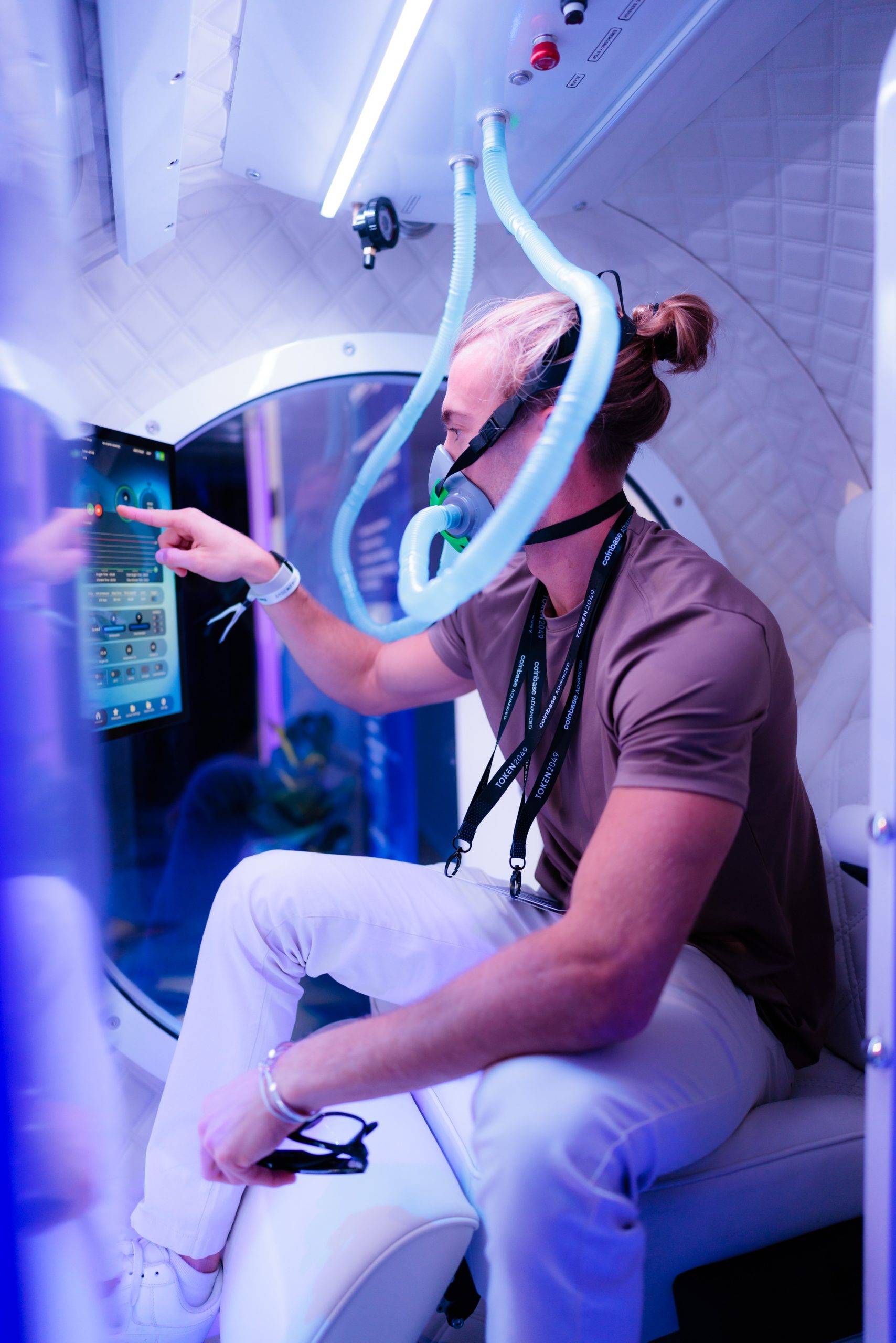
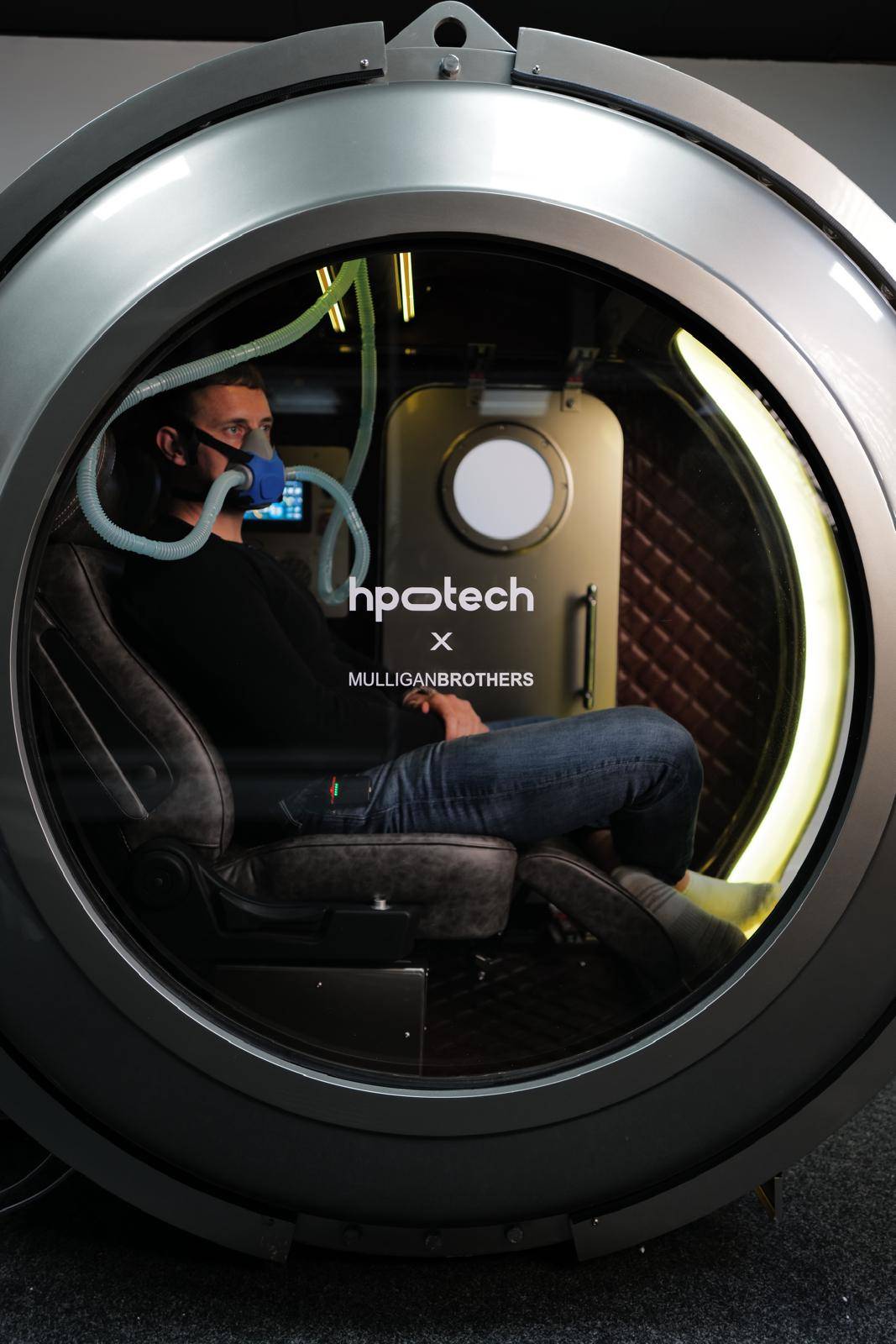
Above: Inside the ZEUGMA hyperbaric chamber, users are breathing pure oxygen on demand through the BIBS mask with CO2 exhaust.
At the heart of HPO.TECH’s design philosophy lies a simple idea: life-enhancing technology should not feel frightening to the people who use it. Traditionally, hyperbaric chambers have been treated as purely utilitarian pressure vessels, with engineering demands naturally taking precedence over everything else.
For Kabak, that was only part of the story. If a person spends extended periods in one of these spaces, the chamber must also be understood in architectural and psychological terms. It must feel open. Comfortable. Intuitive. Even beautiful. That shift in perspective helped define a new design language for the field.
Rather than viewing the chamber as a sealed machine, Kabak and his team approached it as an environment under pressure, where light, transparency, spatial perception, materiality and emotional ease matter just as much as mechanical performance. The result is a body of work that retains rigorous engineering standards, including worldwide certification, while introducing something unexpectedly rare in hyperbaric medicine: elegance.
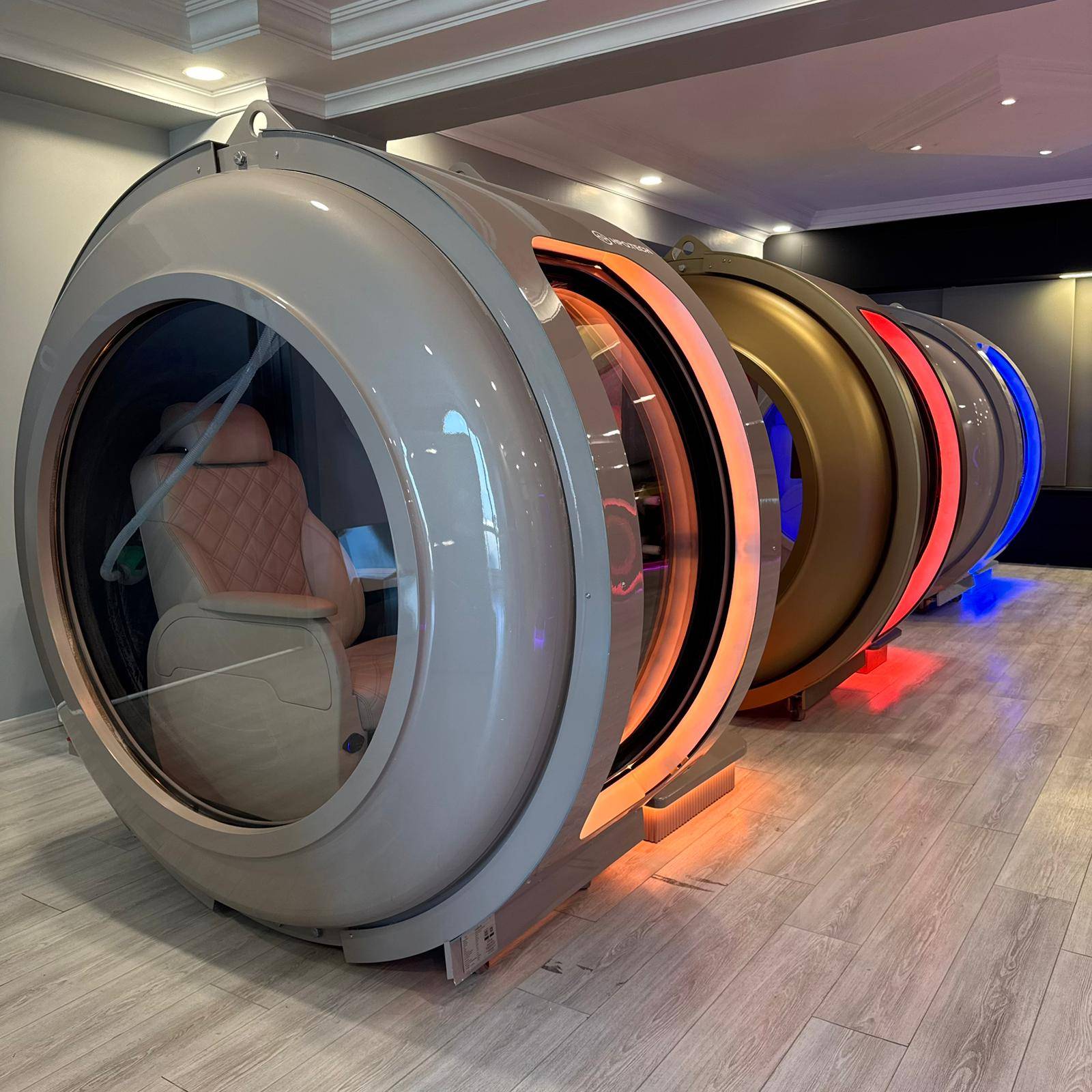
Above: A collection of ZEUGMA hyperbaric chambers inside the HPO.TECH showroom in Istanbul, Turkey.
This was the thinking that gave rise to the ZEUGMA hyperbaric chamber, a design that would go on to become one of the most widely copied in the world. Its significance lies not only in its technical sophistication, but in the fact that it brought a new level of refinement to the category. Under Kabak’s direction, the chamber became something more aligned with the contemporary wellness world: restorative, polished, and deeply considered. In doing so, it helped hyperbaric oxygen therapy move further into the mainstream.
For many first-time users, entering a hyperbaric chamber can feel daunting. Claustrophobia, anxiety and uncertainty are common reactions, especially when the surrounding design language is cold or overtly medical. HPO.TECH’s response has been to treat emotional comfort as an essential part of performance.
Its chambers are defined by spacious interior volumes, panoramic observation windows, ergonomic seating and reclining options, and a visual softness that is unusual in this category. Everything is designed to create a sense of openness and reassurance. The effect is less like entering a machine and more like stepping into a carefully imagined capsule for recovery.
In luxury wellness, the experience surrounding the treatment is never secondary to the treatment itself. It shapes the body’s willingness to relax, the mind’s willingness to trust, and ultimately the user’s relationship with the therapy. Tolga Kabak seems to understand this instinctively. His chambers are engineered for safety and efficacy, but also for emotional reception. They are designed to reduce fear and replace it with curiosity.
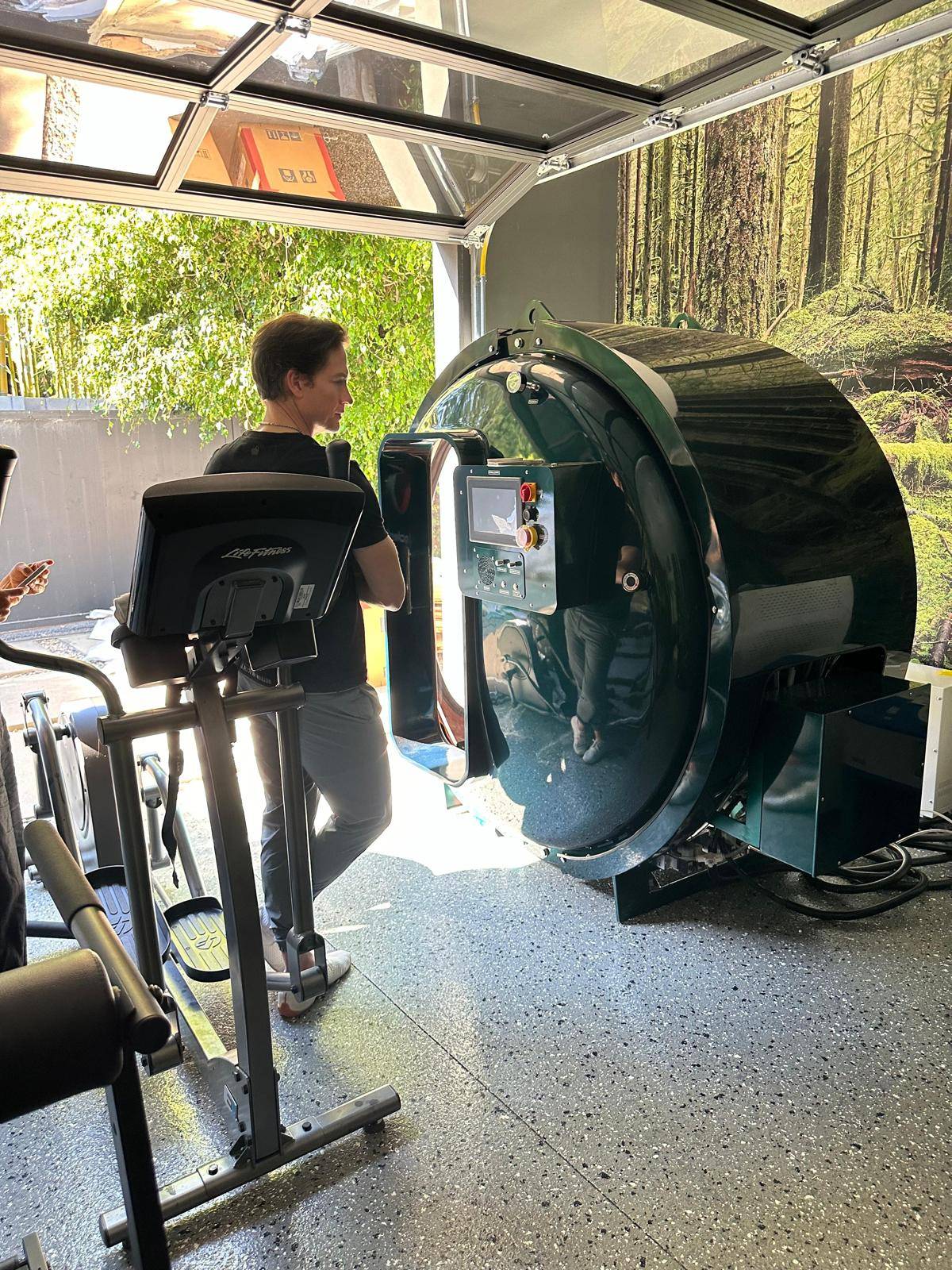
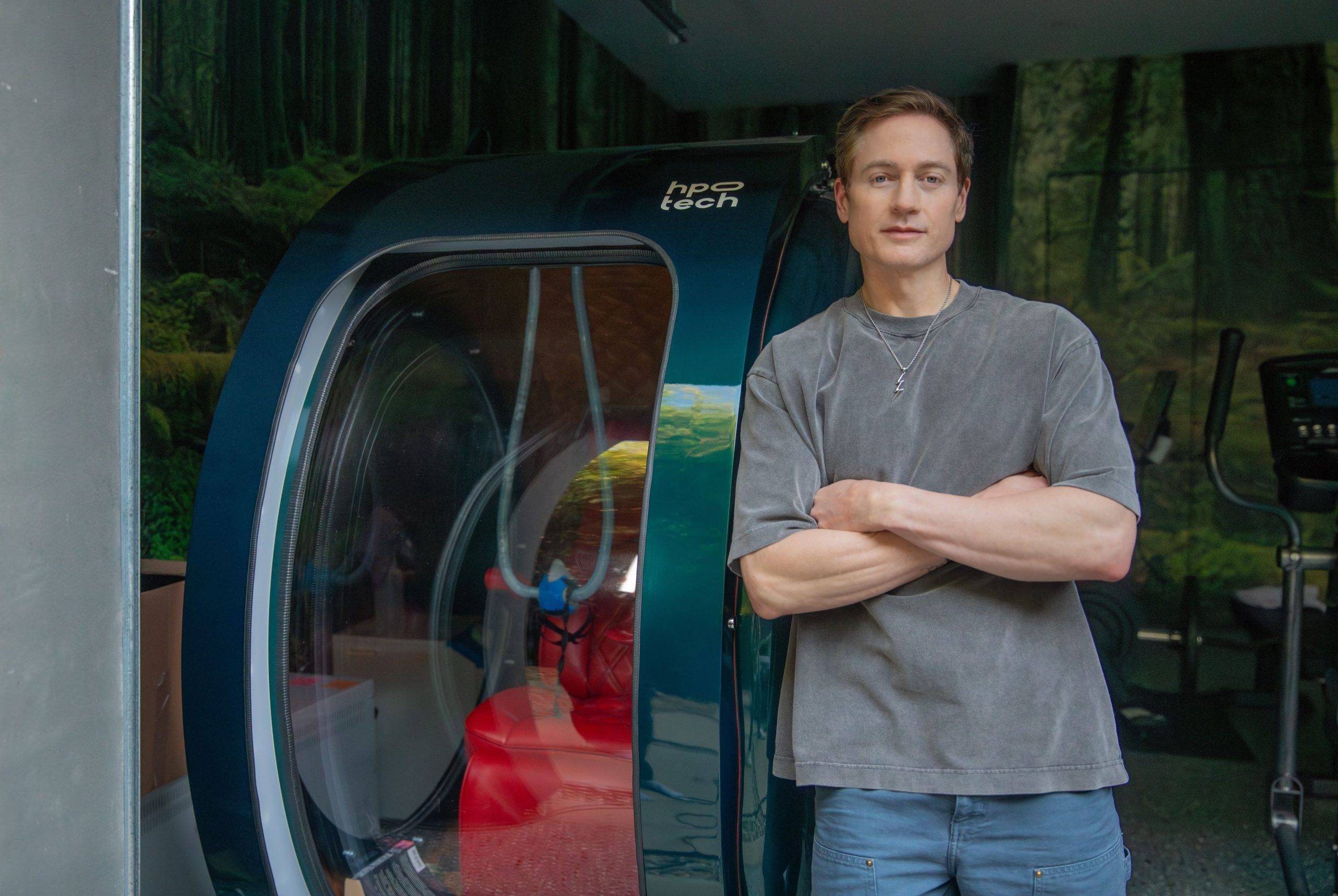
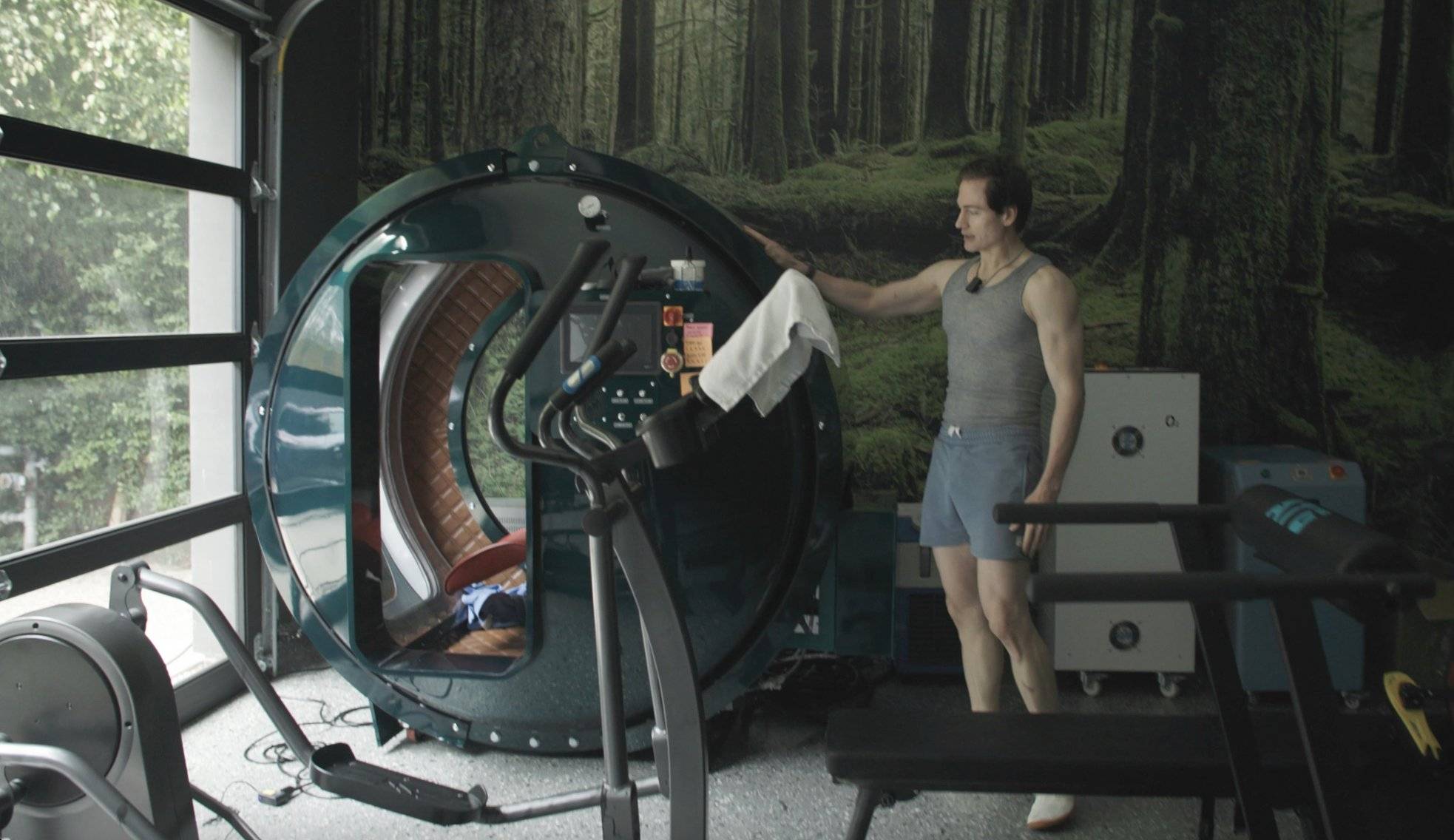
Above: Celebrity biohacker Bryan Johnson next to his ZEUGMA hyperbaric chamber inside his private home gym. Click to read more about Bryan Johnson’s results with the ZEUGMA.
That is why many celebrities and high-profile personalities, including Bryan Johnson, have already chosen a ZEUGMA hyperbaric chamber for personal use.
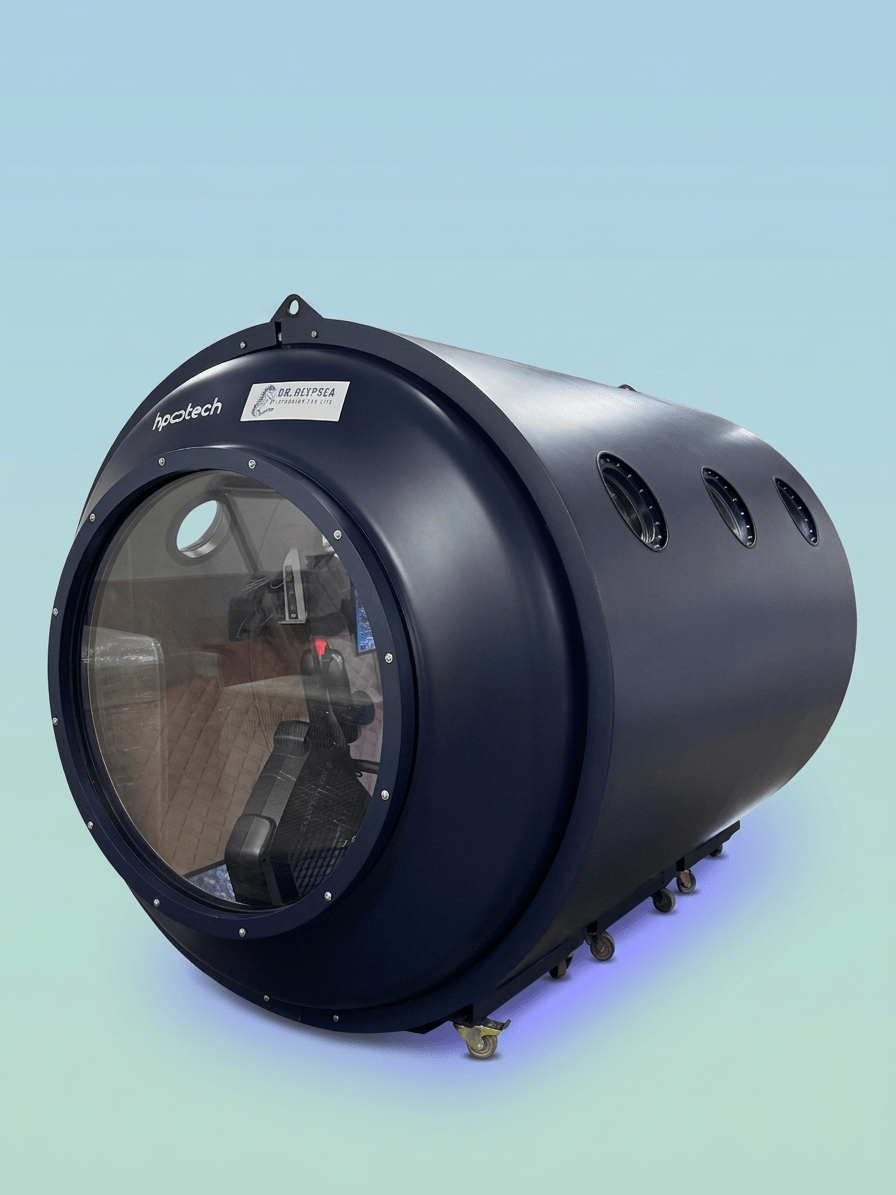
One of HPO.TECH’s most distinctive innovations lies in its use of transparency. Its chambers are among the most visually open in the field, featuring unusually large windows, multiple viewing configurations and a level of design freedom rarely seen in pressure systems operating safely at up to 2.4 ATA. In hyperbaric engineering, every opening affects structural performance, and larger transparent surfaces introduce significant technical challenges.
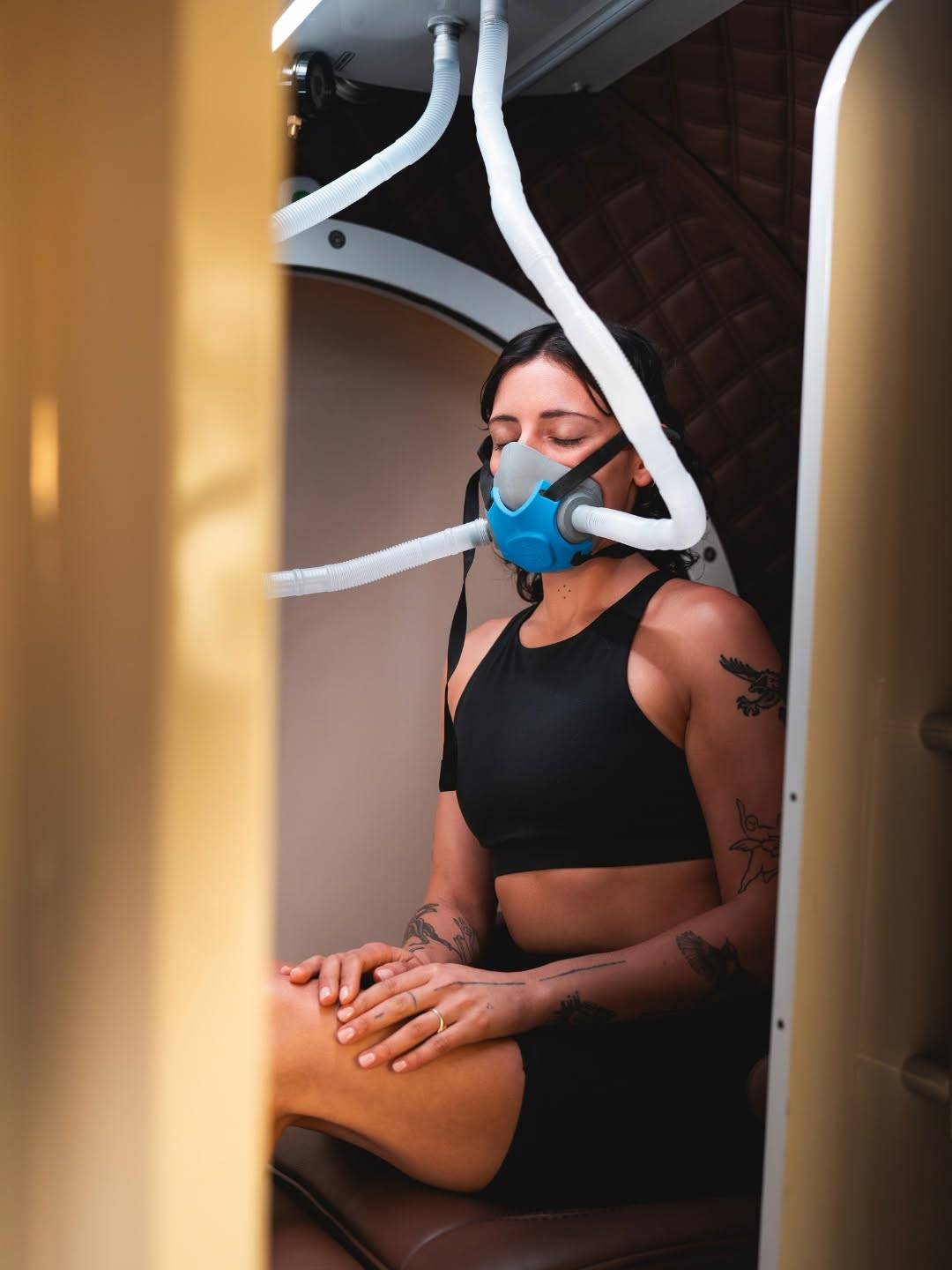
Above: Jordan Mulligan from the Mulligan Brothers inside his ZEUGMA hyperbaric chamber inside his private video studio. See the Mulligan Brothers x HPO.TECH documentary about Dr. Joseph Dituri on YouTube.
To make this possible, HPO.TECH undertook complex engineering across several disciplines, from PMMA and acrylic material development to window flange and frame design, stress distribution analysis and fatigue resistance under repeated pressure cycles. In most conventional chambers, windows remain small because scaling them up becomes exponentially more difficult.
Instead of treating visibility as a minor feature added after the fact, Tolga Kabak designed the entire chamber around transparency as a central idea. The resulting spaces feel lighter, calmer and more generous, all while maintaining the exacting standards required of a highly specialized pressure vessel.
Above: The TAMPA Multibaric chamber can switch from hyperbaric mode (2.4 ATA) for HBOT to hypobaric mode (0.356 ATM) for altitude training at the touch of a button.
HPO.TECH’s systems that combine hyperbaric oxygen therapy with hypobaric altitude simulation within a single platform create new possibilities in sports performance, neurological recovery, anti-ageing research and human physiology. Its TAMPA project reflects that direction, opening the door to multi-baric environments that are as relevant to cutting-edge scientific exploration as they are to the next chapter of wellness.
This work is already part of highly advanced research into longevity and age reversal. Using HPO.TECH technology, Joseph Dituri and Arizona State University’s Healthspan team gained international attention as semifinalists in the $101 million XPRIZE competition, selected from 765 teams worldwide, for research connected to reversing ageing.
Hyperbaric systems are no longer confined to the role of treatment devices alone. Increasingly, they are becoming sophisticated research platforms and carefully designed human environments, capable of supporting some of the most exciting developments in modern medicine and wellbeing.
By bringing together engineering discipline, design thinking and a genuine sensitivity to human experience, Kabak has helped shape a new vision of what recovery can look and feel like. One where safety and science remain paramount, and where beauty, openness and emotional ease are part of the therapy itself.
To find out more about HPO.TECH and the ZEUGMA hyperbaric chamber, visit the links below:
Osmangazi, Battalgazi Cd. No:27
34887 Sancaktepe’
Istanbul
Turkey
Web: hpotech.com
Tel: +1 (315) 512-1112 (Alexandru Harbuzaru, BDO)
Email: office@hpotech.com
Necessary cookies are absolutely essential for the website to function properly. These cookies ensure basic functionalities and security features of the website, anonymously.
| Cookie | Duration | Description |
|---|---|---|
| __cfduid | 1 month | The cookie is used by cdn services like CloudFare to identify individual clients behind a shared IP address and apply security settings on a per-client basis. It does not correspond to any user ID in the web application and does not store any personally identifiable information. |
| _abck | 1 year | This cookie is used to detect and defend when a client attempt to replay a cookie.This cookie manages the interaction with online bots and takes the appropriate actions. |
| bm_sz | 4 hours | This cookie is set by the provider Akamai Bot Manager. This cookie is used to manage the interaction with the online bots. It also helps in fraud preventions |
| cookielawinfo-checbox-analytics | 11 months | This cookie is set by GDPR Cookie Consent plugin. The cookie is used to store the user consent for the cookies in the category "Analytics". |
| cookielawinfo-checbox-functional | 11 months | The cookie is set by GDPR cookie consent to record the user consent for the cookies in the category "Functional". |
| cookielawinfo-checbox-others | 11 months | This cookie is set by GDPR Cookie Consent plugin. The cookie is used to store the user consent for the cookies in the category "Other. |
| cookielawinfo-checkbox-advertisement | 1 year | The cookie is set by GDPR cookie consent to record the user consent for the cookies in the category "Advertisement". |
| cookielawinfo-checkbox-necessary | 11 months | This cookie is set by GDPR Cookie Consent plugin. The cookies is used to store the user consent for the cookies in the category "Necessary". |
| cookielawinfo-checkbox-performance | 11 months | This cookie is set by GDPR Cookie Consent plugin. The cookie is used to store the user consent for the cookies in the category "Performance". |
| ts | 3 years | This cookie is provided by the PayPal. It is used to support payment service in a website. |
| ts_c | 3 years | This cookie is provided by PayPal when a website is in association with PayPal payment function. This cookie is used to make safe payment through PayPal. |
| viewed_cookie_policy | 11 months | The cookie is set by the GDPR Cookie Consent plugin and is used to store whether or not user has consented to the use of cookies. It does not store any personal data. |
Functional cookies help to perform certain functionalities like sharing the content of the website on social media platforms, collect feedbacks, and other third-party features.
| Cookie | Duration | Description |
|---|---|---|
| akavpau_ppsd | session | This cookie is provided by Paypal. The cookie is used in context with transactions on the website. |
| nsid | This cookie is set by the provider PayPal. This cookie is used to enable the PayPal payment service in the website. | |
| tsrce | 3 days | This cookie is set by the provider PayPal. This cookie is used to enable the PayPal payment service in the website. |
| x-pp-s | session | This cookie is set by the provider PayPal. This cookie is used to process payments from the site. |
Performance cookies are used to understand and analyze the key performance indexes of the website which helps in delivering a better user experience for the visitors.
| Cookie | Duration | Description |
|---|---|---|
| YSC | session | This cookies is set by Youtube and is used to track the views of embedded videos. |
Analytical cookies are used to understand how visitors interact with the website. These cookies help provide information on metrics the number of visitors, bounce rate, traffic source, etc.
| Cookie | Duration | Description |
|---|---|---|
| _ga | 2 years | This cookie is installed by Google Analytics. The cookie is used to calculate visitor, session, campaign data and keep track of site usage for the site's analytics report. The cookies store information anonymously and assign a randomly generated number to identify unique visitors. |
| _gid | 1 day | This cookie is installed by Google Analytics. The cookie is used to store information of how visitors use a website and helps in creating an analytics report of how the website is doing. The data collected including the number visitors, the source where they have come from, and the pages visted in an anonymous form. |
Advertisement cookies are used to provide visitors with relevant ads and marketing campaigns. These cookies track visitors across websites and collect information to provide customized ads.
| Cookie | Duration | Description |
|---|---|---|
| _fbp | 3 months | This cookie is set by Facebook to deliver advertisement when they are on Facebook or a digital platform powered by Facebook advertising after visiting this website. |
| fr | 3 months | The cookie is set by Facebook to show relevant advertisments to the users and measure and improve the advertisements. The cookie also tracks the behavior of the user across the web on sites that have Facebook pixel or Facebook social plugin. |
| IDE | 1 year 24 days | Used by Google DoubleClick and stores information about how the user uses the website and any other advertisement before visiting the website. This is used to present users with ads that are relevant to them according to the user profile. |
| test_cookie | 15 minutes | This cookie is set by doubleclick.net. The purpose of the cookie is to determine if the user's browser supports cookies. |
| VISITOR_INFO1_LIVE | 5 months 27 days | This cookie is set by Youtube. Used to track the information of the embedded YouTube videos on a website. |
Other uncategorized cookies are those that are being analyzed and have not been classified into a category as yet.
| Cookie | Duration | Description |
|---|---|---|
| _gat_gtag_UA_120081375_1 | 1 minute | This cookie is installed by Google Analytics. The cookie is used to calculate visitor, session, campaign data and keep track of site usage for the site's analytics report. The cookies store information anonymously and assign a randomly generated number to identify unique visitors. |
| _gat_gtag_UA_83740222_1 | 1 minute | This cookie is installed by Google Analytics. The cookie is used to calculate visitor, session, campaign data and keep track of site usage for the site's analytics report. The cookies store information anonymously and assign a randomly generated number to identify unique visitors. |
| _mcid | 1 year | No description |
| ak_bmsc | 2 hours | No description |
| CONSENT | 16 years 9 months 2 days 6 hours | No description |
| ec_store_chameleon_font | session | This cookie is provided by Ecwid and it is used to save the font utilised in the website's online store. |
| enforce_policy | 1 year | No description |
| l7_az | 30 minutes | No description |
| LANG | 9 hours | No description |
| x-cdn | This cookie is provided by Paypal and is used in context with shopping transactions on the website's store. |