
Woe betide the person who committed a petty crime, such as stealing someone’s robe from a public bath. Their victim would seek retribution by way of a curse, inscribed on a sheet of lead or pewter, then toss it into the hot spring in the hope that the goddess Sulis Minerva would grant their wish. With the combined powers of Sulis, who, according to ancient Celtic mythology, possesses healing powers, and Minerva, whom the Romans attributed wisdom and justice, the criminal wouldn’t have stood a chance.
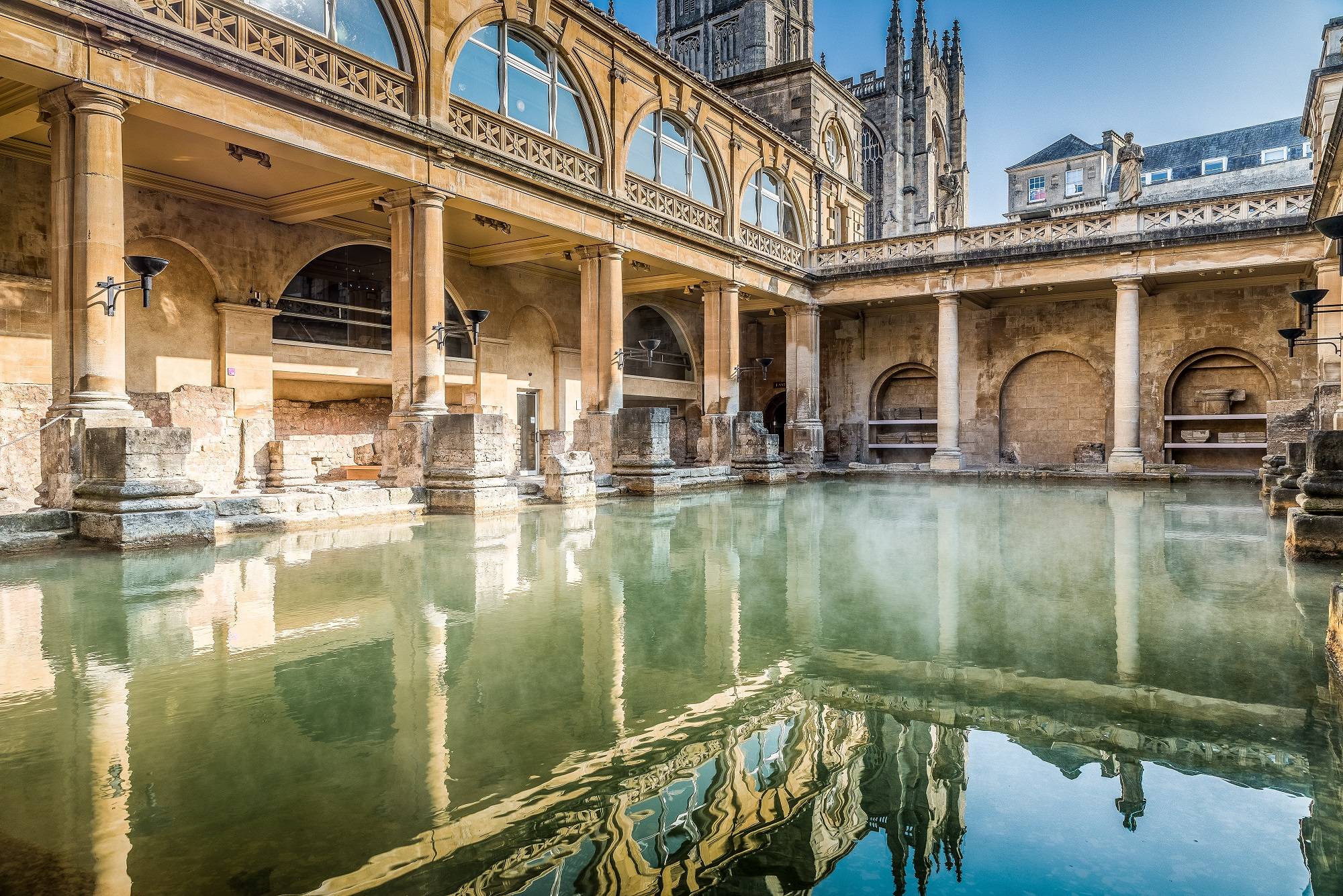
Such was life in Acque Sulis, the ancient name for the modern-day spa town of Bath, where a temple was built by the Romans around 60-70 AD in honour of their goddess. Altars became part of worship and animal sacrifice rituals, while public baths fed by thermal spring waters, believed to have healing powers, became the centre of social life in this settlement for four centuries.
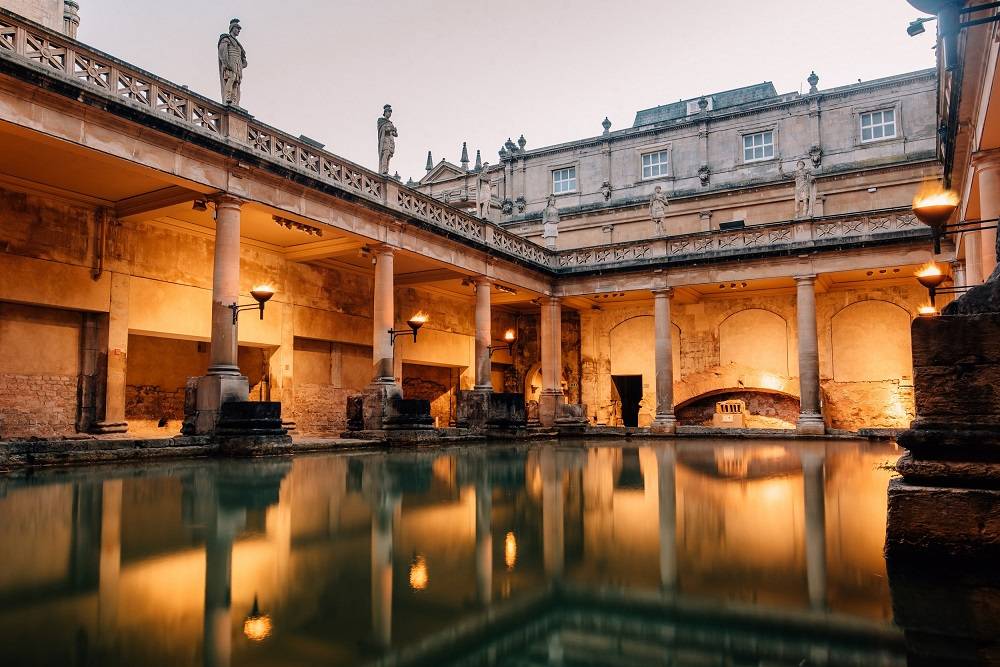
But when Roman rule in Britain came to an end in the 5th century AD, time gradually took its toll on the public bath and temple complex, their ruins buried beneath rubble and paving. It was not until the late 19th century that these ancient baths were first discovered and excavated. Restoring and conserving the Roman Baths were major archaeological achievements, but even more impressive was how the Romans used architectural and engineering skills to equip the baths with plumbing, underfloor heating and even waste management.
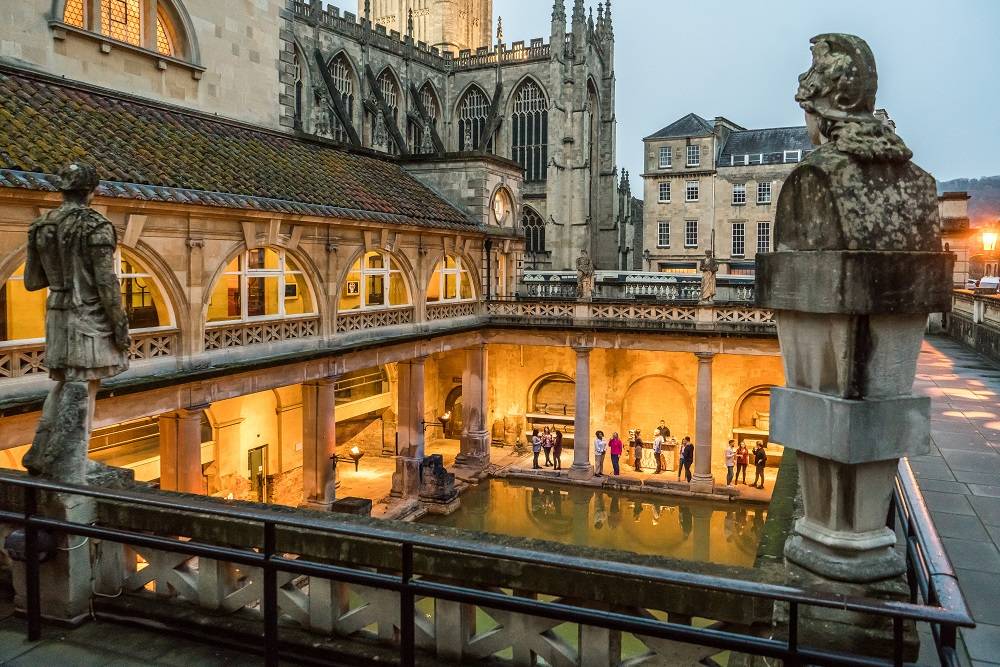
The Roman Baths we see today comprise the Roman Bath House, Sacred Spring, the Roman Temple, and a museum. Visitors get a first glimpse of the Great Bath from the terrace above, where statues of Roman emperors and governors of Roman Britannia stand on guard. Crafted by British sculptor George Anderson Lawson, they date back to 1894 and made their first appearance during the reopening of the Roman baths in 1897, after which public bathing resumed. However, due to health issues, the baths were closed for good in 1978.
The thermal waters that feed the Roman baths today come from the same source—King’s Spring (one of three springs in the city centre), which fed the ancient baths over 2000 years ago. Still densely infused with minerals, they also possess the unmistakable odour of sulphur, steam rising from the water surface naturally heated at an average of 34º Celsius (93º Fahrenheit).
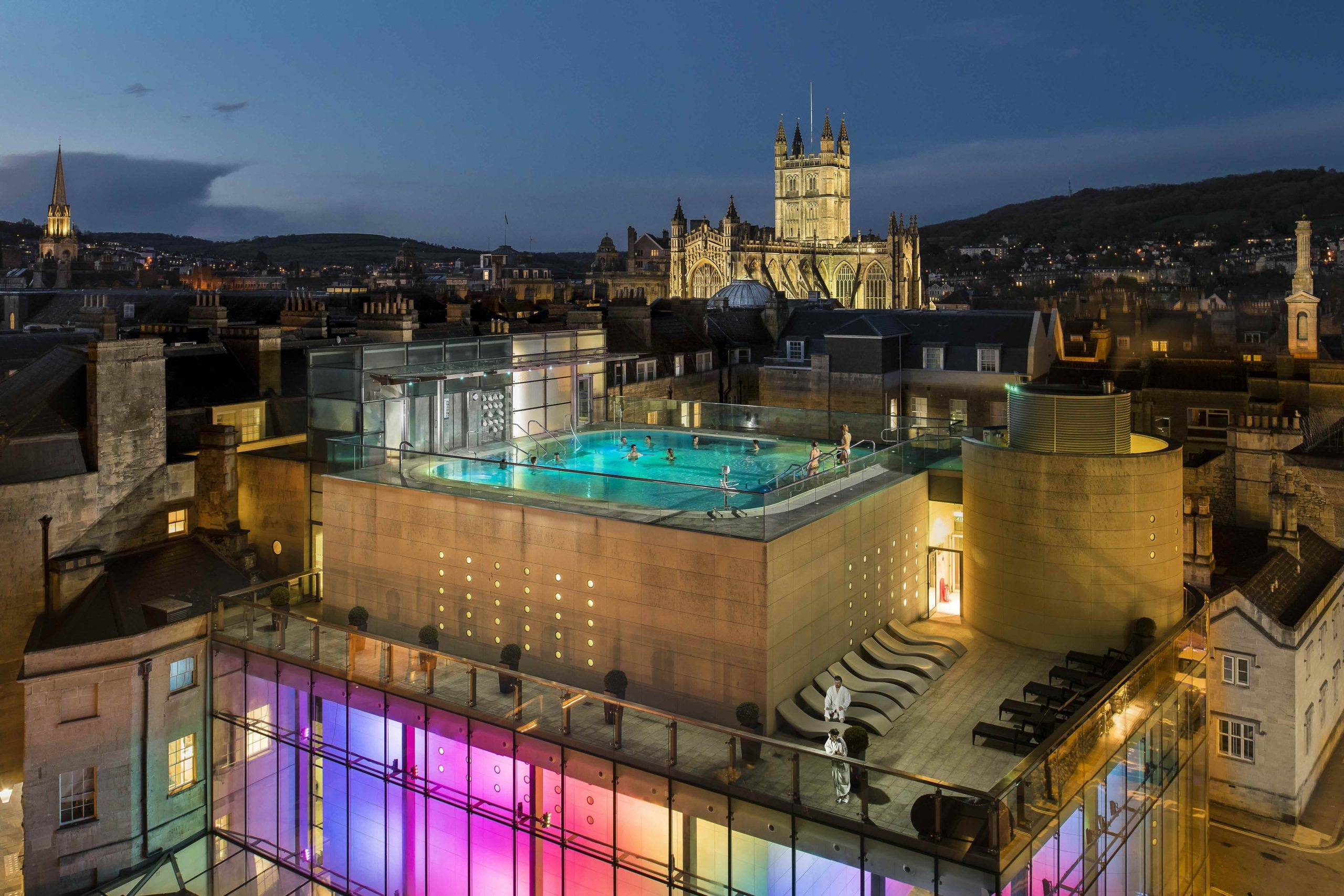
THERMAE BATH SPA
During the decadent days of Acque Sulis, as in countless public baths across the Roman Empire, there were no health and hygiene rules to contend with. All manner of leisure activity was done in the baths, evidenced by archaeological finds, which have included teeth, scalpels, needles, jewellery, animal bones, even dice and coins. Bathing in the buff was the norm, and while many came to be cured of their ailments, the thought of contracting a disease probably never crossed bathers’ minds.
Fortunately, the joy of bathing in Bath’s thermal waters is not over, thanks to the Thermae Bath Spa, the modern-day equivalent of the Roman Baths. Situated just around the corner from the old Roman bathing haunt, the modern spa opened its doors to the public in 2006 to provide a complete spa experience spread across six storeys. Designed by Sir Nicholas Grimshaw, the architecture couldn’t be more different from its ancient predecessor, its façade dominated by glass to allow plenty of light to filter into the bathing areas.
The spa complex comprises the Minerva Bath, the Wellness Suite, the Cross Bath and an open-air rooftop pool, all fed by mineral-rich thermal waters from three springs: King’s Spring, Hetling Spring, and the Cross Bath Spring, recognised as an official sacred site, which delivers clean water directly to the Cross Bath above. The water is regularly monitored and tested for flow and temperature, and a small amount of chlorine is applied to comply with health and safety regulations, making the bathing experience safer but just as therapeutic.
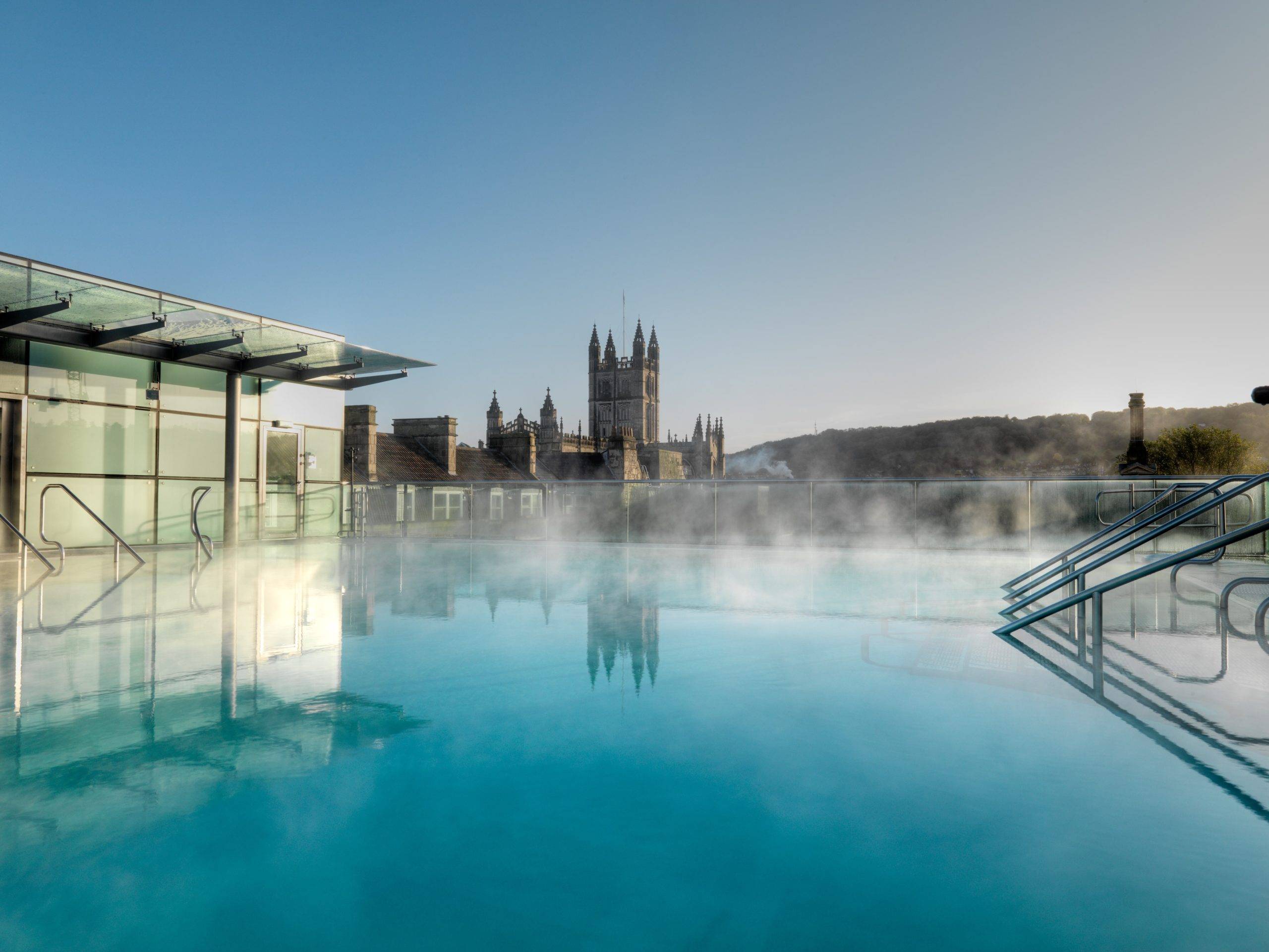
The indoor Minerva Bath creates a relaxing haven with flowing curved lines, ambient lighting and a spacious whirlpool bath. At the open-air Rooftop Pool, bathers can enjoy views of the city’s historic buildings, punctuated by the historic Bath Abbey’s tower, although sunset and evening sessions lend a more magical, romantic atmosphere. Situated in a separate open-air venue is the Cross Bath, available only for small parties of up to 10 guests.
The ancient Romans didn’t hold back when it came to self-gratification. But they also knew how to counteract the hazards of their hedonistic lifestyles by cleansing their bodies in a series of temperature-regulated bathing rituals. Today, we are well aware of the benefits of ‘detoxifying’ the body of toxins and impurities through thermal spa experiences.
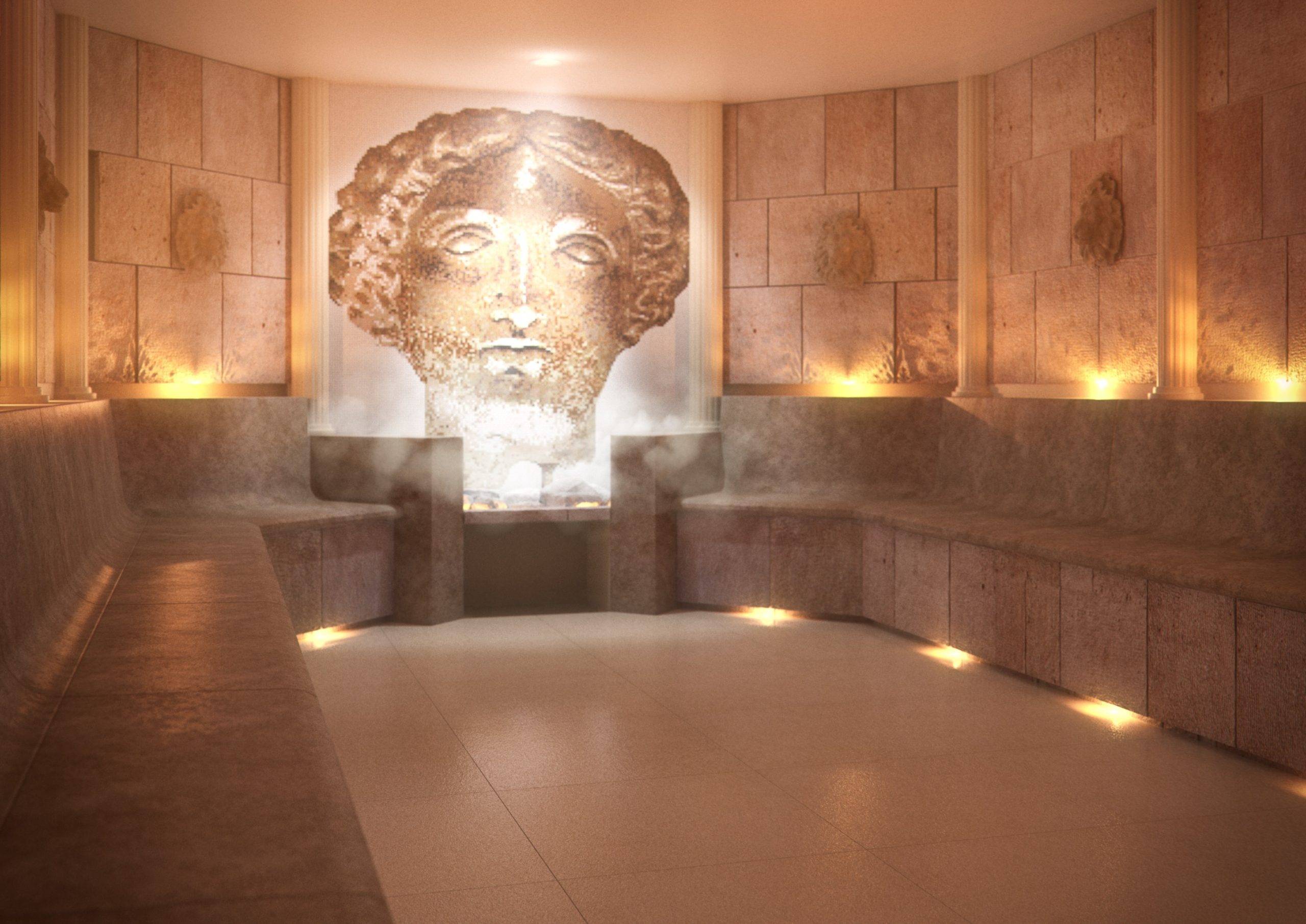
The Wellness Suite on the second floor offers a series of therapeutic rituals, such as the Roman Steam Room (sudatorium to the Romans), designed with hand-crafted stone seats, columns and an imposing mosaic of Minerva. There’s also the Georgian Steam Room, inspired by the period’s architecture. Alternatively, the Infrared Room provides heat using light waves to penetrate deeper into joints and muscle tissues at more comfortable temperatures. Experience Showers bring relief, while those who prefer to cool off with arctic temperatures head for the Ice Chamber. And finally, the Celestial Relaxation Room’s twinkling lights, heated loungers and calming sounds will induce restful tranquillity. There’s also a range of spa treatments and facials that ancient Romans would be envious of.
HEALING VIBES
Those in search of more bespoke wellness experiences should head to The Soul Spa in the centre of Bath. Their Sound Bath and Guided Meditation session is highly recommended as a gentle way of releasing mental, emotional and physical tensions. At the heart of this exercise is learning how to breathe deeply, which helps to gradually empty the mind and relax the body. The sound of crystal singing bowls sends healing vibrations to alleviate anxieties, clear emotional blockages and rebalance energies. Drifting into a relaxing slumber or meditative state is a sure sign that this healing exercise works.
FEEDING THE SOUL
Privileged ancient Romans would have indulged in lavish dinners, but what they didn’t have is the variety of culinary experiences modern Bath brings to the table. A prime example is Chez Dominique, an intimate restaurant situated just a few paces from the scenic banks of the River Avon. Owned by husband-and-wife team Chris and Sarah, the restaurant opened in 2016 to specialise in modern French and European cuisine, and has since garnered the 2017 Bath Good Food Awards for ‘Best French’ and ‘Best Steak’, and the OpenTable Diners’ Choice Award for 2017, 2018, 2019, and 2020.
Indeed, Chez Dominique deserves the accolades for its honestly good food, made from high-quality ingredients. The menu changes seasonally and could include enticing dishes such as ox tongue fritters, cured duck ham, onglet steak with wild garlic butter, Reblochon cheese, and desserts like Basque coconut cheesecake with passion fruit curd and a Roasted hazelnut dark chocolate tart.
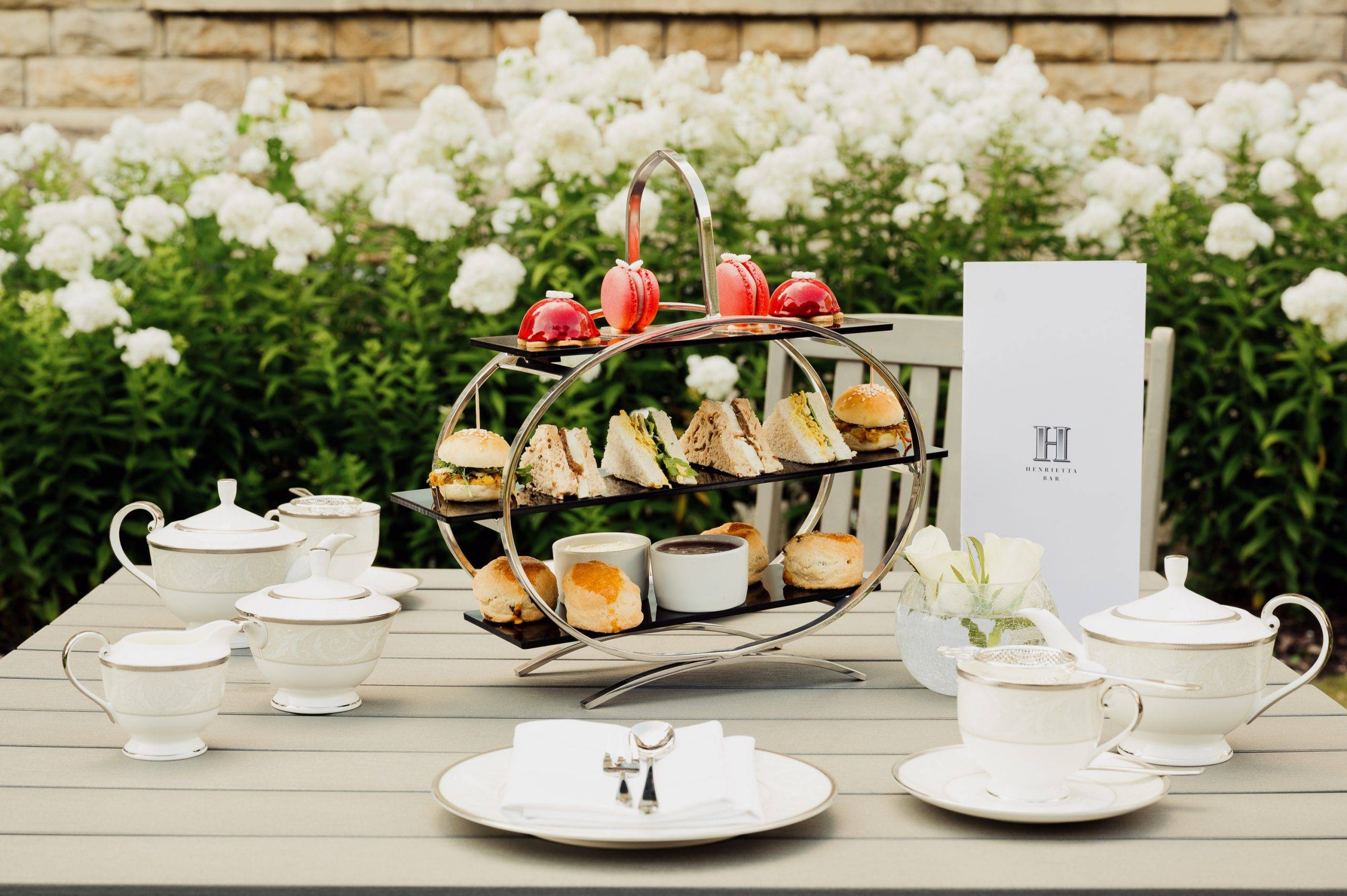
HIGH SOCIETY TEA
This year, the city of Bath commemorates Jane Austen’s 250th anniversary, and a fitting way to join in the festivities is to savour a Traditional Afternoon Tea at The Roseate Villa’s Henrietta Restaurant. The Regency-inspired menu includes a selection of exotic finger sandwiches, plain and fruit scones with clotted cream and strawberry preserve, mango macarons, lemon meringue pie and a selection of artisan cakes. And it’s good to know there’s also a Vegan Afternoon Tea version. Choosing a blend of tea to accompany the feast can be tricky, and the recommended Jane Austen Blend, comprising three fine Chinese teas and served without milk, makes an ideal choice for its balanced, delicate taste. The Lady Whistledown is also a wonderfully refreshing option, concocted from the finest black tea, rosehip, blackberry leaves and rose petals. And if guests fancy dressing up in Regency fashion as Elizabeth Bennet and Mr Darcy, they would fit in very nicely.
A CITY THAT HEALS
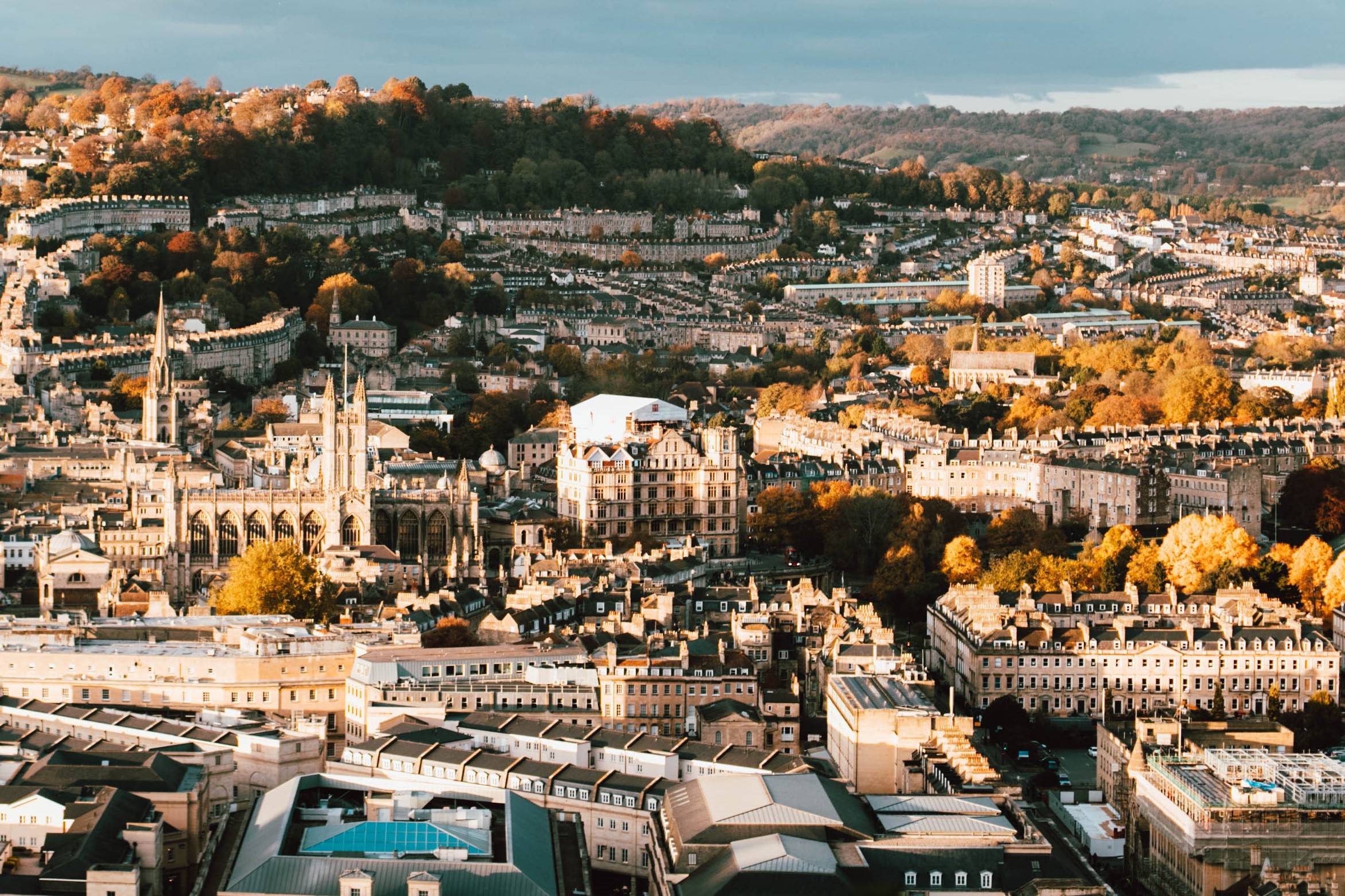
The vibrant city of Bath is undoubtedly a destination that heals visitors in more ways than one. Therapy comes in the form of shopping, dining, art and architecture, and most important of all—bathing in its thermal spring waters. The constant flow of the River Avon brings plenty of positive energy to this spa town, and combining the precious legacy of the Roman Baths with the splendour of Georgian architecture is hard to beat. It’s no surprise then that Bath is the only historic city in Britain to be designated a UNESCO World Heritage Site, as well as one of 11 Great Spa Towns of Europe.
Harnessing Bath’s curative environment has been the focal point of the city’s annual Re:Balance Bath Wellbeing Festival for the past three years, and there’s more to look forward to when it takes place once again from 29th January to 15th February 2026. During this three-week period, visitors can take part in events, talks and activities comprising mindfulness, fitness and meditation sessions to banish the winter blues.
What’s more, travelling to Bath from London Paddington with Great Western Railway is a pleasant and stress-free journey. Trains run every half an hour. Save and explore more with the Long Weekender ticket. Leave on a Friday or Saturday and return on a Monday.