


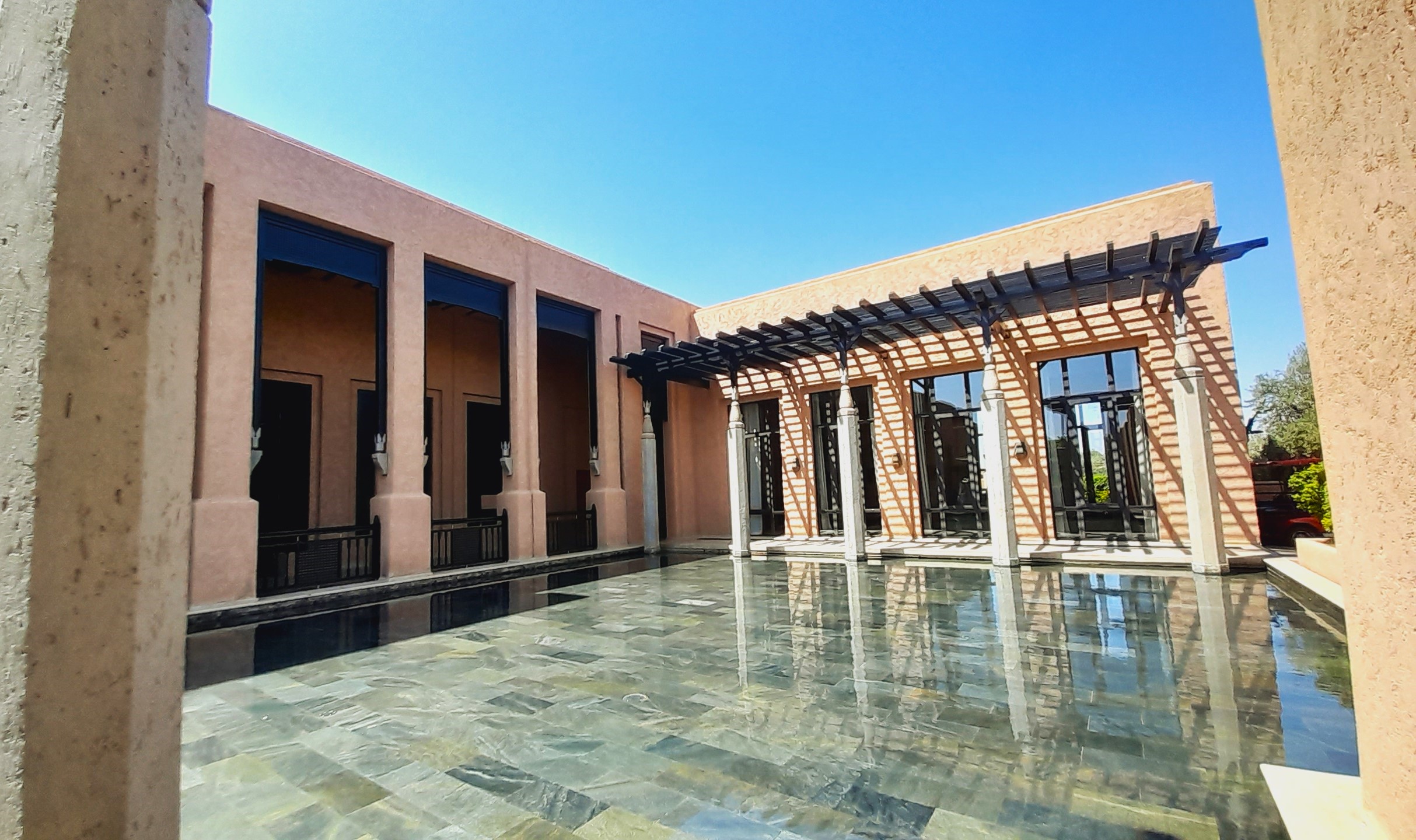
Fairmont Royal Palm Marrakech entrance © Rowena Marella-Daw
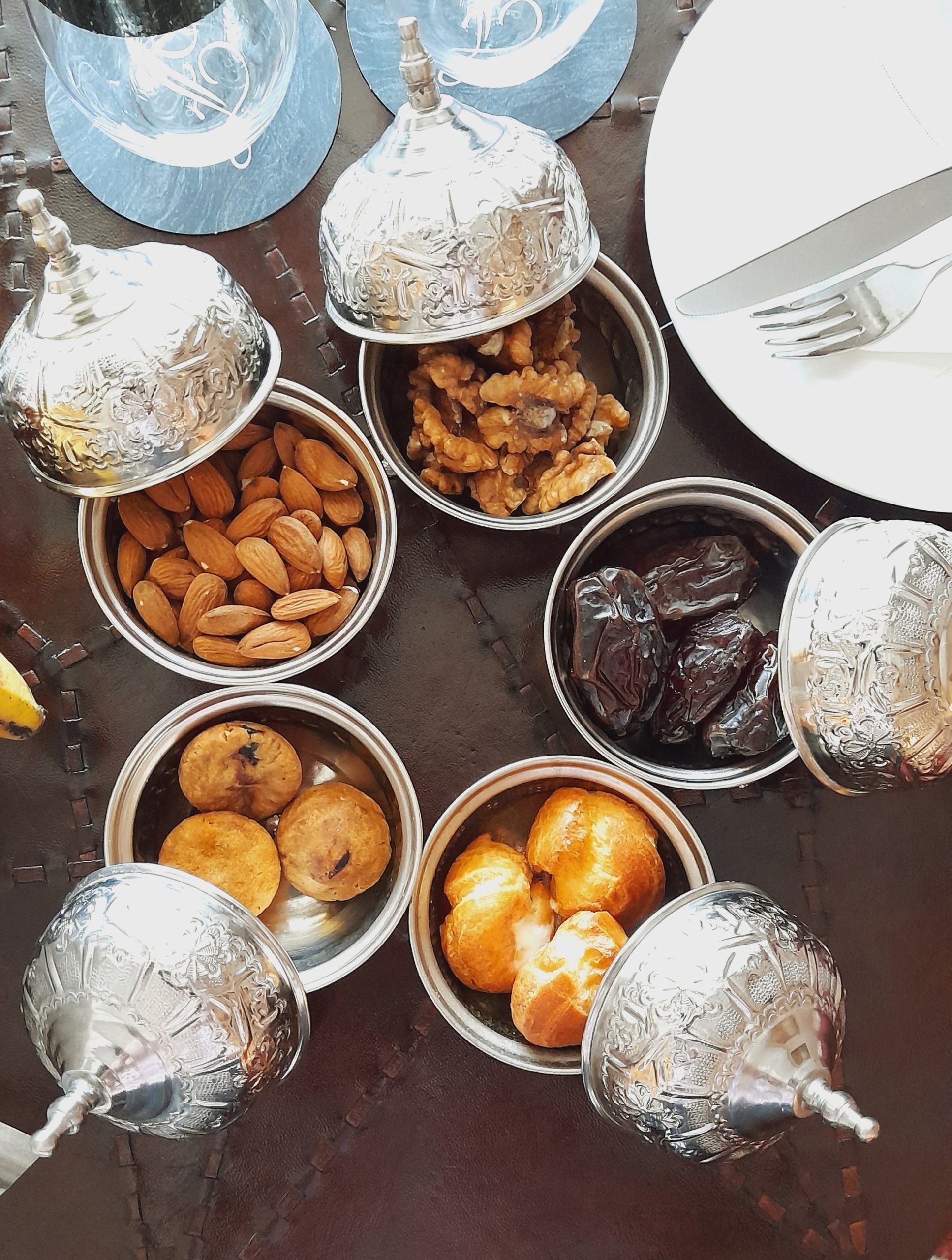
Fairmont Royal Palm Marrakech welcome treat © Rowena Marella-Daw
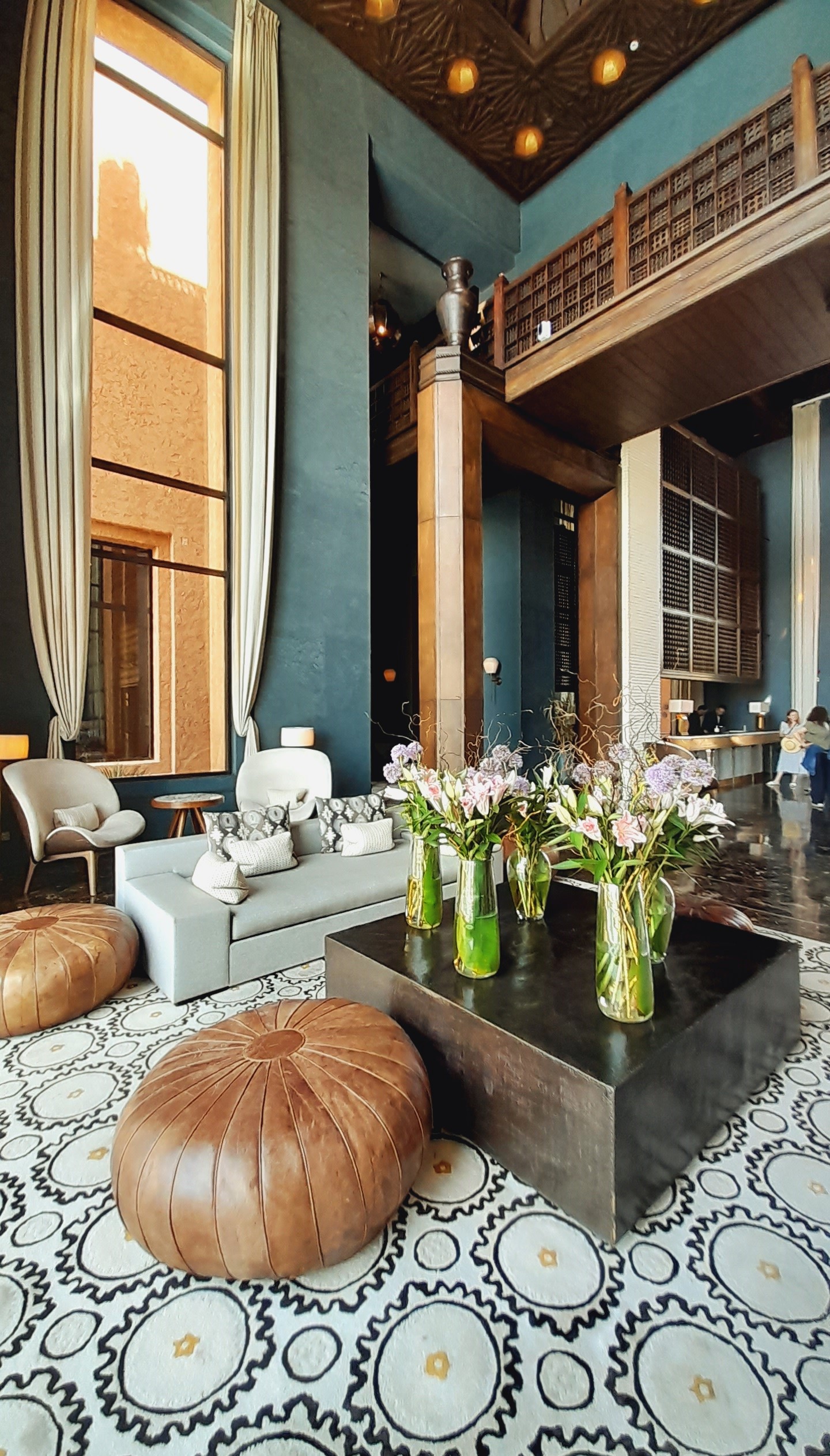
Fairmont Royal Palm Marrakech lobby © Rowena Marella-Daw
Marrakech is one city you have to experience more than once. Each visit unravels a different layer of the Red City’s rich cultural tapestry, and my latest jaunt was just as memorable as previous ones. Although bleary-eyed from a 06:40am flight, my companions and I buzzed with excitement as we headed in the direction of the Atlas Mountains and towards Fairmont Royal Palm Marrakech, our luxury abode. In mid-June, a pleasant mid-20s Centigrade temperature combined with dry heat set the perfect climate for our sojourn.
A GRAND ENTRANCE
Grand as grand can be, a wide pathway flanked by two large shallow pools and columns of palatial proportions led us to the reception area. To get a real sense of the resort’s vastness, the entire estate, covering 231 hectares (570 acres), can accommodate up to 47 football stadiums or 325 standalone football pitches. And the scale of this property became apparent as I entered the lobby, where a 14-metre-high glass wall revealed expansive landscaped gardens and reflecting pools, a main outdoor swimming pool, and sections of an 18-hole golf course that seemed to stretch into infinity.
While sipping a refreshing welcome drink at Le Bar, my eyes were drawn towards three dozen or more Moroccan lanterns of varying lengths and sizes suspended from a lattice frame positioned above the bar. This feature, typical of Middle Eastern and Moroccan architecture, is referred to as ‘Moucharabieh’ or ‘Mashrabiya’ and is traditionally carved from wood, such as Atlas cedar or walnut. The spaces within geometric patterns allow light to filter through and cast decorative shadows on surfaces.
The resort’s main structure was designed by architect Jean-François Adam as a modern interpretation of the Ksar, a traditional North African fortified village, while the interior reflects the style of riads. I instantly sensed the mysterious, mystical ambience while walking through dimly lit corridors, nooks and crannies that open up to grand spaces illuminated by natural light.
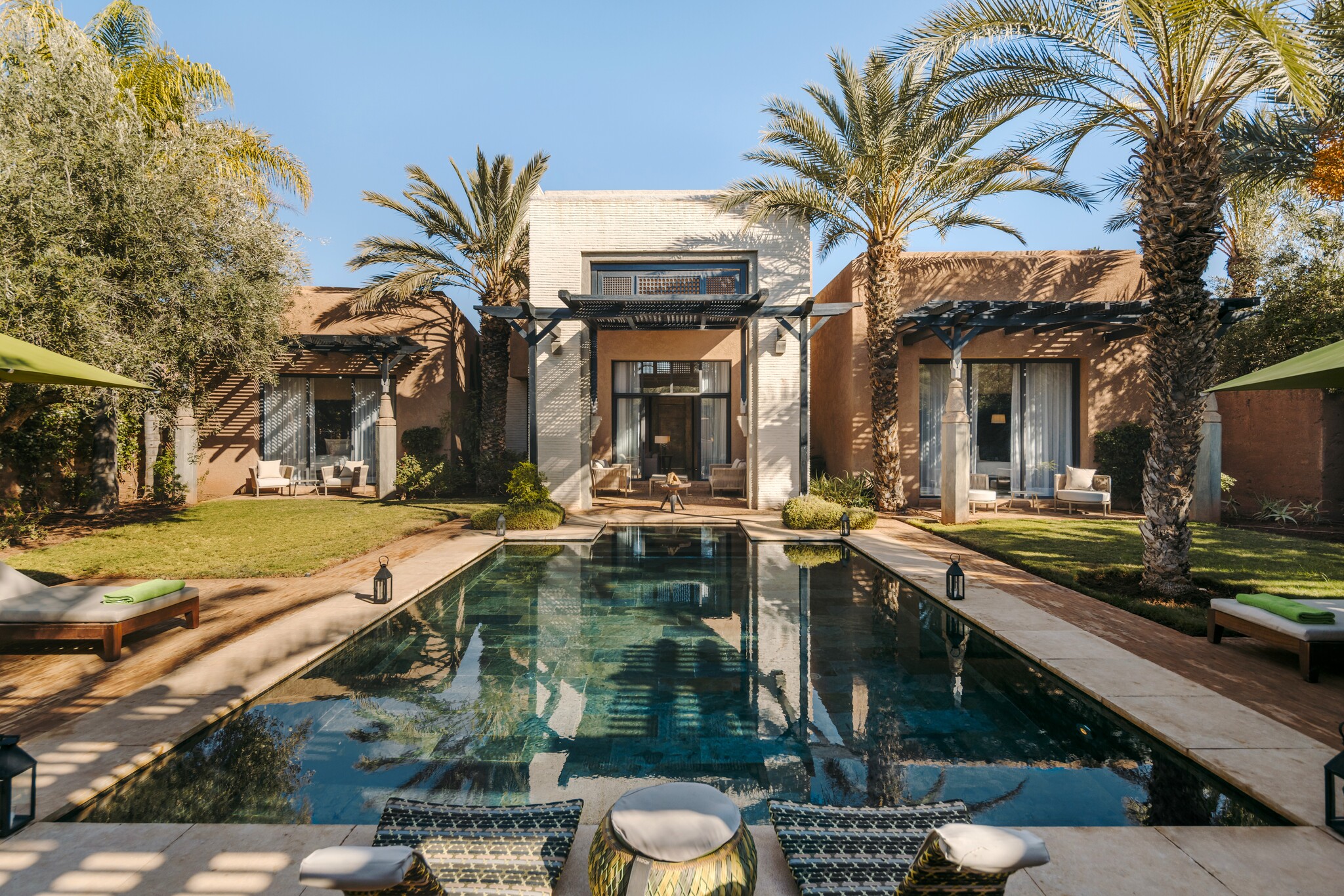
Prince Villa at Fairmont Royal Palm Marrakech
SPATIAL LUXURY
Quality, not quantity, rules at Fairmont, which is why there are only 125 rooms and suites. Generously sized from 72sqm to 310sqm, they are spread across a cluster of three-storey buildings, all within close proximity to the restaurants, the spa and health centre. My Junior Suite on the first floor opens up to a terrace with extensive views over the golf course and the Atlas Mountains. Moucharabieh screens and marble surfaces enhance the ensuite bathroom and dressing room, which are just as big, if not bigger than the bedroom itself. So far, there are only 10 private villas in the estate, and one of them, the Prince Villa, is a two-bedroom sanctuary with its own authentic Hammam. The private swimming pool is wrapped by manicured gardens with enough space for alfresco dining and a covered patio for cocktail parties.
EPICUREAN ODYSSEY
My Fairmont culinary journey started with an early lunch at Capricci, specialising in traditional Italian dishes with a dash of contemporary influences. After two courses, I was ready for a nap—until they brought in an eye-popping Lemon Trope L’Oeil, a realistic recreation of a whole lemon. This stunning ‘capolavoro’ (masterpiece) was too good to eat, but a shame not to. So I gently cut through the delicate pistachio dacquoise to savour the soft, hollow meringue oozing with candied citrus fruits and honey cream.
Balmy summer evenings are best enjoyed dining alfresco at Al Ain restaurant, where Zellij tiles, lanterns and the distant Atlas mountains all conspired to create a romantic atmosphere. A plethora of dishes marrying spice-infused Moroccan and Lebanese specialities awakened my taste buds, starting with a Mezze sharing selection of six salads and dips, including a Mama Ghanouj, a grilled courgette version of the original aubergine-based Baba Ghanouj.
Following a brief pause for sunset photos, our amiable maitre’d, Faisal, arrived with the main dishes: Chicken tagine with saffron, preserved lemons, green olives, and candied almonds; Slow-braised lamb with spices, onions, and caramelised tomatoes; and a dish of large spiced prawns. Surprisingly, we found space for a light dessert of Kunafa (filo pastry with sweet Akawi cheese and pistachios, topped with Madagascan vanilla ice cream). My first ever Moroccan wine, a light, refreshing Volubilia Rosé, made a great companion to a sumptuous meal.
Next day’s lunch was at the L’Olivier poolside Mediterranean restaurant, an ideal spot for cooling down after spending a hot morning traversing the old town’s crowded souks, aperfectly baked pizza topped with pan-seared lobster meat, Stracciatella, baby greens, lemon zest and a sprinkling of crushed pistachios certainly raised this Italian staple to a higher level.
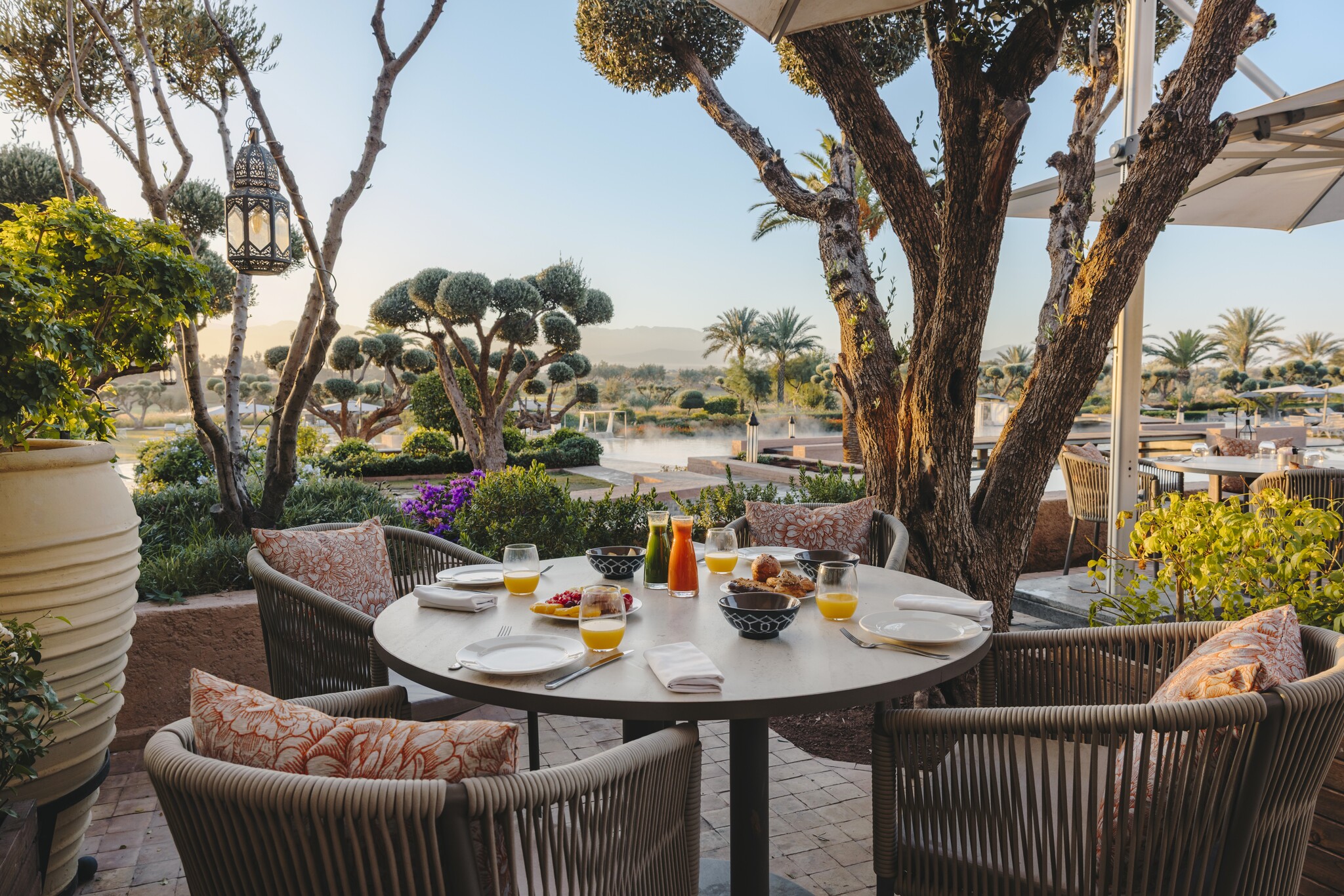
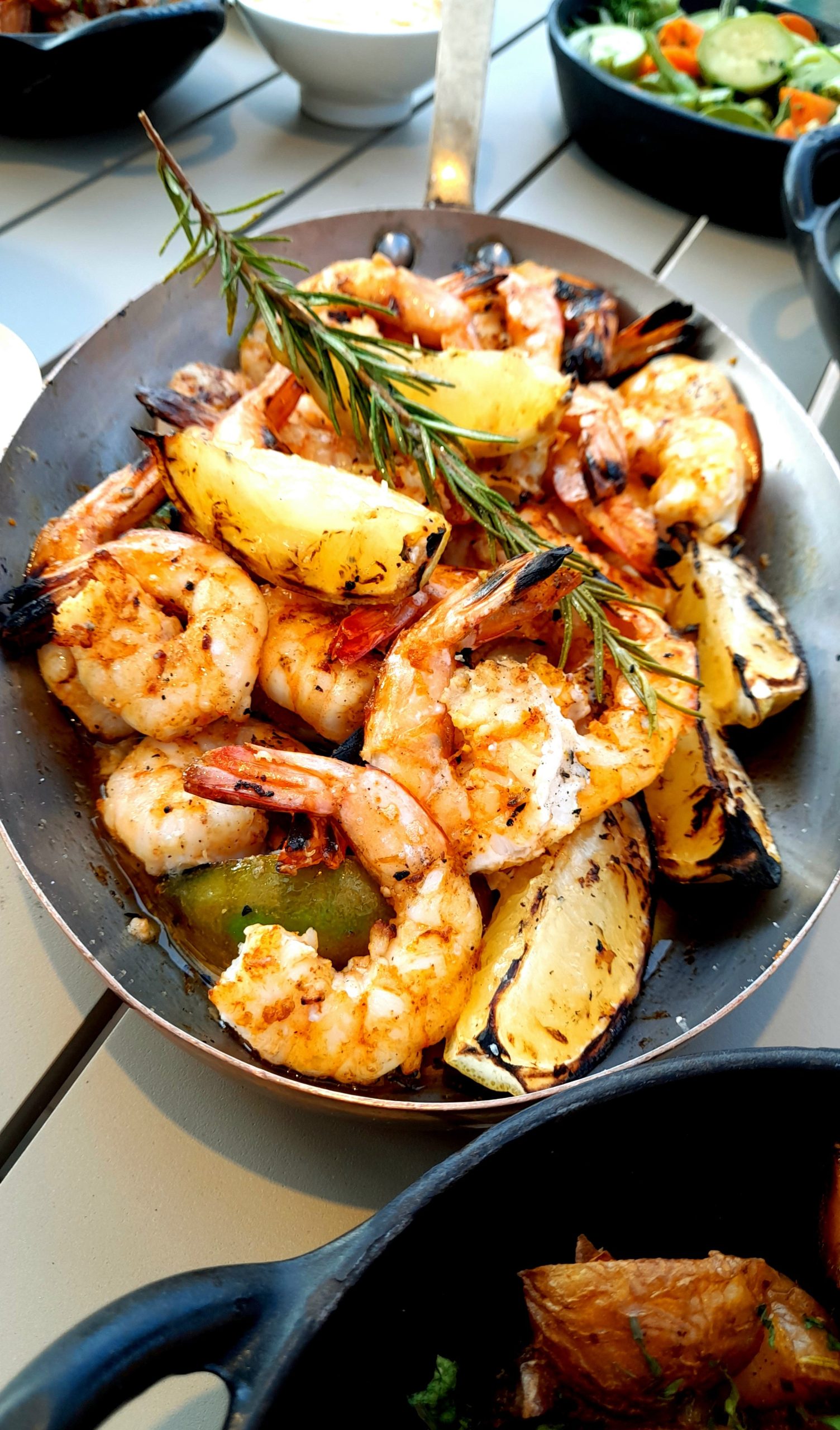
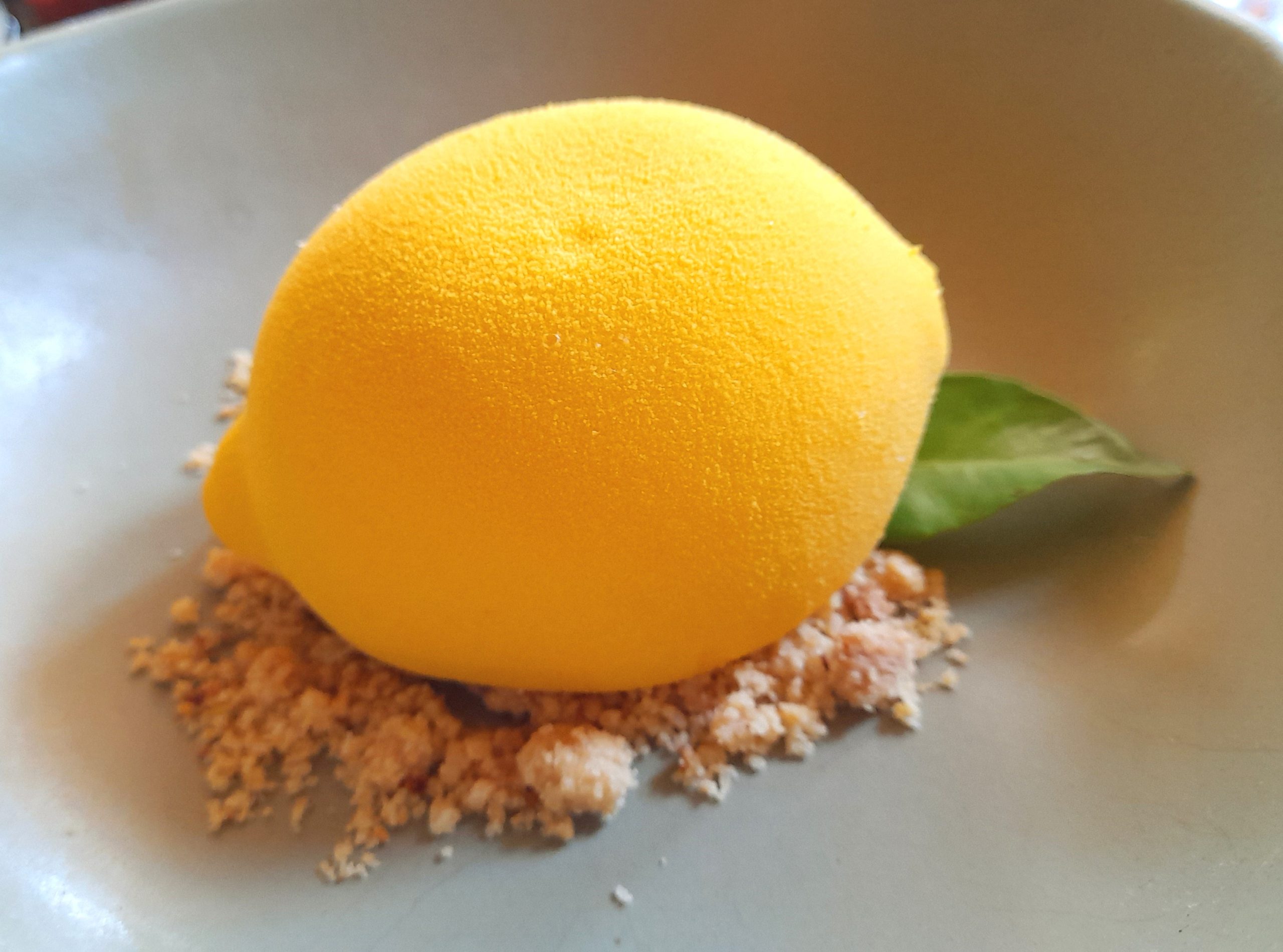
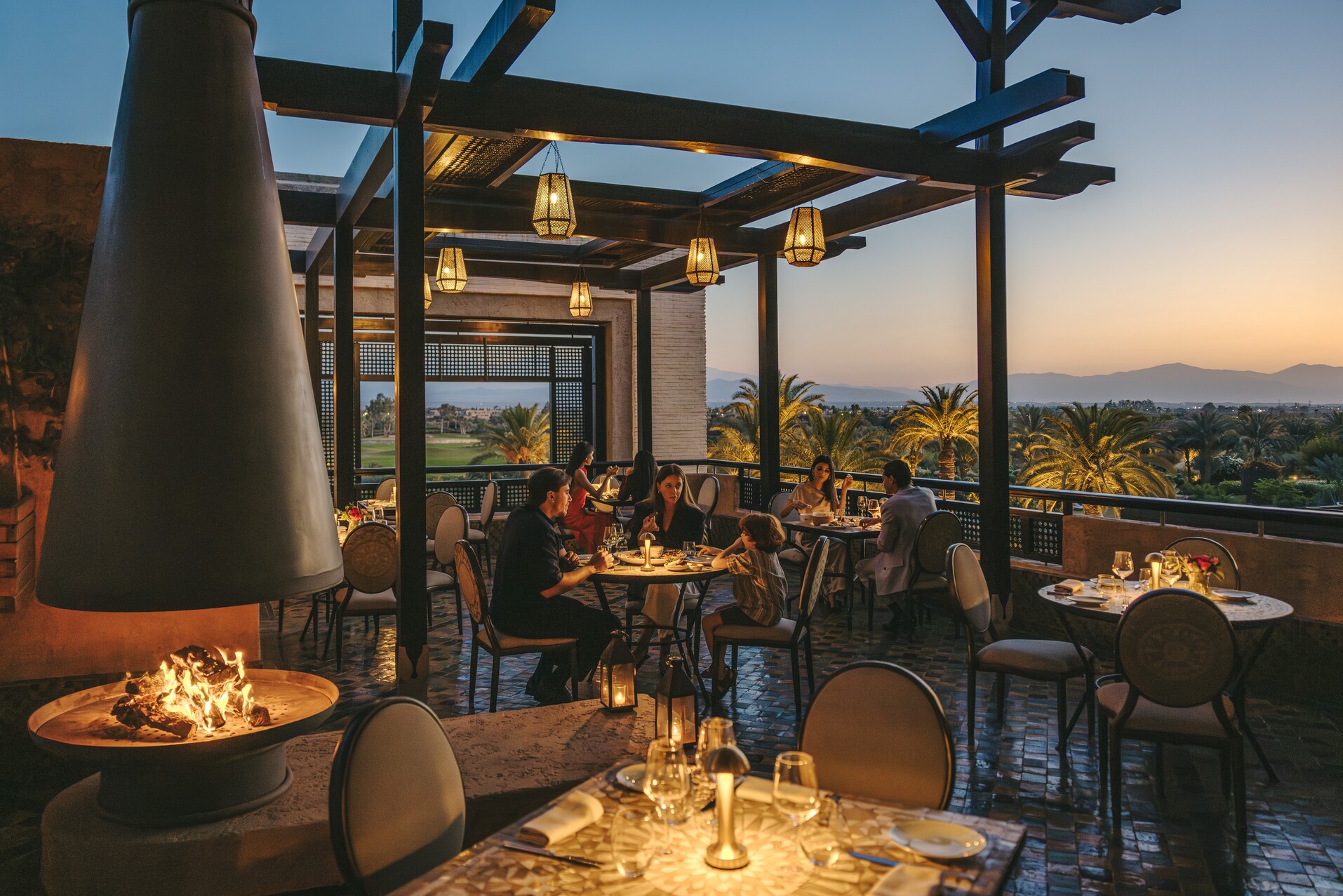
Clockwise from top left: Italian restaurant Capricci; spiced prawns at Al Ain © Rowena Marella-Daw; alfresco dining at Al Ain; Lemon Trope L’Oeil at Capricci © Rowena Marella-Daw
LE SPA
Fairmont’s Le Spa is a sprawling sanctuary, the focal point of which is a large indoor pool bathed in natural light. But what makes this place special is its dedicated hammam area comprising eight steam cabins. Here, I experienced my first authentic ritual, Escape Hammam by marocMaroc. While lying on the steam room’s marble seat, the therapist poured buckets of hot water all over my body—a shock to the system, but vital for opening the pores. The soothing part came when I was smothered in Beldi black soap, a traditional Moroccan paste made from olive oil, which prepares the skin for exfoliation. After 10 minutes, she scrubbed my legs and arms with a Kessa glove, the whole point of which was to scour away dead skin. Although uncomfortable, I reminded myself of the mantra: “No pain, no gain”. Following another warm rinse, she applied a special Miel d’Ambre Balm and Orange Infusion moisturiser. My skin glowed and had never felt so soft; even my companions noticed the difference.
Next door, the Fitness Centre houses state-of-the-art facilities and activities catering to all levels and skills. Sporty types have access to tennis, padel and squash courts, while those who prefer moderate exercise can swim in the semi-Olympic lap pool or take classes in the yoga studio. And while parents are enjoying well-earned ‘me-time’, the Kid’s Club keeps young ones entertained with a range of indoor and outdoor activities.
Further away, the Golf Country Club is a destination unto itself. The 18-hole par-72 championship golf course comes with its own Legends’ Bar, a semi-Olympic swimming pool, fitness room, and lavish changing rooms. Keeping the grass in tip-top condition requires adopting sustainable measures, such as using recycled water to irrigate the grounds and gardens, and premium-quality turf, which requires less water compared to traditional grass.
CREATIVE CORNER
Tucked behind the spa is a special place for guests of all ages. Under the guidance of resident potter Amine, my companions and I became deeply immersed in shaping copious lumps of wet clay into objects of our choice. There was a lot of kneading, stretching and moulding; some even tried their hand at wheel throwing. In the end, we were all pleased to have produced a collection of practical and decorative pieces, although mine was the odd one—a mini bust resembling, unintentionally, a male head with a turban. The entire experience was fun and therapeutic; I could have spent the entire day there.
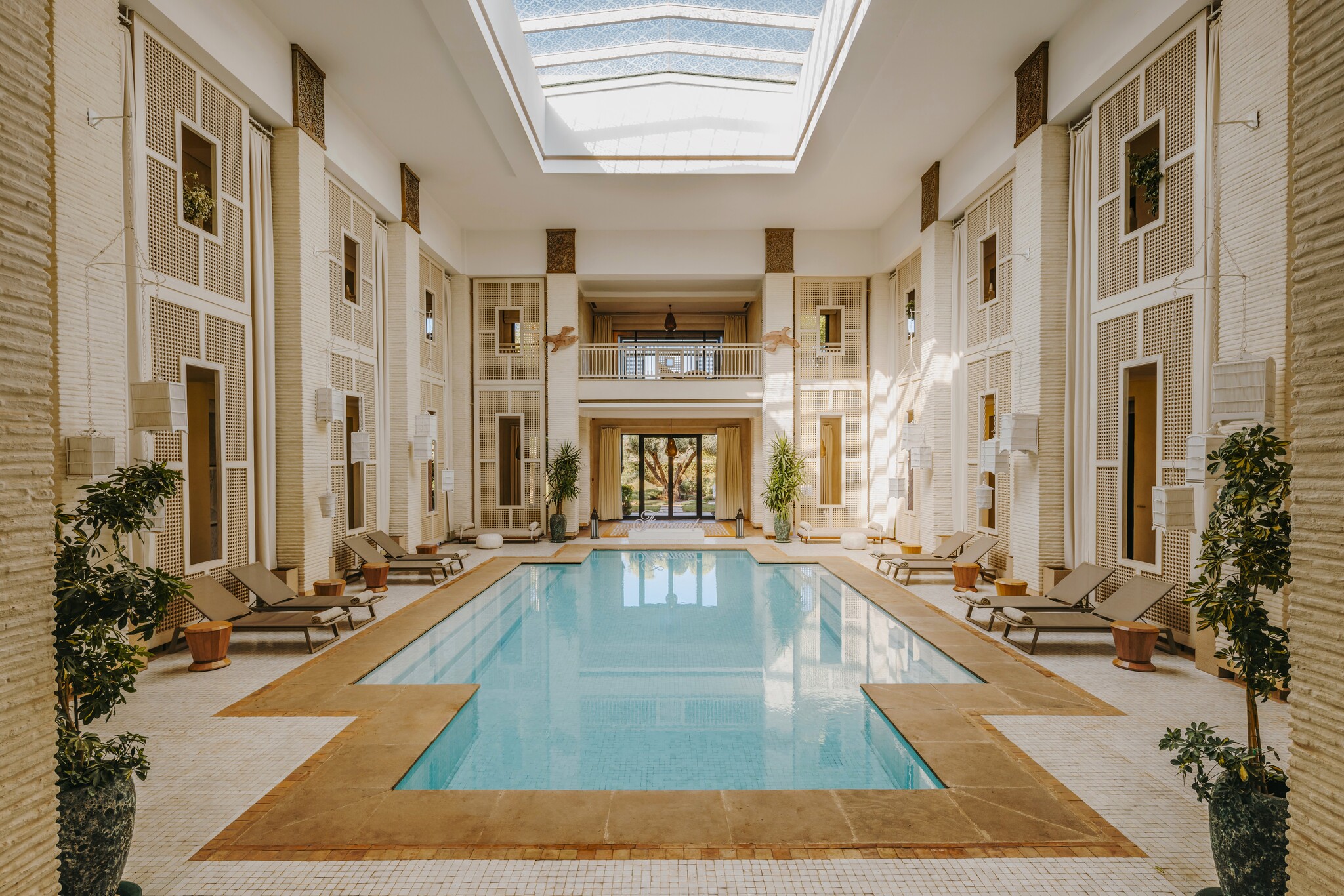
Indoor pool at Fairmont Royal Palm Marrakech’s Le Spa
ART AND THE CITY
It was worth getting up early to visit Le Jardin Majorelle in Gueliz, a modern enclave adjacent to the Medina. The estate is a labour of love from French Orientalist artist Jacques Majorelle, who, since the 1920s, spent four decades creating a paradise garden around his art studio and residence. Using striking Cobalt Blue paint (Bleu Majorelle), he brought life to every surface—the villa, Art Deco studio, walls, even fountains. Nearly two decades after his untimely death, the estate was rescued from demolition when fashion designer Yves Saint Laurent and his partner Pierre Bergé bought the estate in 1980 and restored it to its former glory. Today Le Jardin Majorelle showcases an impressive collection of exotic plants and giant cacti gracing winding pathways, ponds and fountains, while Majorelle’s former studio is now a museum devoted to Berber arts and culture. Next door, the Musée Yves Saint Laurent pays homage to the late designer’s iconic haute couture and theatrical collections over the decades. He loved this place; his ashes have been scattered around Jardin Majorelle.
Venturing into the heart of old Marrakech, our official guide, Aladdin, led us deep inside the Medina’s labyrinthine souks. If he had a magic flying carpet, we wouldn’t have had to dodge motorbikes speeding through narrow alleyways every few minutes. The donkeys, however, weren’t fazed at all. Shop after shop lined both sides of the path—Berber carpets, hand-made leather goods, spices, lanterns, garments, jewellery—everything I didn’t think I needed taunted me. I mooched around a cavernous ‘Aladdin’s’ cave and gawked at huge antique doors, one of which I vowed to take home one day. Equally fascinating was witnessing craftsmen, blacksmiths, silversmiths and tanners applying skills passed on from generation to generation.
The best surprise was the Ben Youssef Madrasa, an architectural gem dating back to 1564. Built by Sultan Abdullah Al-Ghaleb Assaad, it served as the epicentre of knowledge for students and scholars of various disciplines for four centuries. The considerable amount of time, passion and skill that went into embellishing walls and pillars with Zellij tiles and intricately carved cedar wood panels makes this historic landmark truly remarkable.
Another fine example of Moroccan craftsmanship is Bahia Palace, built in the mid-19th century as a royal residence. Walls and floors are embellished with Zellij tiles hand-cut in geometric patterns, while doors, windows and beams are made from Cedar wood hand-carved in arabesque floral and calligraphic motifs. As with traditional riads, the focal points here are the courtyards adorned with fountains and plants.
Revisiting Marrakech for the third time brought back good memories. It was also reassuring to see that the Medina’s familiar character and energy have not changed at all. Jemaa el-Fnaa square, famous for its snake charmers and persistent merchants, is still manic and buzzing with tourists, and it was a refreshing change to witness the old town’s more authentic cultural heritage. After absorbing the city’s exhilarating sights and sounds, returning to the luxury, peace and quiet of Fairmont Royal Palm Marrakech made this visit even more memorable.
BOXOUT
What better way to start an early morning flight to the five-star Fairmont Royal Palm Marrakech than with a door-to-door journey in comfort and luxury? Travelling to Gatwick Airport with Blacklane’s executive chauffeur service and an overnight stay at the Sofitel London Gatwick certainly made my trip more enjoyable and stress-free. See my full review here…
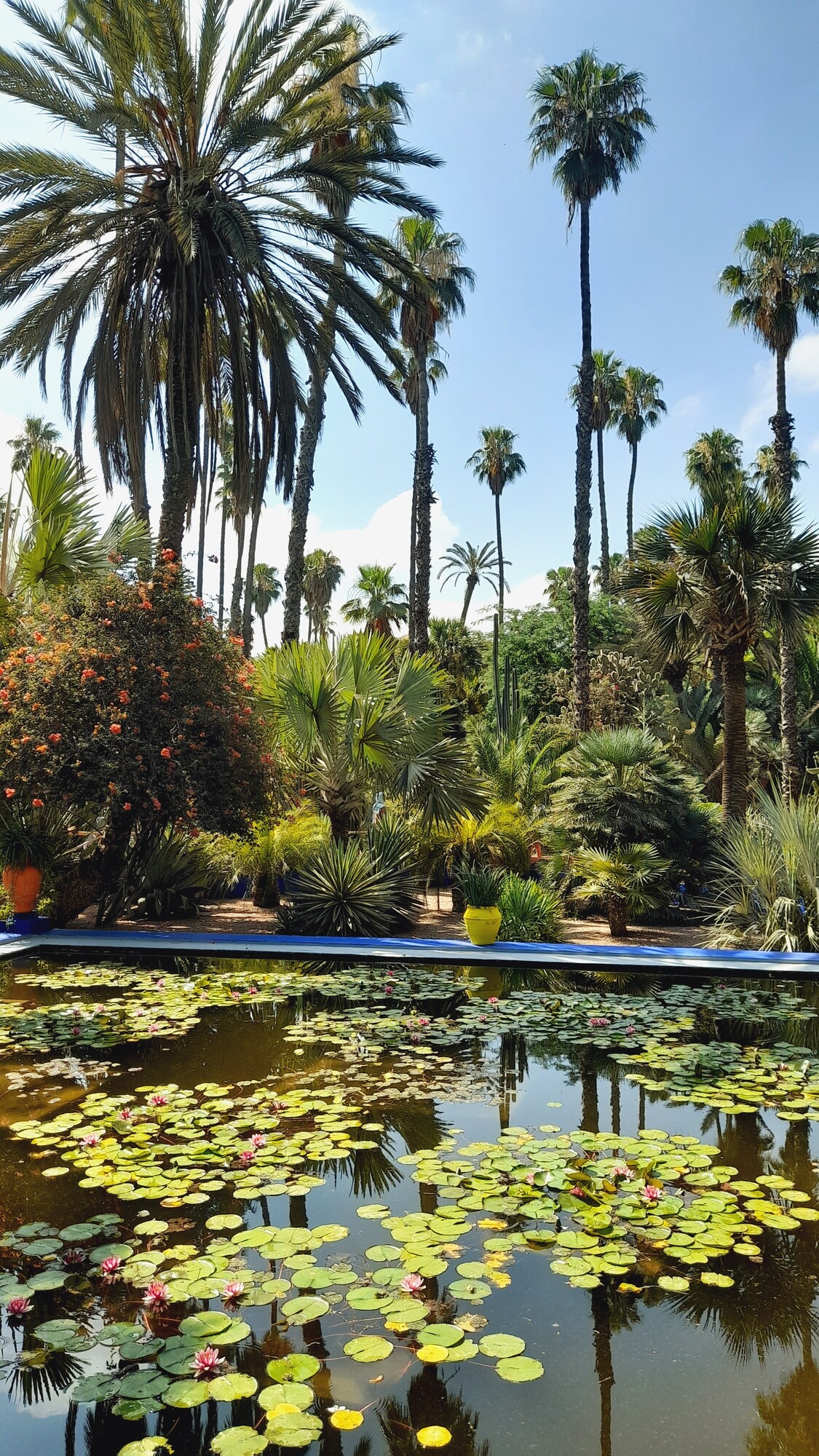
Jardin Majorelle © Rowena Marella-Daw
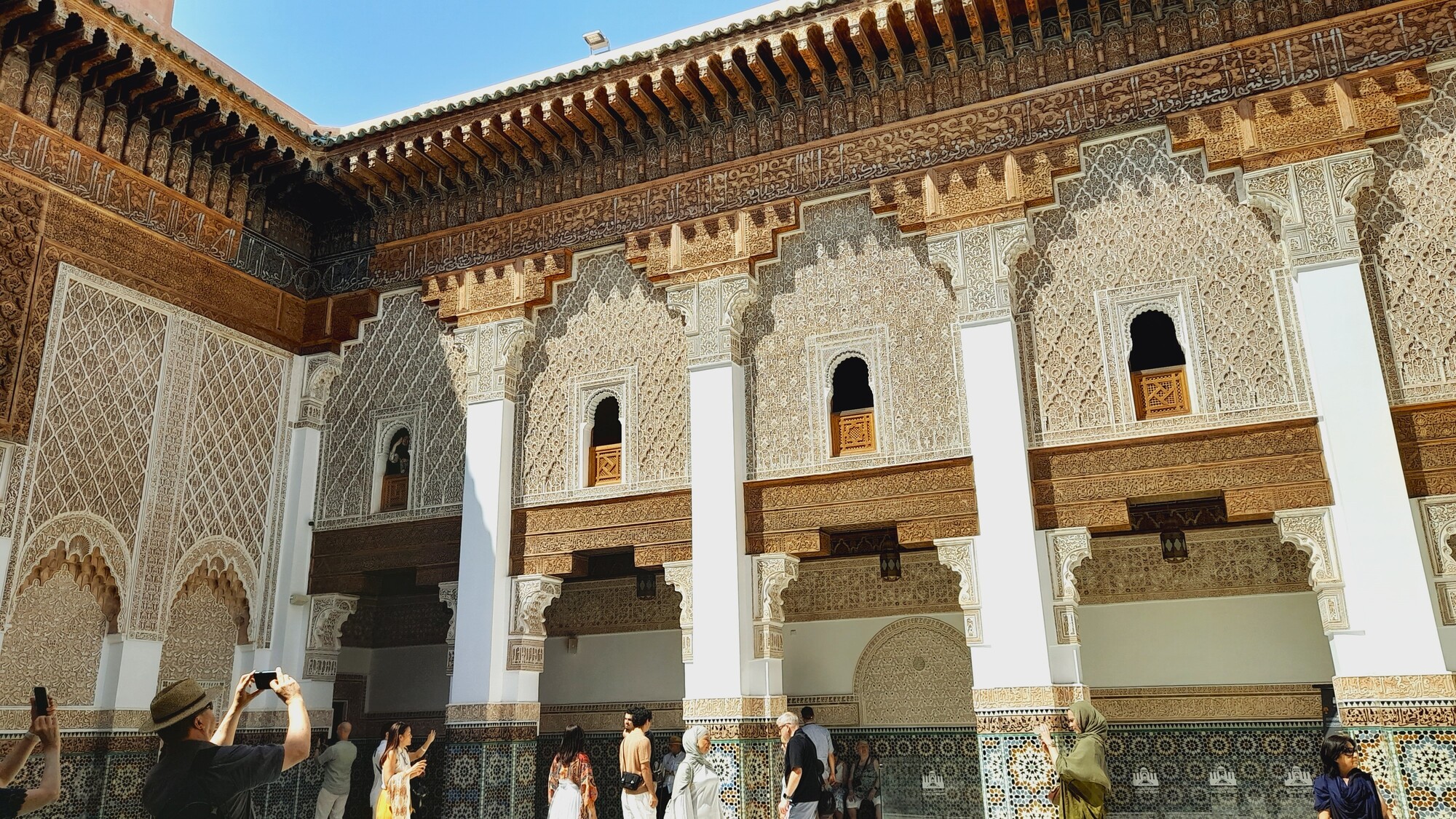
Ben Youssef Madrasa © Rowena Marella-Daw
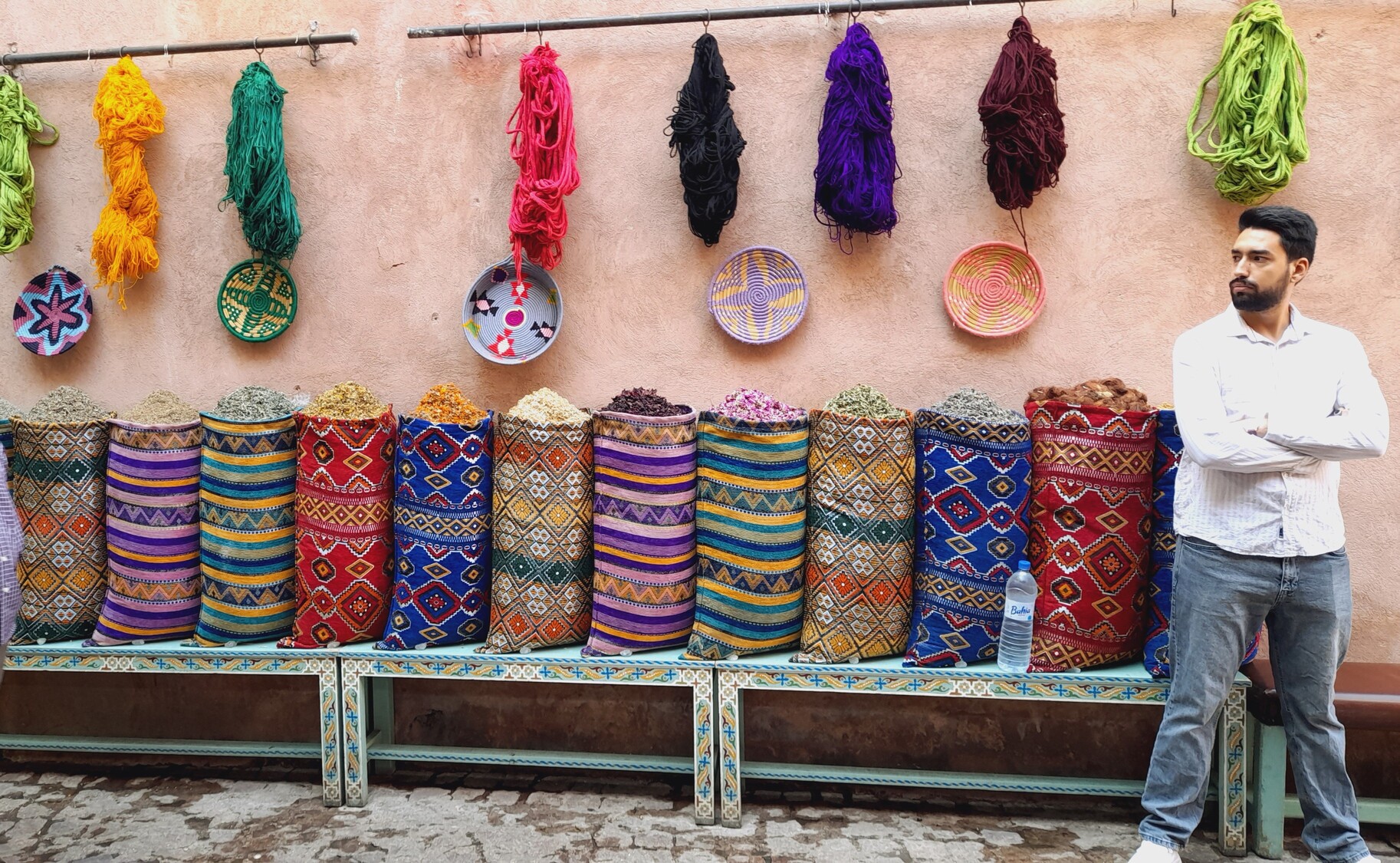
Medina Souk © Rowena Marella-Daw
To find out more about Fairmont Royal Palm Marrakech, visit the links below:
Fairmont Royal Palm Marrakech
Km 12 Route D’Amizmiz
Marrakech 40000
Morocco
Web: fairmont.com
Tel: +212 5 24 48 78 00
Email: marrakech@fairmont.com
Instagram: @fairmontmarrakech