


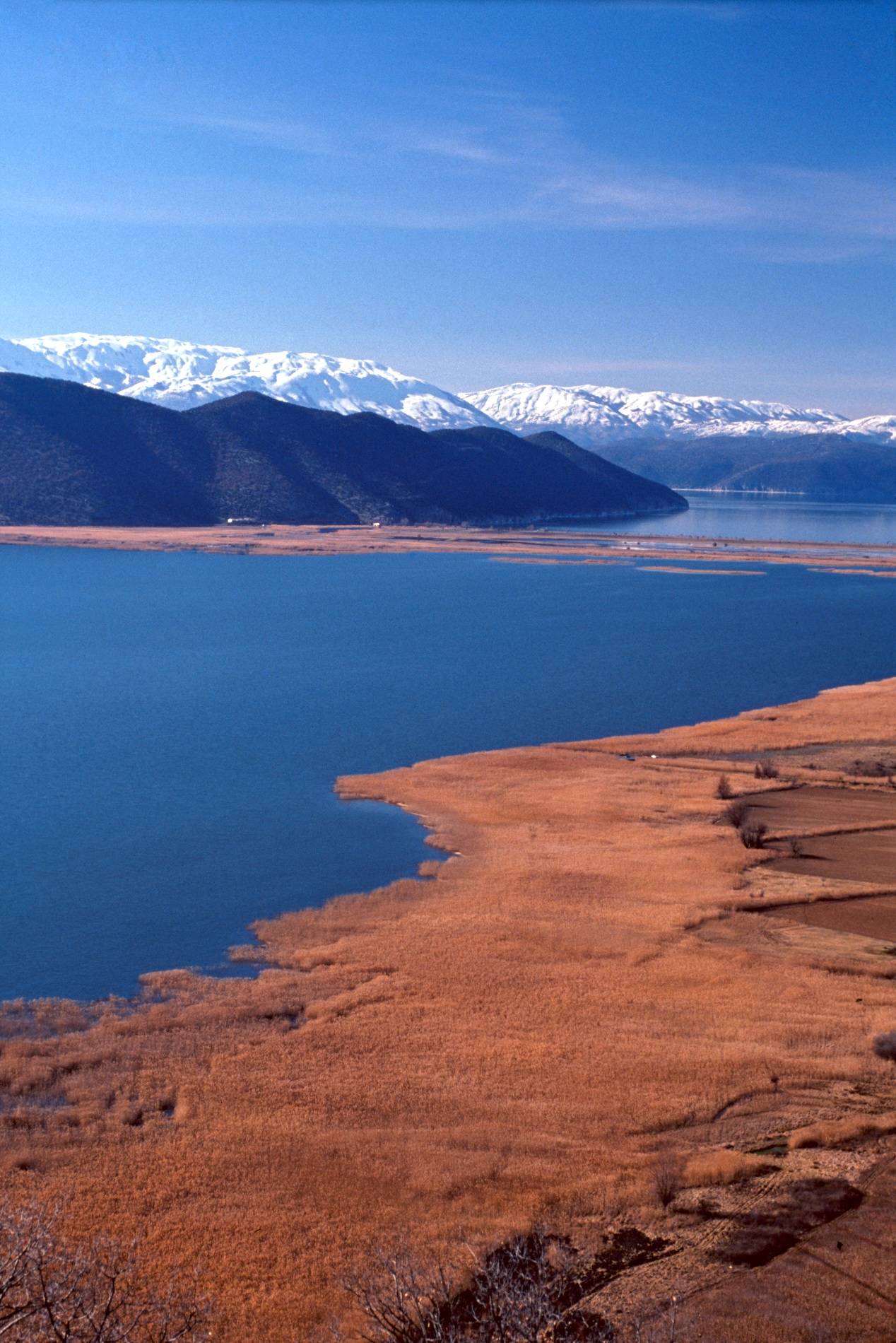
Prespes © GNTO/A. Bonetti
Tucked into the mountains of Florina in northern Greece, close to the borders with Albania and North Macedonia, Prespes is an otherworldly place marked by water, reeds and wide horizons. At its heart lie two lakes, Mikri Prespa and Megali Prespa, their shores shifting between wetlands, farmland, forest and small villages.
Together, they form one of Europe’s most important wetland ecosystems and one of mainland Greece’s most distinctive natural landscapes. Almost all of the Greek Prespa region was first given national protection in 1974, with the larger Prespa National Park established in 2009. Mikri Prespa is also recognised as a wetland of international importance under the Ramsar Convention.
Nature is the obvious draw. More than 1,500 indigenous plant species have been recorded in the wider area, while extensive reed beds edge the shallower waters of Mikri Prespa. But it is the birdlife that has earned Prespes particular attention. Dalmatian and great white pelicans breed here alongside cormorants, pygmy cormorants and several species of heron, making the lakes an important destination for birdwatchers.
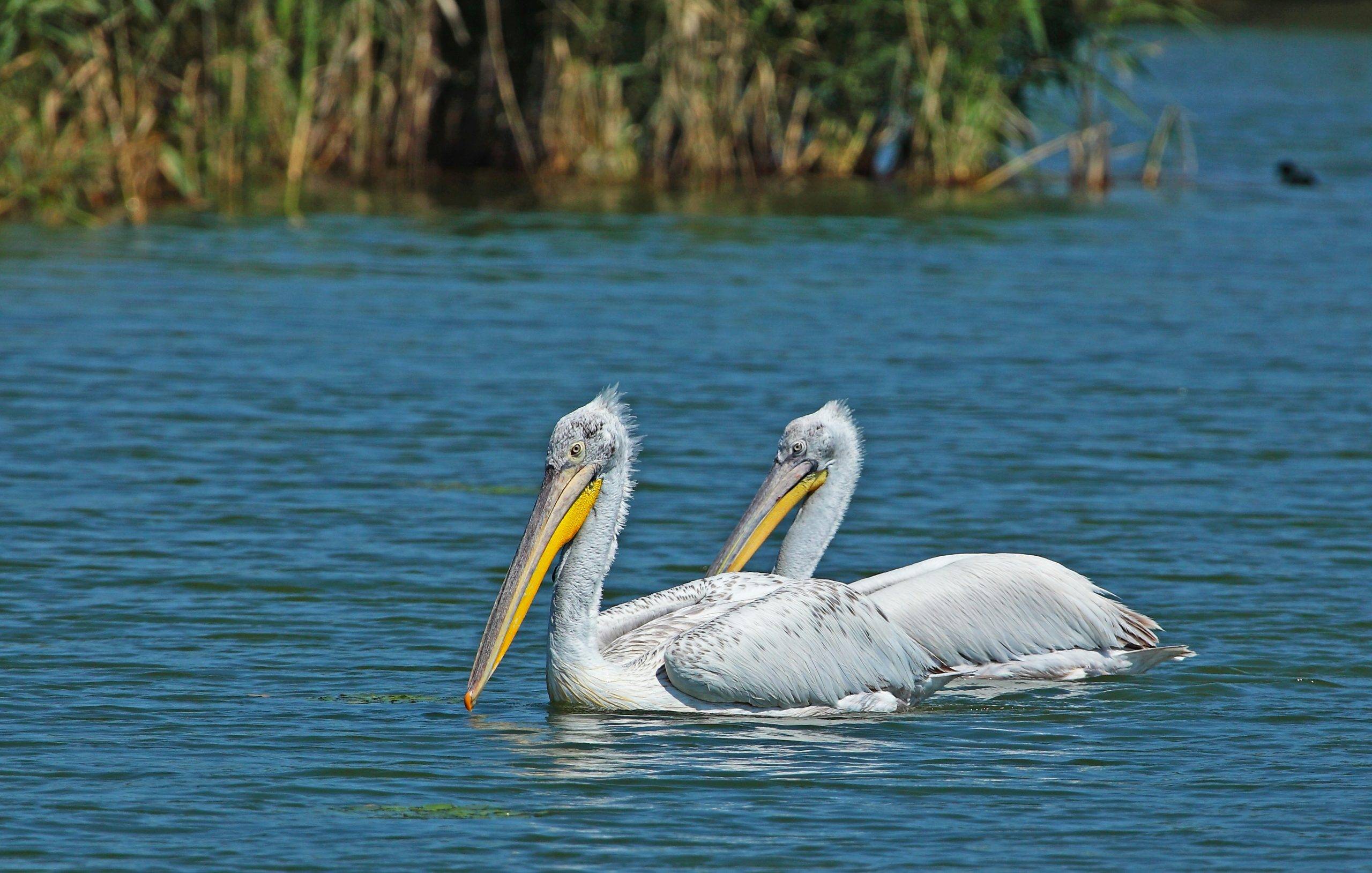
The birdlife on the lakes is prolific © Vasilis Caravitis
The water has its own ecological story. Prespa supports a number of endemic fish species, part of an ecosystem that has evolved in relative isolation over thousands of years. It is one of those places where conservation feels inseparable from daily life: fishing, farming and tourism all exist within a landscape whose value depends on protecting what makes it extraordinary in the first place.
Prespes, however, is not simply a destination for naturalists. Human history has left its mark across the lakes and surrounding mountains, with traces of different civilisations appearing in churches, ruins, rock paintings and hermitages.
One of the most notable places to explore is Agios Achillios, a tiny island in Mikri Prespa reached by a long floating footbridge across the water. At its centre stand the ruins of the Basilica of Agios Achillios, a three-aisled church dating from the 10th century. The walk across the lake is part of the experience, with reeds on either side and mountains rising beyond the water.
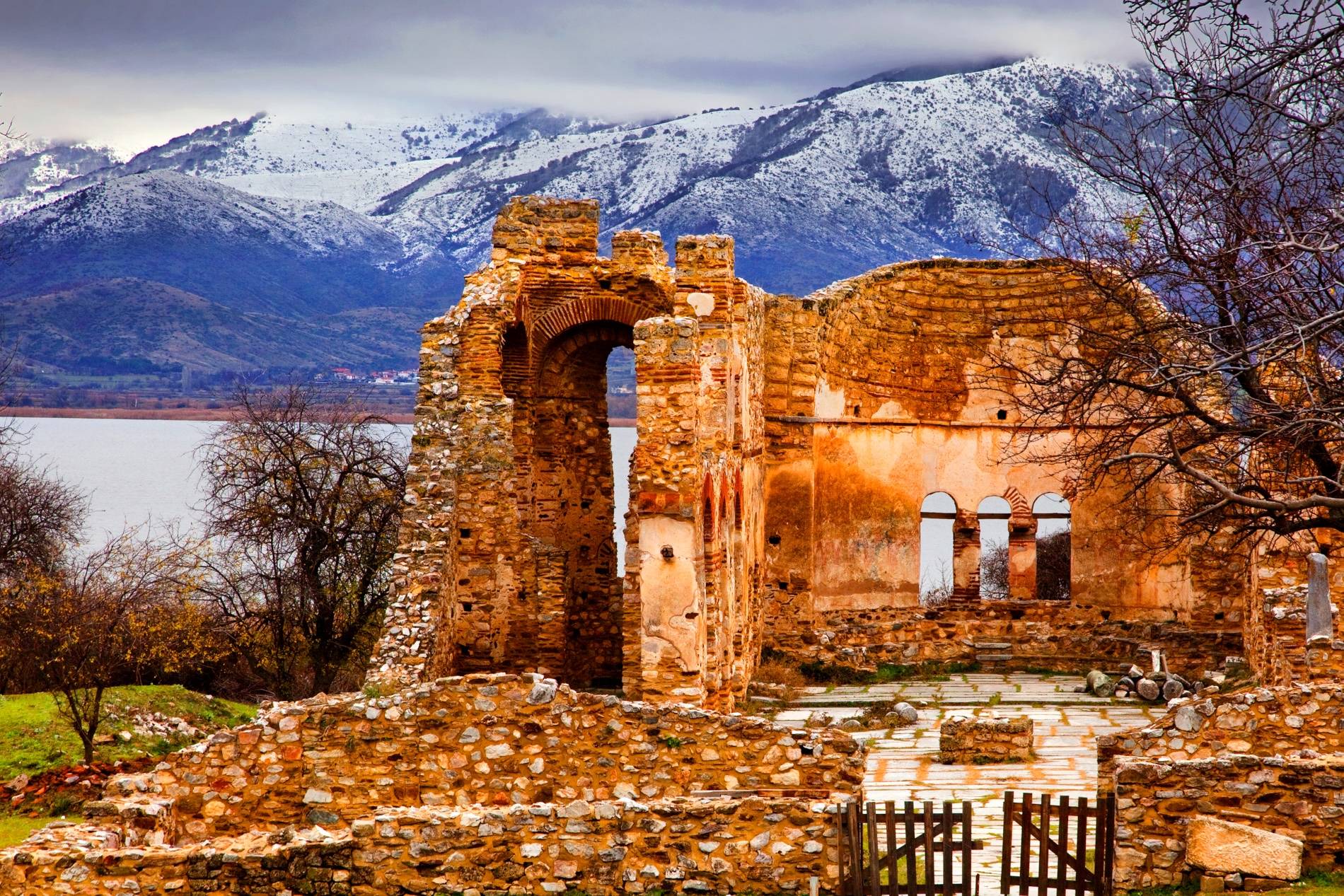
Agios Achillios © P. Merakos
Megali Prespa offers a different sense of scale. Spanning three countries, the lake feels broader and wilder, with mountain slopes dropping toward open water. Around the bay of Psarades and elsewhere along its shores, rock paintings and old hermitages speak to the religious communities that once sought seclusion here.
One of the best ways to see them is from the water. Traditional wooden boats known as plaves set out across Megali Prespa, following the shoreline towards caves, paintings and places that are difficult to reach from land.
Back on shore, the villages add further intrigue. Psarades sits beside Megali Prespa, its relationship with fishing written into both its name and its way of life, while Agios Germanos lies higher in the surrounding countryside. Neither requires an exhaustive itinerary: the best way to experience them is to walk, stop for a leisurely lunch, and soak up the surroundings.
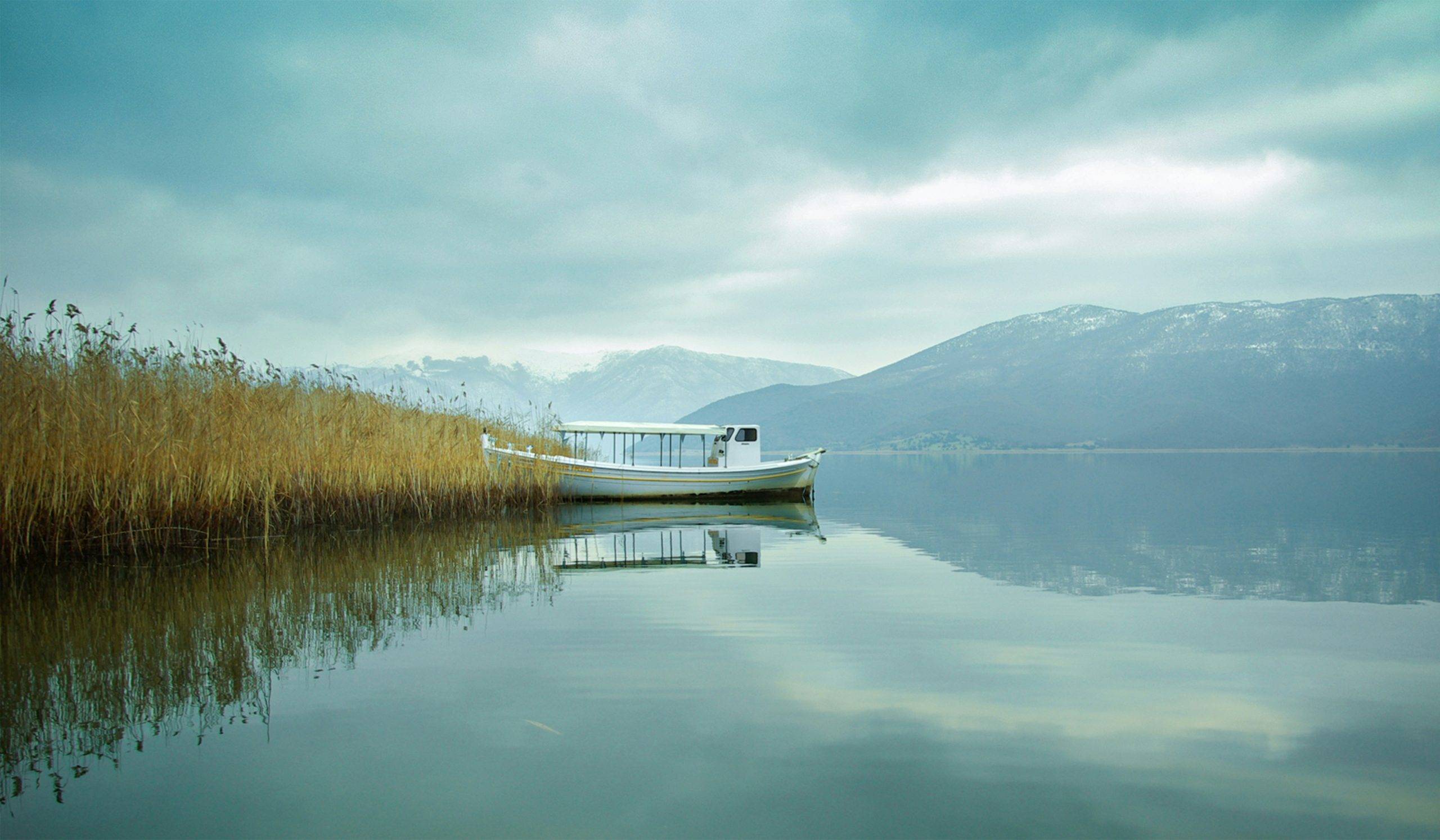
Megali Prespa is best explored by boat © Andreas Motsios
Food here is closely tied to what the land and lakes provide. Carp is a local staple, alongside the peppers for which the wider Florina region is known. Then there are Prespa’s gigantes, the large white beans that have become one of the area’s signature ingredients, served in tavernas with dishes that lean towards the hearty and unfussy. A glass of local tsipouro is a fitting accompaniment.
The lakes themselves are markedly different in size. Mikri Prespa covers around 47.35 square kilometres and reaches a depth of about eight metres, while Megali Prespa extends across roughly 272 square kilometres and reaches approximately 55 metres at its deepest point.
Yet figures only go so far in explaining Prespes. Its appeal lies in the combination: pelicans lifting from the reeds, a footbridge stretching towards an island, Byzantine stonework beside the water, lunch in a lakeside village and mountains reflected across an almost motionless lake. In a country celebrated for its islands and coastline, Prespes offers another version of Greece—quieter, greener and altogether more unexpected.
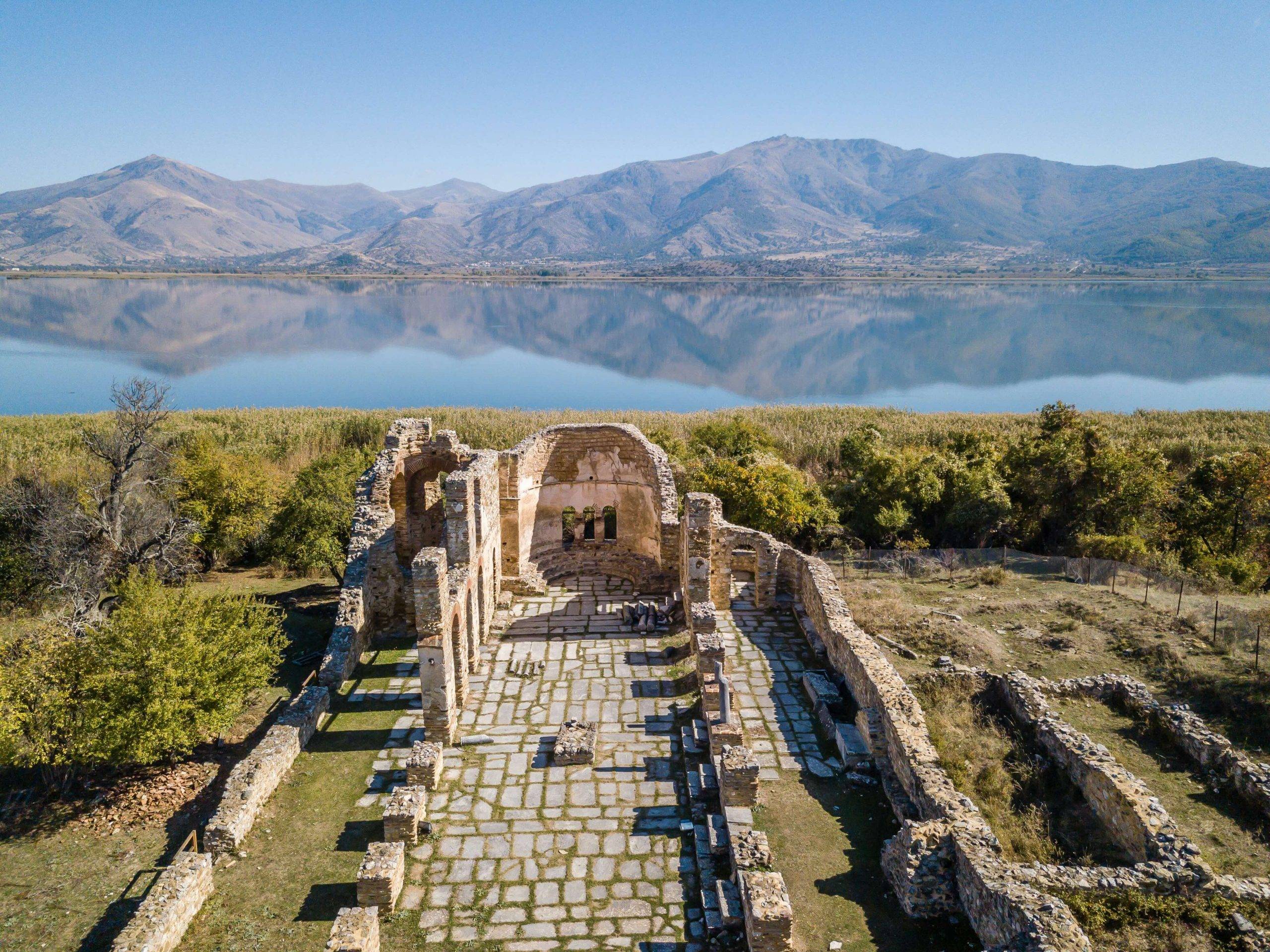
Prespes brings together water, nature and ancient ruins © Stefan Roks
To find out more about the Prespa Lakes, explore visitgreece.gr, the official website of the Greek National Tourism Organisation…