


The Beauty of the Handmade
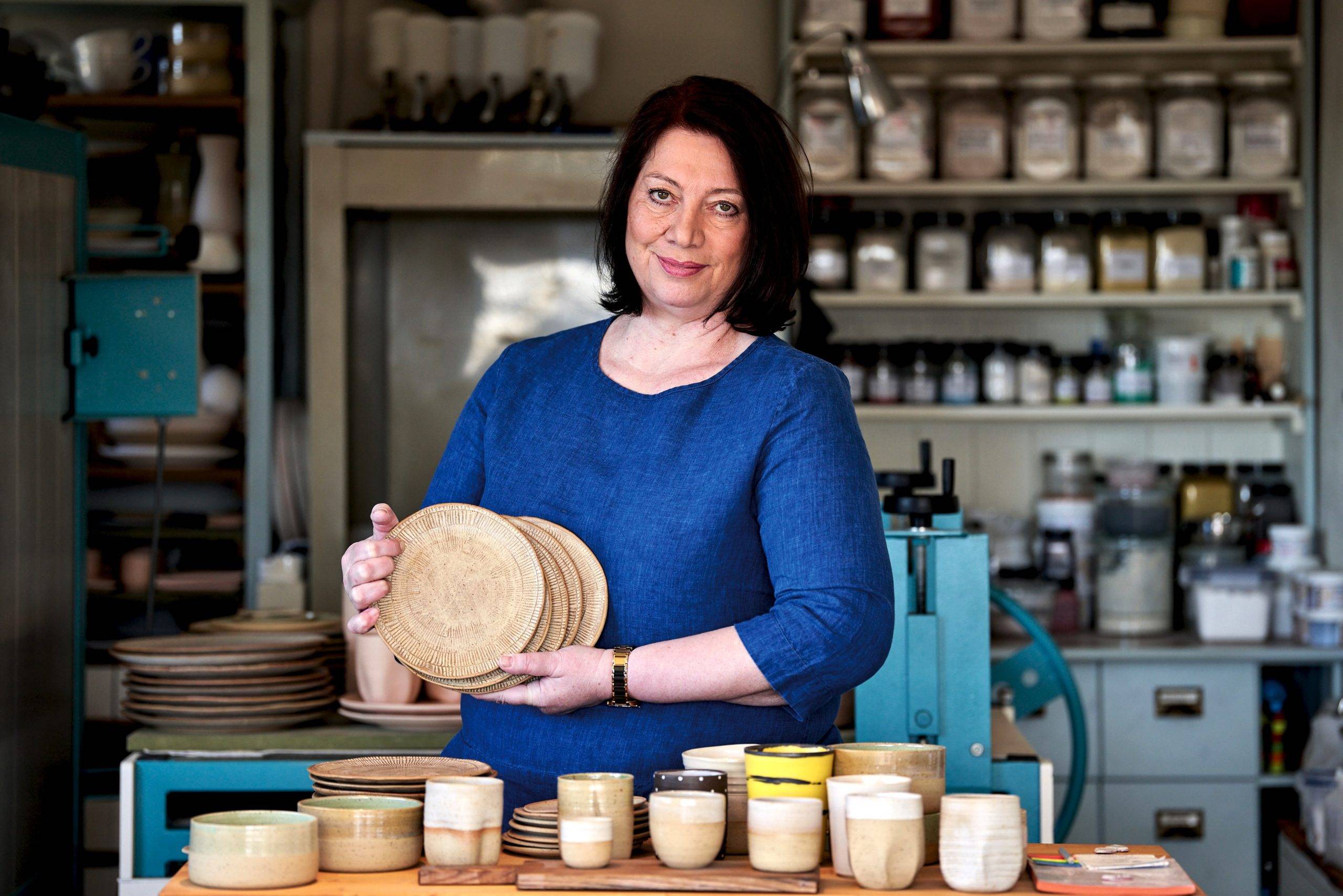
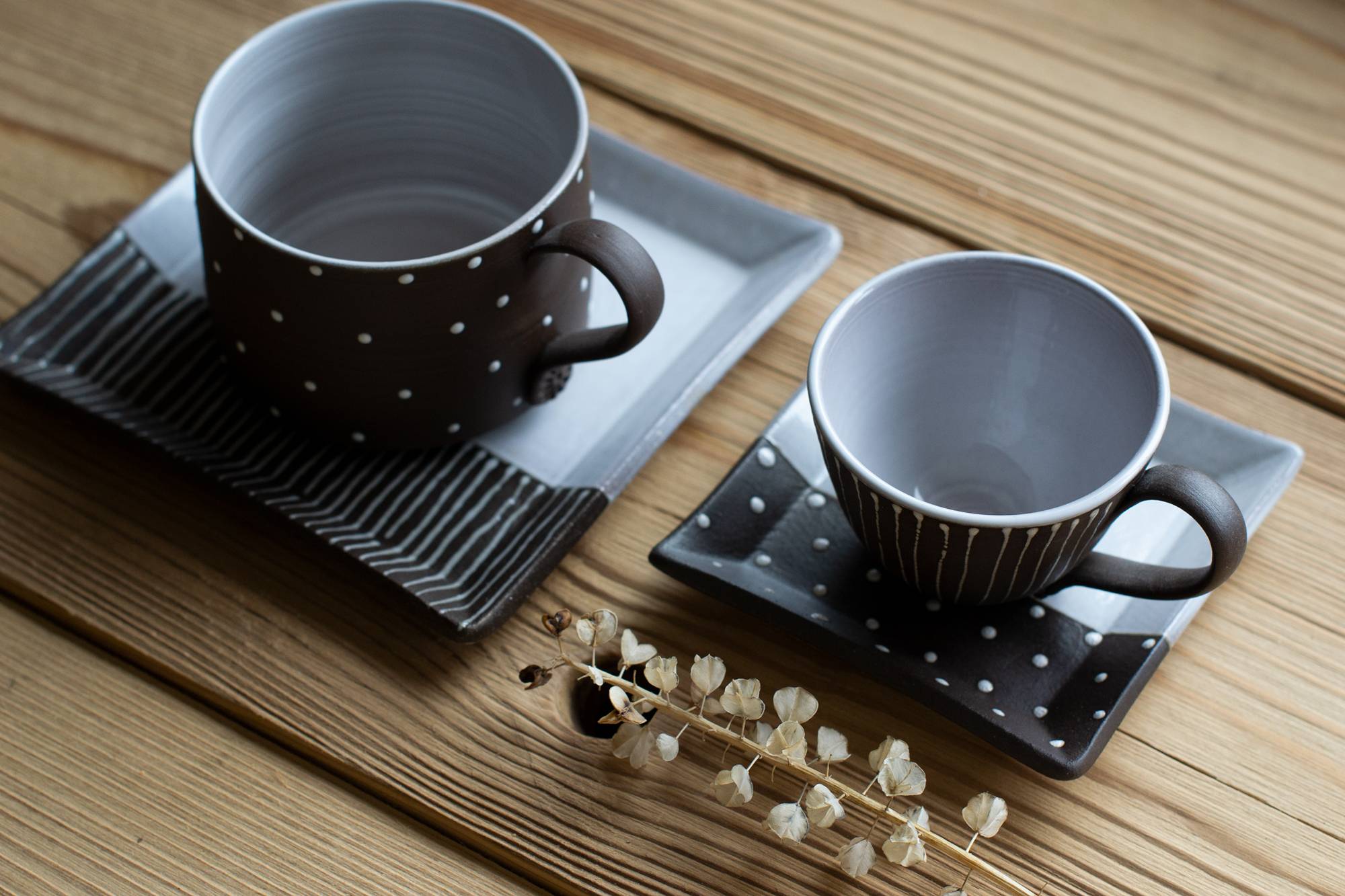
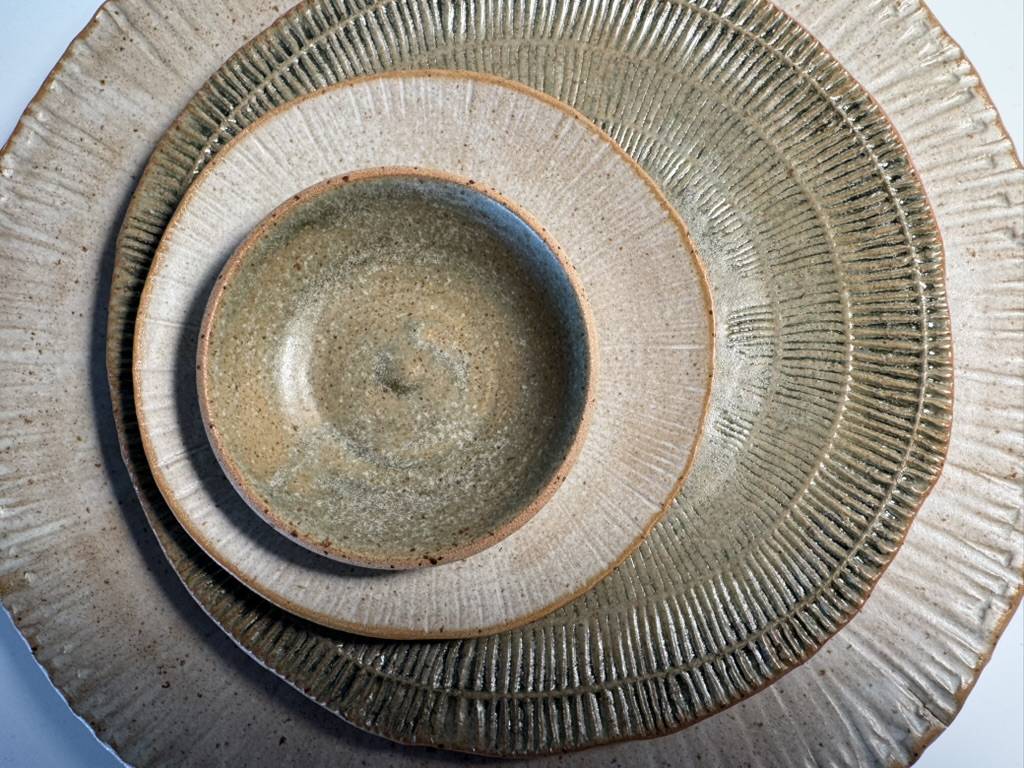
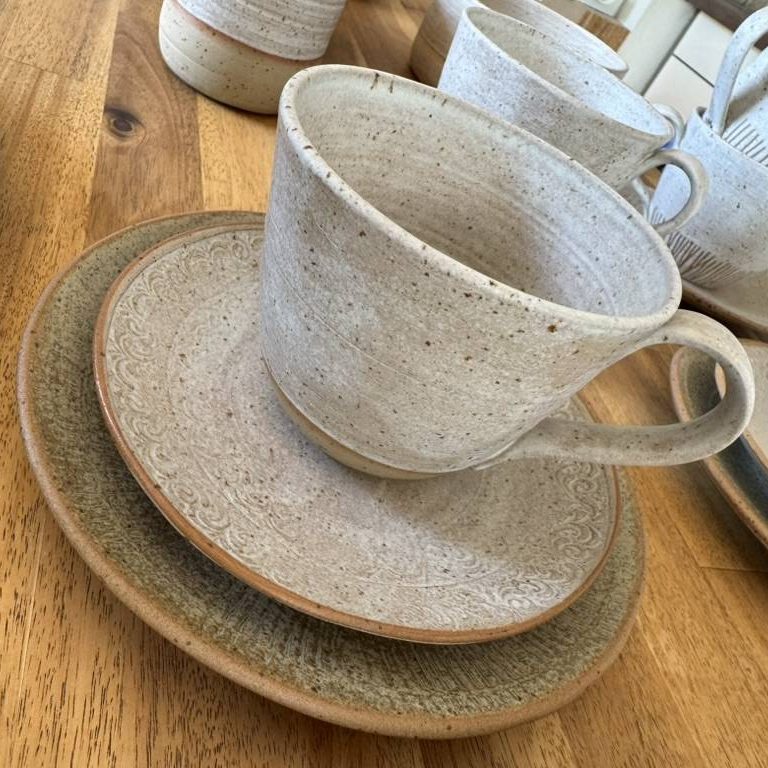
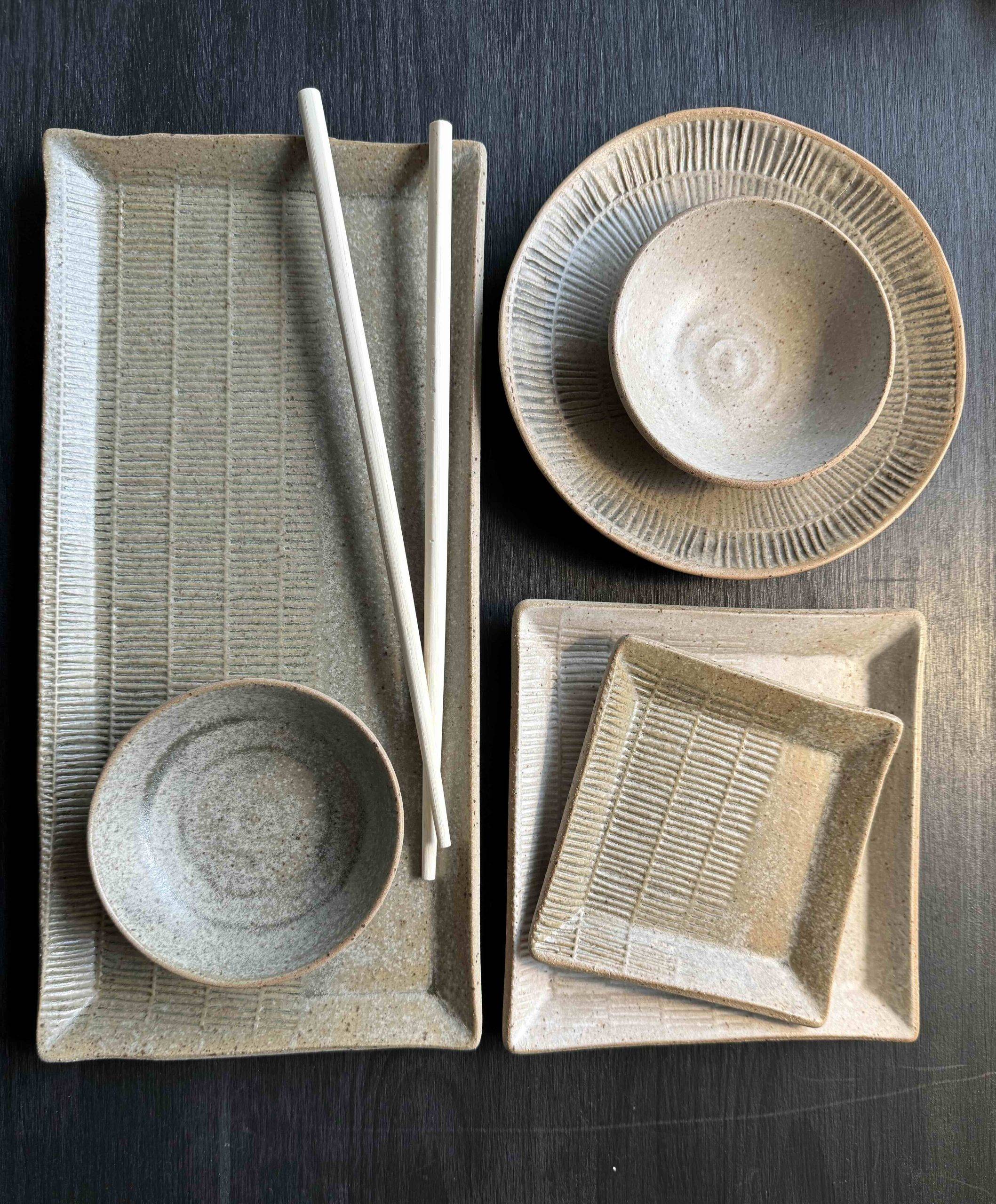
In her one-woman studio, Elisabeth Pschaid crafts everyday tableware by hand, patiently working with clay, fire, and time to create unique pieces that carry the trace of their making.
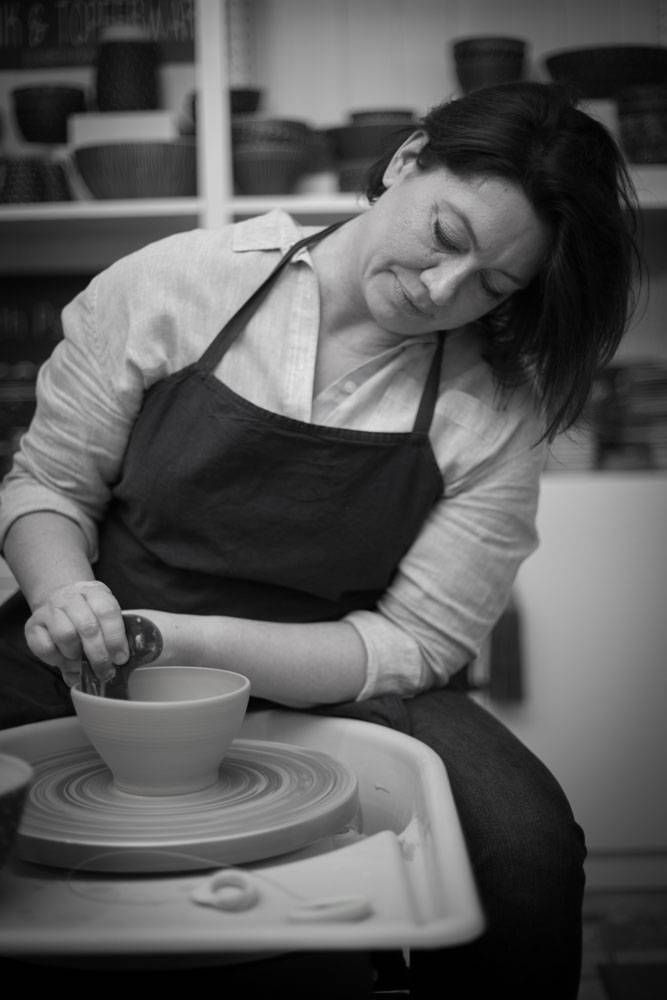
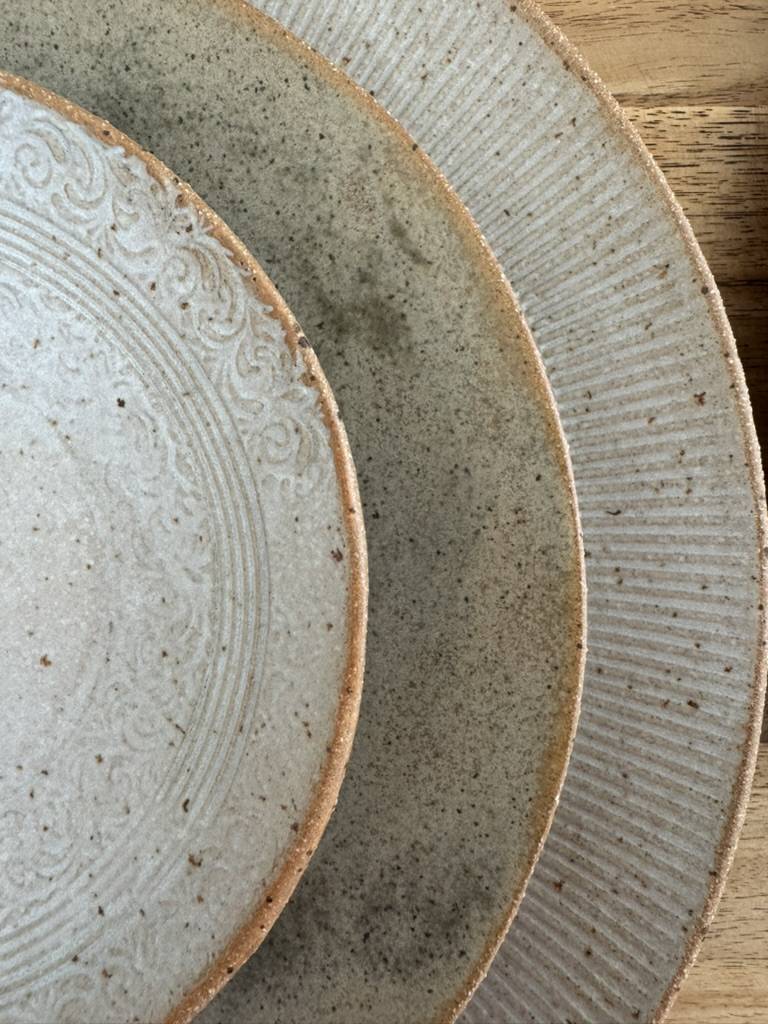
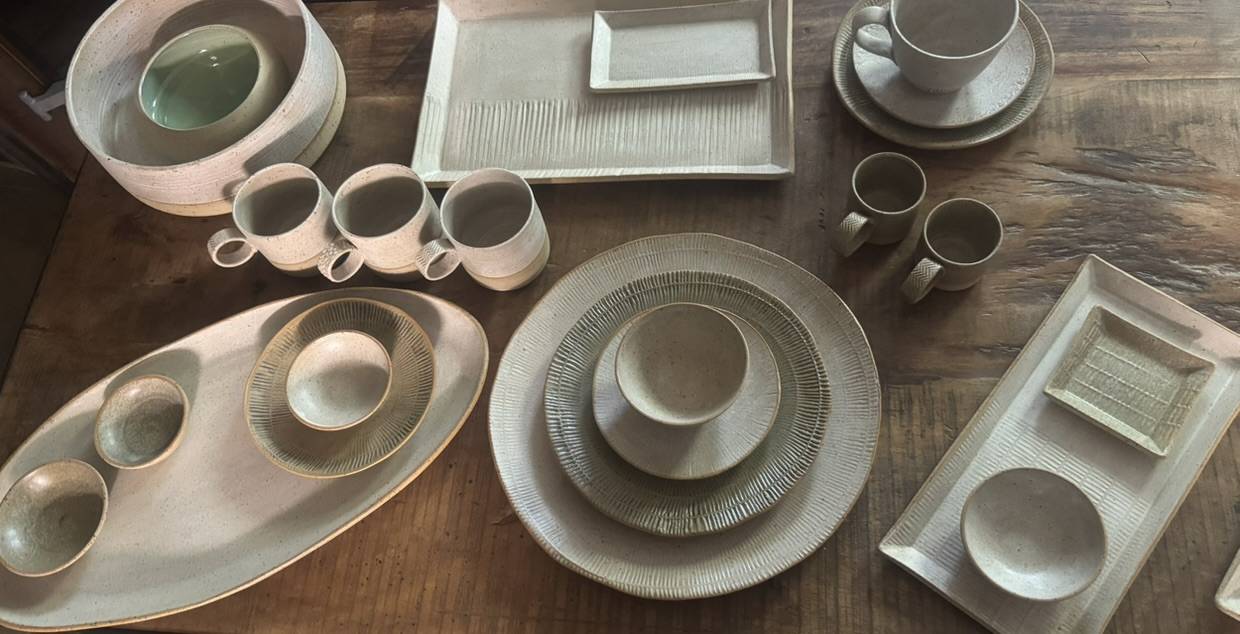
In Elisabeth Pschaid’s eponymous studio in Höf-Präbach, hands stay busy. She kneads, throws, turns, retouches, glazes—these are just a few technical terms from the working world of an Austrian artist who creates distinctive, one-of-a-kind ceramic pieces for everyday use.
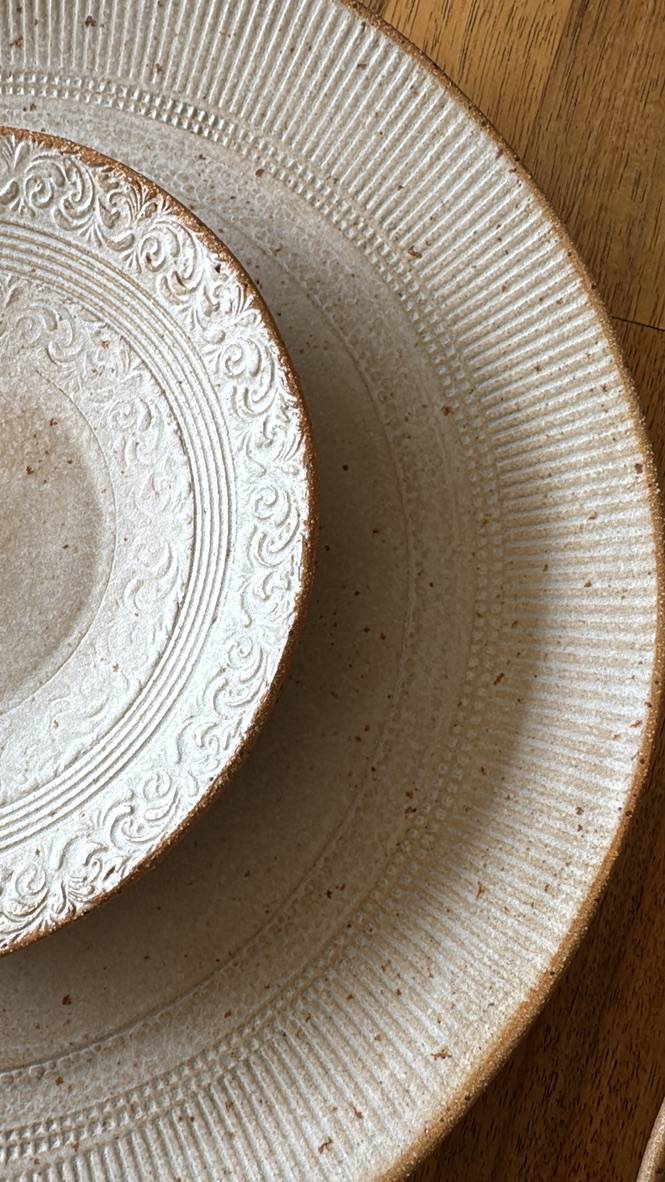
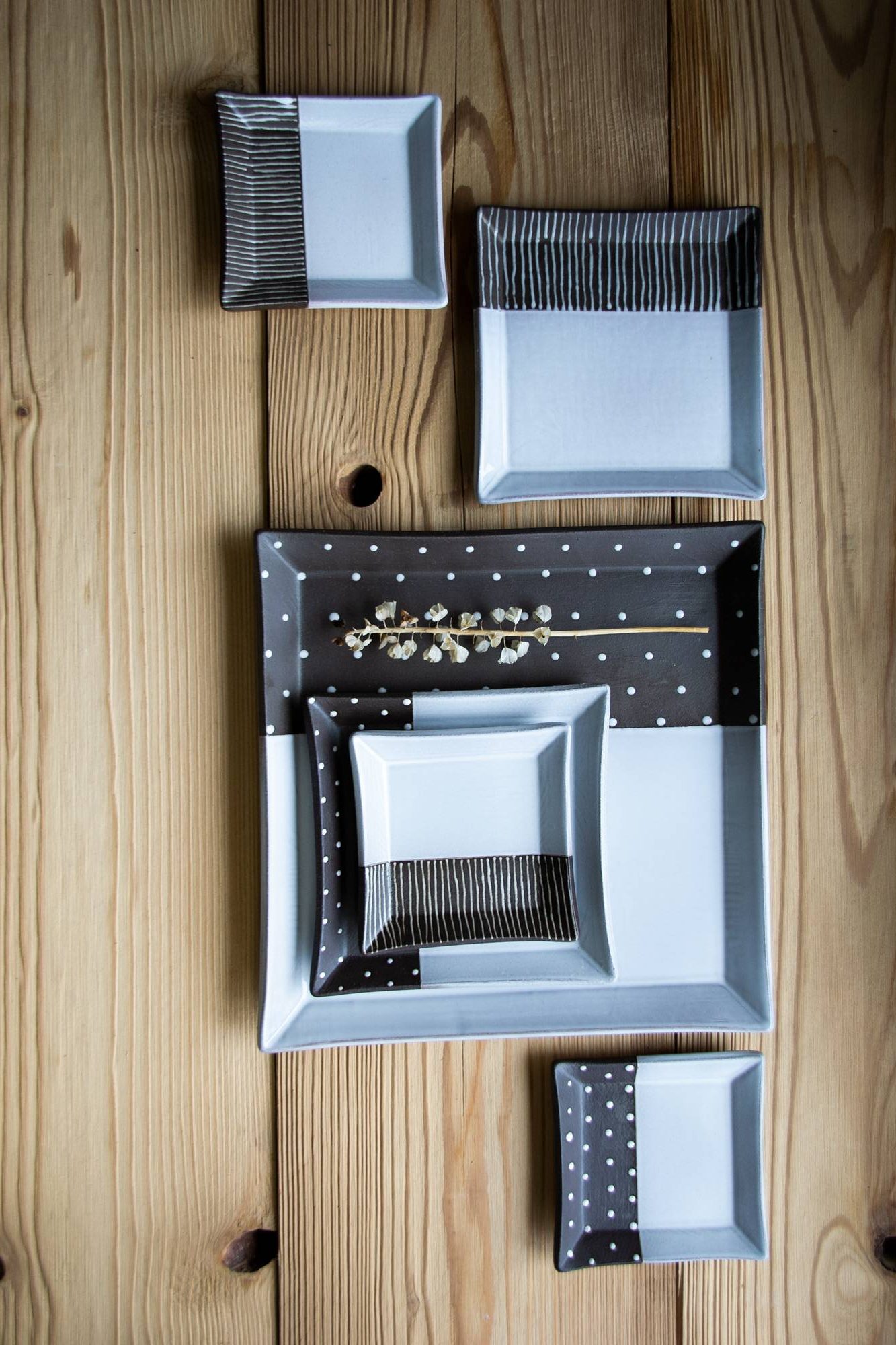
An independent ceramic artist since 2009, she lovingly handcrafts all the tableware herself, primarily on the potter’s wheel. Inspired by nature and the stoneware cultures and traditions of England, Japan, and India, her designs and shapes are mostly clear, simple, and straightforward, decorated with embossing or painting that showcase Pschaid’s attention to detail. Glazes, which form a glass-like coating over the clay, are made according to her own recipes. Great importance is placed on high-quality raw materials and their origins.
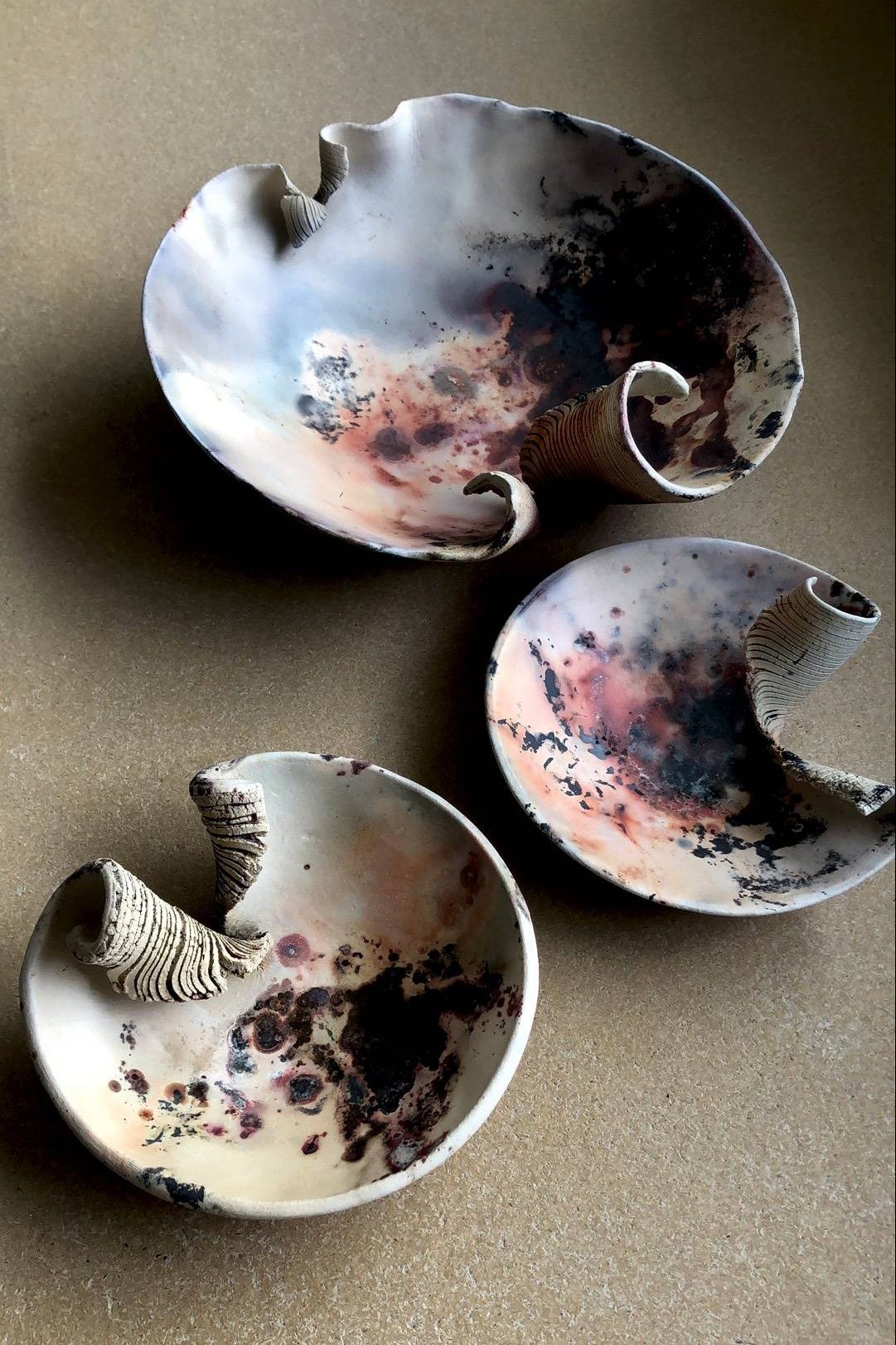
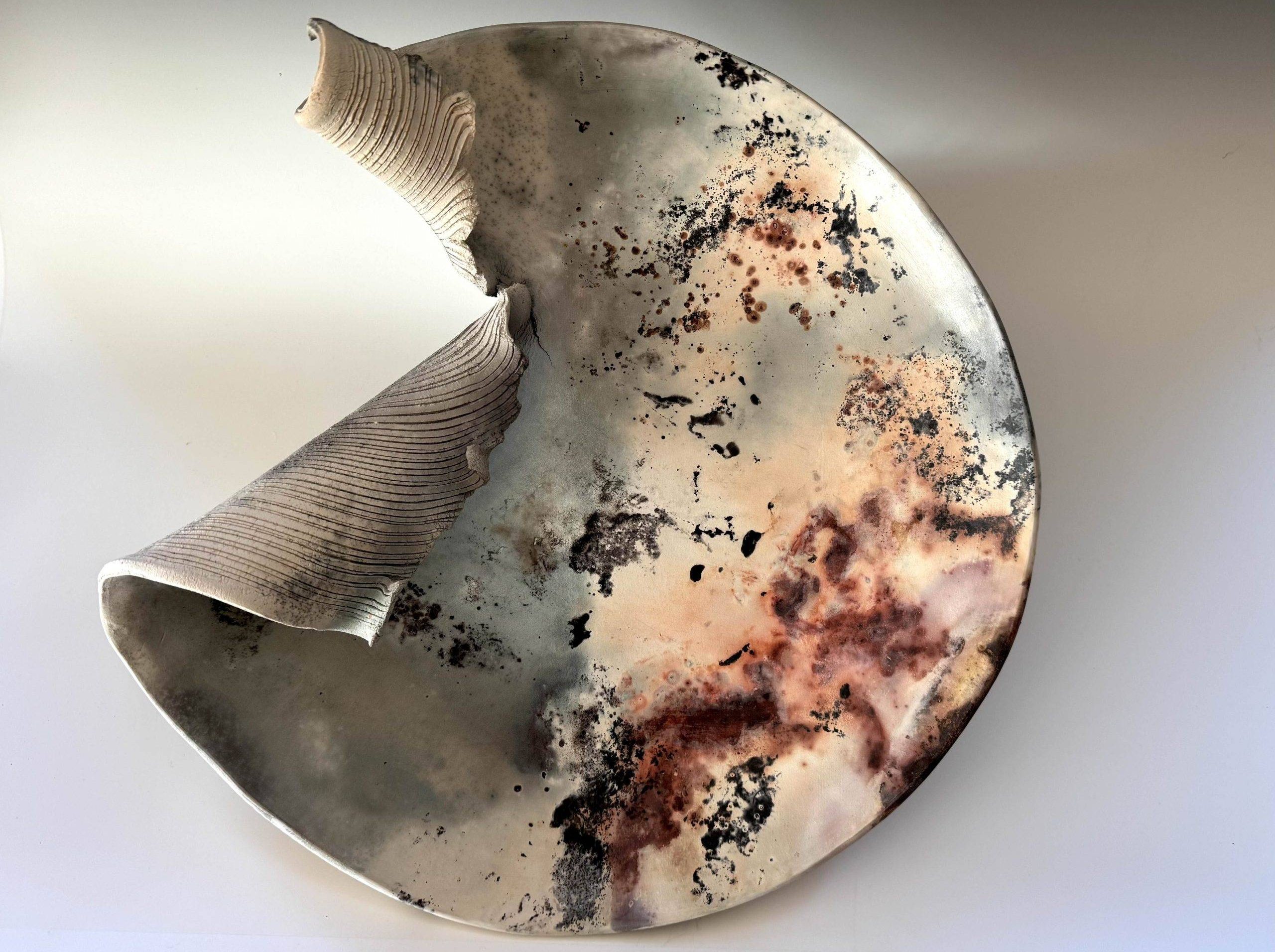
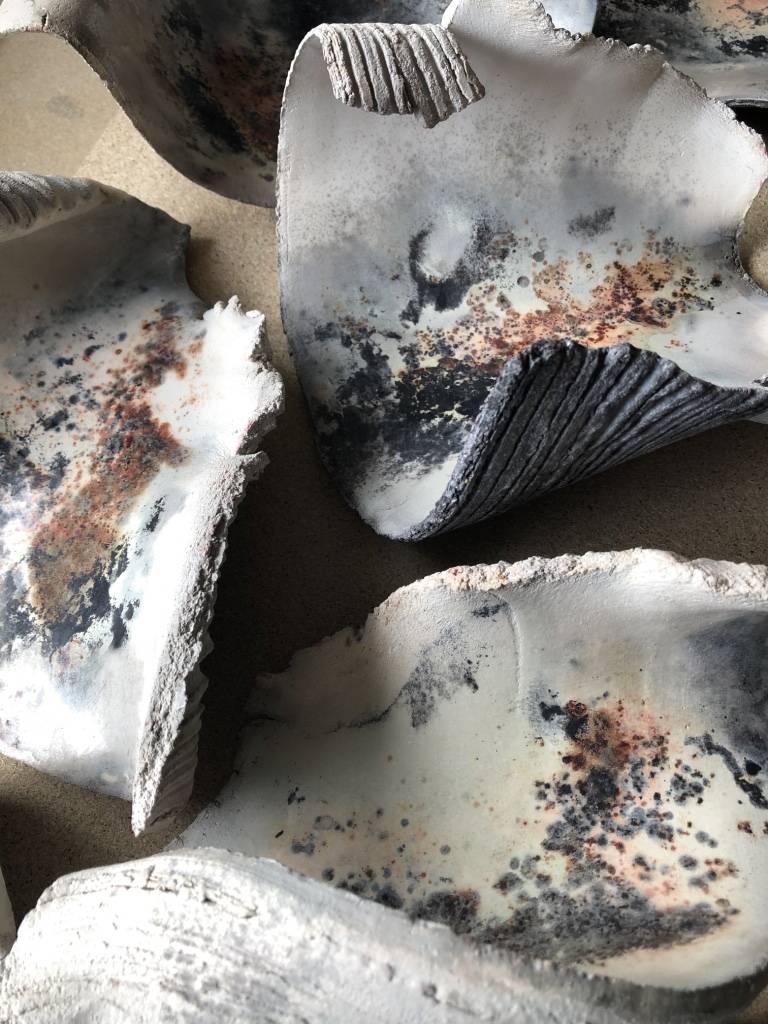
As a sole proprietor, Pschaid produces both individual pieces and small series in her studio, all designed to complement finely prepared dishes and reflect a unique lifestyle. Many of her creations are adapted and customised to individual ideas, from colour to size and detailing. And when she moves from everyday objects to purely decorative work, she returns to an older technique: Grubenbrand, an archaic wood-fired outdoor pit firing method in which smoke and flame determine the final patterning. Nothing is fully predictable, which is precisely why no two pieces are ever alike. Pretty, practical, unusual, and artistic—this is what defines Elisabeth Pschaid’s work.
FOUR sits down with the artist to learn more about her products, passion, and creative process…
Could you tell us a little about Pschaid Keramik and what the studio is all about?
In my studio, I produce everything from functional ceramics to artistic ceramics. Materials and raw materials are selected with great care. Glazes are made in the studio. I carry out every single step of the process myself.
How did your journey with ceramics first begin and how has your work evolved over the years?
After training in two different jobs and working in them for 20 years, one day a ceramicist placed a lump of clay in my hand, and my passion for this material was ignited. At first, I took courses alongside my job, then began a formal course of study in arts and design. After finishing my studies, I travelled to meet professional ceramicists in other countries to learn from them. It was during my time at school that I set up my studio at my current location.
What do you love most about working with clay?
To work with the formable material using craftsmanship and in collaboration with the material itself, to bring out its wide variety of properties.
How would you describe your style to someone discovering your work for the first time?
My style is straightforward, characterised by simple, clear forms, with a certain attention to detail, and rooted in ceramic vessel-making.
What makes Pschaid Keramik different to other studios?
A very meticulous approach to materials and raw materials. I make all the glazes myself.
Where do you usually find inspiration for your pieces?
I often draw inspiration from everyday life, particularly when it comes to function and form. I also find inspiration whilst travelling to distant lands and experiencing other cultures, as well as from historical sources (e.g. in museums).
What does a typical day in the studio look like? Can you talk us through the process of creating a piece, from idea to finished object?
Ideas don’t originate in the studio; they usually arise elsewhere. Once an idea is in my head, I sometimes put it down on paper, but often I simply translate the visual image in my mind directly into a first draft. I then refine that first draft. It usually takes many stages of development before a piece is produced in a small batch. Often, however, they remain one-off pieces.
Do you have a favourite part of the making process?
I really enjoy working on the potter’s wheel and the smell of clay that’s still damp. I also love the process of developing glazes, which I find really exciting.
What is the most challenging part of working with ceramics?
Bringing new ideas to life through materials means choosing the right materials, being open to experimentation, and having perseverance and stamina.
Are your pieces usually planned in detail, or do they evolve as you work?
In principle, yes, but in practice I often let things develop naturally.
How important is experimentation in your practice? Do you work mostly with traditional methods, or are you open to newer innovations?
Experimentation is very important to me; otherwise, there’s no progress. In my small studio, this part of the work is very labour-intensive. Personally, I find it too boring to always follow the same production process. I’m constantly refining things to see how they could be simpler, quicker, more consistent, and so on.
These days, everything is expected to happen quickly, but clay doesn’t allow for that. It takes time to shape it, it needs time to dry, and time for the firing process. As I work in the craft sector and not the industrial sector, I face major challenges. You must know and understand traditional craft methods to be able to develop them further.
Do you create mostly functional objects, decorative pieces, or a mix of both?
I do both; at the moment, tableware (functional objects) make up the bulk of the work in my studio.
What do you hope people feel when they see or use your ceramics?
I hope my ceramic pieces radiate my love for this material, and that the people who use them can sense it.
How do you approach custom or commissioned pieces?
First, we discuss the customer’s requirements to see what is feasible. Then I set about selecting the appropriate materials. The first sample is produced and discussed with the customer. Once everything is agreed, we move on to production.
What has been one of the most rewarding moments for Pschaid Keramik so far?
There are many wonderful moments, such as when customers write to me to tell me how much they enjoy using my pottery, or when I open the kiln in my workshop after firing and see the pieces have turned out exactly as I’d imagined.
Is there a piece or collection that feels especially meaningful to you?
Yes, pit firing or smoke firing. It’s a technique with ancient origins that is now used to create extraordinary decorative finishes on ceramics. I find it really fascinating to bring ancient knowledge into the present day and interpret it in a new way.
What can people look forward to from Pschaid Keramik in the future?
I remain committed to small-scale, bespoke production that also incorporates customer requests, to continuous development, and, hopefully, to bringing to life many more of the ideas that are currently just in our heads.
To find out more about Pschaid Keramik, visit the links below:
Pschaid Keramik
Römerstrasse 101
8063 Eggersdorf
Austria
Web: pschaidkeramik.at
Tel: +43 664 3019272
Email: elisabeth.pschaid@aon.at
Instagram: @elisabethpschaid
Facebook: @elisabeth.pschaid
Necessary cookies are absolutely essential for the website to function properly. These cookies ensure basic functionalities and security features of the website, anonymously.
| Cookie | Duration | Description |
|---|---|---|
| __cfduid | 1 month | The cookie is used by cdn services like CloudFare to identify individual clients behind a shared IP address and apply security settings on a per-client basis. It does not correspond to any user ID in the web application and does not store any personally identifiable information. |
| _abck | 1 year | This cookie is used to detect and defend when a client attempt to replay a cookie.This cookie manages the interaction with online bots and takes the appropriate actions. |
| bm_sz | 4 hours | This cookie is set by the provider Akamai Bot Manager. This cookie is used to manage the interaction with the online bots. It also helps in fraud preventions |
| cookielawinfo-checbox-analytics | 11 months | This cookie is set by GDPR Cookie Consent plugin. The cookie is used to store the user consent for the cookies in the category "Analytics". |
| cookielawinfo-checbox-functional | 11 months | The cookie is set by GDPR cookie consent to record the user consent for the cookies in the category "Functional". |
| cookielawinfo-checbox-others | 11 months | This cookie is set by GDPR Cookie Consent plugin. The cookie is used to store the user consent for the cookies in the category "Other. |
| cookielawinfo-checkbox-advertisement | 1 year | The cookie is set by GDPR cookie consent to record the user consent for the cookies in the category "Advertisement". |
| cookielawinfo-checkbox-necessary | 11 months | This cookie is set by GDPR Cookie Consent plugin. The cookies is used to store the user consent for the cookies in the category "Necessary". |
| cookielawinfo-checkbox-performance | 11 months | This cookie is set by GDPR Cookie Consent plugin. The cookie is used to store the user consent for the cookies in the category "Performance". |
| ts | 3 years | This cookie is provided by the PayPal. It is used to support payment service in a website. |
| ts_c | 3 years | This cookie is provided by PayPal when a website is in association with PayPal payment function. This cookie is used to make safe payment through PayPal. |
| viewed_cookie_policy | 11 months | The cookie is set by the GDPR Cookie Consent plugin and is used to store whether or not user has consented to the use of cookies. It does not store any personal data. |
Functional cookies help to perform certain functionalities like sharing the content of the website on social media platforms, collect feedbacks, and other third-party features.
| Cookie | Duration | Description |
|---|---|---|
| akavpau_ppsd | session | This cookie is provided by Paypal. The cookie is used in context with transactions on the website. |
| nsid | This cookie is set by the provider PayPal. This cookie is used to enable the PayPal payment service in the website. | |
| tsrce | 3 days | This cookie is set by the provider PayPal. This cookie is used to enable the PayPal payment service in the website. |
| x-pp-s | session | This cookie is set by the provider PayPal. This cookie is used to process payments from the site. |
Performance cookies are used to understand and analyze the key performance indexes of the website which helps in delivering a better user experience for the visitors.
| Cookie | Duration | Description |
|---|---|---|
| YSC | session | This cookies is set by Youtube and is used to track the views of embedded videos. |
Analytical cookies are used to understand how visitors interact with the website. These cookies help provide information on metrics the number of visitors, bounce rate, traffic source, etc.
| Cookie | Duration | Description |
|---|---|---|
| _ga | 2 years | This cookie is installed by Google Analytics. The cookie is used to calculate visitor, session, campaign data and keep track of site usage for the site's analytics report. The cookies store information anonymously and assign a randomly generated number to identify unique visitors. |
| _gid | 1 day | This cookie is installed by Google Analytics. The cookie is used to store information of how visitors use a website and helps in creating an analytics report of how the website is doing. The data collected including the number visitors, the source where they have come from, and the pages visted in an anonymous form. |
Advertisement cookies are used to provide visitors with relevant ads and marketing campaigns. These cookies track visitors across websites and collect information to provide customized ads.
| Cookie | Duration | Description |
|---|---|---|
| _fbp | 3 months | This cookie is set by Facebook to deliver advertisement when they are on Facebook or a digital platform powered by Facebook advertising after visiting this website. |
| fr | 3 months | The cookie is set by Facebook to show relevant advertisments to the users and measure and improve the advertisements. The cookie also tracks the behavior of the user across the web on sites that have Facebook pixel or Facebook social plugin. |
| IDE | 1 year 24 days | Used by Google DoubleClick and stores information about how the user uses the website and any other advertisement before visiting the website. This is used to present users with ads that are relevant to them according to the user profile. |
| test_cookie | 15 minutes | This cookie is set by doubleclick.net. The purpose of the cookie is to determine if the user's browser supports cookies. |
| VISITOR_INFO1_LIVE | 5 months 27 days | This cookie is set by Youtube. Used to track the information of the embedded YouTube videos on a website. |
Other uncategorized cookies are those that are being analyzed and have not been classified into a category as yet.
| Cookie | Duration | Description |
|---|---|---|
| _gat_gtag_UA_120081375_1 | 1 minute | This cookie is installed by Google Analytics. The cookie is used to calculate visitor, session, campaign data and keep track of site usage for the site's analytics report. The cookies store information anonymously and assign a randomly generated number to identify unique visitors. |
| _gat_gtag_UA_83740222_1 | 1 minute | This cookie is installed by Google Analytics. The cookie is used to calculate visitor, session, campaign data and keep track of site usage for the site's analytics report. The cookies store information anonymously and assign a randomly generated number to identify unique visitors. |
| _mcid | 1 year | No description |
| ak_bmsc | 2 hours | No description |
| CONSENT | 16 years 9 months 2 days 6 hours | No description |
| ec_store_chameleon_font | session | This cookie is provided by Ecwid and it is used to save the font utilised in the website's online store. |
| enforce_policy | 1 year | No description |
| l7_az | 30 minutes | No description |
| LANG | 9 hours | No description |
| x-cdn | This cookie is provided by Paypal and is used in context with shopping transactions on the website's store. |