



In the ever-evolving landscape of wellness, the supplement aisle has transformed from a humble corner of the health store into a kingdom of possibilities. Where multivitamins once reigned supreme, a new wave of highly targeted compounds is now capturing the collective attention of longevity seekers, biohackers, athletes, and everyday optimisers alike. The year 2025 heralds the age of the Supplement Sovereigns—powerful, data-backed ingredients that don’t just promise marginal gains but aim to reset, restore, and enhance the body at a cellular level.
NMN and NAD+ Precursors: Still Holding Court
Despite regulatory challenges in some markets, nicotinamide mononucleotide (NMN) continues to dominate conversations around ageing and mitochondrial health. As a precursor to NAD⁺—a coenzyme essential for energy metabolism and DNA repair—NMN has shown promise in early human trials. Studies suggest it may support improvements in muscle performance and insulin sensitivity, particularly in older adults and those with metabolic dysfunction.
Alongside NMN, nicotinamide riboside (NR) has gained traction, with human trials confirming its ability to increase NAD⁺ levels safely and sustainably. Some formulations pair NR with compounds like pterostilbene or resveratrol, which are thought to activate similar pathways to caloric restriction, though such effects remain theoretical rather than clinically proven.
Spermidine: The Autophagy Activator
Quietly climbing the ranks is spermidine, a naturally occurring polyamine found in foods like wheat germ, aged cheese, and soybeans. Its ability to stimulate autophagy—the body’s cellular “clean-up” process—has made it a favourite among those interested in neuroprotection and longevity. New academic research also suggests that regular spermidine intake may improve memory performance and slow age-related cognitive decline.
Berberine: The Metabolic Multitasker
Described by some as “nature’s Ozempic”, berberine has seen renewed interest as metabolic health takes centre stage. Unlike Ozempic (semaglutide), which activates the GLP-1 receptor, berberine works via AMPK activation to support insulin sensitivity and glucose uptake, offering more modest weight loss effects. While its glucose-lowering properties are well-documented, what’s new in 2025 is its microencapsulated delivery systems, improving bioavailability and reducing the gastrointestinal discomfort often associated with it.
Functional medicine practitioners now pair berberine with inulin, a prebiotic fibre, or banaba leaf extract for enhanced insulin sensitivity. A growing number of studies are also examining berberine’s impact on gut microbiota, with early findings suggesting its role as a modulator of inflammatory pathways and a potential adjunct in the treatment of PCOS and NAFLD (non-alcoholic fatty liver disease).
Apigenin: The Cortisol Calmer
As the conversation around stress pivots from psychological resilience to biochemical management, apigenin—a flavonoid abundant in chamomile and parsley—emerges as a promising natural stress shield. It has been shown to inhibit the enzyme CD38, preserving cellular NAD⁺ levels and potentially supporting metabolic pathways. It also interacts with GABAₐ receptors, binding at the benzodiazepine site to produce anxiolytic and sedative-like effects in animal models.
In 2025, apigenin is particularly popular among high performers for its ability to support deep sleep. Supplement brands are now combining it with magnesium glycinate and L-theanine to create gentle, non-addictive evening blends that support hormonal balance and circadian health.

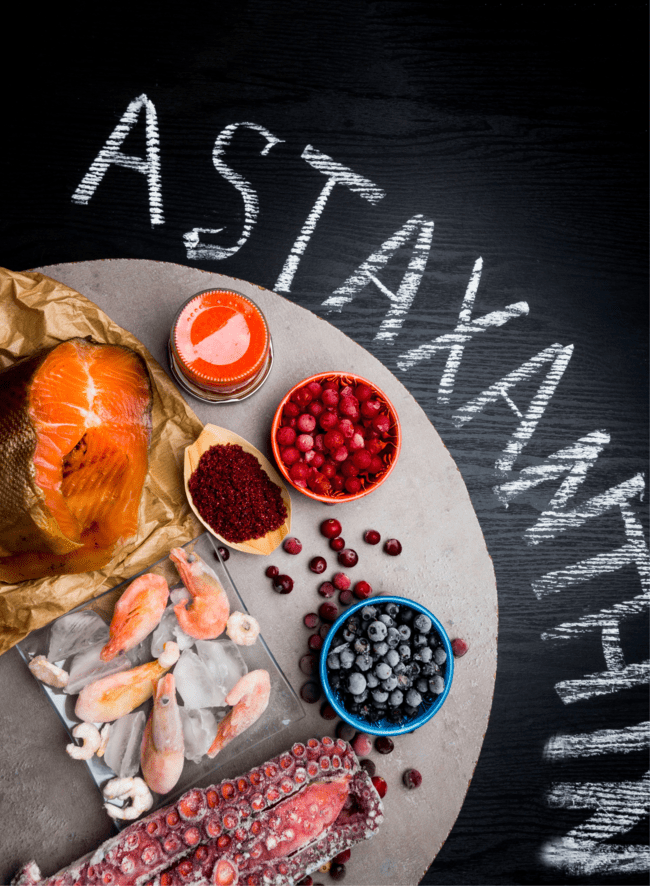

Astaxanthin: The Radiance Molecule
Once a niche ingredient known only to natural beauty devotees, astaxanthin has stepped into the mainstream spotlight. Derived from microalgae, this carotenoid boasts antioxidant powers that far surpass vitamin C and E, protecting cells from oxidative stress and UV-induced damage. But its benefits go beyond skin-deep.
New findings show astaxanthin’s potential in enhancing endurance and reducing lactic acid build-up in muscles, positioning it as both a beauty and performance enhancer. As the boundaries between skincare and supplements blur, astaxanthin is now being embraced in collagen-boosting complexes, particularly when paired with hyaluronic acid and marine peptides.
Tributyrin: Gut-Brain Gold
Gut health has long been a staple of the wellness world, but in 2025, the spotlight shifts to tributyrin—a pro-drug form of butyrate, the short-chain fatty acid essential for colon health. Unlike standard sodium butyrate supplements, tributyrin offers enhanced delivery and absorption, reaching the large intestine intact and providing long-lasting effects. Recent preclinical studies also highlight its promise in supporting the gut-brain axis and modulating inflammation.
Honokiol: The Sleep Secret
Sourced from the bark of magnolia trees, honokiol is making waves as a natural, non-habit-forming alternative to sleep medications. Its appeal lies in its dual function: anxiolytic by day, sedative by night. Acting on GABA-A receptors while also crossing the blood-brain barrier, honokiol promotes deep, restorative sleep and, in some small human studies, has shown it can be beneficial for anxiety.

The Rise of Personalised Stacks
Perhaps the most notable shift in 2025 isn’t any single ingredient but the rise of fully personalised supplementation. Companies now offer at-home blood biomarker panels, genetic or microbiome sequencing, and AI-based data analysis to deliver tailored formulations—often including custom capsules or blends based on your metabolic signals and microbiome activity. Whether targeting immune support, metabolic health, hormonal balance, or mental clarity, these custom stacks are rendering the one-size-fits-all model increasingly obsolete.
With wearables now tracking biometrics like sleep stages, heart rate, and in some cases glucose levels, the feedback loop between supplementation and outcome has never been tighter—enabling users to fine‑tune their regimens with greater precision. The supplement landscape in 2025 is no longer about popping isolated capsules and hoping for the best. It’s about intelligent formulation, synergistic pairings, and context-aware usage. The sovereigns of today’s supplement kingdom are not crowned by hype but by science, bioavailability, and real-world efficacy.
As consumers become savvier and research grows more robust, we are witnessing a revolution—one where wellness is less about trends and more about truly personalised health sovereignty. And in this fast-moving field, the question is no longer “What should I take?” but “What does my body need right now, and how can I give it the best?”